7 things people who always say 'you decide' when asked to choose a restaurant, a movie, or what to have for dinner reveal about their childhood, according to psychology - and the one therapists notice first is that the person at forty-six who genuinely cannot name what they want for dinner is not indecisive but a child who learned that having a preference was the fastest way to be told it was wrong
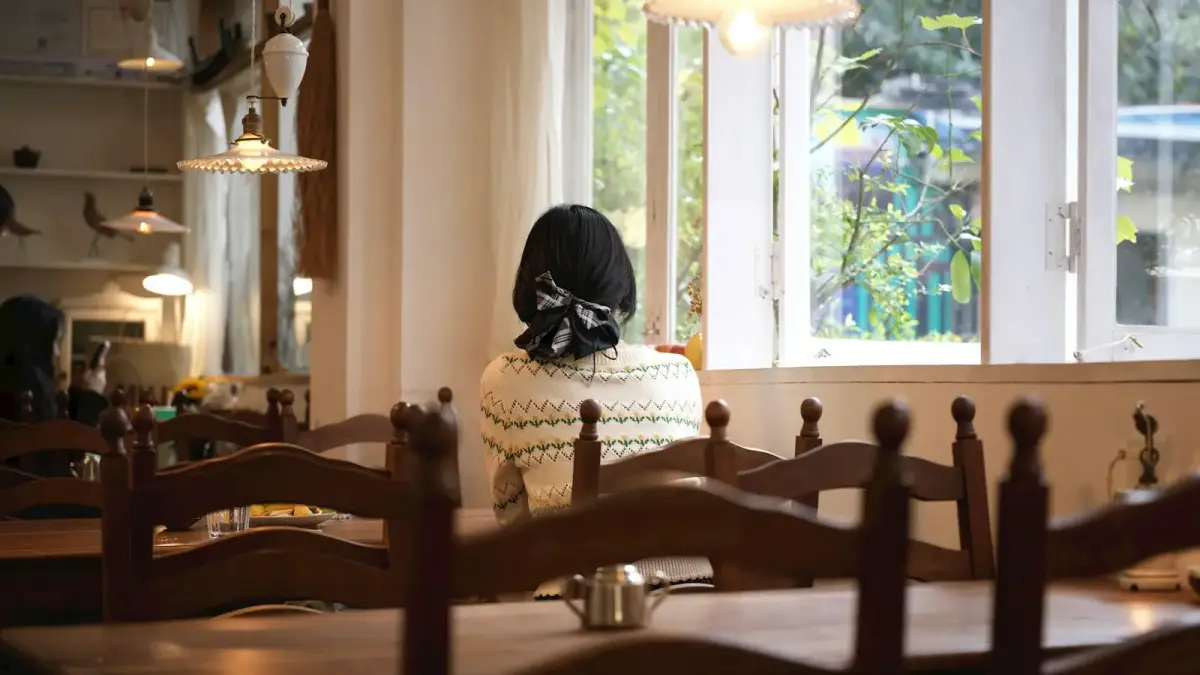
I was forty-three the first time a therapist asked me what I wanted for lunch.
Not in a session. We had run over, and she was ordering food to her office, and she turned to me casually and said, “I’m getting Thai - do you want anything?” And I froze. Not because the question was hard. Because I genuinely did not know the answer.
I could tell you what my husband liked. I could tell you what my kids would eat without complaining. I could tell you what was healthy, what was cheap, what would be fastest. But what I wanted? The question didn’t compute. It was like being asked to describe a color I’d never seen.
That moment cracked something open. Because I realized I’d been saying “you decide” for thirty years - not because I was easygoing, not because I didn’t care, but because somewhere along the way I had lost the ability to hear my own voice when it tried to tell me what it wanted.
If that resonates with you - if you’re the person who always defers, always says “whatever you want,” always waits to see what everyone else is having before you order - what follows might feel uncomfortably familiar.
1. You genuinely do not know what you want for dinner - and it’s not a small thing
People laugh about this. “I’m so indecisive about food!” they say, like it’s a charming quirk. But for you, it’s not indecision. It’s blankness.
When someone asks what you want for dinner, you don’t sort through options and struggle to pick one. You reach inward and find nothing. No signal. No pull toward anything. The machinery that generates preferences - that quiet inner voice that says “actually, I’d love sushi tonight” - went offline a long time ago.
Psychologist Dana Jack, whose research on self-silencing theory has shaped how we understand suppressed identity, found that people who chronically silence their own needs don’t just stop expressing preferences. They stop having them. The internal experience of wanting something gets rerouted so many times that the signal eventually stops being sent.
You’re not bad at choosing restaurants. You lost access to the part of yourself that knows what it’s hungry for.
2. You wait to hear what the other person wants and then choose something similar
This one is so automatic you might not even notice you do it. Someone says “I’m thinking pasta,” and suddenly you’re thinking pasta too. Not because you wanted it. Because now you have a safe answer.
You’ve learned to construct preferences by borrowing them. It feels like agreement, like compatibility, like being easygoing. But it’s actually a scanning behavior - you’re reading the room before you commit to anything, making sure your answer won’t be the wrong one.
A 2003 study published in the Journal of Personality and Social Psychology found that individuals who grew up in environments where their preferences were routinely corrected or dismissed developed what researchers called “preference mirroring” - the habit of aligning their stated desires with whoever held the most social power in the room.
You’re not agreeable. You’re safe.
3. Being put on the spot to choose triggers something that feels like panic
“Just pick one.” Three words that make your chest tighten.
When someone hands you a menu and says “you choose for the table,” or when a friend says “I don’t care, just pick a movie,” something happens in your body that is wildly disproportionate to the situation. Your heart rate ticks up. Your mind scrambles. You feel a flash of something that, if you’re honest, feels a lot like fear.
That’s because for you, choosing was never neutral. Choosing had consequences. Maybe you picked the wrong restaurant and your mother sighed the whole meal. Maybe you asked for the toy you actually wanted and were told you were selfish. Maybe you said you wanted to watch something and your father changed the channel without a word.
The nervous system doesn’t forget those lessons. A 2019 study in Frontiers in Psychology found that adults who experienced chronic invalidation in childhood showed elevated cortisol responses during low-stakes decision-making tasks. Their bodies were treating “pick a restaurant” the same way other people’s bodies treat public speaking.
Your panic at the dinner table is not dramatic. It’s old.
4. You have strong opinions about nearly everything - but you cannot make yourself say them out loud
This is the paradox that confuses everyone, including you. You’re not an empty person. You’re not without taste or perspective. You know exactly which movie is better. You have a favorite restaurant. You have opinions about music and politics and the right way to load a dishwasher.
But voicing them? That’s a different skill entirely. That requires something you were never given permission to practice - the belief that your preference is allowed to take up space.
So you sit in restaurants knowing you want the salmon, and you order the chicken because that’s what seems easiest. You watch movies you didn’t pick and enjoy them fine but wonder, sometimes, what it would feel like to just say “I want to see this one” without bracing for impact.
The opinions are there. They’ve always been there. You just learned very early that the safest place for them was inside.
5. When someone else makes the decision, what you feel is not disappointment but relief
This is the tell. This is the one therapists notice first.
Most people, when a choice is taken away from them, feel at least a flicker of annoyance. A small assertion of “but I wanted something else.” For you, that flicker doesn’t come. What comes instead is a settling. A loosening in your shoulders. A quiet, almost physical relief that you didn’t have to do the dangerous thing.
Dana Jack’s work found that self-silencing individuals often describe the removal of choice as a form of safety. Not because they’re passive. Because choice, for them, is where punishment used to live. If you don’t choose, you can’t choose wrong. If you don’t want, you can’t want the wrong thing.
That relief is real. But it comes at a cost you might not be counting - the slow, decades-long erosion of knowing who you are when no one else is in the room to tell you.
6. In relationships, you are called “easygoing” and “low-maintenance” - and something about those words has always felt like disappearing
Your partners have always loved this about you. You’re so flexible. So easy to be with. You never make a fuss. You’re happy with whatever.
And you’ve worn that label like armor, because what’s the alternative? Being difficult? Being demanding? Being the person who makes things complicated? You watched what happened to people who wanted things. You learned that the easiest way to be loved was to need nothing.
But here is what “easygoing” actually costs: your partner doesn’t know your favorite flower. They don’t know what city you’d move to if you could. They might not know your favorite meal, because you’ve never let yourself have one in front of them.
A 2021 study published in the Journal of Research in Personality found that individuals with high self-silencing scores reported feeling simultaneously closer to and less known by their romantic partners. They had achieved intimacy by removing themselves from it - being so accommodating that they became invisible inside their own relationships.
Your partner thinks they know you. They know the version of you that was shaped entirely around what they needed.
7. The moment you realize “you decide” was never generosity - it was the last echo of a child who solved the problem of wanting by learning to want nothing
This is the one that hurts.
Because you’ve told yourself a story about this. You’ve told yourself you’re flexible, adaptable, easy to please. You’ve told yourself that not having strong preferences makes you a good partner, a good friend, a good coworker. You’ve built an identity around being the person who doesn’t make things difficult.
And then one day - maybe in therapy, maybe in a quiet moment at a restaurant, maybe reading something exactly like this - you see it for what it is. Not flexibility. Not generosity. Survival.
You were a child who wanted something - a toy, a meal, a movie, attention, a different life - and learned that wanting was dangerous. That preferences could be wrong. That the safest answer to “what do you want?” was always “whatever you want.”
So you stopped wanting. Not all at once. Slowly, like a language you stopped speaking until you forgot the words entirely.
The “you decide” at the dinner table is not a small thing. It’s the last surviving echo of a girl who figured out at seven or eight years old that the fastest route to peace was the absence of desire. And she carried that solution into every restaurant, every relationship, every moment someone turned to her and asked what she wanted, for the rest of her life.
Here is what I want you to know, if any of this found you tonight.
Your preferences are not dangerous. They never were. What was dangerous was the environment that made them feel that way - and you are no longer in that environment, even if your body hasn’t fully caught the update.
You are allowed to want the salmon. You are allowed to pick the movie. You are allowed to say “actually, I’d rather go to the Italian place” and have that be the whole sentence, without apology, without justification, without checking everyone’s face to make sure you haven’t just ruined the evening.
The wanting was never the problem. You were never the problem.
You were a child who did something incredibly intelligent - you read your environment, identified the threat, and adapted. That adaptation kept you safe. It also kept you hidden, from everyone, including yourself.
Naming it is the first step back. Not to being “more decisive.” That was never the issue. The step back is to the part of you that still knows what she wants, that has been waiting very patiently for someone to ask and actually want the answer.
She’s still in there. She always was.