7 things people who cannot eat the last piece of food on a shared plate reveal about their childhood, according to psychology - and the one therapists find most telling is that the person who insists 'no, you take it' at forty-six is not being generous but is still the child who learned that taking the last of anything was the fastest way to be called selfish in a house where there was never quite enough and wanting was something you did quietly or not at all
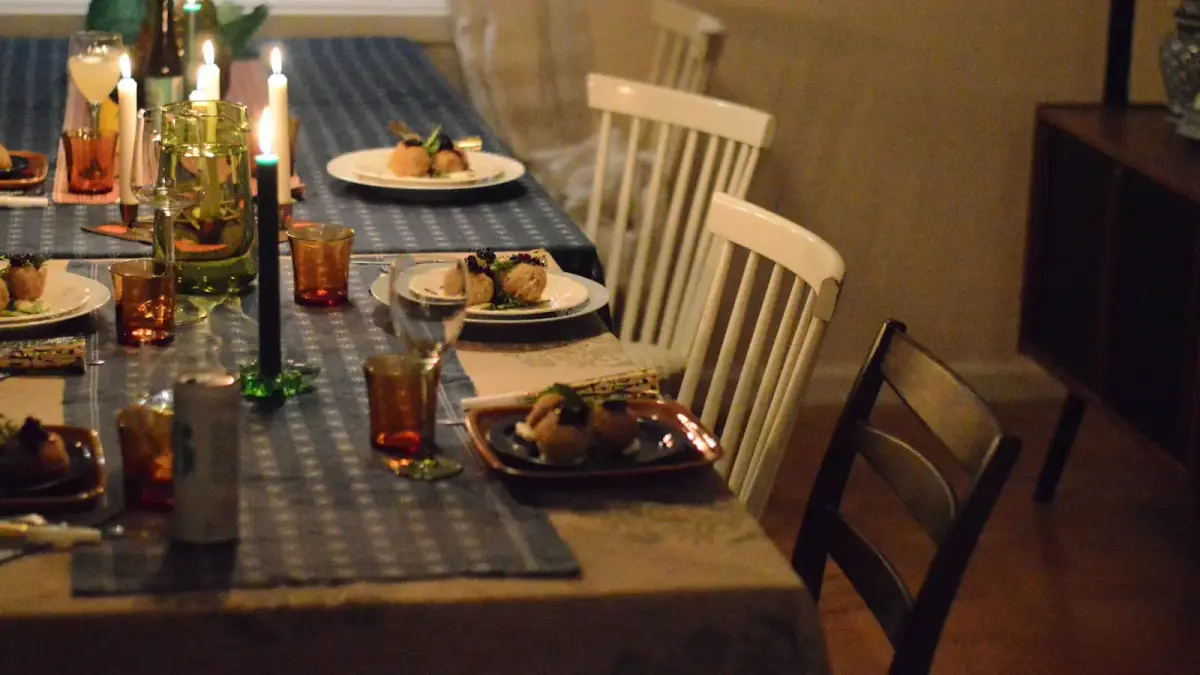
I was at a dinner party last year when the host brought out a plate of bruschetta and set it between six of us. Within minutes, six pieces had become five, then three, then two. And then there was one. It sat there for the rest of the evening. Nobody touched it. At one point, someone picked up the plate, offered it around the table, and every single person said some version of “no, you have it.” So it went back down. And it sat there, drying out under the kitchen light, until the host cleared the dishes.
I watched that lone piece of bruschetta like it was a social experiment. Because I knew exactly why nobody touched it.
I knew because I am one of those people. I have never eaten the last piece of anything on a shared plate in my entire adult life. And for a long time, I thought that made me polite. Generous, even. It took years of therapy and a lot of uncomfortable honesty to understand what it actually made me - a person who learned, very young, that wanting the last of something was a character flaw.
If you are someone who physically cannot bring yourself to take that last slice, that last cookie, that last piece of bread - this is not a quirk. It is a map. And it leads directly back to childhood.
1. You always insist someone else take the last piece - because taking the last of something once invited punishment
You do it reflexively now. Someone reaches for the plate, hesitates, and you jump in with “go ahead, I’m fine” before you have even checked whether you are, in fact, fine. You could be starving. You could have been thinking about that last dumpling for ten minutes. It does not matter. The words leave your mouth before your hunger gets a vote.
This pattern almost always traces to a specific childhood dynamic - one where taking the last of something triggered a visible reaction from a parent. Maybe it was a sharp comment. Maybe it was a look. Maybe it was the word “selfish” delivered casually enough that it sounded like an observation rather than an accusation, which somehow made it worse.
A 2019 study published in the Journal of Personality and Social Psychology found that children who experienced consistent negative feedback around resource consumption developed what researchers called “anticipatory self-denial” - the habit of refusing things before anyone could judge them for wanting those things. The refusal became automatic. It became personality.
You are not being generous when you wave away the last piece. You are performing a safety behavior you learned before you were old enough to recognize it as one.
2. You take less than your share at every meal - because you learned to make your appetite invisible
You are the person who takes one scoop when everyone else takes two. Who puts food back on the serving dish because your portion “looks like too much.” Who eats half a sandwich and wraps the rest “for later” even though later never comes because someone else will eat it first and that is, somehow, a relief.
This is not modesty. This is appetite suppression as a survival strategy.
In homes where resources felt scarce - whether food was literally limited or whether the emotional climate made abundance feel threatening - children learn to shrink their consumption to match what feels safe. You did not learn to eat less because you wanted less. You learned to want less because wanting more was dangerous.
The child who minimized her plate was the child who avoided conflict. She made herself smaller at the table so she would not be noticed, so no one would look at her portion and measure it against theirs, so no one could say she was taking more than she deserved.
And now you are an adult who genuinely believes she has a small appetite. You do not. You have a carefully trained one.
3. You serve everyone else first and eat whatever remains - because you learned that your needs came last
You are already up and moving before anyone asks. Plates filled, drinks topped off, seconds offered. By the time you sit down - if you sit down at all - you eat from whatever is left. The burnt piece. The small piece. The one nobody wanted.
This is not hospitality. This is hierarchy internalized so deeply that it feels like love.
Psychologist Dana Jack’s research on self-silencing theory describes this pattern with painful clarity. Jack found that people - women especially - who grew up in environments where their needs were consistently deprioritized develop a relational style built on suppression. They silence their own desires not because those desires don’t exist but because expressing them feels fundamentally unsafe. The giving becomes compulsive. It becomes the only way to earn a seat at the table.
You serve others first because somewhere in your childhood, you learned that the fastest way to belong was to be useful. And the fastest way to be useful was to make sure everyone else was taken care of before you even considered yourself.
You call it nurturing. A therapist might call it a child’s negotiation with a household that never quite had enough room for her.
4. You say “I’m not that hungry” when you actually are - because you learned to deny your wants before anyone else could
This one is quiet and devastating. You are hungry. You know you are hungry. But when the food arrives, or when someone offers you something, the words that come out are “I’m fine” or “I already ate” or “I’m not really hungry right now.”
You pre-empt your own needs. You reject yourself before anyone else gets the chance.
This is a strategy that children develop in environments where expressing desire - for food, for attention, for comfort - was met with dismissal or irritation. The child learns that the rejection hurts less if she does it to herself first. If she never asks, she never hears no. If she never reaches for the last piece, nobody can slap her hand away.
A 2021 study in Frontiers in Psychology found that adults who experienced consistent emotional invalidation in childhood showed significantly higher rates of what the researchers termed “preemptive self-denial” in social eating contexts. They were not less hungry than their peers. They were more practiced at ignoring it.
You have been calling this discipline. It is not discipline. It is a wound dressed up in self-control.
5. You eat faster or slower than everyone to avoid being the last one eating - because visibility at the table was dangerous
You have a complicated relationship with the pace of eating, and it shows up in one of two ways. Either you eat faster than everyone so your plate is clean before anyone can observe you still eating. Or you eat so slowly, so carefully, that you fade into the background of the meal entirely.
Both strategies serve the same function. They keep you from being watched.
In certain childhood homes, eating was a performance under surveillance. How much you took, how fast you ate, whether you went back for more - all of it was observed, and all of it could be commented on. The child who learned this learned to manage her timing. Speed up to disappear. Slow down to become invisible. Either way, the goal was the same - do not be the person still eating when everyone else is done, because that person is the one who gets noticed, and getting noticed was never safe.
You probably do not even realize you do this. It lives in your body now, not your thoughts. Your fork moves at a pace set decades ago by a dining room where being seen with food was a form of exposure.
6. You always bring food to gatherings but never eat what you brought - because giving was the price of belonging
You are the person who shows up with a homemade pie, a tray of cookies, a dish that took you three hours to prepare. And then you do not touch it. Someone says “this is incredible, did you try some?” and you wave them off. “I had some while I was making it,” you say, which may or may not be true but is beside the point.
The point is that you bring food as an offering. An entrance fee. A justification for your presence.
Research on scarcity mindset - particularly work examining how childhood resource limitation shapes adult social behavior - consistently finds that people who grew up in environments of material or emotional scarcity develop transactional models of belonging. You give in order to earn your place. The giving is not optional. It is the mechanism through which you prove you deserve to be included.
You do not eat what you brought because eating it would undermine the transaction. The food is not for you. The food is proof that you are worth keeping around. Taking it back would be like retracting your application.
Brene Brown has written extensively about how belonging and worthiness get tangled in childhood. When your early environment taught you that love was conditional - that you had to earn your spot through usefulness, through sacrifice, through giving more than you ever took - food becomes one more currency in a lifetime of proving you deserve to be in the room.
7. Your generosity around food is a deeply rehearsed performance of selflessness that you invented because wanting something for yourself was never safe
This is the one therapists notice first, and it is the one that breaks my heart every time I write about it.
You are generous. Genuinely, beautifully generous. You give freely, you share without hesitation, you insist others take the best portion, the biggest piece, the last bite. And everyone around you sees a kind person. A selfless person. A person who just does not care that much about food.
But a therapist sees something different. A therapist sees a performance so well-rehearsed, so deeply embodied, that even you have forgotten it is a performance. It started in childhood, in a home where wanting something for yourself - openly, unapologetically - was met with consequences. Maybe not dramatic consequences. Maybe just a shift in the room. A tightening. A parent’s expression changing just enough to teach you that your desire had cost something.
So you learned to want nothing. Or rather, you learned to perform wanting nothing. You learned to wrap your deprivation in the language of generosity so thoroughly that you forgot the deprivation was there at all.
Dana Jack’s self-silencing research found that the most deeply silenced individuals are often perceived by others as the most giving. The suppression is so complete that it reads as virtue. The child who learned to erase her own hunger became the adult everyone admires for her selflessness.
But selflessness that was never a choice is not a virtue. It is a survival strategy.
If you recognized yourself in any of this, I want you to sit with something for a moment. The next time you are at a table and there is one piece left and you feel that familiar pull to offer it to someone else - pause. Just pause. Notice what happens in your body. Notice the discomfort. Notice how unsafe it feels to simply reach for it.
That discomfort is not about the food. It never was.
It is about a child who learned that the safest version of herself was the one who wanted the least. And it is about the adult you are now - the one who still believes, somewhere underneath all the years and all the insight, that taking the last piece would reveal something unforgivable about who she really is.
It would not. It would reveal that you are a person with an appetite. And that was never something you should have had to hide.