8 things people who always find the person standing alone at a gathering - who cross an entire room to stand beside someone nobody has spoken to, who introduce themselves to the quiet one at the edge of every party, who notice the specific posture of someone pretending they chose to be by themselves - do according to psychology, because a child who spent enough birthday parties watching the room arrange itself into groups that never included her built a detection system for the loneliness she was never rescued from and an emergency response that sends her across every room to run the rescue nobody ran for her
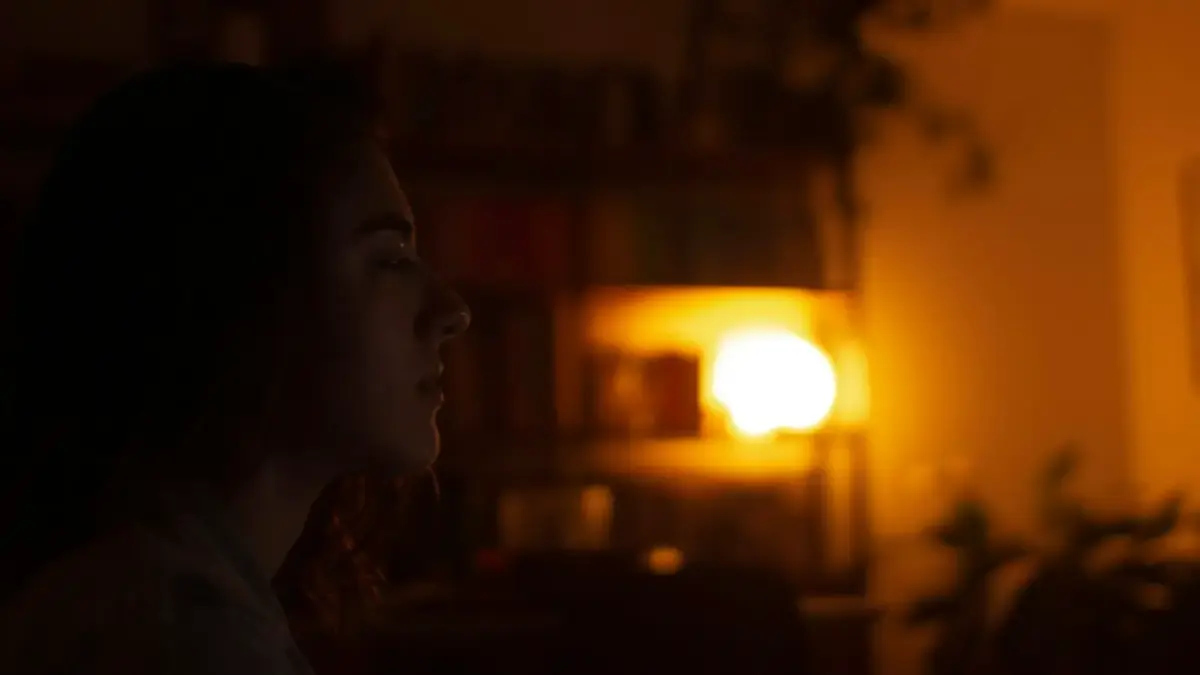
I was nine years old at a classmate’s birthday party when I first realized that standing alone has a specific posture. Not sadness, exactly. More like a performance. You hold your drink a certain way. You study the decorations like they’re genuinely interesting. You adjust your shirt. You check your phone even though nobody has texted you. You build a whole little theater of being fine, and you hope - desperately, silently - that someone in the room will see through it.
Nobody saw through mine. Not at that party, and not at many parties after it.
But something happened because of all that standing alone. I started to see other people doing it. I could spot the performance from across any room - the way someone’s eyes moved a beat too fast, the way they laughed at nothing, the way they positioned themselves near a group without actually being in it. And my body would move before my brain caught up. I’d cross the room. I’d stand beside them. I’d say something small and stupid and warm.
I didn’t decide to become this person. I was built into her, one unrescued birthday party at a time.
If you recognize yourself in this - if you are always, always the one who finds the person standing alone - here’s what psychology says about what you’re actually doing, and where it actually comes from.
1. You scan the room before you engage with anyone yourself
You walk into a gathering and something happens before you take off your jacket. Your eyes sweep the room. Not for the people you know. Not for the food or the bar or the host. You are scanning for the person who is alone.
This isn’t a conscious choice. It’s a detection system running in the background, and it activates the moment you enter any social space.
A 2019 study published in Psychological Science found that individuals with histories of social exclusion develop heightened perceptual sensitivity to social cues - particularly cues related to isolation and rejection. The researchers called it “rejection sensitivity,” but that term undersells what’s actually happening. You aren’t sensitive to rejection. You are an expert at detecting it. Your childhood gave you thousands of hours of training data.
You will find the alone person faster than anyone else in the room, every single time. And you will find them before you find your friends.
2. You can read the difference between “chose to be alone” and “was left alone”
This is the part that other people don’t understand. They’ll say, “Maybe she wants to be by herself.” And sometimes that’s true. But you know the difference, and you know it in your bones.
Chosen solitude has a stillness to it. The person’s body is settled. Their breathing is even. They aren’t performing anything.
Abandoned aloneness looks different. There’s a restlessness. A cycle of looking up and looking down. The person is monitoring the room, waiting for an opening that isn’t coming, pretending they already found what they’re looking for. Their body is tense in a way they think is invisible.
You read all of this in about three seconds, because you have spent years being the person whose tension nobody read.
3. You have a collection of low-pressure opening lines that you’ve refined over years
You don’t walk up to the alone person and say, “Are you okay?” You know that question lands like a spotlight. It announces to the whole room that this person was visibly struggling, and that’s the last thing they need.
Instead, you’ve built a repertoire. “Have you tried the food yet?” “Do you know the host, or are you a plus-one situation like me?” “I love that jacket - where did you find it?” These aren’t small talk. They are carefully engineered pressure valves. They give the person something easy to respond to. They create a bridge without forcing the person to walk across it.
Brene Brown has written extensively about how genuine connection begins with reducing vulnerability to a tolerable level. That’s exactly what your opening lines do. You aren’t asking the person to be vulnerable. You’re standing beside them and making vulnerability unnecessary for the first thirty seconds. That’s often all it takes.
4. You stand beside them, not in front of them
Here’s something you probably do without realizing it. When you approach the person standing alone, you don’t face them directly. You stand next to them. Shoulder to shoulder. Looking out at the same room they’re looking at.
This is not an accident. This is a deeply sophisticated piece of social engineering that your nervous system learned to do on its own.
A 2017 study published in the Journal of Personality and Social Psychology found that side-by-side positioning reduces cortisol responses in social interactions, particularly for individuals who score high in social anxiety. Face-to-face positioning creates a confrontational geometry. Side-by-side positioning creates an alliance. You are not interrogating this person. You are joining them. You are saying, without words, “I’m looking at the same thing you’re looking at. We’re in this room together now.”
You figured this out long before any researcher published it, because you remember exactly how it felt when someone stood in front of you and asked what was wrong.
5. You feel physical discomfort when you see someone excluded and cannot reach them
This is the one that people who don’t carry this pattern will never fully understand. It isn’t empathy in the abstract. It’s a physical response. Your chest tightens. Your stomach drops. You feel a pull in your body - an actual, measurable pull - toward the person standing alone.
And when something prevents you from going to them - when you’re trapped in a conversation, or the room is too crowded, or social dynamics make it awkward - you don’t just feel bad. You feel wrong. Like you’re failing at something essential.
Neuroscientist Naomi Eisenberger’s research at UCLA has demonstrated that witnessing social exclusion activates the same neural pathways as experiencing physical pain. Your brain doesn’t distinguish between watching someone get left out and getting left out yourself. For you, those are the same event. They have always been the same event.
6. You never forgot the person who once did this for you - or you mourn that nobody ever did
There are two versions of this story, and both end in the same place.
Some of you remember the exact person. You were twelve, or fifteen, or twenty-three, and you were standing at the edge of a room pretending the wall art was fascinating, and someone crossed the room and stood beside you and said something ordinary and kind. You remember their face. You remember what they were wearing. You remember the specific relief that flooded your body when you realized you were no longer invisible.
And some of you don’t have that memory. Nobody ever came. You stood at the edge of enough rooms and nobody crossed toward you, and at some point your child brain made a decision that you’ve been living out ever since: If nobody is going to run this rescue, I will. I’ll run it for everyone. I’ll run it for every person who looks the way I looked. I’ll run it forever.
Both versions of the story built the same adult. The one who always goes.
7. You cannot enjoy a gathering until you have checked on the person at the edge
People think you’re being selfless. People think you’re “so sweet” for going to talk to that person standing alone. What they don’t understand is that you literally cannot relax until you do it.
The detection system doesn’t have an off switch. Once you’ve spotted the person at the edge, a timer starts in your nervous system. You can try to ignore it. You can tell yourself it’s not your responsibility. But your body is keeping score, and every minute you don’t move toward that person, the discomfort grows.
This is what psychologists call a “compulsive repair behavior” - an action that an individual performs not because it brings pleasure but because not performing it causes distress. You aren’t going to the alone person because it makes you feel good. You’re going because not going makes you feel like you’re abandoning someone, and you already know exactly what abandonment looks like from the inside.
Once you’ve reached them, once you’ve made contact and confirmed they’re okay - then you can breathe. Then you can enjoy the party. Not before.
8. You carry the specific exhaustion of monitoring every room for someone who needs including
There is a cost to this, and you probably don’t talk about it.
Every room you enter, the system activates. Every gathering, every meeting, every casual dinner with friends, every airport gate, every waiting room. Your eyes sweep. Your radar pings. You are always, always looking for the person who is alone and pretending they’re fine.
This is beautiful and it is also genuinely tiring. Because the system never shuts down. It runs at weddings and funerals and work events and grocery stores. You are permanently on patrol for a kind of suffering that most people can’t even see, and you are permanently available to respond to it.
A 2021 study in Frontiers in Psychology found that individuals with high empathic accuracy - the ability to correctly identify what others are feeling - report significantly higher rates of emotional exhaustion. Not because empathy is a flaw. Because running a detection system at full power for decades requires energy that nobody accounts for. Nobody checks on the person who checks on everyone.
And that’s the quiet irony of this whole pattern. You became the rescuer because nobody rescued you. And now you rescue everyone, and nobody thinks to rescue the rescuer. You look like the most socially competent person in the room. You look like you don’t need anyone. You look fine.
You know better than anyone what “looking fine” actually means.
If this is you - if your body has been crossing rooms your entire adult life, if your radar has been running since childhood, if you are tired in a way that nobody sees because you’re too busy making sure nobody else feels invisible - I want you to know something.
What you do is not small. What you do changes the night for someone. You are the person that some people remember for decades - the stranger who walked over, the warm voice that broke the silence, the presence that said you are not invisible here.
You built that from nothing. You built it from birthday parties where nobody came for you. You built it from all the rooms that didn’t include you. You turned the worst thing you knew into the best thing you do.
And one of these days, someone is going to cross a room for you.