8 things people who always say 'I will just have water' at restaurants even when everyone else is ordering cocktails and the waiter is standing there waiting and the table has already agreed to split the bill evenly do without realizing it, according to psychology
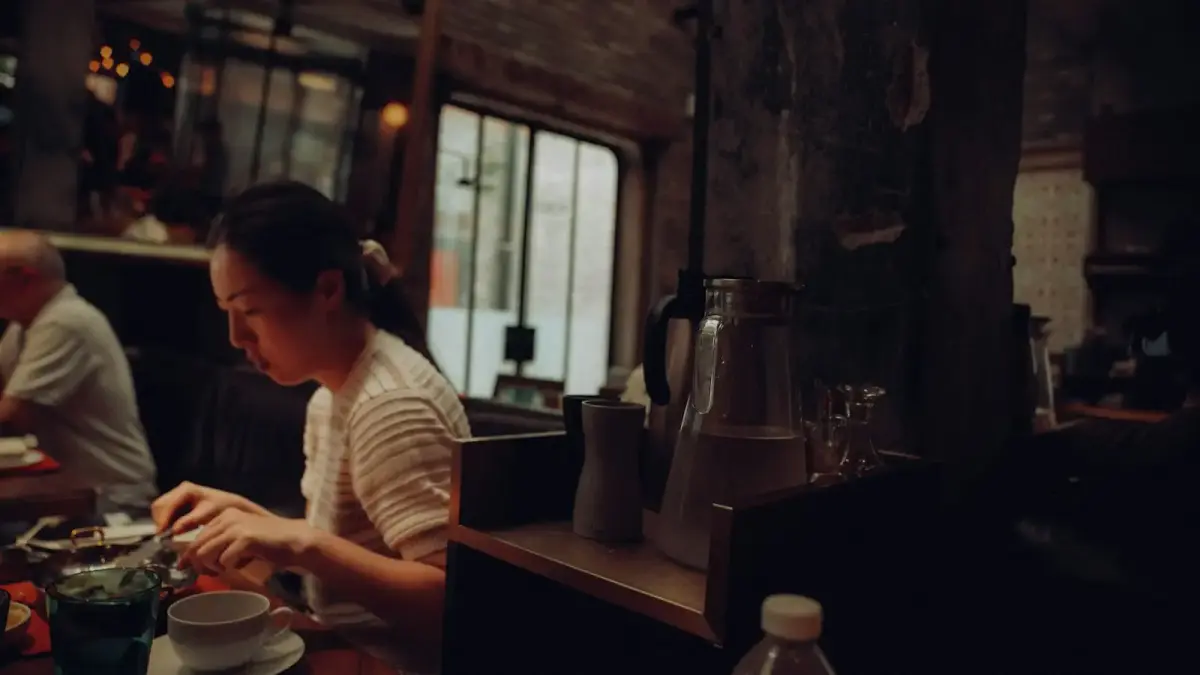
I watched my mother do it every single time.
The waiter would come around, and the rest of the table would order wine or a cocktail or even just a soda, and my mother would smile and say, “Just water for me, thanks.” She’d say it quickly, like she wanted to get it out before anyone could argue. Like she was apologizing for being there at all.
I didn’t understand it then. I thought she just didn’t like drinks. But years later, sitting in a restaurant with friends, I heard myself say the exact same thing in the exact same tone - fast, light, already moving past it - and something clicked. I wasn’t choosing water. I was performing something I’d been rehearsing since I was seven years old.
If you’re the person at the table who always orders water, you probably have a perfectly reasonable explanation. You’re being healthy. You’re driving. You don’t really feel like a drink tonight. And maybe that’s true sometimes. But if it’s true every time - if something in your chest tightens at the thought of adding a fourteen-dollar cocktail to a bill that someone else might have to look at - this might be about something much older than tonight’s dinner.
Here are 8 things you might be doing without realizing it, according to psychology.
1. You are performing the safest version of yourself
When you order water, you are not making a beverage choice. You are making a relational calculation. You are asking yourself: what is the version of me that costs the least to be around?
This is something developmental psychologists call “self-minimization” - the habit of shrinking your presence, your needs, and your preferences to maintain relational safety. A 2019 study in the Journal of Personality and Social Psychology found that people who grew up in financially stressed households were significantly more likely to suppress their own desires in social settings, even when the financial pressure was no longer present.
The water isn’t about the water. It’s about making sure you don’t take up more than your share of space.
2. You are running your mother’s math in your head
Here’s what no one talks about: the person who orders water at dinner probably watched someone do arithmetic at the table when they were a child. Not with a calculator. With their eyes. That quiet scan of the menu, the slight pause before ordering, the way a parent’s face changed when the bill came.
You absorbed that math. You internalized it so deeply that it now runs automatically, like software you didn’t install but can’t uninstall either. You might earn six figures now. You might have zero debt and a retirement account. It doesn’t matter. The math still runs.
John Bowlby’s attachment research showed that children don’t just learn what their parents say - they learn what their parents feel but never say. If your parent felt stressed about money but never named it, you learned to read the stress and respond to it by becoming smaller. By needing less. By ordering water.
And the hardest part is this: you can’t point to a single moment where someone told you to do it. No one sat you down and said, “Don’t order drinks.” You just watched. And watching was enough.
3. You have confused self-denial with consideration
There’s a story you tell yourself, and it’s a kind one. You tell yourself you’re being thoughtful. You’re being low-maintenance. You’re being the easy guest, the uncomplicated friend, the person who never makes things harder.
But here’s what’s underneath that story: a belief that your desires are an imposition. That wanting something - really wanting it, openly, without apology - would be a burden on the people around you.
Susan Cain, in her research on introverted temperaments and social behavior, has written about how quieter people often mistake self-erasure for politeness. You’re not being polite when you order water to avoid adding to the bill. You’re being afraid. And the fear is so old, so familiar, that it feels like good manners.
4. You never upgrade the plane ticket either
This is the part where you might recognize a pattern.
You don’t just order water at restaurants. You also book the cheapest hotel, even when you can afford something nicer. You wear clothes until they fall apart. You feel a flash of guilt when someone buys you an expensive gift. You keep your thermostat two degrees cooler than you’d actually like.
A 2021 study published in Frontiers in Psychology examined what researchers called “consumption guilt” - the discomfort some people feel when spending money on themselves, even when they have the resources. The study found that this guilt was most pronounced in adults who grew up watching a parent sacrifice their own comfort for the family’s financial stability.
You learned that comfort was something other people earned. Yours was optional.
5. You calculate what you “owe” before you even sit down
The bill hasn’t arrived. No one has mentioned money. But you’ve already done the math.
You know what the cheapest entree costs. You know that if you skip the appetizer and order water, your portion of the split bill will subsidize someone else’s steak, and you’ve already decided that’s fine. You’ve decided it’s fine because the alternative - speaking up, asking to pay separately, ordering what you actually want - feels like it would reveal something about you that you’d rather keep hidden.
What it would reveal is that you have needs. And somewhere along the way, you learned that having needs was the most dangerous thing you could be.
You don’t split the bill unevenly because you can’t afford it. You split it unevenly - silently subsidizing other people’s orders with your own restraint - because the alternative feels like a confrontation. And you have spent your entire life making sure you are never, ever the reason for a confrontation.
6. You treat your own pleasure like a negotiation you haven’t earned
Watch what happens when someone says, “Get whatever you want, it’s on me.” You still hesitate. You still scan the menu for the second-cheapest option. You still feel a small contraction in your body at the thought of ordering freely.
This isn’t frugality. Frugal people enjoy the money they save. They feel satisfaction. You don’t feel satisfaction when you order water. You feel relief. And there’s a world of difference.
Relief means you avoided something. You dodged a threat. The “threat” was being seen as someone who wants things. Who takes up space. Who lets herself have the nicer version without performing three minutes of justification first.
Brene Brown’s research on worthiness and vulnerability points to exactly this pattern. People who struggle with self-worth don’t just deny themselves luxuries. They deny themselves the experience of being provided for - because accepting generosity means accepting that you are worth the generosity, and that belief hasn’t landed yet.
7. You are the person everyone describes as “so easy” and you’ve mistaken that for a compliment
People love having you around. You never complain. You go along with the plan. You eat wherever everyone else wants to eat, sit wherever the open seat is, and when someone asks what you want, you say “I’m good with anything.”
And you think this makes you easy to love. But what it actually makes you is easy to overlook.
A 2020 study in the Journal of Research in Personality found that individuals who habitually suppressed their preferences in group settings reported higher levels of loneliness and lower relationship satisfaction over time - not because they were ignored, but because they had made themselves unreadable. When you never say what you want, the people who love you can’t reach you. They just get the performance.
The girl who orders water is the same girl who says “I don’t mind” when she does mind, “it’s fine” when it isn’t, and “don’t worry about me” when she desperately wants someone to worry about her anyway.
8. You have made “needing nothing” your entire identity - and it’s exhausting
Here’s the thing no one tells you about being the low-maintenance person: it is the most high-maintenance way to live.
It takes enormous energy to constantly monitor your own desires and file them down before anyone else can see them. To run the math on every meal, every purchase, every small luxury. To make sure you never accidentally reveal that you wanted the pasta instead of the salad, the window seat instead of the middle, the cocktail instead of the water.
You’re not low-maintenance. You’re performing a version of yourself that requires constant vigilance. And the exhaustion you feel at the end of a dinner out - that heaviness, that quiet depletion - isn’t because socializing drains you. It’s because pretending to want nothing is one of the hardest things a person can do.
Daniel Goleman’s work on emotional labor applies here more than most people realize. The energy it takes to constantly edit your preferences in real time - to want the cocktail, notice the wanting, suppress the wanting, replace it with water, and then smile like nothing happened - that is genuine psychological work. You’ve been doing it so long it feels effortless. It isn’t.
If you read this and felt something tighten in your chest, I want you to hear this clearly.
You were not born this way. You were shaped this way. By a parent’s anxious arithmetic. By the silence around money. By the unspoken rule that the safest child was the one who never asked for anything.
And that child did something remarkable - she figured out how to be loved by making herself easy to afford. That was smart. That was adaptive. That was survival.
But you are not surviving anymore. You are sitting at a table in a restaurant with people who chose to be here with you. People who would not blink if you ordered the cocktail. People who would probably be happy to see you want something openly for once.
The only person at the table still running your mother’s math is you.
The wanting was never the problem. It was never expensive to love you. And the next time the waiter comes around and you feel that familiar pull to say “just water” - you are allowed to pause. To look at the menu. To order the thing you actually want.
Not because it costs seven dollars. But because you are allowed to want things. You always were.