8 things people who can always tell when someone in the room has been crying - even after they have washed their face and straightened their posture and walked back in with a voice carefully pitched three notes too bright - do without thinking, according to psychology, because the child who learned to read the aftermath of tears she was never supposed to have witnessed developed a detection system that never turns off
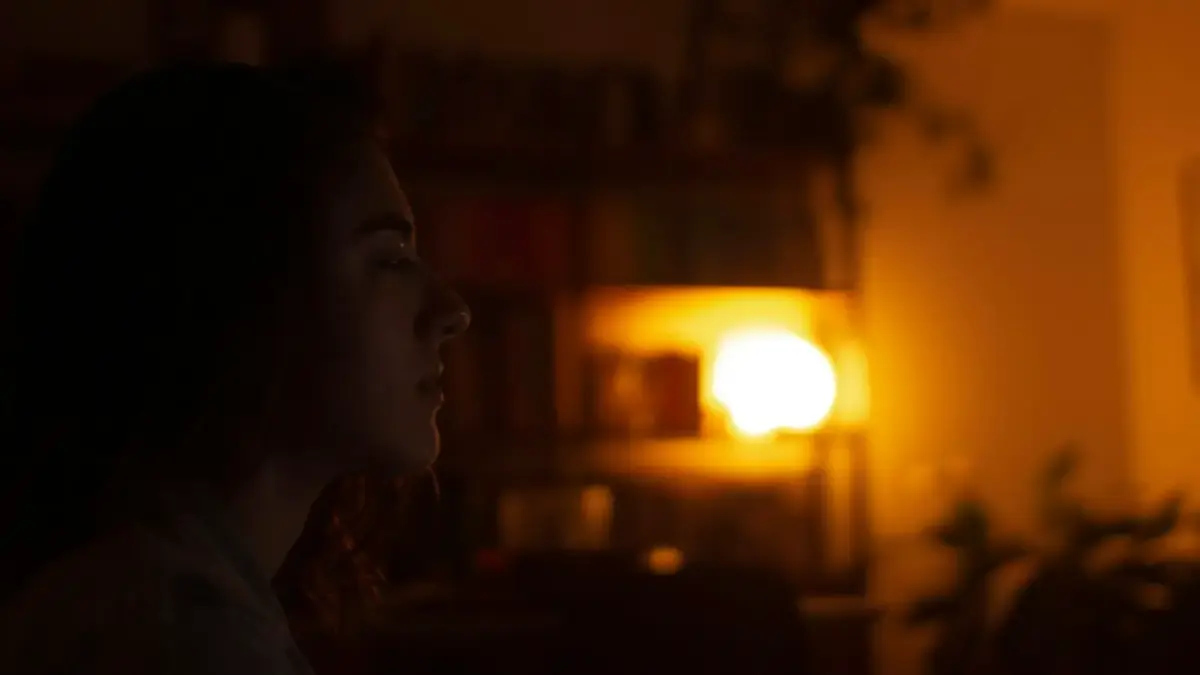
I was fourteen when I realized I could do it.
My mother came back from the bathroom at a restaurant, sat down, picked up her menu, and said something perfectly ordinary about the pasta specials. Her makeup was intact. Her voice was steady. She was smiling. And I knew - with the kind of certainty you feel in your teeth - that she had been crying less than two minutes ago.
I didn’t say anything. I never said anything. That was part of the deal, wasn’t it? You notice everything and you mention nothing, because the person who was crying went to great lengths to make sure nobody could tell, and naming it would be a kind of cruelty.
Years later, I learned that this skill - this involuntary, exhausting, strangely precise skill - has a name in psychology. It has research behind it. And it is far more common than I thought, especially among people who grew up in homes where the emotional weather could shift without warning and the only forecast available was the one you taught yourself to read.
If you are someone who always knows when a person has been crying, even when they have done everything right to hide it, here is what you are actually doing - and why you cannot stop.
1. You register the puffiness that concealer cannot reach
The first thing your eyes go to is the tissue around the orbital bone - the delicate skin just beneath the lower lash line and along the inner corners. Crying triggers fluid retention in that area within minutes, and no amount of cold water fully resolves it. The skin looks slightly thickened, almost swollen in a way that is different from tiredness or allergies.
You learned to distinguish between “didn’t sleep well” puffiness and “cried for eleven minutes in the car” puffiness before you had language for either. You can see it across a dinner table, in fluorescent lighting, through a screen. Most people glance at a face and see a face. You glance at a face and see a timeline.
2. You hear the pitch correction in their voice
When someone has been crying and then stops, their vocal cords retain tension. The voice comes back slightly higher, slightly brighter, with a quality that psychologists who study vocal affect sometimes describe as “controlled cheerfulness.” It sounds almost right, but there is a thinness to it - like a note played on a string pulled just a fraction too tight.
A 2019 study published in the Journal of Nonverbal Behavior found that listeners with high emotional sensitivity could detect post-distress vocal shifts with remarkable accuracy, even when speakers believed they had fully recovered their composure. You do not need to read that study to confirm what your nervous system already cataloged before you turned ten.
You hear the effort behind the brightness. You hear someone performing “fine” the way an understudy performs a role they learned overnight.
3. You notice the water bottle
This one sounds small, but it is almost a signature. Someone who has been crying and then returned to the group will often take a sip of water - not because they are thirsty, but because swallowing resets the throat. It clears the residual tightness that crying leaves behind. It is a physical reset button.
You notice that the sip is too deliberate. Too controlled. The glass is lifted with a steadiness that suggests the hand holding it is being carefully managed. And then there is the swallow itself - slightly harder than it needs to be, followed by a small breath that most people would never register.
You register it the way a musician registers a missed beat. Not because you are trying. Because you cannot not hear it.
4. You read the posture that is trying too hard
Grief and crying leave the body slightly collapsed. The shoulders curve inward, the chest contracts, the chin drops. When someone reassembles their posture after crying, they tend to overcorrect. The shoulders go back a little too far. The spine straightens with a rigidity that is more military than natural.
You see the difference between someone who is naturally upright and someone who is holding themselves upright. One looks comfortable. The other looks like a building with scaffolding - structurally sound, but you can see the support system.
Daniel Goleman has written extensively about how emotional intelligence involves reading not just what people express, but what people are working to contain. You have been reading containment your entire life. It is, in many ways, your first language.
5. You catch the micro-delay before they laugh
Laughter is one of the hardest things to fake after you have been crying, and you know this because you have watched people try. There is a micro-delay - perhaps half a second - between the moment they hear something funny and the moment they produce the laugh. In genuine laughter, that gap barely exists. In post-crying laughter, the brain has to route the impulse through a checkpoint: is it safe to let this out, or will the laugh crack open into something else?
You catch that delay. You feel it like a hiccup in the rhythm of a conversation. And you understand, without anyone explaining it, that the person is not being dishonest. They are being brave. They are trying to return to normal before they are ready, because they believe that is what the room needs from them.
6. You notice how they avoid certain eye contact
After crying, the eyes themselves become vulnerable. Not just puffy or red, but expressive in a way that feels uncontrollable. A 2021 study in Psychological Science found that the eyes of someone who has recently experienced emotional distress dilate differently and blink at irregular intervals for up to thirty minutes afterward, even when the person reports feeling calm.
You notice that the person who was crying will make eye contact with the group but avoid sustained eye contact with the one person most likely to ask if they are okay. They will look at you long enough to seem normal, then look away a beat too early. They are managing their exposure, and you can see the management.
You were perhaps seven or eight when you learned that the eyes are the last thing to recover. You learned it by watching someone you loved try to pretend nothing had happened, and succeeding with everyone in the room except you.
7. You detect the over-engagement
This is the one that breaks your heart the most. The person who was just crying will often become the most animated person in the room. They will ask questions, offer compliments, steer the conversation, laugh a little too loudly. They become helpful and interested and present in a way that is technically flawless and emotionally backward.
Gabor Mate has described this pattern as a form of self-erasure - the instinct to turn outward so aggressively that no one thinks to look inward at what you are carrying. You recognize it because you have done it yourself. You have been the person pouring someone else’s coffee ten minutes after falling apart in the hallway, and you know exactly what that performance costs.
You watch someone else do it and your chest tightens, because you can see every stitch in the mask they are sewing in real time.
8. You feel it before you can name it
This is the one that is hardest to explain, and it is the one that matters most. Before you register the puffiness, the pitch, the posture, the water, the laughter delay, the eye avoidance, the over-engagement - before any of that reaches your conscious awareness - you feel a shift. Something in the room changes. The air gets a little heavier. The person’s energy is slightly different, and your body knows it before your mind catches up.
A 2020 study in Frontiers in Psychology on interoceptive sensitivity found that individuals who grew up in emotionally unpredictable environments often develop heightened somatic awareness - the ability to detect emotional states in others through subtle physiological cues that bypass conscious processing entirely. Your body became a tuning fork for other people’s pain because, at some point, detecting that pain early was the only way to keep yourself safe.
You did not choose to learn this. You learned it the way animals learn to hear the pitch of a predator’s footstep. It was survival. It became identity.
What this costs you
Here is what nobody tells you about being the person who always knows: it is lonely. You carry information that no one gave you permission to have. You sit in rooms full of people who are doing fine, and you know which ones are not, and you cannot say anything because saying it would mean admitting you can see through walls that other people cannot even find.
You get tired in ways that have nothing to do with sleep. You absorb the aftermath of emotions you were never invited into. And sometimes you wish you could just look at a face and see a face, instead of reading the whole story written in the skin beneath someone’s eyes.
But here is what I want you to hear.
The child who learned to read the room with that kind of precision did it because she had to. She built a detection system out of necessity, and it worked, and it kept her safe, and it is still running because no one ever told her she could turn it off.
You are not broken for noticing what other people miss. You are not “too sensitive” or “overthinking it.” You are carrying a skill that was forged in a fire you did not start, and the fact that you still use it - gently, quietly, without ever embarrassing the person you have seen through - tells me something important about who you are.
You are someone who was taught, very young, that love sometimes looks like pretending not to notice. And you have carried that tenderness into every room you have ever walked into since.
That is not a flaw. That is the kind of emotional intelligence that cannot be taught in any classroom, because it was written into your nervous system by a childhood that asked too much of you and gave you, in return, the ability to see people more clearly than they have ever been seen.
You did not break. You became someone who reads the weather inside other people - and most of the time, you use that gift to make sure no one else has to stand in the rain alone.