8 things that quietly happen to people who cannot sit in a quiet room without finding something to fold, wipe, or straighten - not because they are naturally tidy but because a child who grew up watching her mother measure her value by the state of the house learned that an idle body was an undeserving body, and the hands at fifty-three that reach for the dish towel the moment they sit down are not restless but rehearsing the only proof of worth they were ever taught, according to psychology
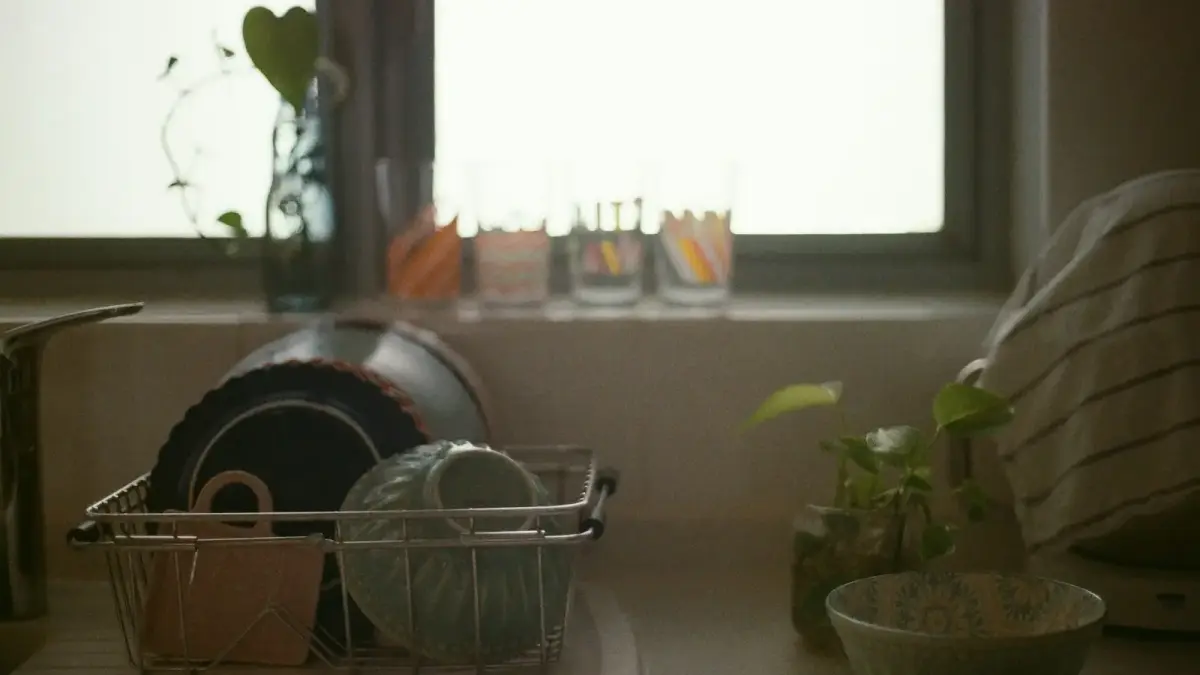
I sat down on the couch at 2:15 on a Sunday afternoon. By 2:16 I was refolding the throw blanket draped over the armrest. By 2:17 I was in the kitchen wiping a counter I had wiped thirty minutes ago. By 2:19 I was standing at the sink rinsing a single mug, and I could not have told you the moment I stood up.
My husband looked at me from the living room. “You just sat down,” he said.
I know. I know I just sat down. I know the counter was clean. I know the blanket was fine. I know none of this needed doing. But my hands didn’t know that. My hands have never known that. They operate on instructions I didn’t write, following a curriculum I absorbed before I had words for what was happening.
My mother was a beautiful woman who cleaned like she was being graded. And in a way she was - by her own mother, by the neighbors, by the quiet tribunal in her head that never once told her she’d done enough. I grew up watching her wipe surfaces that were already gleaming, and what I learned was not how to keep a house. What I learned was that a woman sitting down in the middle of the day was a woman who had given up.
If your body can’t be still in a clean room - if rest feels like a dare you keep failing - here’s what psychology says is actually going on underneath the dish towel.
1. You wipe counters that are already clean because your nervous system reads stillness as danger
You know the counter is clean. You cleaned it after breakfast. You cleaned it after lunch. But something in your chest tightens when you walk past it, and the cloth is in your hand before the thought fully forms.
This isn’t about cleanliness. This is about a nervous system that was calibrated in a home where stillness was never neutral. In your childhood house, a woman sitting down meant something had been missed, or someone was about to point out what had been missed. The vigilance was never about dirt. It was about avoiding the accusation that you weren’t trying hard enough.
A 2020 study published in Psychosomatic Medicine found that individuals raised in environments where parental approval was conditional on visible effort showed elevated cortisol levels during periods of enforced rest. Their bodies literally treated relaxation as a threat. Your hand reaching for the cloth is not a habit. It’s a stress response wearing the disguise of housekeeping.
2. You refold towels in other people’s bathrooms because you cannot stop auditioning
This one is the tell. You’re at a friend’s house. You use the bathroom. And before you leave, you refold the hand towel so the edges line up. Or you straighten the soap dish. Or you adjust the bath mat with your foot so the fringe lies flat.
Nobody asked you to do this. Nobody will ever notice you did it. But you did it anyway, because somewhere inside you there’s a girl who learned that the state of the towels was the state of the woman. That’s not a metaphor. That’s the literal equation your childhood handed you - the quality of your folding was the quality of your character.
Psychologist Harriet Lerner has written about how women who grow up in households where domestic perfection was the primary currency of approval develop what she calls an “ambient performance state” - a low-grade, constant awareness that they are being evaluated by the condition of the nearest surface. You’re not compulsive. You’re auditioning for a role you were cast in before you could read.
3. You cannot watch a movie without folding something because your body does not believe it has permission to just receive
Other people watch a movie. You watch a movie while sorting a basket of laundry, or peeling potatoes for tomorrow, or mending a button, or organizing the junk drawer you pulled onto your lap like a security blanket.
If your hands are empty while a screen is on, something in your stomach goes sour. It feels indulgent. It feels like you’re getting away with something. The enjoyment has to be earned by simultaneous productivity, or it doesn’t count.
A 2018 study in the Journal of Personality and Social Psychology found that people raised with conditional self-worth tied to productivity report significantly less pleasure during leisure activities unless those activities are paired with some form of output. The researchers called it “contaminated rest” - the body is physically sitting, but the mind is filing the experience under “waste” unless something useful is being accomplished at the same time.
You don’t fold laundry during movies because you like folding laundry. You fold laundry during movies because a child inside you still believes that enjoyment without labor is theft.
4. You straighten couch pillows that nobody moved because the room has to look like nobody lives in it
You walk through the living room and your hand shoots out to adjust a pillow. No one sat on it. No one touched it. It shifted maybe half an inch from its assigned position, and you fixed it without breaking stride.
This is the reflex of a child who learned that the house was not a place to live in - it was a display. The living room was for company. The couch was for looking at. A pillow out of place was evidence of carelessness, and carelessness was the first step toward something worse, something your mother never named but you could feel in the air when she walked into a messy room.
What you’re maintaining is not a couch arrangement. You’re maintaining the illusion that everything is under control - that you are under control. Because in the home you grew up in, a tidy room was proof that the woman running it had not fallen apart. And the terror of falling apart got passed to you along with the throw pillow placement.
5. You clean before the cleaning person comes because being seen in your real mess is unbearable
If you’ve ever spent the morning before a housekeeper arrives frantically tidying, wiping, putting things away - you know this isn’t logical. You know you’re paying someone to do exactly what you’re doing. You know it makes no sense.
But the idea of another person walking into your house and seeing evidence that you did not keep it perfect makes your skin crawl. It feels like being caught. Like being exposed as the woman who couldn’t manage it, who let things slide, who - if we’re being honest about the voice underneath - is lazy.
That word. Lazy. It sat in your mother’s mouth like a grenade. She may not have said it to you directly, but she said it about other women, and the message was clear. A woman whose house looked lived-in was a woman who had failed at the one job that was supposed to be effortless. You pre-clean before the cleaner arrives because the alternative is letting someone witness your imperfection, and imperfection in a home was the original sin of your childhood.
6. You apologize when someone visits and sees a single dish in the sink because your home is your report card
A friend stops by unannounced. There’s one coffee cup in the sink. A newspaper on the table. A pair of shoes by the door. A normal, lived-in, perfectly fine home.
And the first thing out of your mouth is “Sorry about the mess.”
There is no mess. Everyone in the room knows there is no mess. But you cannot stop the apology because your nervous system has already registered the presence of another person in your space and launched the protocol - scan for flaws, identify what they might notice, preemptively apologize before they judge.
Brene Brown has written about how shame becomes most visible not in the big moments but in the small, automatic ones. The reflexive apology for a clean house is one of the most precise expressions of inherited domestic shame that exists. You’re not apologizing for the cup. You’re apologizing for the possibility that someone might see you as the kind of woman your mother warned you about by being a different kind of warning herself.
7. You feel a strange guilt when you are sick because illness does not exempt you from the performance
You have the flu. You are genuinely, measurably unwell. And from the couch where you are supposed to be resting, you are looking at the dust on the baseboard and feeling a low, humming guilt that has nothing to do with the dust and everything to do with the belief that a sick woman is still supposed to keep the house from showing it.
Your mother did this. She cleaned through migraines. She cooked through fevers. She folded laundry with a back so sore she couldn’t stand straight, and she wore that pain like a medal because suffering through domestic labor was the ultimate proof of devotion. Rest was for women who didn’t care enough. Pain was just the price of being good.
A 2022 study published in Frontiers in Psychology found that women who internalized their mother’s productivity-based self-worth as children reported significantly higher guilt during illness and recovery periods than women whose childhood homes had more flexible definitions of value. Your guilt when sick is not irrational. It’s deeply rational within the system you were raised in. It’s just that the system was brutal.
8. You describe yourself as “someone who just likes things tidy” because the real explanation is too heavy to say out loud
This is the story you tell at dinner parties. You laugh about it. “I’m just a neat freak,” you say, rolling your eyes a little. “I can’t help it - I just like things clean.” And people nod, because it sounds like a personality trait, a quirk, something lighthearted.
But you know it’s not lighthearted. You know that underneath the cheerful self-deprecation is a fifty-year training program that taught you a woman’s stillness is a woman’s failure. You know that the hands that reach for the dish towel are not tidy hands - they’re frightened hands. You know that when you say “I just like things clean,” what you mean is “I don’t know who I am if I stop.”
And that is the part you never say. Because saying it would mean admitting that the relentless folding, wiping, and straightening is not domestic excellence. It’s a survival strategy. It’s the only vocabulary of worth you were ever given, and you’ve been speaking it so fluently for so long that the idea of sitting in a quiet room with idle hands and a full heart feels like learning a language at an age when everyone else already speaks it.
Here is what I want you to know, if you are the woman with the dish towel in her hand and the ache in her chest.
Your mother taught you the only thing she knew. She taught you that a clean surface was a safe surface, and that your hands should always be moving because still hands invited scrutiny. She was not cruel. She was passing forward the only proof of value her own mother ever accepted. The chain is older than both of you.
But you are allowed to put the towel down.
You are allowed to sit on the couch and not stand up for an hour. You are allowed to watch a movie with nothing in your hands. You are allowed to let the pillow be crooked and the counter have a crumb and the towel hang the way it lands.
Your worth was never in the folding. It was never in the wiping. It was never in the spotless house that looked like nobody lived there because somebody was always, always working to keep it that way.
You lived there. You live here. And a home that shows evidence of a woman resting is not a home that’s been neglected.
It’s a home where someone finally learned that she was enough before she picked up the cloth.