8 things people over 60 who fill the bird feeder every morning before they make their own coffee - who know which cardinal comes at 7:10 and which chickadee is new this week, who can sit at the kitchen window for twenty minutes without once reaching for a phone - understand about attention that the rest of us are still paying apps to teach us, according to psychology
My mother kept the birdseed in an old coffee can by the back door, with a chipped measuring cup living inside it like a resident. Every morning she would fill the kettle, set it on the stove, and then walk out in her slippers to fill the feeder while the water came to a boil. The coffee always waited, but the birds never did.
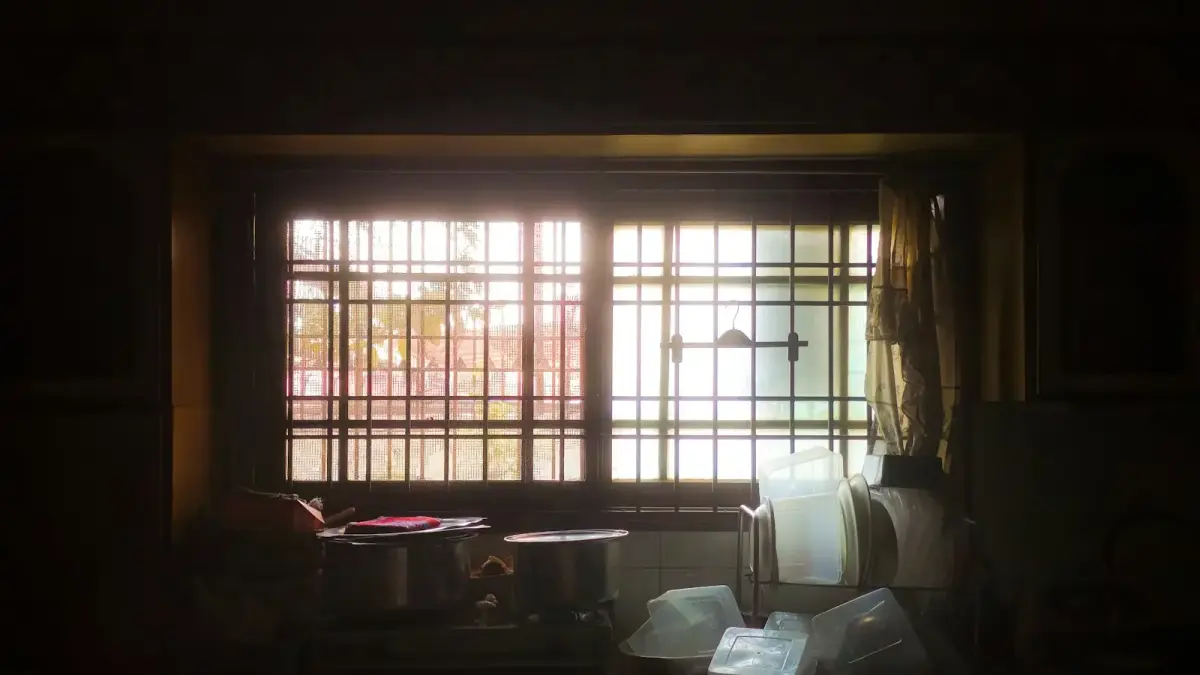
For years I thought it was just one of her habits, the way some people always wipe down the counter twice. Then one winter I stayed with her for a week, and I found myself standing next to her at the kitchen window at 7:10 in the morning. “There he is,” she said, and a cardinal landed on the feeder like he had an appointment.
She knew him. She knew his mate, who came later and was more nervous. She knew that the chickadee with the slightly ragged tail was new that week, and she had been watching to see whether he would stay.
I remember checking my phone right after, and feeling oddly ashamed. I had spent that year downloading meditation apps, reading about “slow living,” and paying a monthly subscription to be reminded to breathe. My mother had been doing all of it, for free, with a coffee can and a window.
If you are the one who fills the feeder before you fill your own cup, I want you to know something. This is not you getting old and quiet. It is a skill, and psychology has spent decades trying to describe what you already understand.
1. Attention is a form of love
When you can tell one cardinal from another, you are doing something most people never do. You are paying the kind of close, unhurried attention that we usually reserve for the people we love most. And maybe that is exactly the point.
The philosopher Simone Weil once wrote, in essence, that attention is the rarest and purest form of generosity. You understand this in your bones. Every morning you offer your full, undivided attention to a small creature that will never know your name.
What you have learned is that attention is not just a mental function. It is a way of saying “you matter” to the world. The rest of us are only beginning to realize how much we have been withholding it from everything around us, including ourselves.
2. Small changes are the real news
The rest of the world wakes up and reaches for the headlines. You wake up and notice that the goldfinches have started turning olive for the winter. You notice that the feeder emptied faster than usual, and you wonder who has been visiting.
This is not a smaller way of seeing the world. It may actually be a truer one. Most of life does not happen in breaking news; it happens in tiny, gradual shifts that only patient eyes can catch.
People who notice small changes in nature tend to notice small changes in people, too: the friend whose voice sounds a little thinner on the phone, the grandchild who has gone quiet at dinner. Your morning window has been training you to see what others walk right past.
3. You can give without being thanked
There is something quietly radical about feeding birds. They will never thank you. They will not remember you, and if you stopped tomorrow, they would simply go somewhere else.
And yet you keep doing it. You haul the heavy bags of seed from the car in January, you scrub the feeder when it gets moldy, you fret when the squirrels figure out the baffle. You have made peace with a kind of care that asks for nothing in return.
Psychologists who study well-being often point out that giving tends to make us happier than receiving, especially when the giving is freely chosen. Many of us spent decades giving in ways that were tangled up with obligation and expectation. The feeder may be the purest giving you have ever done, and some part of you knows it.
4. The day should start with someone else being fed
Notice the order of your morning. Before you have had a sip of coffee, before you have checked anything or answered anyone, you have already taken care of something outside yourself. That small sequence says a great deal about who you are.
For many people, the first act of the day is reaching for a screen and absorbing whatever anxiety is waiting there. You begin instead with an act of tending. Your nervous system gets to start the day from a place of purpose rather than alarm.
There is a reason so many older people describe mornings like this as “setting the tone.” Routine, especially gentle routine, gives the mind something to stand on. When everything else in the world feels uncertain, the feeder still needs filling, and you are still the one who fills it.
5. Boredom is a doorway, not a problem
Twenty minutes at a window, watching nothing in particular happen, would make many younger people deeply uncomfortable. We have been trained to treat any empty moment as a problem to be solved with a scroll. You learned, perhaps long ago, that empty moments are not actually empty.
A well-known 2010 study published in Science by Matthew Killingsworth and Daniel Gilbert found that people’s minds wander nearly half the time, and that people tend to be less happy when their minds are elsewhere. The researchers concluded that a wandering mind is often an unhappy one. Being fully present with what is in front of you, even something simple, seemed to matter more for happiness than the activity itself.
When you sit with the birds, you are not “doing nothing.” You are letting your mind settle into the present, which is exactly what the meditation apps are trying to coax people into. You just found the door without a subscription.
6. You learn individuals, not species
Anyone can learn to identify a blue jay. What you know is something different. You know this particular blue jay, the loud one who chases everyone off the platform and then hesitates, oddly polite, when the doves arrive.
This is the difference between information and relationship. The world is full of information, and very little of it touches us. A relationship, even with a bird, changes us, because it asks us to stay curious about a single living thing over time.
Researchers have found that this kind of everyday nature connection has real effects. A 2017 study published in BioScience by Daniel Cox and colleagues found that people who could see more birds, shrubs, and trees around their homes in the afternoon reported lower levels of depression, anxiety, and stress. You did not need a study to tell you that the cardinal at 7:10 makes your morning better, but it is nice to know science agrees.
7. The window was the original screen
Before there were phones and televisions, there were windows. People sat by them, watched by them, waited by them. You may be one of the last generations to remember that a window could hold your attention all on its own.
In the 1980s, psychologists Rachel and Stephen Kaplan developed what is called attention restoration theory, later expanded in work published in the Journal of Environmental Psychology. Their idea was that our minds have two kinds of attention: the effortful, focused kind we use for work and screens, and a softer, effortless kind that natural scenes gently invite. Time spent in that softer attention, they found, helps restore the focused kind that modern life drains.
Your kitchen window is a restoration machine. The birds pull your attention without demanding it, and your tired mind gets to rest. Meanwhile, the glowing screen in everyone else’s pocket does the opposite, asking for focus all day and giving very little rest in return.
8. Loving something means noticing when it is gone
This is the hardest thing you understand, and maybe the most important. There comes a morning when the cardinal does not come at 7:10. Then he does not come the next day either, or the day after that.
You will never know exactly what happened. You only know that a small, bright presence in your life is no longer there, and that you are the only person in the world who noticed. That quiet grief is real, and it is a sign of how much you were paying attention.
People who tend feeders through the years learn to live alongside the seasons in a way that softens loss without denying it. Birds leave, and new ones arrive. The chickadee with the ragged tail becomes a regular, and life, in its small and patient way, keeps filling the empty perch.
I think about my mother’s coffee can a lot these days. She is gone now, but I have my own feeder, and I have started filling it before I make my coffee. I am not as good at it as she was yet.
Some mornings I still reach for my phone before I reach for the seed scoop. Some mornings I forget to look up at all. But on the good mornings, I stand at the window long enough to notice who has come, and for a few minutes, the whole noisy world goes quiet.
If you are the one at the window every morning, please do not let anyone convince you that you have simply “slowed down.” You have learned to pay attention in a world that is constantly selling it back to us in tiny, expensive pieces. You learned it the old way, by caring about something small, every single day.
So tomorrow, when the kettle starts to warm and you head out in your slippers with the scoop, know that you are doing something the rest of us are still trying to learn. The coffee can wait. The birds, and the part of you that loves them, are worth being first.