Children who always knew the answer in class but never raised their hand - who mouthed it under their breath, who whispered it to the kid sitting next to them and watched that child raise their hand and say the exact same words at full volume, who got 'could participate more' on every report card even though they never got a question wrong - often become adults who write brilliant emails but cannot speak in meetings, because a child who learned that being right out loud drew a different kind of attention than being right quietly decided the safest place for a correct answer is inside someone else's mouth
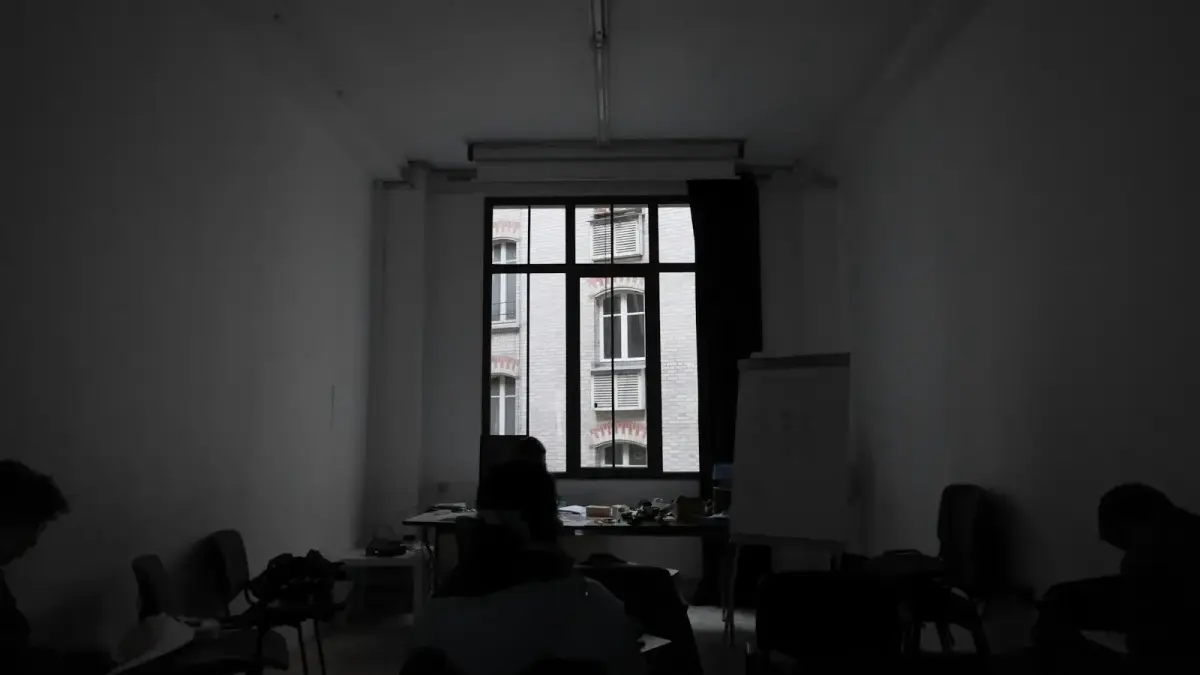
I was seven years old, sitting third row from the back in Mrs. Patterson’s class, and I knew the answer was “evaporation.” I knew it the way you know your own name - instantly, without effort, like the word had been waiting inside me before the question was even finished. My lips moved. I could feel the syllables forming against the backs of my teeth. But my hand stayed in my lap like it was pinned there.
The girl beside me - Katie, with her messy ponytail and her loud confidence - leaned over. “What is it?” she whispered. I told her. And I watched her arm shoot straight into the air.
“Evaporation!” Katie said, full volume, proud smile, teacher’s praise.
I felt two things at once. Relief that the right answer had made it into the room. And something smaller, quieter - a little ache I wouldn’t have a name for until I was thirty-five years old.
If you were that child, the one who always knew but never raised your hand, I want you to understand something. That silence wasn’t a flaw. It was a strategy. And the fact that you’re still using a version of it decades later doesn’t mean you’re broken. It means you learned something very early about what happens when certain people become visible.
The answer was never the problem
Here’s what most people get wrong about the quiet kid in the classroom. They assume it’s shyness. They assume it’s introversion, or low self-esteem, or not knowing the material.
But you knew the material. You always knew the material. That was never the issue.
The issue was what happened after you said it out loud.
Maybe the attention that followed a correct answer wasn’t purely positive in your house. Maybe being right in front of a parent felt dangerous - like you were showing them up, or drawing focus you’d later pay for. Maybe a sibling mocked you for being “the smart one” until the label itself became something you wanted to shed like a heavy coat.
Or maybe the classroom itself taught you. A teacher who responded to your raised hand with a sigh because you’d answered too many times already. Kids who rolled their eyes. The subtle social punishment of being correct more than your share.
You learned something that confident kids never had to learn. You learned that knowledge has a social cost, and the cost depends entirely on who’s watching when you spend it.
When being right becomes a risk assessment
A 2014 study published in the Journal of Personality and Social Psychology found that children who grew up in environments where attention was unpredictable - sometimes rewarded, sometimes punished - developed what researchers called “strategic invisibility.” They didn’t withdraw from engagement. They withdrew from visibility.
This distinction matters enormously.
You weren’t checked out. You were hyperaware. You were running a constant background calculation about whether this moment, this room, this audience was safe enough for your voice. That’s not passivity. That’s one of the most sophisticated social computations a child can perform.
And here’s the part that breaks my heart a little. You got so good at it that nobody noticed you were doing it. Your teachers wrote “could participate more” on your report card, which might as well have said “we have no idea what’s happening inside this child.”
Because what was happening inside you was everything. The answers, the insights, the observations. You were full to bursting with them. You just never found a room that felt safe enough to let them out at full volume.
You found other ways instead. You whispered the answer to the kid next to you. You wrote it down in notebooks nobody asked to see. You mouthed it under your breath and felt a small private satisfaction when the teacher confirmed it - even though nobody knew you’d gotten there first.
The ghost-authoring habit
This pattern doesn’t disappear when you graduate. It just puts on a blazer and shows up at work.
You’re the one who writes the email that gets forwarded to the entire department with “great thinking here” at the top - but the forwarding was done by someone else, so the praise lands on their desk. You draft the talking points your manager uses in the meeting. You prepare the presentation your colleague delivers.
You are, in every way that matters, a ghost author of your own professional life.
And the painful part is that you’re not even angry about it. Not really. Because this feels normal to you. This feels like the way it’s supposed to work. Someone else raises their hand. Someone else says it at full volume. You stay in the third row, lips moving, knowing you got there first, feeling that same two-part feeling - relief and ache - that you’ve felt since you were seven.
Susan Cain writes extensively about how Western culture conflates visibility with competence. We assume that the person who speaks first, speaks loudest, speaks most must also be the person who knows most. But research consistently shows the opposite. The relationship between how much someone talks in a meeting and how good their ideas are is essentially zero.
You know this intuitively. You’ve spent your whole life watching less-prepared people get more credit simply because they were willing to take up space. And instead of making you angry, it confirmed what you already believed - that the space itself was the problem, not the answer.
What you actually learned in that classroom
Let me name the real lesson. Not the one on the chalkboard. The one nobody was teaching on purpose.
You learned that there are two kinds of being right. There’s being right quietly - in your notebook, in a whisper, in an email sent at midnight. And there’s being right out loud - in front of people, in real time, with your name attached to it.
Quiet rightness was safe. It got you good grades. It got you the private satisfaction of knowing.
Loud rightness was a gamble. It might get you praised. But it might also get you singled out, mocked, resented, or - worst of all - seen in a way you couldn’t control.
A 2019 study in Frontiers in Psychology found that adults who reported high classroom anxiety as children weren’t afraid of being wrong. They were afraid of being noticed. The anxiety wasn’t about failure. It was about exposure.
Read that again. You were never afraid of being wrong. You were afraid of what being right might cost you.
That’s not a deficit. That’s a child making a rational decision based on the data available to them. The data just happened to be a home or a classroom where attention was currency, and currency could be taxed.
The email is the new whisper
There’s a reason you’re so good in writing. Email, Slack messages, carefully worded documents - these are the adult version of whispering the answer to Katie.
Writing gives you everything that speaking in a room does not. Time to think. The ability to edit. Distance between you and the reaction. Control over how much of yourself is visible.
A 2017 study published in the Journal of Research in Personality found that people who scored high in what researchers call “evaluation apprehension” - the fear of being judged in real-time social situations - consistently outperformed their peers in written communication. Not because they were better writers inherently, but because writing removed the variable that had always been the problem. The audience wasn’t in the room. The reaction wasn’t immediate. The exposure was manageable.
You didn’t become a strong writer despite your classroom silence. You became a strong writer because of it. All those years of processing internally, of holding full paragraphs in your head while deciding whether to let them out, of composing and recomposing before committing - that was training. You were building a muscle that most people never develop because they never had to.
Your writing is what your voice sounds like when you finally feel safe enough.
The correction you don’t actually need
I’m not going to tell you to speak up more in meetings. I’m not going to give you five tips for finding your voice or a journaling exercise about inner confidence. You don’t need those things. What you need is to understand what happened.
You were a child who was right. Being right in the open carried a price. You found another way to be right that felt safer. And you carried that strategy into every classroom, every job, every relationship for the rest of your life.
That’s not a story about weakness. That’s a story about a child who was smart enough to read a room before they could read a chapter book.
The only thing worth reconsidering - gently, in your own time - is whether the rooms you’re in now still require the same strategy. Because you’re not seven anymore. And Katie doesn’t sit next to you. And the answer is still inside you, fully formed, waiting.
Some rooms now are actually safe. Some audiences actually want to hear your voice, not just read your words. And the attention that follows - it might feel different than what you remember. It might just feel like being heard.
You spent decades making sure the right answer got into the room. You just never insisted it arrive in your own voice. That’s not something to fix. But it might be something to outgrow - slowly, on your own terms, at whatever volume feels right.
You were never the kid who didn’t know. You were the kid who knew everything and chose silence anyway. That’s not a deficit on any report card I’ve ever read. That’s a person who understood, long before anyone taught them the word, that intelligence without safety is just a performance.
And you were never interested in performing. You were interested in being right. You just wanted it to be safe to be right out loud.
It can be. Whenever you’re ready.