Children who always knew what time their parents were supposed to be home - who watched the clock from the moment the car pulled out of the driveway, who calculated the drive time plus the errand plus the drive back, who sat by the window when the math stopped adding up - often become adults who track every absence with a mental countdown and feel their whole body reorganize when someone they love is fifteen minutes late, because a child who learned to measure the distance between 'should be home by now' and 'still not here' never found the off switch for the clock their nervous system installed before they were ten
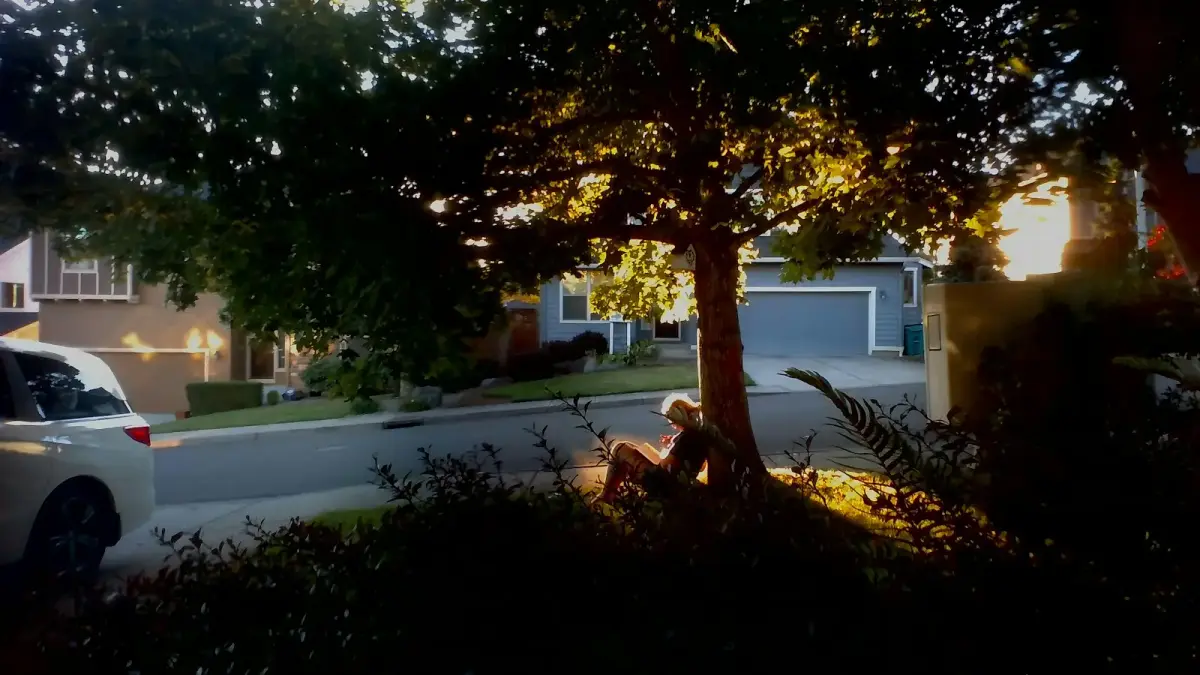
I was eight the first time I did the math.
My mother had gone to the grocery store. She said she’d be back in an hour. I knew the drive was twelve minutes each way. That left thirty-six minutes for shopping. I sat on the couch with a book I wasn’t reading and watched the kitchen clock tick past the thirty-six minute mark, then the forty minute mark, then the full hour.
At sixty-two minutes, I moved to the window. At sixty-eight, I stood up. At seventy-three, I felt something shift in my chest - a tightness that wasn’t pain but wasn’t nothing, either. A quiet alarm that had no sound but filled every room in the house.
She walked through the door at seventy-nine minutes, carrying bags and humming. She had no idea I’d been counting. She had no idea I’d been doing arithmetic with her life for the past hour and nineteen minutes. She had no idea that by minute sixty-five, I had already started writing the story of what might have gone wrong.
If you were this child - the one who always knew what time someone was supposed to be home, who calculated routes and added buffer time and sat by the window when the numbers stopped working - then you already know what I’m about to say. You’re still doing the math. You just don’t sit by the window anymore.
The clock that installed itself
Not every child watches the clock. Most children play, get distracted, lose track of time entirely. They don’t notice when a parent is fifteen minutes late because fifteen minutes doesn’t register as meaningful to a nervous system that feels fundamentally safe.
But some children learn, very early, that time is information. That lateness is data. That the gap between “should be here” and “not here yet” is a space where terrible things live.
These are the children who internalized a lesson no one meant to teach them: that absence is not neutral. That when someone you love is supposed to be somewhere and isn’t, the most logical response is to start preparing for the worst.
A 2019 study published in the Journal of Child Psychology and Psychiatry found that children who exhibited heightened monitoring behaviors around caregiver departures and arrivals showed elevated cortisol responses not during the separation itself, but during the anticipation of reunion. The stress wasn’t in the absence. It was in the countdown.
The researchers called it “reunion anxiety” - the body’s learned response to the uncertainty of when safety would return. But if you lived it, you know it wasn’t anxiety. It was arithmetic. It was your brain doing the only thing it knew how to do with fear: convert it into numbers.
What the clock-watching child was really calculating
Here is what most people don’t understand about the child who always knew when a parent was supposed to be home: they weren’t worried about a specific catastrophe. They weren’t imagining car accidents or hospital rooms, at least not at first.
They were measuring the distance between predictability and chaos.
When the math worked - when the parent arrived within the expected window - the world made sense. The system held. The child could exhale and return to being a child for a few more hours.
When the math stopped working - when the parent was late, or much later than late, or unreachable - the child entered a state that developmental psychologists now recognize as a form of hypervigilant attachment monitoring. But it didn’t feel clinical. It felt like the floor tilting. Like the walls getting thinner. Like being the only person in the house who understood that something might be wrong and having absolutely no power to fix it.
Dr. Allan Schore’s research on right-brain development has shown that children who repeatedly experience uncertainty around caregiver availability develop what he calls “procedural encoding” of threat - the nervous system literally wires itself to treat ambiguity as danger. Not because the child is fragile. Because the child is paying attention.
The clock-watching child wasn’t anxious. They were accurate. They had noticed that the adults around them sometimes disappeared, sometimes came back upset, sometimes didn’t come back when they said they would. And they responded the way any intelligent system responds to unreliable input: by monitoring it more closely.
The specific texture of those minutes
If you were this child, you remember the texture of waiting in a way that other people don’t.
You remember the difference between minute five of lateness and minute twenty. Minute five was manageable. You could explain minute five. Traffic, a long checkout line, running into a neighbor. Minute five had reasons.
Minute twenty was different. Minute twenty was when the reasons stopped being enough and the stories started. Minute twenty was when your body shifted from monitoring to bracing. Your hearing sharpened. You started listening for the sound of tires on pavement, a door handle, a key in a lock.
You remember the specific relief of headlights in the driveway. Not happiness - relief. The feeling of a breath you didn’t know you were holding finally releasing. The almost dizzying sensation of your whole nervous system standing down from a threat that never materialized but felt, in your body, absolutely real.
And you remember the strange guilt that came after. The sense that you had been doing something wrong by worrying that much. That you were too much. That normal children didn’t calculate drive times or sit by windows or feel their stomachs drop when the clock passed the expected arrival.
You weren’t too much. You were a child whose nervous system had learned to read time the way other children learned to read faces - as survival information.
The adult version of the window
You don’t sit by the window anymore. But the clock is still running.
When your partner says they’ll be home by six, you know it at six-oh-one. You feel it at six-oh-eight. By six-fifteen, something in your chest has tightened, and you’re checking your phone with a casualness that isn’t casual at all.
You track flights. You notice when a friend’s “on my way” text was sent twenty minutes ago and the drive is only ten. You know, without trying, how long it takes to get from the office to the house, from the school to the soccer field, from the airport to the front door.
When someone you love is unaccounted for, your body does something it has been doing since you were small: it reorganizes. The background hum of your day gets louder. Your attention narrows. Part of you steps out of whatever you’re doing and stands by a window that doesn’t exist anymore, watching for headlights that you rationally know are coming.
A 2021 study in Frontiers in Psychology examined adults who reported childhood patterns of caregiver-monitoring and found that they showed significantly faster physiological activation in response to even minor delays from loved ones. Their heart rates increased. Their cortisol spiked. Their bodies responded to fifteen minutes of lateness the way other people’s bodies respond to genuine emergencies.
The researchers noted something important: these adults knew, cognitively, that fifteen minutes meant nothing. They knew the person was fine. They knew they were overreacting. But knowing didn’t turn off the clock. Because the clock wasn’t installed by logic. It was installed by a nervous system that learned, before the age of ten, that the space between “should be here” and “not here” was the most dangerous place in the world.
What you do with the countdown now
If this is you, you’ve probably developed strategies you barely notice.
You text “just checking in” at exactly the moment when the mental math tips from green to yellow. You frame it lightly, casually, because you’ve learned that saying “I’ve been counting the minutes since you left and my chest is tight” tends to alarm people.
You build in buffers. When someone says an hour, you tell yourself ninety minutes, because the gap between their estimate and reality is where your anxiety lives, and if you widen that gap preemptively, you buy yourself more minutes of calm.
You sometimes pick fights when someone arrives late, not because you’re angry about the lateness but because the relief of their arrival hits so hard that it comes out sideways. The thirty minutes you spent quietly bracing for disaster has to go somewhere, and it often lands as irritation rather than the thing it actually is, which is terror that briefly wore a polite mask.
You do all of this while appearing completely normal. Because the clock-watching child learned something else, too: that nobody wants to hear about the countdown. That tracking someone’s absence with this level of precision reads as controlling, or clingy, or irrational. So you learned to do it silently. To monitor without being caught monitoring. To stand by the window without anyone seeing you stand by the window.
The reframe you deserve to hear
Here is what I want you to know, as someone who has studied developmental attachment for fifteen years and who still, at forty-seven, feels her whole body shift when her husband is twenty minutes late with no text.
The clock your nervous system installed was never a malfunction. It was a love language.
It was a child’s way of saying: you matter so much to me that I measure your absence in minutes. Your presence is the thing that makes the world make sense, and when you’re not here, the world stops making sense, and I don’t know how to make it start again without you.
That is not anxiety. That is devotion, encoded into the body before the brain had words for it.
Psychologist John Bowlby, whose attachment theory reshaped how we understand human bonding, wrote that the monitoring of a loved one’s proximity is not a sign of insecurity but a fundamental feature of the attachment system itself. Every human being tracks the availability of the people they love. Every nervous system notices when someone important is absent.
What happened to you wasn’t that your system broke. It’s that your system calibrated itself to a higher level of vigilance because the data it received early on suggested that vigilance was necessary. Your clock runs faster than other people’s because you had reason to believe that every minute mattered.
Learning to live with the clock
You probably won’t turn it off. I haven’t, and I’ve spent decades understanding exactly why it’s there.
But you can do something that the child by the window couldn’t: you can name it. You can feel the shift at minute twelve and say, quietly, to yourself or to the person you love, “My clock just turned on. I know you’re fine. But the part of me that’s eight years old doesn’t know that yet, and she needs a minute to catch up.”
You can let the countdown run without believing it. You can feel your chest tighten and breathe into it instead of around it. You can recognize that the alarm is real - your body is genuinely responding - without agreeing that the emergency is real.
And you can stop being ashamed of it.
Because a child who sat by the window and counted the minutes until someone they loved came home was not a child with a disorder. They were a child with a profound, almost unbearable capacity for love, and a nervous system that decided, long before they had any say in the matter, that the people they loved were worth every second of that vigil.
The clock is still running. It will probably always be running. But it was never a flaw. It was always, from the very first minute you started counting, a record of how deeply you learned to love before you even knew what love was asking of you.