Children who always knew which cabinet not to open when guests were over - the one with the chipped glasses, the one with the mismatched dishes, the one with the dented pot lid pushed to the back behind the good china - often become adults who instinctively hide every imperfection before anyone enters their home, because a child who learned that certain cabinets were confessions learned that a family's worth lived in the things you kept visitors from seeing
I was nine years old the first time I understood that our kitchen had two versions.
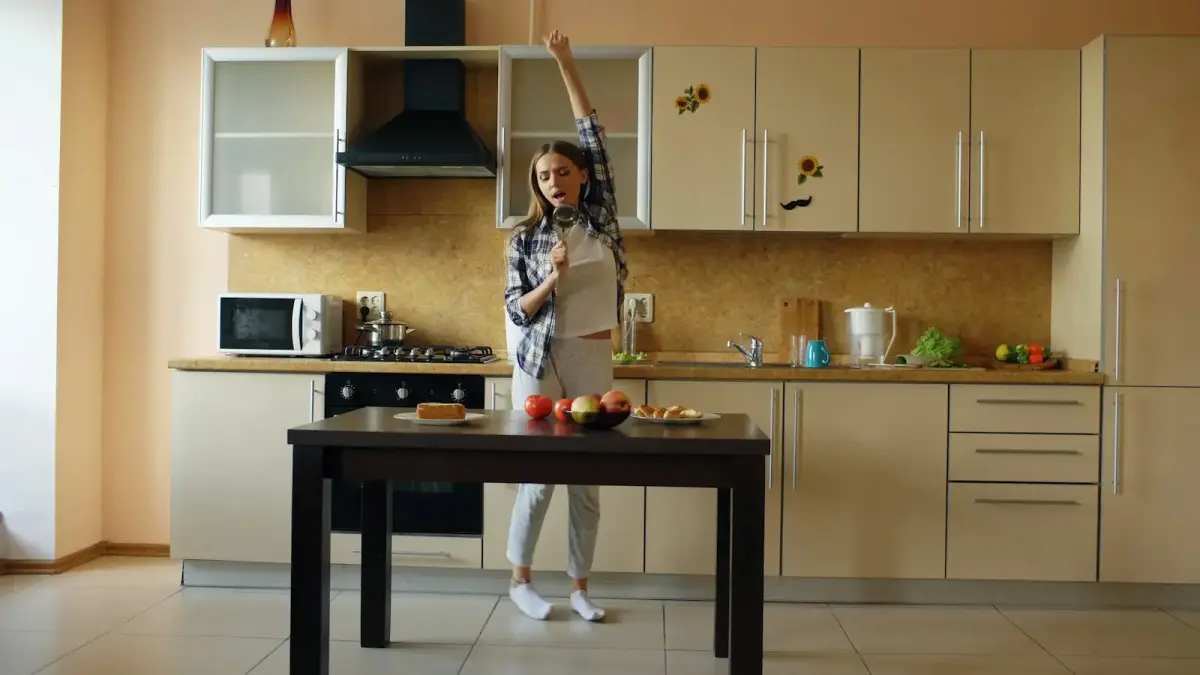
There was the real kitchen - the one with the drawer that stuck, the cabinet where the mismatched mugs lived next to a cracked mixing bowl my mother refused to throw away, the corner shelf where the dented pot with the loose handle sat behind a row of nicer ones she had received as wedding gifts but barely used.
And there was the company kitchen. The one where those cabinets stayed shut, where the good glasses came down from the top shelf, where the dish towel was suddenly clean and folded instead of balled up next to the sink. My mother could transform the room in fifteen minutes. I watched her do it dozens of times. And somewhere around the third or fourth time, I started helping without being asked - not because I wanted to but because I had already memorized which parts of our house were allowed to be seen and which ones were not.
I was not cleaning. I was curating.
And if you grew up doing the same thing - if you can still feel the specific anxiety of a guest reaching for the wrong cabinet door - then you already know that this was never about tidiness. It was about something much deeper. It was about learning, before you had the words for it, that the truest parts of your home were the ones that had to stay hidden.
1. You learned the geography of shame before you learned long division
Every house has cabinets that work and cabinets that confess. You knew which ones were which by the time you were seven. The one under the sink with the warped wood. The pantry shelf where the off-brand cereal lived next to the expired cans your mother kept “just in case.” The hall closet that opened onto a small avalanche of things that had nowhere else to go.
You did not think of these as messy. You thought of them as dangerous. Because a guest opening the wrong door was not an inconvenience. It was an exposure.
A 2017 study published in the Journal of Personality and Social Psychology found that children as young as six develop sophisticated impression management strategies based on their perception of family status. The children who were most aware of economic or social vulnerability in their households were also the most skilled at controlling what outsiders saw. They were not embarrassed. They were strategic.
You were strategic before you knew what the word meant.
2. You became the advance team before company arrived
Your mother would announce that someone was coming over, and your body would respond before your brain caught up. You knew the protocol. Close the bedroom doors. Move the pile of mail off the counter. Put the good soap in the bathroom. Hide the laundry basket.
You did not need instructions. You had memorized the sequence by watching it happen enough times that it had become automatic - a choreography of concealment that you could execute in under ten minutes with your eyes half closed.
The message was never spoken out loud, but you absorbed it completely: people are coming, which means the house needs to become a different house. And the version of the house they see will be the version that protects us.
3. You closed doors that were not yours to close
There was always a room that could not be fixed in time. The spare bedroom with the sewing machine and the boxes that never got unpacked after the last move. Your brother’s room, which looked like a natural disaster had settled there permanently. The basement, where your father’s unfinished projects lived alongside things the family had stopped pretending it would ever organize.
You closed those doors the way a museum guard ropes off a wing that is under renovation. Not with shame, exactly, but with a practiced efficiency that said: this part of us is not ready to be seen.
A 2020 study in Frontiers in Psychology found that children who grew up in households with high “presentational anxiety” - where the family’s outward appearance was closely managed - were significantly more likely to develop perfectionist tendencies in adulthood. Not because they were taught to be perfect but because they were taught that being seen as imperfect carried consequences.
4. You developed a specific kind of tidiness that is actually performance
You clean your house now. Everyone cleans their house. But there is a difference between cleaning because a surface is dirty and cleaning because a surface might be witnessed.
You know the difference in your body. The first kind of cleaning is maintenance. The second kind is defense. And you have been performing the second kind for so long that you sometimes cannot tell where one ends and the other begins.
You wipe the counter before a friend stops by even though the counter is already clean. You fluff the pillows. You move the stack of bills to a drawer. You light a candle - not because the house smells bad but because a candle says I have this under control.
The house you present to visitors is not your house. It is the museum version. And you have been curating it since you were nine.
5. You apologize for your own home before anyone has said a word
“Sorry about the mess,” you say, standing in a living room that would pass a military inspection. Your guest looks around, confused, because there is no mess. But you see what they do not. You see the blanket that is not folded correctly. The coffee mug still sitting on the end table from this morning. The stack of books that does not look intentional.
You preemptively apologize because a child who watched her mother apologize for the state of the house every time someone walked through the front door learned that the correct posture for receiving a visitor was mild embarrassment. Anything else was arrogance.
A 2019 study published in Psychological Science found that individuals with high self-monitoring tendencies - the habit of constantly adjusting one’s self-presentation based on perceived audience expectations - frequently developed this pattern in childhood homes where external judgment was treated as a serious threat. The apology was not politeness. It was a preemptive strike against being found out.
6. You monitor where guests go like a security detail
When someone comes to your home, part of you relaxes and enjoys the company. But another part - the part that was trained at nine years old - tracks their movement through the house like a camera system.
They ask to use the bathroom. You say of course. But inside you are running a mental inventory: Is the towel the good towel? Did I close the medicine cabinet? Is there anything under the sink that tells a story I did not authorize?
They walk toward the kitchen. You are two steps ahead of them, not physically but mentally, scanning every surface they are about to encounter for evidence of the real house - the one that exists when nobody is watching.
You are not paranoid. You are a child who learned that unmonitored access to the wrong room could unravel the entire presentation. And thirty years later, the monitoring system is still running.
7. You feel relief when they leave that has nothing to do with introversion
You love your friends. You enjoy company. But when the door closes behind them and the house is yours again, something in your chest loosens that you did not even realize was tight.
It is not the relief of solitude. It is the relief of dropping the performance. Of being allowed to open every cabinet, leave the dishes in the sink, let the blanket stay where it fell. The house can go back to being real. And for a few hours, until the next visitor is expected, you can live in it instead of staging it.
This relief is not a preference. It is the exhale of a child who has been holding her breath since the doorbell rang.
8. You are starting to realize the cabinet was never the problem
Here is what nobody told you when you were nine: the chipped glass was not a confession. The mismatched dishes were not an indictment. The dented pot was not evidence of failure. Those cabinets held the honest story of a family that was doing its best with what it had - and the only reason they needed to be hidden was because someone, at some point, decided that honest was not enough.
You inherited that decision. You have been enforcing it in every home you have lived in since. And the woman who races through the house fifteen minutes before a guest arrives, closing doors and straightening pillows and wiping counters that are already clean, is not anxious or particular. She is nine years old and standing in the kitchen, making sure the wrong cabinet does not open before company gets there.
But here is the thing about cabinets. They all open eventually. And what is behind them was never as bad as the effort you spent keeping them shut.
The chipped glass held your orange juice every morning. The dented pot made the soup that warmed you on January nights when the heating was unreliable. The mismatched dishes told the story of yard sales and hand-me-downs and a family that kept everything because replacing things was a luxury they could not always afford.
That cabinet was not a secret. It was a life. And the life was always worth seeing.