Children who always sat in the back seat directly behind the driver - not for the view but because a child who learned that proximity to the person in control was the safest position never stopped choosing the seat closest to whoever was steering
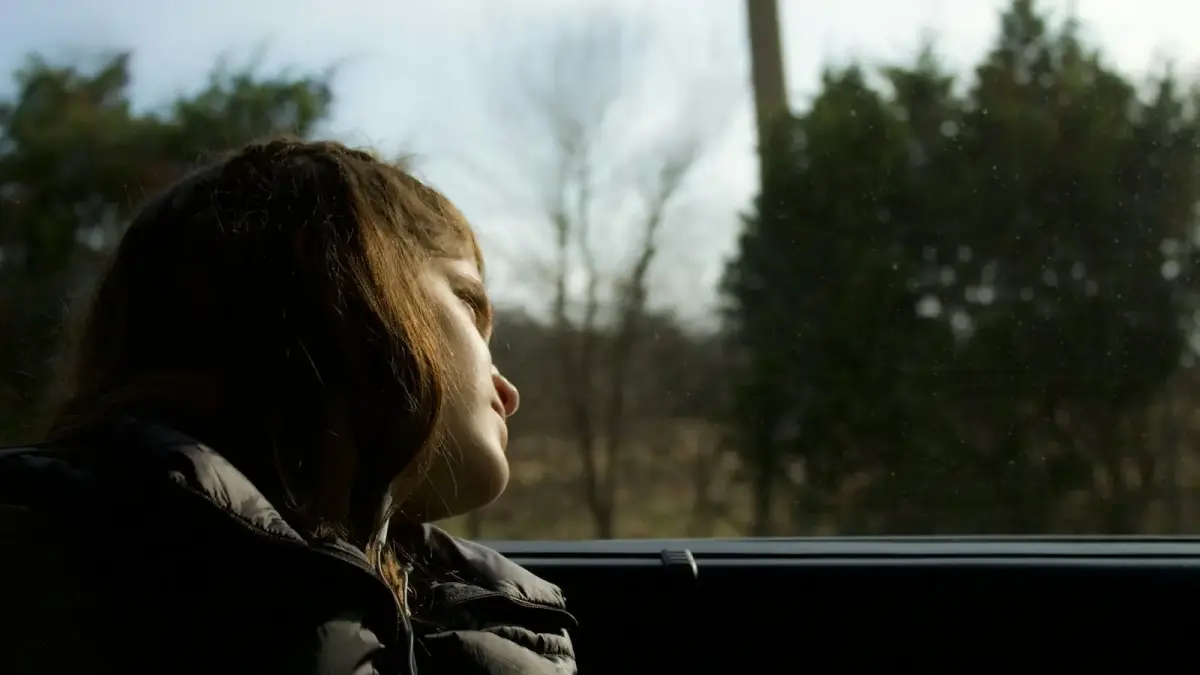
I was eight years old the first time I realized I had a seat.
Not one that was assigned. One I had chosen so many times it had become mine by repetition, by instinct, by something I couldn’t have named at that age but can name now. It was the back seat, driver’s side. Directly behind my father.
From that spot I could see the side of his face in the rearview mirror. I could read the tension in his jaw before it reached his voice. I could feel the car accelerate with irritation or slow down with the particular kind of quiet that meant something had shifted and the rest of the evening was going to be different than planned.
I didn’t choose that seat for the legroom. I chose it because my nervous system had already done the math a child should never have to do - how close do I need to be to the person driving this situation in order to predict what happens next?
And if you recognize that math, if you read that and felt something tighten in your chest, I want you to know that this article is for you. Because that seat behind the driver was never really about the car.
The geography of safety
Children are extraordinary cartographers of emotional terrain. Long before they can spell the word “anxiety,” they are mapping rooms, reading faces, and calculating distances with a precision that would impress a surveyor.
A 2014 study published in Developmental Psychology found that children in unpredictable home environments develop heightened spatial awareness by age four - an unconscious tracking of where adults are, how close the nearest exit is, and which positions in a room offer the greatest access to information about what’s coming next.
This is not strategy. This is survival architecture built by a brain that hasn’t finished developing yet.
The seat behind the driver is a masterpiece of that architecture. It places the child close enough to monitor the emotional state of the person in control. It provides a partial view of their face. It puts a physical barrier - the seat itself - between the child and that person’s body, which means contact requires effort, turning around, reaching back.
Close enough to read the weather. Far enough to brace for the storm.
And here’s the part that stays with you long after you’ve grown tall enough to drive the car yourself: the logic doesn’t retire. It just moves to new rooms.
The adult who always sits near the exit
You’re at a restaurant with friends. Everyone is settling in, unfolding napkins, scanning the menu. You’ve already completed a different scan entirely.
Where’s the exit? Which seat has the best sightline to the door? Who at this table holds the most social power, and where should you position yourself relative to them?
You choose your chair, and it feels like preference. It feels like “I just like sitting here.” But your body chose before your mind caught up.
A 2019 study in the Journal of Personality and Social Psychology examined what researchers called “positional vigilance” - the tendency among adults with early caregiving unpredictability to unconsciously select seats, standing positions, and spatial orientations that maximize their ability to monitor authority figures and access exits.
The participants didn’t know they were doing it. When asked why they chose a particular seat, they said things like “it felt right” or “I don’t know, I always sit there.” The feeling of rightness was the nervous system recognizing a configuration it had practiced ten thousand times in the back seat of a car.
The aisle seat, the back row, the spot by the door
Let me be specific about what this looks like when it follows you into adulthood, because I think you’ll recognize more of these than you expect.
1. You always choose the aisle seat on planes
Not for convenience. For the knowledge that you can stand up and move without climbing over anyone, without asking permission, without being trapped by someone else’s body between you and open space.
2. You sit with your back to the wall at restaurants
You’ve been told this is a military habit, a sign of toughness. But for you it’s not about watching for threats. It’s about never having your back to a room you can’t read.
3. You position yourself nearest the person in charge
In meetings, at family gatherings, at parties - you drift toward whoever holds the emotional power. Not to impress them. To monitor them. Because your childhood taught you that the safest distance from authority is close enough to read the mood but far enough to adjust your behavior before the mood reaches you.
4. You know the layout of every room you enter
Within thirty seconds, you’ve clocked the exits, the sight lines, the spots where you could stand if things got tense. You don’t think of this as anxiety. You think of it as being observant. Your friends even compliment you on it.
5. You feel physically uncomfortable with your back to a door
If someone seats you facing the wall at a restaurant, something in your body protests. It’s not rational. You know nothing is going to happen. But your nervous system is running an old program that says: if you can’t see who’s coming in, you can’t prepare.
6. You choose the chair closest to the host at dinner parties
And if asked to move, you feel a flicker of something that’s hard to name. Not anger. Something closer to exposure. Like a piece of armor has been removed and you haven’t been given a replacement.
What the rearview mirror really taught you
Here is what I want you to understand about the child who sat behind the driver, because I think it reframes everything.
That child was not passive. That child was doing something remarkably sophisticated - reading micro-expressions in a two-inch rectangle of reflected glass, calibrating their entire emotional state based on the angle of a jawline or the grip of hands on a steering wheel.
Dr. Stephen Porges’ polyvagal theory describes this as neuroception - the nervous system’s ability to detect safety or danger without conscious awareness. In children who grow up in emotionally unpredictable environments, neuroception becomes extraordinarily refined. They don’t just sense danger. They sense the precursors to danger, the atmospheric shifts that precede the storm by minutes or hours.
That rearview mirror was a training ground. And the adult you became - the one who reads rooms before entering them, who feels the emotional temperature drop before anyone else notices, who knows a meeting is going sideways three minutes before the first raised voice - that adult was trained by a child who had no choice but to become fluent in a language most people never learn to speak.
When positioning becomes a prison
There’s a cost to this, and I don’t want to skip past it in the rush to validate.
Because the truth is, always sitting closest to the person in control means you are always oriented toward someone else. Your body is a satellite dish pointed at whoever holds the power, and that means you’re rarely pointed at yourself.
A 2021 study in Frontiers in Psychology found that adults who scored high on childhood hypervigilance measures also reported significantly lower interoceptive awareness - the ability to notice and interpret signals from their own body. Hunger, fatigue, pain, desire. The signals were there, but years of prioritizing external monitoring had turned down the volume on internal ones.
You became so good at reading the driver that you forgot you were also a passenger with needs.
And the positioning behavior, as comforting as it feels, can become its own kind of cage. If you can only relax in the seat with the best sightline, you are not free. You are managed. You are still in the back seat of that car, still reading the rearview mirror, still adjusting your breathing to match the tension in someone else’s jaw.
The seat you were never allowed to choose
I want to say something that might land differently than you expect.
The seat behind the driver was brilliant. It was the right choice for a child in that situation. Your nervous system did exactly what it needed to do to keep you as safe as possible in an environment where safety was not guaranteed.
That is not dysfunction. That is intelligence operating under constraint.
But the constraint is gone now. You are not eight years old. You are not in the back seat. The person driving is not unpredictable, or if they are, you now have the ability to get out of the car entirely.
The question that matters now is not “where should I sit to be safest?” It’s a question your nervous system may have never been asked: “Where do I actually want to sit?”
Not the strategic seat. Not the monitoring seat. Not the seat that offers the best reading of whoever holds the power.
The seat you would choose if safety were already guaranteed. If nobody’s mood was yours to track. If you could sit with your back to the door and feel nothing but the conversation in front of you.
Learning to sit somewhere new
I won’t pretend this is simple. You don’t override decades of spatial programming with a single insight, no matter how clarifying that insight feels.
But I will tell you what I’ve learned, both from the research and from my own slow process of sitting in chairs that make my nervous system uneasy.
Start noticing the choice. That’s all. The next time you walk into a room and feel yourself pulled toward a particular seat, just pause long enough to ask: am I choosing this, or is the child in the back seat choosing this?
You don’t have to pick a different chair. You just have to notice that the choosing is happening. Because awareness is the first crack in the pattern, and patterns that have been seen can eventually be renegotiated.
Gabor Mate has written beautifully about how the body keeps its protective strategies long after the threat has passed - not out of failure, but out of loyalty. Your nervous system is not broken. It is faithful. It is still honoring a seating chart drawn by a child who needed it.
The work is not to abandon that child’s intelligence. The work is to let them know the car has stopped. That you’ve arrived somewhere safe. That they can, if they want to, try a different seat.
And if they’re not ready yet, that’s fine too. You can sit behind the driver for as long as you need. But now you’ll know why. And knowing why is the seat you were never allowed to choose as a child - the one where you understand yourself, and that understanding becomes its own kind of safety that no positioning in any room can match.