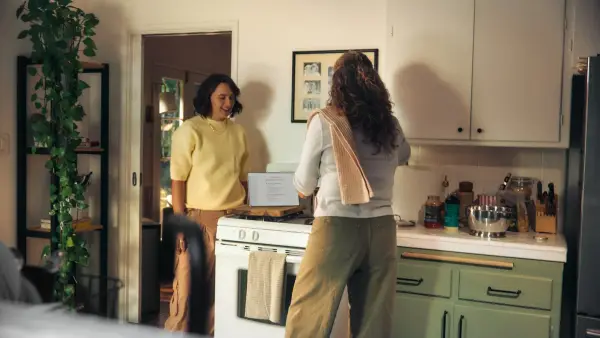
Children who always sat in the same seat at the dinner table and felt their stomach drop the one time someone else sat there - who had a spot on the couch, a side of the car, a corner of the classroom that was theirs without anyone declaring it - often become adults who cannot settle into any room until they have found the one chair that lets their nervous system stand down, because a child who grew up in a house where everything shifted without warning learned that the only constant was where her body was allowed to land
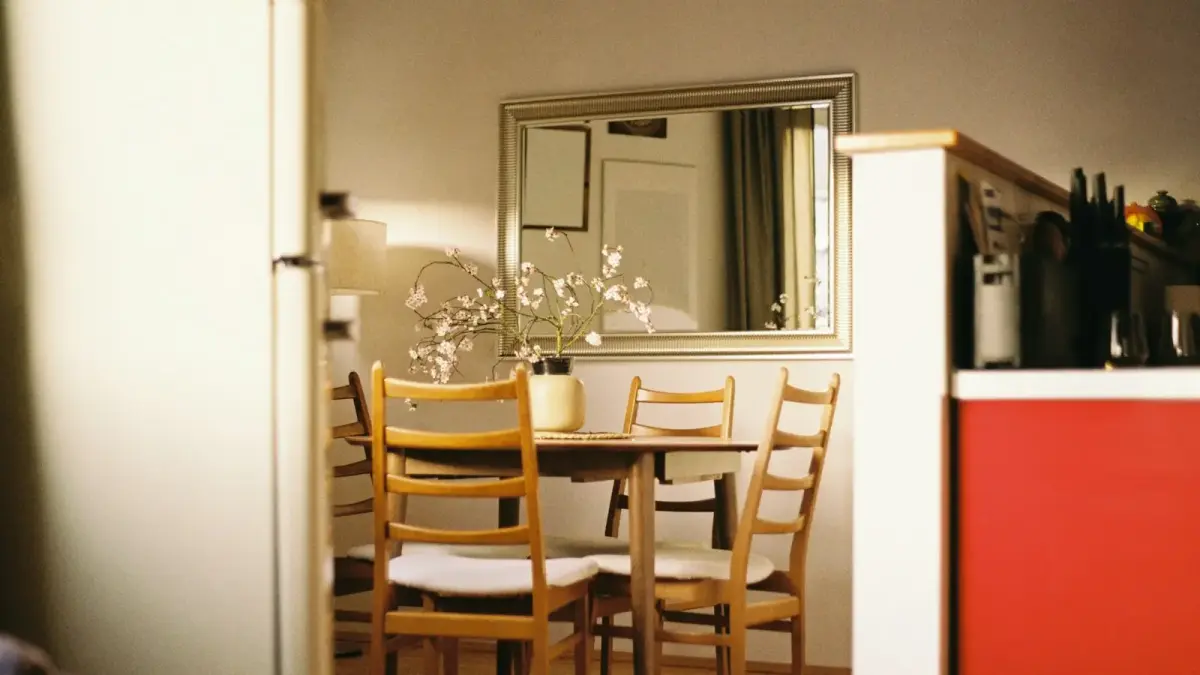
I was nine the first time it happened. Thanksgiving at my grandmother’s house, the table stretched out with its extra leaf, and my cousin Danny was sitting in my chair.
Not technically my chair. Nobody had assigned seats. There was no place card, no rule, no announcement. But I had sat in that chair - the one with the slightly wobbly leg, pressed against the wall where I could see the kitchen doorway - at every family dinner for as long as I could remember.
I stood in the dining room holding my plate and felt something cave in behind my sternum. Not anger. Something worse. The floor had shifted. The room looked different from this angle. I couldn’t figure out where I was supposed to go, even though there were three empty chairs right in front of me.
My mother nudged me forward. “Just sit anywhere, Sarah.” But anywhere felt like nowhere. I ate the whole meal feeling slightly outside of my own body.
I was thirty-four before I understood what that moment was actually about.
The seat was never about the seat
If you were a child who claimed a spot - the left side of the couch, the backseat behind the driver, the third desk from the window in Mrs. Patterson’s classroom - and held that spot with a quiet, fierce consistency that nobody else seemed to need, I want you to know something.
You weren’t being rigid. You weren’t being difficult. You were solving a problem that no one else in the room could see.
You were anchoring yourself.
1. You were building ground in a world that kept moving
Children who grow up in environments where emotional weather changes without warning - where a parent’s mood could turn between the car ride and the front door, where the rules were different on Tuesday than they were on Monday, where love was available but unpredictable - develop a profound need for spatial constancy.
The chair was the one thing that didn’t change. The corner of the couch was the one surface that held still.
A 2015 study published in the Journal of Environmental Psychology found that people who reported higher levels of childhood instability showed significantly stronger place attachment behaviors in adulthood - a persistent need to establish and return to fixed positions in physical space. The researchers called it “compensatory anchoring.”
You weren’t being particular. You were building the only foundation you had access to.
2. Your nervous system learned to read the room from a fixed point
Here is something most people never think about. When you sit in the same place every time, you are giving your nervous system a stable platform from which to monitor everything else.
You could see who was coming through the door. You knew where the exits were. You had calibrated your peripheral vision to that exact angle, so you could track facial expressions and voice tones without turning your head.
Move the chair, and the whole surveillance system collapses. You’re not scanning from a calibrated position anymore. You’re starting over, and starting over takes energy you learned very young not to waste.
This is why it felt so disorienting when someone took your spot. It wasn’t just preference. It was the loss of a tactical position your body had memorized.
3. The stomach drop was real - it was your threat detection system firing
That sinking feeling when you walked into the room and someone was in your chair? That wasn’t overreaction. That was your autonomic nervous system registering a change in the environment and flagging it as a potential threat.
Dr. Stephen Porges’ polyvagal theory explains this beautifully. The nervous system is constantly scanning for cues of safety or danger - a process he calls neuroception. For a child who grew up in an unpredictable environment, spatial displacement registers the same way an unexpected noise does. Something is different. Something moved. Be alert.
Your stomach dropped because your body was doing exactly what it was designed to do. It was telling you that your safe perimeter had been breached.
You just didn’t have the language for it at nine years old. You only knew that you needed your chair back.
4. You weren’t claiming territory - you were creating a self
This is the part that breaks my heart a little.
Children who anchor spatially are often children who didn’t have a strong sense of psychological self yet. They were still forming. The environment was too turbulent for them to build a stable inner identity, so they borrowed stability from the physical world.
The chair became an extension of the self. The corner of the room became a container for a person who didn’t yet feel contained on the inside.
A 2019 study in Frontiers in Psychology found that children who exhibited strong territorial behaviors in the home - consistent seating choices, distress when personal spaces were occupied by others - were significantly more likely to have caregivers with inconsistent emotional availability. The researchers noted that spatial anchoring served as a self-regulation strategy when co-regulation with a caregiver was unreliable.
You weren’t possessive. You were building a self out of the only materials available.
5. This is why you still do it - the conference room, the restaurant, the couch
You’re an adult now. Nobody is going to take your chair at Thanksgiving anymore. But your body doesn’t know that.
You walk into a meeting room at work and scan for the seat that feels right - back to the wall, probably, with a clear sightline to the door. You find it. You sit. Your shoulders drop half an inch.
The next week, a new colleague is in that chair. You sit somewhere else. You are professional about it. But something is off for the next forty-five minutes. You can’t track the conversation as easily. You feel slightly exposed. You leave the meeting vaguely irritated and can’t explain why.
Or maybe it’s the restaurant. You have a preferred table, and when the hostess leads you somewhere else, you feel a quiet resistance that you override because you know it’s irrational.
Or the couch. Your partner’s family has a different living room layout, and you spend the first thirty minutes of every visit sitting slightly forward, unable to lean back, unable to settle. They think you’re uncomfortable with them. The truth is that you haven’t found your position yet.
6. You go quiet when someone takes your spot, and people misread it
Here’s the pattern that confuses the people who love you.
Someone sits in your usual place at the holiday dinner. You don’t say anything. You don’t fight for it. You just go quiet.
Not angry-quiet. Not passive-aggressive-quiet. Recalibrating-quiet. Your system is working overtime to re-establish equilibrium from an unfamiliar position, and all the energy that would normally go toward conversation and warmth and connection is being redirected to the project of figuring out where you are.
People notice you’ve gone still. They ask if you’re okay. You say yes, because how do you explain that you can’t relax because you’re sitting two feet to the left of where your body expected to be?
This isn’t something you can think your way out of. It’s subcortical. It lives in the part of your brain that was running your survival responses long before language came online.
7. The need for “your” spot is not the same as the need for control
I want to be very clear about this distinction, because people who anchor spatially often get mislabeled as controlling.
Control is about managing outcomes. It’s about making sure things go the way you planned. It’s top-down, cognitive, deliberate.
Spatial anchoring is about regulation. It’s about giving your nervous system a reference point so that it can calm down enough for you to be present. It’s bottom-up, somatic, automatic.
You don’t need your chair because you want to dominate the table. You need your chair because your body can’t let go of sentry duty until it knows where it is relative to everything else in the room.
There is an enormous difference between those two things, and most people have never been taught to see it.
8. You probably also have a side of the bed, and it matters more than you’ve admitted
This one runs deep. You have a side of the bed, and sleeping on the other side feels genuinely wrong. Not just unfamiliar. Wrong in your bones.
When you travel, one of the first things you do in a hotel room - before unpacking, before checking the view - is figure out which side of the bed you’ll sleep on. You might not even be conscious of it. But your body is already doing the calculation. Which side has the wall? Which side faces the door? Which side lets you sleep the way you sleep at home?
Your partner knows not to suggest switching sides. Not because you’ve made a big deal about it. Because the one time it happened, you lay there for twenty minutes with your eyes open, your body refusing to believe it was safe to drift off.
The side of the bed is the last anchor of the day. It’s where your nervous system finally agrees to stand down. Moving it is not a small ask.
9. You can learn to anchor from the inside - but it takes time
The good news - and I say this as someone who has done this work - is that spatial anchoring is a strategy, not a sentence.
It was a brilliant strategy. It kept you regulated through a childhood that didn’t offer enough relational regulation. Your body figured out how to use physical space as a substitute for the emotional stability it wasn’t getting from the people around it.
But you can learn to carry that stability internally. Somatic therapies, particularly those informed by polyvagal theory, can help you build what clinicians call interoceptive awareness - the ability to feel your body’s internal state and regulate it from the inside rather than needing the external environment to do it for you.
A 2021 study in Psychological Science found that adults who practiced body-based mindfulness techniques for eight weeks showed significant reductions in place-dependent anxiety - the need to be in a specific location in order to feel calm.
This doesn’t mean you have to give up your chair. It means that if someone takes it, the floor doesn’t have to fall away.
You can learn to be the anchor instead of needing one.
You were never being difficult
If you read this and recognized yourself - the child who always sat in the same spot, the adult who still scans every room for the right chair - I want you to sit with something for a moment.
You figured that out on your own. Nobody taught you to anchor spatially. Nobody explained neuroception to you or gave you a toolkit for self-regulation. You were a small person in a big, unpredictable room, and you found a way to stay.
The chair, the corner, the side of the bed - those were your inventions. Your nervous system’s quiet, elegant solution to a problem it couldn’t name.
And if you still need your spot, that’s okay. It means the system is still running. It means some part of you is still that careful child, checking the room, finding the one fixed point, settling in.
You’re not rigid. You’re not controlling. You’re not difficult.
You’re someone who learned very early that the world doesn’t always hold still. So you found the one place it did, and you stayed there.
That was never a flaw. That was wisdom.