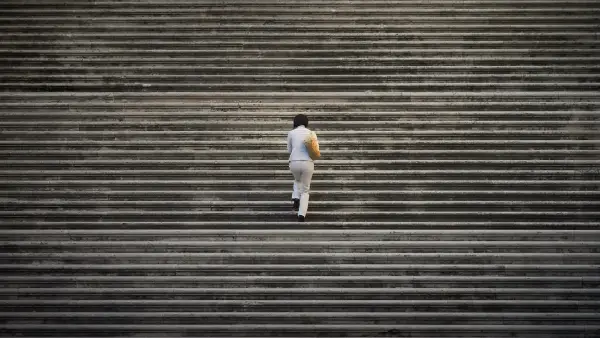
Children who always saved their favorite food for last on the plate - who ate the vegetables first, then the potatoes, then the bread, working through everything they liked least before allowing themselves the one thing they actually wanted - often become adults who cannot start with joy, who finish every task they dread before permitting themselves the thing they love, because a child who learned that pleasure had to be earned by first completing what was expected never developed the belief that she was allowed to begin with the thing that made her happy
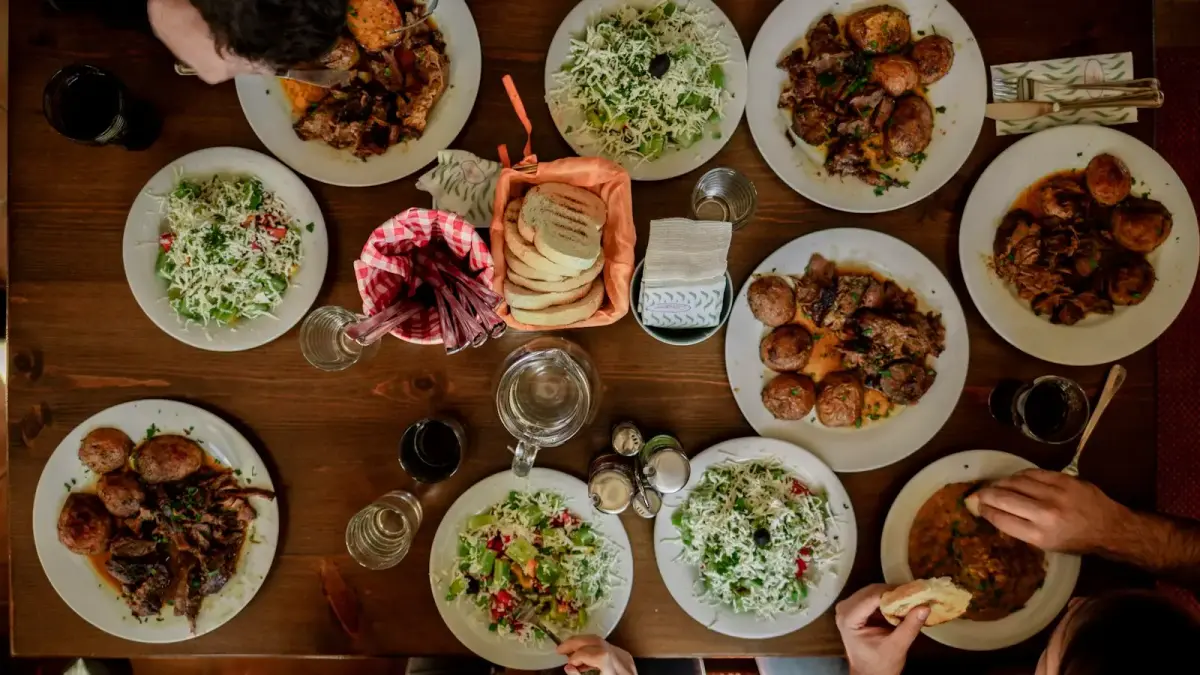
I was seven years old, sitting at the kitchen table, and I remember the exact order. Peas first. Then the rice. Then the chicken. And finally - finally - the crispy, golden edge of my mother’s homemade mac and cheese, which I’d been staring at since the plate was set down in front of me.
I didn’t know why I did it. Nobody told me to eat in that order. But something in me had already decided that the good thing had to come last. That I had to get through the hard parts before I was allowed to arrive at the part that actually made me happy.
I carried that rule off the dinner plate and into every corner of my life. And if you’re reading this with a strange prickle of recognition, I’m willing to bet you did too.
1. You treat joy like a reward you haven’t finished earning
There’s a particular kind of person who cannot sit down with a novel at two in the afternoon. Not because they don’t have time. Because the dishes aren’t done. Because the emails haven’t been answered. Because there is always one more unpleasant task standing between them and the thing they actually want to do.
This isn’t discipline. This is a deeply internalized belief that pleasure must be preceded by suffering - or at least by effort. That you haven’t yet done enough to deserve the good part.
A 2012 study published in the Journal of Personality and Social Psychology found that individuals who chronically delay rewards tend to experience lower overall life satisfaction, not because they lack pleasurable experiences, but because the anticipation becomes contaminated with anxiety about whether they’ve truly earned the right to enjoy them.
You’re not lazy for wanting to start with what lights you up. You just never learned that joy doesn’t require a receipt.
2. Saturdays don’t begin until every chore is crossed off
You know this version of the weekend. You wake up and the first thing your brain does is build a list. Laundry. Groceries. That phone call you’ve been avoiding. Clean the bathroom. And somewhere at the bottom, so far down it barely registers as real - the walk you wanted to take, the friend you wanted to call, the afternoon you wanted to spend doing absolutely nothing.
By the time the list is done, the day is gone. Or worse - you’re too depleted to enjoy the thing you were working toward.
This is what happens when a child learns that rest is the last course. That you eat your way through obligation before you’re permitted to taste the thing that actually nourishes you. The structure of the dinner plate became the structure of your life.
3. You feel guilty when something good happens too early
Here’s the one that catches people off guard. Someone offers you something wonderful - an unexpected afternoon off, a gift, a compliment - and instead of receiving it, you flinch. Not because you don’t want it. Because it came too soon. You hadn’t finished the hard part yet.
There’s an almost physical discomfort that arrives when joy shows up before you’ve checked every box. Like something is out of order. Like the universe made a bookkeeping error and you’re going to have to pay it back later.
This is not humility. This is a child’s arithmetic, still running in your adult body, insisting that the good thing must always come after the bad thing.
4. You’ve turned procrastination into a moral framework
Most people think of procrastination as avoiding hard tasks. But some of us have the opposite problem. We procrastinate on pleasure. We delay the things that bring us joy with the same intensity other people delay the things that bring them stress.
Reading the book - after the report is done. Calling the friend - after the house is clean. Taking the trip - after the project is finished. There is always a gate. Always a toll. Always something that must be completed before you’re allowed to pass through to the part of your life that actually feels like living.
Dr. Fuschia Sirois, a researcher at Durham University, has studied how procrastination connects to self-compassion. Her work suggests that people who struggle to offer themselves kindness are far more likely to delay experiences of joy and rest - not because they’re irresponsible, but because they don’t believe they deserve those experiences yet.
5. Your to-do list is organized by dread, not priority
Pull out your to-do list right now. Look at the order. If you’re the person I’m describing, the items aren’t arranged by urgency or importance. They’re arranged by how much you don’t want to do them - with the most dreaded task at the top and the most enjoyable at the bottom.
This is the dinner plate. Vegetables first. Bread second. The thing you actually want, last.
You’ve built an entire productivity system around the principle that you must suffer your way to satisfaction. And the strangest part is that it looks, from the outside, like discipline. Like maturity. People admire you for it. They say you have such a strong work ethic.
They don’t see what it costs you.
6. You struggle to enjoy vacations until the final day
The first few days of any trip are contaminated. You’re thinking about the emails piling up. The work waiting for you. The re-entry. You can’t quite land in the moment because some part of you believes you haven’t yet earned the right to be here.
Then, around day four or five, something loosens. You finally start to enjoy yourself. And then it’s almost over.
A 2010 study published in the journal Applied Research in Quality of Life found that the happiness boost from vacations was strongest in anticipation and weakest during the actual trip for many participants - particularly those who reported high levels of conscientiousness. The researchers noted that the inability to psychologically “arrive” in a pleasurable experience was one of the strongest predictors of diminished vacation enjoyment.
You’re not bad at relaxing. You just never learned that you don’t need to finish something difficult before you’re allowed to begin something beautiful.
7. You parent yourself the way someone once parented your pleasure
Here is where it gets tender. Because that child at the dinner table didn’t invent the rule. She absorbed it. Maybe it was spoken - “You can have dessert after you finish your vegetables.” Maybe it was modeled - a mother who never sat down until everyone else was fed, a father who never took a day off until every project was done.
The message wasn’t cruel. It was ordinary. It was the water you swam in. And it taught you something that felt like a fact: pleasure is conditional. Joy is the last course. And you must always, always clean your plate first.
Psychologist Dr. Edward Deci, whose self-determination theory has shaped decades of motivation research, found that when children learn to associate pleasure with external permission rather than internal desire, they develop what he called “introjected regulation” - they continue to control themselves long after the external authority is gone. The parent leaves the table, but the rule stays.
You became your own gatekeeper. And you’ve been a strict one.
8. The real cost isn’t delayed joy - it’s the belief underneath it
The saddest part of this pattern isn’t that you eat the vegetables first. It’s why. Underneath the habit, underneath the to-do list and the Saturday cleaning and the guilt about unearned pleasure, there is a quiet belief that has been running your life for decades.
It says: you are not the kind of person who gets to start with the good thing.
Other people can. Other people can wake up and paint. Other people can read in the morning. Other people can take the trip before the garage is organized. But not you. You haven’t done enough yet. You are always one task away from permission.
That belief is not a fact. It was never a fact. It was a lesson you absorbed at a table where the portions were small and the rules were clear, and you’ve been living inside it ever since.
I still catch myself doing it. I’ll sit down on a Sunday morning with a coffee and a book, and within three minutes my brain starts scanning for what I haven’t finished yet. The pull to get up and do something productive first is almost gravitational.
But I’ve started practicing something small. I eat the mac and cheese first. Not every time. Not perfectly. But sometimes I let myself begin with the thing that brings me joy, before I’ve earned it, before the list is done, before I’ve checked every box.
And what I’ve found is that the world doesn’t collapse. The laundry still gets folded. The emails still get answered. The only thing that changes is that I arrive at the rest of my day a little softer, a little more generous with myself, carrying a little less of that old, quiet arithmetic that told me I had to suffer my way to satisfaction.
You were not put on this earth to eat the vegetables first every single time. You are allowed to start with the thing that makes you happy. Not because you’ve earned it. Because you’re here. And that was always enough.