Children who were always told they would have fun once they got there - who stood frozen in the doorway of every birthday party, every school dance, every house that was not their own, with their stomach turning and their mother's hand on their back pushing gently forward - often become adults who cancel plans they were genuinely looking forward to three hours before leaving, who feel the excitement curdle into dread and the dread harden into excuses and the excuses solidify into relief and then shame in that exact order, because a girl who learned that the distance between wanting to go and being able to walk through the door was the longest distance her body had ever crossed never built the bridge between anticipation and arrival that everyone else seems to have been born with
I was eleven years old and standing in the doorway of my friend Caitlin’s house, and I could hear the other girls laughing inside, and I wanted to be in there with them more than I wanted almost anything. But my feet wouldn’t move.
My mom was behind me, one hand on my shoulder, doing that thing parents do where they try to be patient but you can feel the impatience radiating through their fingertips. “You’re going to have so much fun once you get in there,” she said. And she was right. I always did. Once I crossed the threshold, once I sat down, once someone handed me a slice of pizza on a paper plate and the conversation absorbed me, I was fine. I was better than fine. I was the girl who stayed latest, who laughed loudest, who didn’t want to leave.
But the doorway. The doorway was a country I had to cross every single time, and nobody gave me a map, and the crossing never got shorter.
I’m forty-three now, and I still stand in doorways. They just look different. Now the doorway is the three hours before a dinner reservation. The morning of a weekend trip I planned myself. The twenty minutes between getting dressed and actually walking to the car. The gap between wanting to go and going - that gap is where I lose myself, every single time.
The child who wanted to go but couldn’t walk through
Developmental psychologist Jerome Kagan spent decades studying what he called “behavioral inhibition” - a temperament visible as early as four months old, where certain children respond to new stimuli with heightened vigilance, elevated heart rates, and muscular tension. These weren’t shy children, exactly. They were children whose nervous systems treated novelty as a threat that needed to be assessed before it could be enjoyed.
About 15 to 20 percent of children are born with this temperament. And what Kagan found was that the temperament itself wasn’t the problem. The problem was the gap - the space between wanting to engage and being physiologically able to engage. These children wanted the birthday party. They wanted the sleepover. They stood at the door with desire and dread in equal measure, and the adults around them usually responded in one of two ways.
They pushed. Or they pulled the child away.
Neither response taught the child the thing they actually needed to learn: that the discomfort between wanting and arriving is survivable, that you can feel your stomach churn and still walk forward, that the transition is the hardest part and the hardest part does end.
Instead, the child learned something else entirely. They learned that the distance between intention and action was vast and shameful, that other children crossed it without effort, and that their inability to do the same was a deficiency they needed to hide.
Excitement that turns to poison
Here is the part that nobody talks about when they call you flaky.
You don’t cancel plans because you don’t care. You cancel plans in the middle of caring enormously. The sequence is so predictable you could set a clock by it.
Monday: your friend texts about dinner on Friday. You say yes immediately. You mean it with your whole chest. You’re already thinking about what you’ll wear, what you’ll order, the conversation you’ve been craving.
Wednesday: a flicker. Nothing specific. Just a low vibration in your gut. A thought that arrives sideways - what if it’s awkward? What if you can’t think of anything to say? What if you’re too tired? You push it away. You still want to go.
Thursday night: the vibration is louder now. You’re not thinking about what you’ll wear anymore. You’re thinking about the parking, the noise, the energy it takes to be a person in a room with other people. You open the text thread and start composing a cancellation, then delete it. You still want to go. You just can’t feel the wanting anymore beneath everything else.
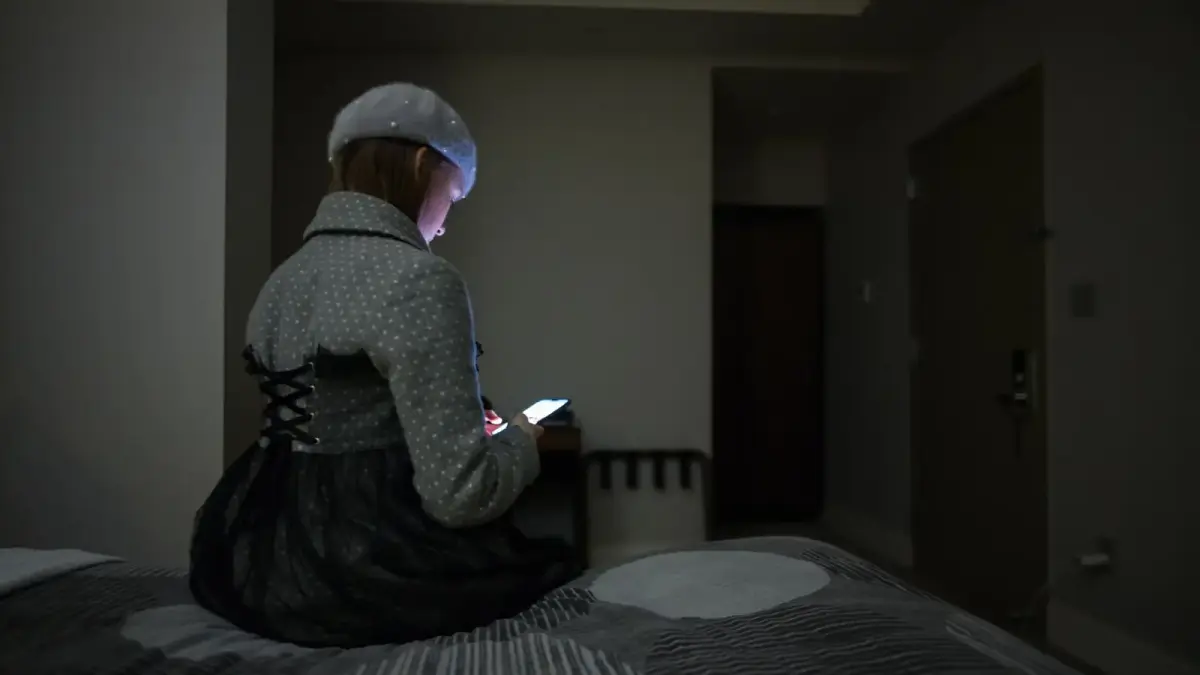
Friday, three hours before: the dread has solidified into something physical. Your chest is tight. You’re sitting on the edge of the bed in the outfit you picked out on Monday, and you can’t stand up. The excuses write themselves - you’re coming down with something, you had a terrible day, something came up. You send the text. The relief is instant and enormous. And then, about forty-five minutes later, the shame walks in and sits down and stays for the rest of the night.
You wanted to go. You never stopped wanting to go. But wanting and going have never lived in the same room inside your body.
The bridge that everyone else seems to have
A 2018 study published in the Journal of Abnormal Psychology tracked adults with high behavioral inhibition from childhood into their thirties and found something that surprised even the researchers. These adults didn’t have lower desire for social connection than their peers. In many cases, they had higher desire. They craved closeness, valued friendship deeply, and reported intense loneliness.
The deficit wasn’t motivation. It was what the researchers described as the “intention-action gap” - the neurological and emotional distance between deciding to do something and actually doing it. For most people, this gap is small enough to be invisible. You want to go to dinner, so you go to dinner. The wanting and the going are practically the same event.
But for people who grew up with behavioral inhibition - especially those who never received support for the transition, who were simply pushed through doors or told they were being ridiculous - the gap can feel like a canyon. And every cancellation widens it. Every time you don’t go, the next doorway gets taller.
This is what makes the pattern so cruel. It’s self-reinforcing. You cancel, you feel shame, the shame makes the next event feel more fraught, the additional pressure makes the next cancellation more likely.
It was never laziness
I need you to hear this part, because I know what you’ve been telling yourself.
You’ve been telling yourself you’re lazy. That you’re a bad friend. That something is fundamentally wrong with your wiring. That other people manage to show up to a casual brunch without conducting an internal negotiation that leaves them drained before they’ve even left the house.
You are not lazy. You are performing an act of psychological labor that most people never have to perform. Every time you make plans, your nervous system starts running a simulation - of the drive, the arrival, the social navigation, the energy output, the re-entry into your own space afterward. Other people’s nervous systems run that simulation in the background, barely noticeable. Yours runs it in high definition, on repeat, with the volume turned all the way up.
A 2021 study in Frontiers in Psychology found that individuals with high anticipatory anxiety expend significantly more cognitive and emotional resources before an event than during it. The event itself is often fine. Even enjoyable. But the metabolic cost of getting there - the hours of mental rehearsal, the cortisol spikes, the decision fatigue of should-I-or-shouldn’t-I - is real and measurable. By the time the event arrives, you’re already exhausted from an experience that hasn’t happened yet.
You’re not flaky. You’re pre-fatigued. And you’ve been pre-fatigued since you were a child standing in a doorway with your mother’s hand on your back, burning through your energy reserves just trying to make your legs work.
The specific loneliness of wanting to be someone who shows up
There’s a particular kind of pain that belongs to people like us, and I don’t think it has a name yet.
It’s the pain of watching yourself from the outside - watching yourself send the cancellation text, watching yourself make the excuse, watching the relief flood in - and knowing, with perfect clarity, that this is not who you want to be. You want to be the person who shows up. You want to be the friend who is there. You want to be dependable and present and the kind of person whose face people light up to see when they walk in.
And you are that person. When you get there. The problem is that getting there requires crossing a distance that most people don’t even know exists.
Susan Cain, who wrote extensively about the inner lives of people who process the world more intensely, described something that resonates here. She talked about how introverts and highly sensitive people often have a rich inner landscape that makes them wonderful companions - once they arrive. The tragedy is that the world measures you by arrival, not by intention. Nobody sees the forty-five minutes you spent sitting on your bed, fully dressed, fighting your own nervous system. They just see the empty chair.
And so the loneliness builds. Not because people leave you - but because you keep leaving yourself outside of rooms you wanted to be in.
What your body learned before your mind could translate it
When you were small and standing in that doorway, your body was doing something sophisticated. It was taking in an enormous amount of sensory and social data - the volume of the room, the number of people, the unfamiliarity of the space, the emotional temperature - and running it through a threat assessment that was far more detailed than what your peers were experiencing.
Your body wasn’t broken. It was, if anything, too thorough. It was processing at a depth that required more time, more resources, more recovery. And the adults around you, who probably meant well, interpreted this as a problem to be solved rather than a process to be supported.
“You’ll have fun once you get there” became the refrain of your childhood. And the cruelest part is that it was usually true. You did have fun. But the truth of the statement obscured what was actually happening: you were learning that your experience of the transition - the dread, the freeze, the overwhelm - didn’t count. Only the outcome counted. Only the fun mattered.
So you stopped trusting your own experience of the in-between. You learned to dismiss your body’s signals as dramatic, irrational, wrong. And now, as an adult, when your body sends those same signals before a Friday dinner, you don’t know how to listen to them without also judging them.
The bridge you’re building, even now
I want to tell you something that took me a very long time to understand.
The bridge between anticipation and arrival that everyone else seems to have been born with - they weren’t born with it either. They just had an easier time building it because their nervous systems handed them lighter materials. Their crossings were shorter. Their doorways were lower. And many of them had someone on the other side, not pushing from behind, but standing in the room and saying, “Take your time. I’ll be here when you’re ready.”
You can still build that bridge. It will be harder, and it will take longer, and some days you will still cancel plans you wanted to keep. But the shame - the shame you can start to set down.
Because here’s what I’ve learned, standing in doorways for forty-three years: the fact that you want to go is not negated by your inability to make yourself go. The wanting is real. The wanting is you. The cancellation is your nervous system doing what it learned to do when it was four years old and the birthday party was too loud and too bright and too much. Those are not the same thing.
You are not the person who cancels. You are the person who wants to go. You are the person who gets dressed, who picks out the earrings, who feels the flutter of excitement on Monday before the dread arrives on Thursday. That person - the wanting person - is just as real as the person who sends the text.
Maybe more real. Maybe the most real version of you there is.
And maybe the bridge isn’t about getting yourself through the door every time. Maybe it’s about standing in the doorway without the shame. About saying, “This is hard for me, and it has always been hard for me, and the hardness doesn’t mean I’m failing.”
You’re not failing. You’re crossing a distance that most people can’t even see. And some days you make it across, and some days you don’t, and both of those outcomes belong to a person who has been trying - genuinely, exhaustingly trying - since she was a child in a party dress with her stomach in knots and her mother’s hand on her back and a room full of laughter that she wanted, so badly, to be part of.
You wanted to be part of it. You still do. That has always been enough.