Children who always volunteered to walk to the store alone when the grocery list was short - who raised their hand for every solo errand, every trip to return the borrowed dish next door, every walk to the mailbox at the end of the road that somehow took twenty minutes - often become adults who 'run errands' as a form of solitude, who drive to the pharmacy for one item and sit in the parking lot for fifteen minutes before going inside, because a child who discovered that usefulness was the only socially acceptable reason to be alone never learned to ask for time by herself without first proving she was doing something productive with it
I was nine years old, standing in the kitchen, when my mother mentioned that Mrs. Patterson’s casserole dish had been sitting on our counter for three days and someone really ought to return it. I said “I’ll go” before she finished the sentence.
Mrs. Patterson lived three blocks away. I took seven.
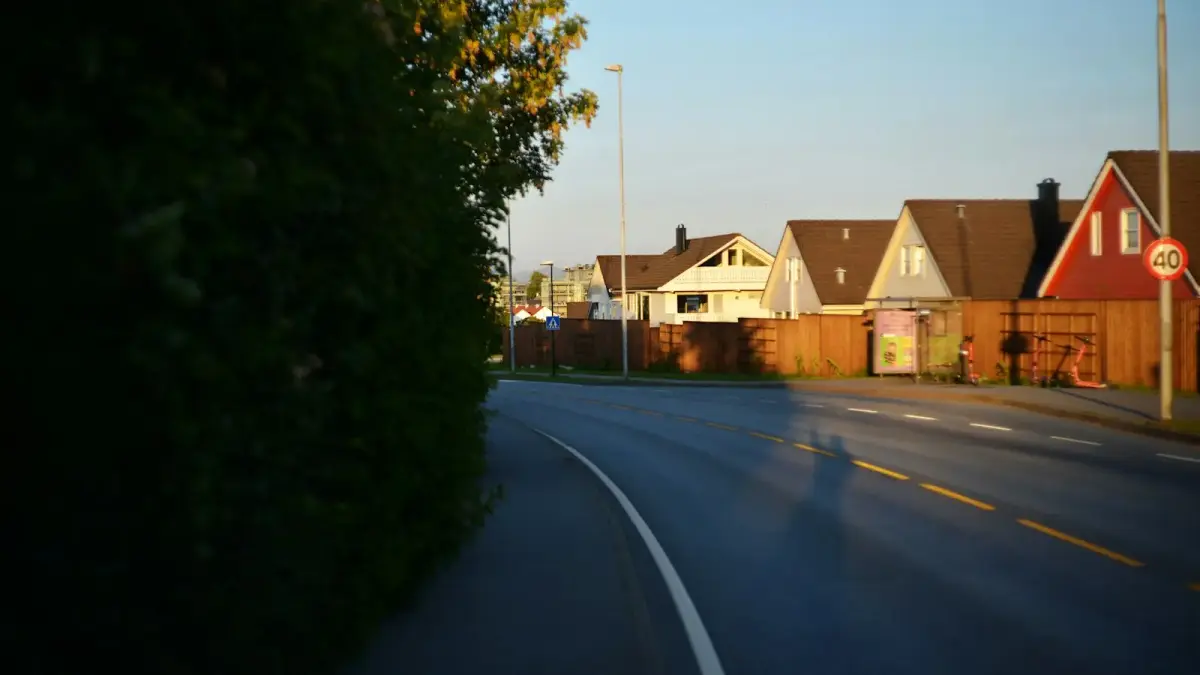
I walked past the elementary school with the empty parking lot. I walked along the fence where someone’s dog always pressed its nose through the chain link. I stopped at the corner where the sidewalk buckled from a tree root and balanced on the raised edge like it was a tightrope, one foot in front of the other, the casserole dish steady in both hands.
I wasn’t lost. I wasn’t distracted. I was doing the only thing I knew how to do when I needed to be alone - I was being useful first.
If you were this child - the one who volunteered for every trip to the mailbox, every run to the corner store for a missing ingredient, every walk next door to borrow an egg or return a Tupperware lid - then you already know exactly what I’m describing. You know that the errand was never really the point. The errand was the permission slip.
The child who always said “I’ll go”
Every family has one. The kid who, the moment someone mentions needing bread or milk or stamps, is already reaching for their shoes. The one who treats a trip to the mailbox at the end of the road like a personal pilgrimage, stretching what should be a four-minute walk into a twenty-minute absence that nobody questions because she came back with the mail.
It looks like helpfulness. Adults praise it as responsibility. “She’s so dependable,” they say. “Always willing to pitch in.”
But the child knows something the adults don’t. She knows that “I’ll go get it” is the one phrase in the English language that buys you solitude without requiring an explanation.
You can’t say “I need to be alone for a while” when you’re ten. Not without someone asking if you’re okay, if something happened at school, if you’re mad at your brother. Wanting to be alone, in most families, is treated as a symptom - something that needs fixing or at least investigating.
But wanting to walk to the store? That’s just being a good kid.
The economics of earned solitude
A 2014 study published in the Journal of Research in Personality found that children who scored high in introversion developed elaborate strategies for securing alone time within social environments - not by withdrawing, which triggered adult concern, but by finding roles that naturally positioned them away from the group. The researchers called these “functional retreats.”
I call them survival tactics.
The child learns a formula early: solitude is suspicious, but productivity is praised. If you combine the two - if you make your alone time look like a contribution - nobody questions it. Nobody worries. Nobody follows you.
So the child becomes the one who offers to set the table before anyone arrives. Who volunteers to check if the sprinkler is still running. Who says she’ll ride her bike to the library to return the books, and then sits on the bench outside the library for forty-five minutes reading the flap copy of novels she’ll never check out, because the bench is quiet and nobody knows where she is and for forty-five minutes she belongs entirely to herself.
This is not laziness or avoidance. This is a child solving a problem with the only tools available to her. The problem is that she needs silence the way other children need noise, and silence in a full household has to be purchased with usefulness.
How an errand becomes an identity
The pattern doesn’t fade with age. It deepens.
The child who volunteered to walk to the store becomes the teenager who gets her driver’s license and immediately starts “running errands” that take two hours on a Saturday morning. She drives to the post office, the dry cleaner, the pet store for dog food. She does all of it in a careful, inefficient sequence that maximizes time in the car alone, windows down, radio on, no one needing anything from her.
By adulthood, the errand has become something closer to ritual. You drive to the pharmacy for a single prescription and sit in the parking lot for fifteen minutes before going inside. You go to the hardware store for a lightbulb and come back two hours later, not because you got lost, but because you needed those two hours and the lightbulb was the excuse.
Your partner asks where you’ve been. “The hardware store,” you say. And it’s true. You were at the hardware store. You just don’t mention the thirty minutes you spent in the garden section looking at nothing, or the twenty minutes you sat in your car afterward listening to the end of a podcast episode you could have paused.
A 2019 study in Frontiers in Psychology found that adults who identified as introverts were significantly more likely to structure their solitude around tasks - grocery shopping, returning items, picking up prescriptions - rather than simply claiming unstructured free time. The researchers noted that many participants expressed guilt about wanting to be alone unless the alone time “produced something useful.”
That guilt didn’t start in adulthood. It started the first time a child said “I just want to be in my room” and saw the flicker of concern cross a parent’s face.
The permission slip you never stopped carrying
Here is what I want you to understand about this pattern, because I lived inside it for thirty years before I recognized what I was doing.
The errand is not the point. The errand is the permission slip. And you’ve been carrying one your whole life.
You learned, very young, that being alone required justification. That solitude was acceptable only when it was productive, only when it served someone else, only when you could point to the milk in the fridge or the mail on the counter and say, “See? I wasn’t just sitting there. I was doing something.”
Susan Cain wrote about this in her work on introversion - the way Western culture treats the desire for solitude as a deficit rather than a temperament. The quiet child isn’t celebrated for her rich inner world. She’s monitored for signs of social dysfunction. She learns quickly that the safest way to get what she needs is to disguise it as something the household needs too.
And so she grows up believing that her need for silence is a burden she must offset with usefulness. That she hasn’t earned the right to close a door unless there’s a task on the other side of it.
The grocery store parking lot confession
I sat in a Target parking lot last March for forty minutes. I had gone in for toothpaste and a birthday card. I was done in twelve minutes.
I sat in the car because the car was quiet. Because my phone was on silent. Because no one was going to walk into the car and ask me what was for dinner or whether I’d seen the electric bill or if I could look at something on their laptop.
When I finally drove home, my husband asked if Target was busy. I said yes. It wasn’t busy. The store was practically empty. But “yes” was easier than “I needed to sit in silence for forty minutes and I didn’t know how to ask for that without feeling like I was abandoning you.”
That’s the real cost of this pattern. Not the errands themselves - the errands are fine, even pleasant. The cost is that you never learn to say the true thing, which is: I need to be alone right now, not because anything is wrong, but because being alone is where I put myself back together.
You skip the sentence and grab your keys instead. You manufacture a reason. You say “I should probably pick up” or “I need to swing by” or “while I’m out I might as well” - and every phrase is a small, practiced lie designed to protect the people you love from a truth that isn’t even unkind.
What the long way home was really about
A 2021 study in the Journal of Personality and Social Psychology found that people who grew up in homes where solitude was treated as suspicious or antisocial were more likely to experience what the researchers called “restorative guilt” - a persistent sense that resting or being alone was something they needed to compensate for with visible productivity.
That’s the child standing in the kitchen saying “I’ll go.” That’s the adult in the pharmacy parking lot. Same child, same negotiation, decades apart.
But here is the piece that matters most.
That long walk home with the casserole dish was not a character flaw. It was a child figuring out how to take care of herself in a world that didn’t have a word for what she needed. She wasn’t being sneaky. She wasn’t being antisocial. She was doing something remarkably sophisticated - she was managing her own nervous system within the constraints she’d been given.
And she was right to need it. The quiet. The solo walk. The twenty-minute trip to the mailbox. She was right.
If you are still carrying a permission slip for your own solitude - still reaching for your keys when what you really need is to close your eyes, still manufacturing errands to buy yourself the silence you could simply ask for - I want you to know that the need was never the problem.
The need was always legitimate. You just grew up in a world that required you to wrap it in usefulness before anyone would let you have it.
You don’t need the lightbulb. You don’t need the toothpaste. You don’t need to swing by anywhere.
You’re allowed to just sit down.