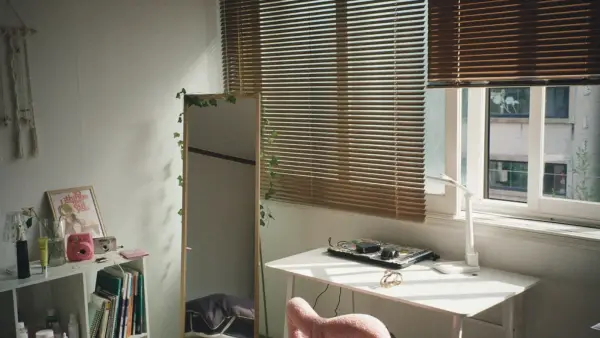
Children who always walked home from school the long way - who added an extra ten minutes to the route because the shortcut passed too many neighbors who might wave and want conversation, who discovered side streets and back alleys and that one path through the quiet end of the park that nobody else used - often become adults who take the long way everywhere, who drive past their own exit on the highway just to have five more minutes alone, because a child who found that distance was the only form of peace she could manufacture never stopped creating routes between herself and the people who love her
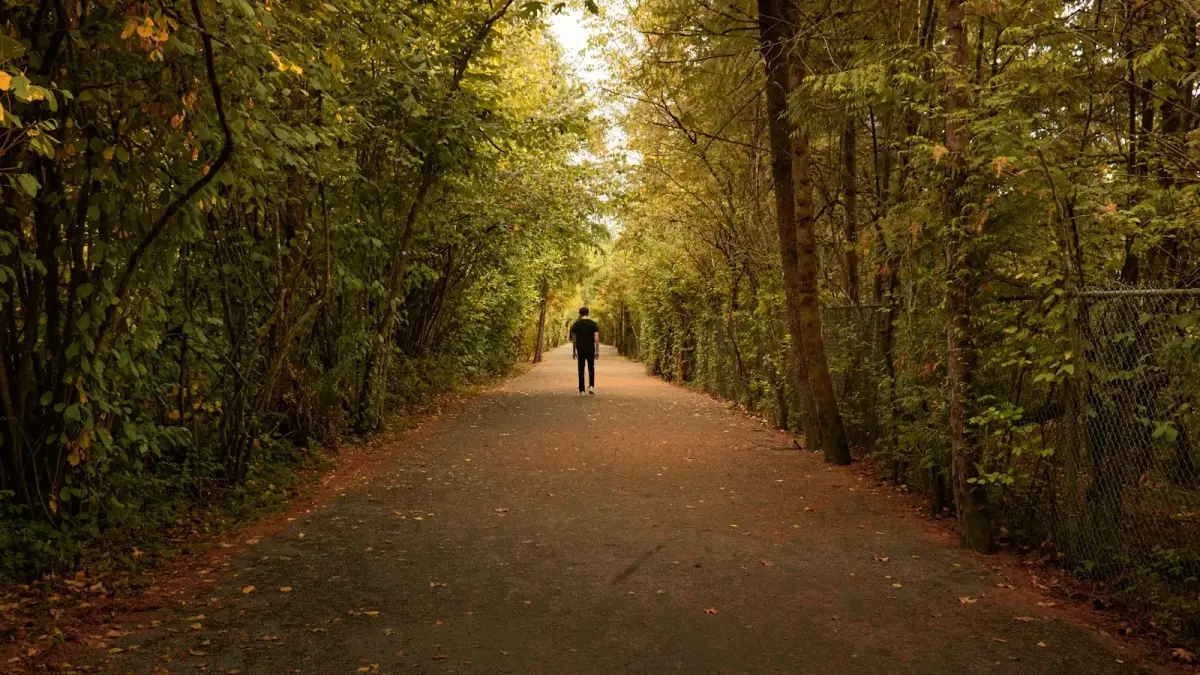
I was nine years old the first time I realized I had a secret.
Not a dramatic one. Not the kind you whisper to a best friend during a sleepover. Mine was a route. A long, winding, completely unnecessary path home from school that added twelve minutes to a walk that should have taken eight.
I had discovered it by accident one afternoon when I saw Mrs. Patterson out watering her front yard on my usual street. She was kind. She always asked about my grades, my parents, whether I was eating enough. And I just couldn’t do it that day. I couldn’t produce one more smile, answer one more question, perform one more version of the polite little girl everyone expected me to be.
So I turned left instead of right. Found a side street I’d never noticed. It curved behind a row of older houses and emptied out near the quiet end of the park where the picnic tables were always empty. The path was longer. It was inefficient. And it was the most peaceful ten minutes of my entire day.
I never went back to the short way home.
If you were that child - the one who mapped alternate routes not because you were afraid of people but because you were exhausted by them - I want you to know something. That impulse didn’t disappear when you grew up. It just found new roads.
1. You choose the farther grocery store over the closer one
There’s a store seven minutes from your house. You know exactly where everything is. The parking lot is easy. It makes perfect sense to shop there.
But you drive to the one twenty minutes away. You’ve told yourself it’s because they have better produce, or the aisles are wider, or you like their brand of yogurt. And maybe all of that is true.
But the real reason is that nobody knows you there. No neighbors in the cereal aisle wanting to chat. No acquaintances near the deli counter who’ll ask how things are going and then stand there long enough that you have to invent an answer that sounds like living.
The farther store is anonymous. And for someone who grew up measuring peace in distance, anonymity is a luxury you’ll drive twenty extra minutes to afford.
2. You drive past your own exit on the highway
This is the adult version of the long way home, and you do it more often than you’ve ever admitted to anyone.
You see your exit approaching. You know you should take it. Dinner needs to be started, the dog needs to go out, someone is probably waiting. But you let the exit pass. Just five more minutes. Just one more song. Just a little more of this strange, moving solitude where nobody can reach you because you’re technically in transit.
A 2014 study published in the journal Science found that many people would rather administer mild electric shocks to themselves than sit alone with their thoughts for fifteen minutes. But you are not those people. You are the opposite of those people. You would drive an extra hour for fifteen minutes of windshield silence.
The highway, for you, is not a route. It’s a room with no door anyone can knock on.
3. You arrive places early just to sit in the car
You’re twenty minutes early for dinner at your friend’s house. You could go in. They wouldn’t mind. But instead you sit in the parked car with the engine off, looking at nothing in particular, breathing in the specific kind of quiet that only exists when you’re alone in a small, enclosed space with nowhere you need to be for a few more minutes.
This isn’t anxiety. This isn’t dread about the social event ahead.
This is refueling. This is the same thing that nine-year-old was doing on that longer path through the park - collecting enough silence to spend it generously on the people waiting inside.
4. You take walks that aren’t going anywhere
Your partner asks where you’re headed. “Just a walk,” you say. They ask if you want company. You say something kind but vague enough to mean no.
And then you walk. Not for exercise. Not for fresh air. Not toward any destination. You walk because walking is the most socially acceptable way to be alone in public without anyone questioning whether something is wrong.
Developmental psychologist Donald Winnicott wrote extensively about the capacity to be alone - and how it develops in childhood as a sign of emotional maturity, not detachment. Children who learn to be comfortably alone in the presence of a caregiver carry that capacity into adulthood. But children who learned to be alone because they needed to - because solitude was the only environment quiet enough to hear themselves think - carry something slightly different. They carry a hunger for it.
Your walks are not aimless. They are aimed precisely at the thing you’ve always needed most.
5. You have a “spot” that nobody else knows about
A bench at the far end of the park. A coffee shop in a neighborhood you don’t live in. A particular stretch of road with a shoulder wide enough to pull over and watch the sky for a few minutes. A back corner of the library where the outlets work and the chairs face the wall.
You found this spot the same way you found that long route home. By wandering. By taking a wrong turn that turned out to be the most right turn you’d made all week.
Everyone in your life knows the version of you that shows up, that listens, that holds space. Almost nobody knows about the bench. And that’s not because you’re hiding. It’s because some spaces lose their power the moment you share them.
6. You feel guilty about needing distance from people you love
This is the part that lives underneath all the longer routes and the extra driving and the parking lot sitting. The guilt.
Because these aren’t strangers you’re creating distance from. These are the people who love you. Your partner. Your children. Your closest friends. And you love them back - fiercely, completely. Which is exactly why it feels so confusing that you still need twelve minutes of silence between the world and your front door.
A 2021 study in the Journal of Research in Personality found that people with high needs for solitude reported equal or greater relationship satisfaction compared to more socially oriented individuals - but they also reported higher levels of guilt about their need for alone time. The researchers noted that the guilt wasn’t coming from the solitude itself. It was coming from a culture that treats wanting to be alone as a rejection of the people around you.
You are not rejecting anyone. You are doing what you’ve done since you were nine years old. You are walking the long way home so that when you arrive, you can actually be there.
7. You process everything on a delay
Someone says something hurtful at lunch. You smile. You nod. You change the subject. And then four hours later, sitting alone in your car or lying in bed in the dark, the feeling finally reaches you.
This is not because you’re slow to feel. It’s because you learned early that feelings need space to land, and there’s rarely enough space in the moment.
The child who walked the long way home was doing something sophisticated that no one recognized as sophisticated. She was building processing time into her day. She was creating a buffer between the stimulation of school and the expectations of home. That twelve-minute walk was not wasted time. It was emotional digestion.
And you still need it. You still need the drive home to replay the meeting. The shower to untangle the argument. The walk around the block to figure out what you’re actually feeling before someone asks you to name it.
8. You love people deeply but from a slight distance
Here is the thing I want you to hear, because I don’t think anyone has said it to you clearly enough.
The distance you create is not a wall. It is not coldness. It is not evidence of something broken inside you.
It is the architecture of your love.
You figured out as a child that you could only give what you had, and that what you had was directly proportional to how much quiet you’d been able to collect. So you built routes. You found side streets and back paths and hidden corners of parks. You manufactured peace in a world that never offered it voluntarily.
Susan Cain, in her research on introversion, describes how introverts don’t have less capacity for connection - they have a different economy of energy. Every interaction costs something. And people who learned this early don’t spend less. They just budget more carefully.
You budget your energy so that when you sit across from someone you love, you can actually see them. You can actually listen. You are actually present - not performing presence while internally calculating how much longer until you can be alone.
That twelve-minute walk made you someone who shows up fully. Even if it takes you a little longer to arrive.
The long way home was never about avoiding people. It was about making sure that when you finally walked through the door, you had something left to give. And you still do this. Every extra mile, every passed exit, every quiet parking lot - these are not signs of withdrawal. They are acts of preparation.
You are not distant. You are someone who learned that love requires space the way a fire requires air.
And the routes you build - the ones nobody else can see, the ones that wind through the quiet parts of your day - those are not detours.
They are how you get home.