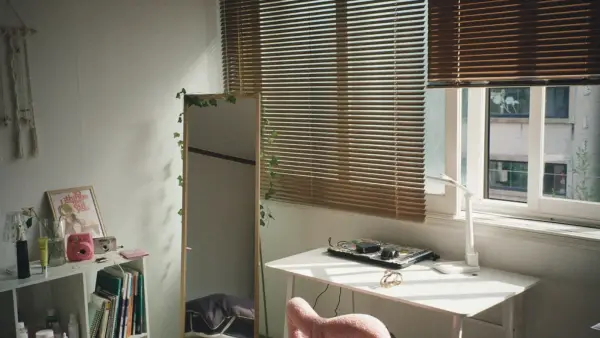
Children who closed their bedroom door the moment they got home from school and sat in complete silence for twenty minutes before they could speak to anyone - who needed the performing to stop and the noise of other people's expectations to drain out of their body before they could be a person again in their own home - often become adults who cannot start their evening until they have had at least fifteen minutes where nobody asks them a single question
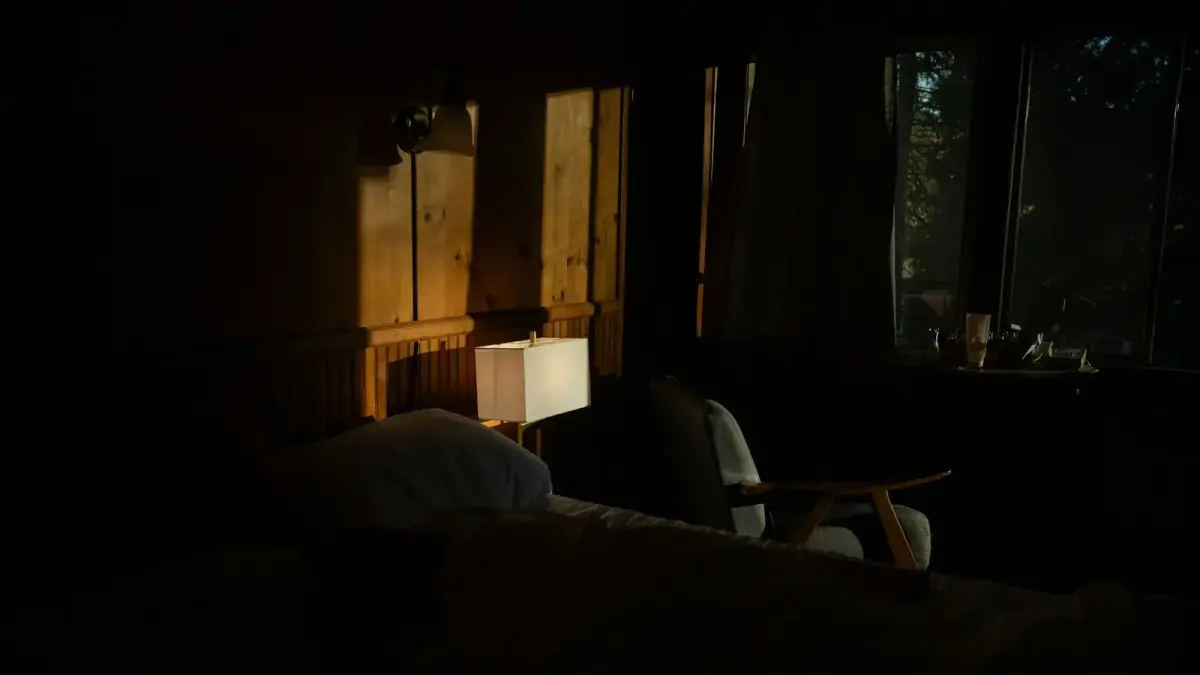
The Click of My Bedroom Door
I remember the sound more than anything else about coming home from school. Not the bus brakes. Not the front door. The sound of my bedroom door clicking shut behind me - that small, definitive latch that meant the day was finally over.
I would drop my backpack on the floor without unzipping it. I would sit on the edge of my bed, sometimes lie flat on the carpet, and just let the silence land on me like a blanket being lowered over my whole body. I didn’t read. I didn’t listen to music. I sat there and let the noise drain out.
My mother used to stand on the other side of that door. I could feel her there. She wanted to ask me about my day, and I understand now that it came from love - a genuine desire to know her daughter. But in those first minutes home, every question felt like someone reaching into a wound before it had closed. I needed the performing to stop. I needed the fluorescent-lit, socially choreographed, answer-when-called version of myself to dissolve before I could find the real one underneath.
I was not being difficult. I was not depressed. I was full - completely, overwhelmingly full of other people - and I needed somewhere to set them all down.
I am forty-six now, and I still cannot begin my evening until I have had at least fifteen minutes where nobody asks me a single question. The bedroom door just looks different.
1. The car-sit - staying in the driveway after you’ve already arrived home
You pull into the driveway or the parking spot and the engine goes off. And you don’t move. Your hand stays on the steering wheel or falls into your lap, and you sit there in the sealed quiet of a vehicle that has become the last room that belongs entirely to you before you walk into a house full of people who need things.
This is the adult version of closing the bedroom door. The car becomes the decompression chamber - the airlock between the public self and the private self.
A 2014 study published in the Journal of Environmental Psychology found that transitional spaces - environments that exist between one social context and another - play a critical role in psychological recovery from social demands. The researchers noted that people who lacked adequate transition time between social roles reported higher levels of emotional exhaustion and identity confusion.
You’re not avoiding your family. You’re not dreading your home. You’re giving your nervous system the runway it needs to shift from the person the world required today to the person who actually lives inside you.
2. The bathroom retreat at social gatherings
You excuse yourself from the dinner table, the party, the family gathering. You lock the bathroom door. And you stand there, sometimes sitting on the edge of the tub, breathing in the silence of a room where nobody can see your face or ask you to produce an expression.
This is the grown-up version of the child who hid in their room. The bathroom is the only socially acceptable place to disappear in another person’s home. Nobody questions a bathroom visit. Nobody times it - at least not until you’ve been gone eight minutes.
What you’re doing in there is not avoiding the people you love. You’re setting down the weight of tracking every conversation, every facial expression, every shift in group energy. Susan Cain writes in Quiet that introverts process social stimulation more deeply than extroverts - not less effectively, but more thoroughly. Every interaction requires more metabolic resources. The bathroom visit is not an escape. It is a metabolic pause.
3. The commute as sacred buffer - and the grief when it disappears
Some people defend their commute with a ferocity that puzzles everyone around them. Thirty-five minutes in a car alone, no podcast, no phone call, just the road and the quiet hum of being between places. When someone suggests carpooling, something inside them tightens.
The commute is the modern equivalent of those twenty minutes on the bedroom floor. It is structured, justified, and invisible. Nobody calls you antisocial for driving to work. Nobody questions why you need thirty minutes between leaving the office and arriving at your front door.
When remote work eliminated the commute for millions of people, many introverts discovered something alarming - they had lost their decompression buffer entirely. The office ended and the home began in the same room, in the same chair, in the same breath. There was no threshold to cross. No door to close. The performing and the being collapsed into one continuous state.
If losing your commute felt like losing a limb, it’s because you lost the space between your selves.
4. Not answering the phone for the first hour home
The phone rings. You see who it is. You love them. And you send it to voicemail anyway - not because you don’t want to talk to them, but because you haven’t finished arriving yet.
This is the child who couldn’t answer their mother’s questions about school for the first ten minutes. The same child, thirty years later, still needing a buffer between the world’s voice and their own. A 2019 study published in Frontiers in Psychology found that individuals with high sensory processing sensitivity required significantly longer recovery periods after periods of sustained social engagement, and that interrupting the recovery period - even with pleasant stimulation - extended the total recovery time.
Read that again. Even pleasant interruption extends recovery. The phone call from someone you adore, the cheerful question from a partner who missed you, the child who runs to the door shouting your name - all of it is beautiful, and all of it lands on a nervous system that hasn’t finished processing the last six hours.
You’re not cold. You’re not ungrateful. Your body is still in the airlock.
5. The evening walk before dinner - moving through silence to arrive at home
Some people come through the door, change their shoes, and walk right back out. Not to run errands. Not to exercise. To walk in silence through a neighborhood where nobody knows their name and nobody needs anything from them.
This is what the child on the bedroom floor was doing - not resting from physical exertion, but moving through a different kind of space. A space with no audience. The evening walk is not exercise. It is translation. It is the body physically crossing a threshold that the mind requires before it can shift modes.
Daniel Goleman has written extensively about the concept of attention fatigue - the neurological cost of sustained focus on social environments. The evening walk restores what Goleman calls open awareness, the unfocused, receptive state that the brain needs to replenish its capacity for directed attention. The walk isn’t leisure. It is maintenance.
6. The delay before you can make conversation at dinner
Your family sits down. The food is served. Someone asks about your day, and the answer that comes out is flat. Not because you had a bad day. Not because you don’t want to share. Because the performing self hasn’t fully dissolved yet, and the real self hasn’t fully arrived, and you’re caught in the gap where language doesn’t quite work the way it should.
This is the child whose mother learned to give them ten minutes before asking questions. The parent who figured it out - who said “go change your clothes, dinner’s in twenty” instead of “tell me everything” - gave their child the greatest gift a quiet kid can receive. Permission to arrive on their own schedule.
The parent who didn’t understand it - who took the silence personally, who said “why won’t you talk to me, I just want to know about your day” - wasn’t wrong to want connection. But they were asking for words from a child who hadn’t finished translating the day back into a language they could speak at home. The public version of them had vocabulary. The home version needed time to find theirs.
7. The specific relief of being alone in a house - not just quiet, but genuinely alone
There is a difference between a quiet house and an empty house, and every person reading this knows exactly what that difference feels like.
A quiet house still has someone in the next room. Their presence is a variable. They might speak. They might walk in. They might need something. The nervous system stays at low alert - not stressed, but not fully at rest. Monitoring at minimum power.
An empty house has no variables. The silence is complete and guaranteed. Nobody is going to walk through a door. Nobody is going to call your name from another room. A 2021 study published in the Journal of Personality and Social Psychology found that solitude - defined as the complete absence of social monitoring demands - produced measurable reductions in cortisol and cognitive load within minutes, even among participants who self-reported no desire to be alone.
You didn’t need to want it for it to help. The nervous system knew what it needed before the conscious mind did. This is why you feel a wave of something close to relief when everyone leaves. Not because you don’t love them. Because your body finally stopped tracking.
8. The inability to go from one social event to another without a gap
Saturday brunch at eleven. A friend’s birthday party at four. These two events have five hours between them, and to an extrovert that sounds like plenty. To you, it sounds like a math problem you might not be able to solve.
Because it’s not about time. It’s about transition. You need enough space between performances to fully dissolve one version of yourself and reassemble another. Brunch-you and birthday-party-you are not the same person. They have different registers, different energy levels, different social vocabularies. And the translation between them is not instant.
The child who needed twenty minutes on the bedroom floor was not being lazy. They were not avoiding their family. They were performing the essential, invisible labor of transitioning between selves - the school self and the home self - and their body understood, long before any psychologist gave it a name, that this transition required silence, stillness, and the absolute absence of being perceived.
The Threshold Between Worlds
Here is what I want you to know, if you were that child. If you are that adult.
You are not antisocial. You are not difficult. You are not broken, and you were never broken. You are a person whose nervous system processes the world more deeply than most, and depth requires time. It requires a runway. It requires a door you can close - literal or metaphorical - between who the world needed you to be today and who you actually are.
The decompression buffer is not a weakness. It is the mechanism by which you remain yourself. Without it, you don’t become more social or more available. You become thinner. More scattered. Less present. The people who love you get a version of you that has been stretched across too many rooms without enough silence between them.
The child who closed the door knew something important. They knew that they could not give themselves to anyone until they had gathered themselves back from everywhere they’d been scattered. And the adult who sits in the car for five extra minutes, who walks around the block before dinner, who needs the first fifteen minutes to be question-free - that adult is doing the same thing.
You are not hiding from your life. You are arriving at it. And you always have been.