Children who grew up in homes where the emotional atmosphere could shift without warning often become adults who clean the entire house when they are anxious - not because tidiness soothes them but because a child who could not control a single thing about the emotional weather in their home discovered that a clean counter and a made bed and a folded towel was the only proof they had that something in their world was still under their management
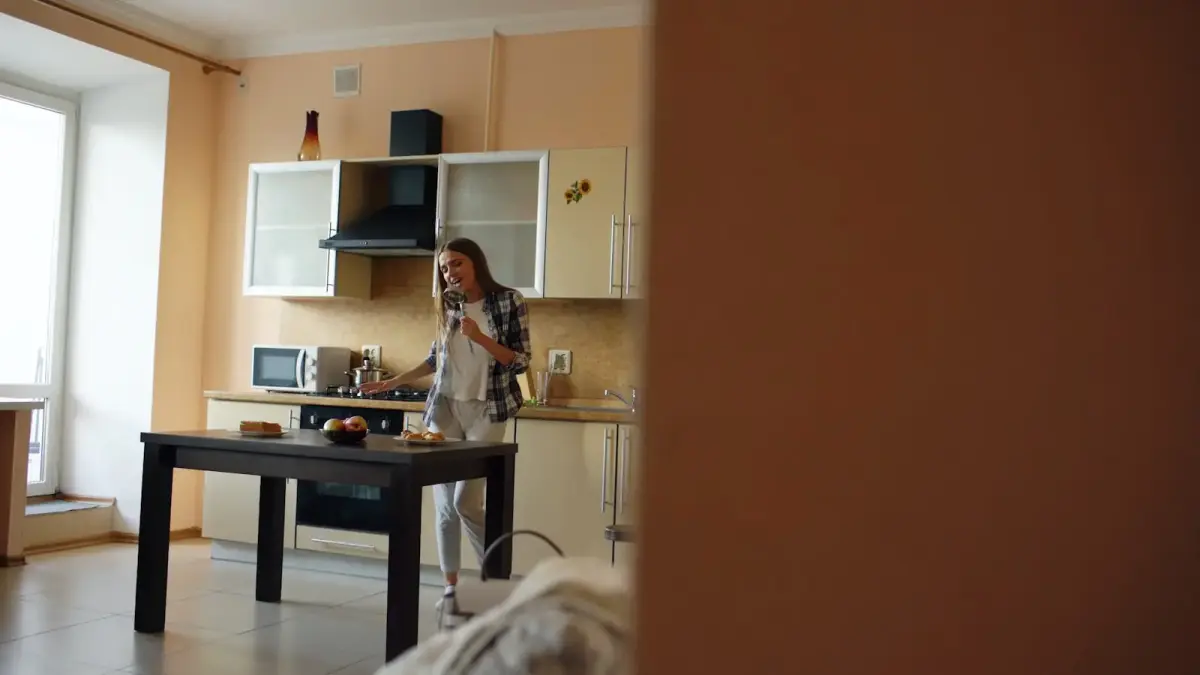
When the anxiety hits, I reach for the sponge
I noticed it again last Tuesday. I’d gotten an email from my daughter’s school - nothing urgent, just a scheduling change - and within fifteen minutes I was on my hands and knees scrubbing the grout between the kitchen tiles.
I wasn’t even aware I’d started. One moment I was reading the email, feeling that familiar tightening behind my ribs, and the next I was elbow-deep in cleaning products, reorganizing the shelf under the sink. My husband walked in and said, “The house looks great,” and I wanted to cry because I wasn’t cleaning the house. I was cleaning the feeling.
If you’ve ever found yourself furiously organizing a closet at 11 p.m. after a tense phone call, or scrubbing the bathroom before a difficult conversation you know is coming, this might land differently for you than it does for most people. Because for some of us, cleaning was never really about cleaning. It was about survival.
The house that breathed
Some homes have weather. Not the kind you can check on your phone - the kind that lives in the walls and changes without a forecast.
You’d walk through the front door after school and immediately scan. Was the kitchen light on or off? Was the TV volume up or down? Were the shoes by the door placed neatly or kicked aside? You became a meteorologist of mood before you could spell the word.
In homes like these, the emotional atmosphere wasn’t stable enough to trust. A Tuesday morning could be warm and easy, everyone laughing over cereal. By Tuesday evening, the air was thick enough to choke on, and nobody would explain why. You learned fast that the shift wasn’t about you - but you also learned, just as fast, that it didn’t matter whether it was about you. You’d still be caught in it.
A 2004 study published in the Journal of Personality and Social Psychology found that children raised in emotionally unpredictable environments develop heightened sensitivity to environmental cues - what researchers call “shift and persist” strategies. These children learn to monitor their surroundings with an intensity that most people reserve for genuinely dangerous situations. The unpredictability itself becomes the threat.
And when the threat is everywhere and nowhere, when you can’t point to it or name it or make it stop, you find the one thing you can point to. The one thing you can name. The one thing you can make stop.
A mess on the counter.
The logic of the sponge
Here is what nobody tells you about anxiety cleaning: it makes perfect sense.
You were a child with no authority over the emotional climate of your home. You couldn’t make the yelling stop. You couldn’t make the silence less heavy. You couldn’t ask what was wrong because the answer was either “nothing” or something too big for a child to hold.
But you could make your bed. You could line up your shoes. You could wipe down the kitchen table and feel, for thirty seconds, like you had done something that mattered.
It wasn’t about tidiness. It was about proof. Proof that you existed in a space you could shape. Proof that your hands could produce order even when everything else was dissolving into noise. The folded towel wasn’t a folded towel. It was evidence that someone in this house was still trying.
Developmental psychologist Gabor Mate has written extensively about how children in chaotic environments develop what he calls “functional coping strategies” - behaviors that serve a real purpose in an impossible situation. The cleaning wasn’t neurotic. It was brilliant. You found the only lever you had and you pulled it, over and over, because it was the only thing that gave you even the thinnest illusion of control.
And illusions matter when you’re eight years old and the real thing isn’t available.
What it looks like now
You’re an adult now, and nobody is slamming doors or going silent for three days without explanation. But your body doesn’t know that.
Your body still reads ambiguity as danger. An unanswered text. A shift in your partner’s tone. A meeting that gets moved to a different time. These things register in the same neural pathways that once tracked whether it was safe to come out of your room.
And when the alarm goes off - when that old, wordless dread starts pooling in your chest - you don’t sit with it. You can’t. Sitting with it feels like drowning. So you move. You scrub the stovetop. You reorganize the pantry. You fold every piece of laundry in the house and then refold the ones that weren’t crisp enough.
A 2019 study in Frontiers in Psychology found that repetitive, structured physical activity - including cleaning - activates the parasympathetic nervous system, which helps regulate the body’s stress response. The rhythm of wiping, folding, sorting creates a predictable sensory loop that essentially tells your nervous system: this is manageable. This is ordered. This is safe.
You’re not being compulsive. You’re self-regulating with the only tool that ever worked.
The difference between clean and controlled
There’s a distinction that matters here, and it’s one that most people miss entirely.
People who enjoy cleaning feel satisfied when they’re done. They look at the clean room and think, “That’s nice.” They feel a gentle contentment and then they move on to something else.
People who anxiety-clean feel relieved when they’re done - but only briefly. Because the cleaning was never about the mess. It was about the feeling underneath the mess. And that feeling doesn’t live in the grout or the dust or the laundry pile. It lives in the nervous system of a person who learned, very young, that the world could change without warning.
So the relief fades. And the scanning starts again. And eventually there’s another email, another tone of voice, another pause in a conversation that lasts half a second too long, and the sponge comes back out.
If this is you, I want you to notice something. Notice that the urge to clean arrives at the exact same moment as the urge to control. They’re not two separate impulses. They’re the same impulse wearing different clothes.
You were solving a real problem
I think one of the most painful parts of recognizing this pattern is the shame that sometimes follows it. The feeling that you’re being ridiculous. That you should be able to just sit down, breathe, and let the anxiety pass without reorganizing your entire linen closet.
But that shame misses the point.
You developed this strategy because you were a child in a home where the emotional ground was never stable. You needed something - anything - to anchor yourself. And you found it. You found it in the act of creating order where there was none, of making something neat and visible and complete in a world that felt like it could unravel at any second.
Susan Cain, in her work on temperament and sensitivity, has written about how highly responsive children often develop elaborate internal coping systems that serve them well into adulthood. The systems aren’t the problem. They’re evidence of a mind that was always working, always adapting, always finding ways to stay okay when okay wasn’t being offered freely.
Your cleaning habit isn’t a flaw. It’s a scar from a very specific kind of intelligence - the intelligence of a child who figured out how to survive an environment that wasn’t designed for them to thrive in.
Letting the counter stay dirty
I’m not going to tell you to stop cleaning when you’re anxious. That would be like telling someone to stop breathing when they’re underwater. The behavior exists because it works, and taking it away without replacing it with something else is just cruelty dressed up as self-improvement.
But I will say this: the next time you find yourself reaching for the sponge at 10 p.m. after a difficult day, pause for just a moment. Not to stop yourself. Just to notice.
Notice the tightness in your chest. Notice the thought that’s circling. Notice the way your body is already moving toward the kitchen before your mind has even caught up.
And then, if you want to, clean. But do it knowing what you’re actually doing. You’re not cleaning the counter. You’re soothing a child who never learned that the world could be messy and still be safe.
That’s not weakness. That’s not dysfunction. That’s a person who found a way through.
The counter can stay dirty sometimes. The world won’t end. But if you need to wipe it down tonight, that’s okay too. You learned this for a reason, and the reason was good enough at the time.
You did what you could with what you had. And what you had was a sponge, a towel, and a fierce, quiet need to make one small corner of the world make sense.
That’s not something to fix. That’s something to honor.