Children who grew up setting their own alarm clocks, packing their own lunches, and walking themselves to school before anyone else in the house was awake often become adults who cannot ask for help with even the smallest task, because a child who learned at seven that the morning belonged to them alone never received the message that self-sufficiency was supposed to have a limit
I made the same sandwich every morning for three years. Two slices of white bread, a thin layer of peanut butter, folded into a plastic bag that I pressed flat before zipping shut. Sometimes an apple. Sometimes a juice box if there were any left in the fridge. I packed it in the same brown paper bag, set it on the counter next to my backpack, and walked out the front door into a neighborhood that hadn’t woken up yet.
I was seven the first year I did this. My alarm went off at 6:15. The house was dark and perfectly still. My parents were asleep - not absent, not neglectful in any way that would have made a teacher file a report. My mother worked late. My father left before dawn some days and slept through others. They loved me. They were just not morning people, and mornings, it turned out, were mine.
Nobody checked my backpack. Nobody asked if I had my homework. Nobody stood at the door and watched me walk down the sidewalk toward school. And I didn’t think any of this was unusual until I was thirty-four years old, sitting in a therapist’s office, and she asked me a question I had never once considered: “Who helped you get ready for school in the morning?”
I stared at her. The question didn’t compute. Get ready? I got myself ready. That was just - that was just what mornings were.
The Quiet Kitchen at 6 a.m.
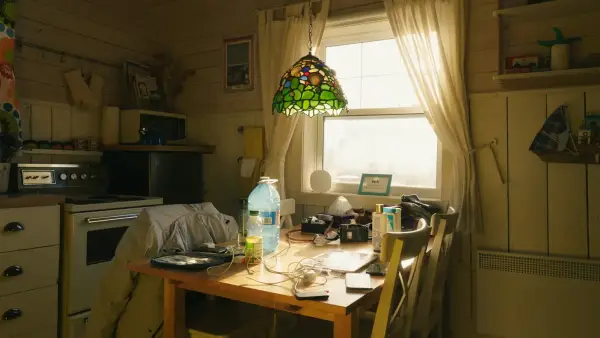
There is a particular quality of silence in a house where everyone is sleeping except you. It’s not peaceful. It’s not scary. It’s something in between - a silence that belongs to you by default, because no one else is awake to claim it.
You learn to move through it carefully. You don’t slam cabinet doors. You don’t run the faucet too hard. You eat cereal standing at the counter because sitting at the table feels strange when every other chair is empty.
The kitchen at 6 a.m. was my operating room. I had a system. Lunch first, then cereal, then teeth, then shoes by the door, then backpack, then coat. I did it the same way every single morning because a seven-year-old with no one supervising her routine needs a ritual the way a surgeon needs a checklist. One deviation and the whole thing falls apart.
I packed my backpack the night before. Always. Not because I was organized by nature - I was seven, I was not organized about anything - but because if I forgot my math worksheet, there was no one awake to help me find it. There was no safety net. The morning had no margin for error, and so I eliminated error before the morning even arrived.
When Self-Sufficiency Becomes the Only Language You Speak
John Bowlby, the psychiatrist who gave us attachment theory, wrote extensively about how children develop their internal working models of relationships in the earliest years. A child who reaches for a caregiver and is consistently met learns that people are reliable, that asking is safe, that needing something from someone is not a risk.
A child who doesn’t reach - not because reaching was punished, but because there was simply no one awake to reach for - learns something different. They learn that the world is navigable alone. That mornings can be handled. That hunger is solvable without assistance. And these lessons feel like competence, like strength, like something to be proud of.
They are also, quietly, a form of loss.
A 2019 study published in the Journal of Research in Personality examined adults who reported high levels of childhood self-management - children who routinely handled daily tasks like meals, hygiene, and school preparation without adult involvement. The researchers found that these adults scored significantly higher on measures of compulsive self-reliance and significantly lower on comfort with depending on others. They didn’t lack social skills. They didn’t avoid people. They simply could not metabolize help. It came toward them and their bodies rejected it, the way a stomach rejects food it has never learned to digest.
I recognized myself in every line of that paper. Not as a diagnosis. As a biography.
The Pride That Is Actually Grief
Here is the part that takes the longest to see.
You are proud of the child you were. You should be. That child was resourceful, capable, and quietly brave every single morning. That child figured out how to tie shoes that no one taught them to tie, how to make a lunch that no one showed them how to make, how to walk half a mile to school along a route that no one ever walked with them first.
But pride is not the only thing living inside that memory. There is also grief - the particular grief of realizing, usually somewhere in your forties, that other children had someone buttering their toast. Other children had a parent standing at the door saying, “Do you have your permission slip?” Other children were driven to school in a warm car while it rained, and you walked, and it didn’t occur to you to ask for a ride because asking for things was not part of your morning vocabulary.
This grief doesn’t announce itself. It shows up sideways. It shows up when you watch your own child getting ready for school and you feel a tightness in your throat that doesn’t match the moment. It shows up when your partner offers to make you coffee and you say “I’ll get it” before they’ve even finished the sentence. It shows up when someone at work says, “Let me help you with that,” and your first instinct - your very first, body-level instinct - is to refuse.
Gabor Mate has written about how early emotional patterns don’t just shape personality - they wire the nervous system. A child who consistently manages their own care learns, at a neurological level, that support is not coming. And the nervous system does not forget this lesson just because the adult mind now knows better.
The Backpack Packed the Night Before
If you were this child, I don’t need to tell you about the backpack. You already know.
You know about checking it twice. You know about the zipper pocket where you kept lunch money folded into a small square. You know about the homework folder that was always in the same slot because if it wasn’t, and you couldn’t find it at 6:20 a.m. with no one to help you look, the entire day unraveled before it began.
You know about the shoes by the door. The coat on the same hook. The house key in the same pocket every single time, because losing your key meant standing on the porch until someone came home, and standing on the porch meant you had failed at the one job the morning gave you.
This is what people don’t understand when they call you “organized” or “put-together” or “someone who really has it all figured out.” They think this is a personality trait. It is not a personality trait. It is an emergency protocol that a child developed because the alternative was chaos, and chaos, in a house where no one else was awake, meant being completely alone with a problem that had no solution.
The Sandwich That Was Always the Same
My lunch was peanut butter on white bread for three years. Not because I liked it particularly. Because I was seven, and then eight, and then nine, and a child that age has a limited repertoire, and nobody expanded it.
I didn’t know you could put lettuce on a sandwich until I ate lunch at a friend’s house in fourth grade. Her mother had made her a turkey sandwich with lettuce, tomato, and some kind of mustard I’d never seen before. It was cut diagonally. There was a napkin folded around it. There was a note inside the bag that said “Have a great day!” with a small heart drawn next to it.
I looked at my peanut butter sandwich in its crumpled plastic bag and felt something I couldn’t name. Not jealousy exactly. Something closer to confusion. Like discovering that a room you’d been living in had a window you never knew was there, and through it you could see a world where someone made your lunch and thought about you while they did it.
I didn’t tell anyone about that feeling. I wouldn’t have known how. The child who packs their own lunch doesn’t have the vocabulary for “I wish someone would do this for me,” because wishing for something you’ve never had requires first understanding that it exists.
The Walk That Nobody Witnessed
The walk to school was twelve minutes. I know because I timed it once with a stopwatch I found in a kitchen drawer. Twelve minutes along the sidewalk, past the houses where occasionally I could see through lit windows - a mother pouring orange juice, a father kneeling to tie a child’s shoe, a family sitting at a table together in the kind of yellow kitchen light that looked warm even from the outside.
I walked past those windows every morning. I don’t know if I felt anything specific about them at the time. I think I just cataloged them, the way a child catalogs facts about the world that don’t yet have emotional weight. Other families do mornings differently. That was the fact. It sat in me without interpretation for decades.
But the walk did something to me that I’m only now beginning to understand. It taught me that the space between my house and the rest of the world was mine to cross alone. That the distance between where I was and where I needed to be was always, fundamentally, my problem to solve. No one was going to drive me. No one was going to walk beside me. The sidewalk was mine and the morning was mine and the getting-there was mine.
And I carried that lesson into every job, every relationship, every difficult conversation, every hospital waiting room, every flat tire, every broken heart. The getting-there was mine. Always mine.
What We Never Learned to Ask For
A 2021 study published in Frontiers in Psychology examined the concept of “earned secure attachment” - the process by which adults who did not receive consistent caregiving in childhood can develop secure attachment later through conscious relationships and self-awareness. The researchers found that the first barrier to earned security was often the individual’s inability to recognize their self-sufficiency as a wound rather than a virtue. You cannot heal what you are still calling a strength.
This is what happened to us. We were not taught that self-sufficiency had a ceiling. No one ever said, “You’re old enough to make your own lunch, but you should still be able to ask for help when you need it.” No one drew that line because no one was awake to draw it. And so self-sufficiency became absolute. It became the floor, the walls, the ceiling, and the roof. It became the entire house we lived in - a house with no doors for anyone else to enter through.
We became adults who carry groceries in one trip even when our fingers are turning white. Adults who sit with migraines for hours before mentioning them. Adults who build entire careers and raise entire families and manage entire households and never once say the sentence that the morning child could not say: “I need help with this.”
Not because we’re strong. Because the morning taught us that no one was listening, and the body believed it, and the body has a longer memory than the mind.
If you were this child - the one in the quiet kitchen, the one with the same sandwich, the one who walked alone past windows full of light - I want you to know something you were never told at 6:15 a.m. on all those dark mornings.
You were not supposed to do all of that by yourself. You were seven. The morning was not supposed to belong to you alone. And the fact that you handled it does not mean you didn’t deserve someone standing beside you, checking your backpack, asking if you had everything you needed.
You did deserve that. You still do.