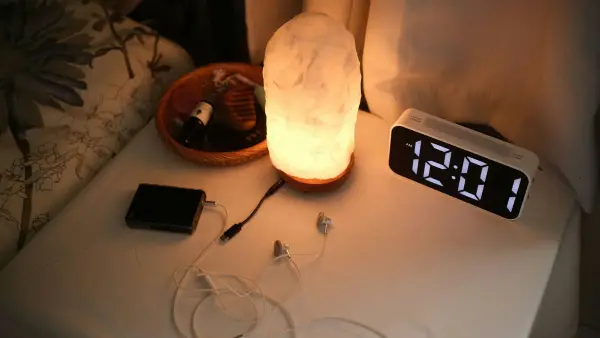
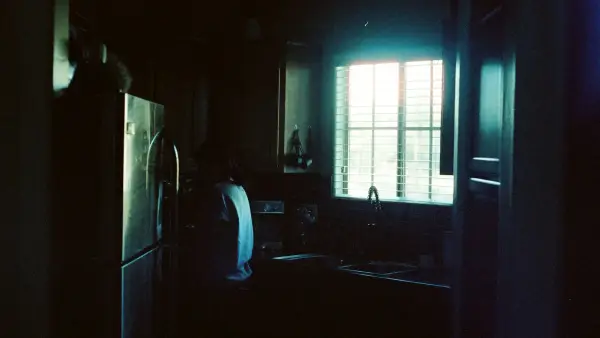
Children who never told their parents they were struggling - who hid the notes from the school counselor, cleaned up their own tears in the bathroom before dinner, and practiced saying 'I am fine' until it was indistinguishable from the truth - often become adults whose closest friends say 'I had no idea' when something finally breaks through, not because they are secretive but because a child who decided at nine that her pain was too expensive for the household budget never received the update that the budget changed
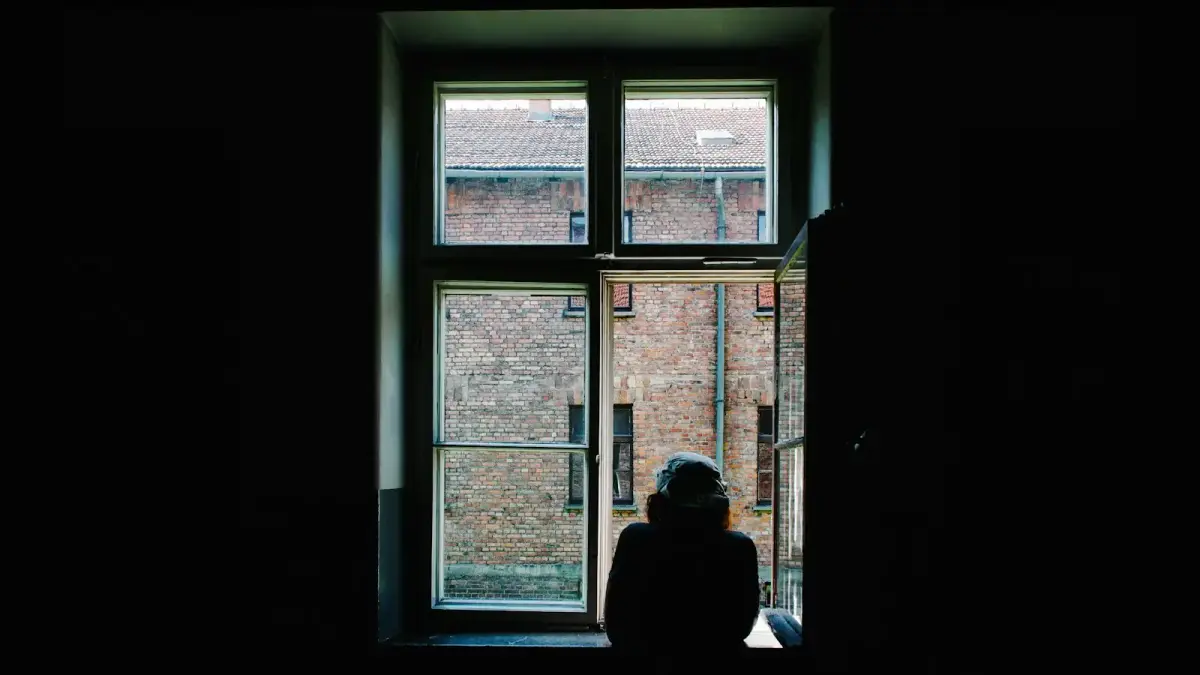
The Bathroom Accountant
I was nine when I learned how to cry without making a sound.
Not because anyone told me to stop crying. Not because someone hit me or punished me for it. But because I could hear my mother on the phone in the kitchen, talking to my aunt about the electricity bill, and something inside me understood - with the ruthless clarity that only a child possesses - that this household could not afford another problem right now.
So I went into the bathroom, locked the door, turned on the faucet, and handled it myself.
I didn’t know I was making a decision that would follow me for thirty years. I thought I was being helpful. I thought I was being good. I was, in fact, performing a kind of emotional accounting that no nine-year-old should know how to do - calculating the cost of my pain against the available resources in the house and concluding, quietly, that I could not afford to file this claim.
The faucet became my therapist. The locked door became my office. And “I’m fine” became the annual report I submitted to everyone who asked.
The Ledger No One Sees
Here is what that child learns to track, without ever being taught: the weight of a parent’s sigh when they sit down after work. The specific silence that means someone is holding something together with their teeth. The number of times a parent says “not right now” before “not right now” becomes a permanent weather pattern.
This is not abuse. Let me be clear about that. Many of these households are full of love - real, sincere, overwhelming love. The parents are doing their absolute best with what they have. But what they have is not enough to go around, and the child can see the math even when no one shows them the numbers.
A 2019 study published in the Journal of Child Psychology and Psychiatry found that children who perceived their parents as emotionally overwhelmed were significantly more likely to develop what researchers call “precocious emotional self-regulation” - essentially, they learned to manage their own distress years before their brains were developmentally equipped to do so.
They did not learn this because they were gifted. They learned it because they had to.
The child starts keeping a ledger. Not a real one. But a felt one. Mom is stressed about money - don’t mention the kids at school. Dad seems tired - don’t bring up the thing that happened at recess. The house feels tight tonight - swallow it.
And swallowing becomes a skill. A masterful, invisible, perfectly executed skill.
The Art of Being Fine
The thing about “I’m fine” is that it is not a lie, exactly. It is a compressed file. Everything is in there - the loneliness, the bullying, the quiet terror of feeling like you are drowning in plain sight. But it has been zipped down to two syllables because the child learned that the full version takes up too much bandwidth for this network.
Gabor Mate writes extensively about how children who suppress their emotional needs in order to maintain attachment with overwhelmed caregivers are not choosing silence. They are choosing connection. The child calculates, at some preverbal, bone-deep level, that expressing pain might cost them the relationship they depend on for survival. So they compress.
They practice “I’m fine” in the mirror. They learn the exact facial expression that makes adults stop asking. They develop a timing instinct for when to bring something up (never) and when to bury it (always). And they get so good at it that by the time they are fifteen, seventeen, twenty-five, the performance is indistinguishable from the truth.
They are not lying. They genuinely do not know how to be anything other than fine. The compression algorithm has been running so long that the original files are almost inaccessible.
What the Budget Actually Looked Like
Let me describe what this child’s emotional budget looked like, because it might sound familiar to you.
There was a fixed income of parental attention. It was real. It was warm. But it was allocated before the child ever got to the table. Some went to a parent’s own unprocessed grief. Some went to a marriage that was either struggling or performing. Some went to a sibling who was louder, needier, or more visibly in crisis. Some went to just keeping the lights on and food in the refrigerator.
By the time the child arrived with their quiet, manageable, easily-dismissable problems - the loneliness, the unnamed sadness, the feeling of being somehow wrong - the budget was spent.
And the child, who was watching the books with terrifying precision, could see that.
So they did what any responsible accountant would do. They absorbed the cost themselves. They took their pain and filed it under “operating expenses” - the invisible, unglamorous costs of keeping the household running smoothly.
A 2021 study in Frontiers in Psychology found that adults who reported high levels of childhood emotional self-reliance showed patterns of brain activation remarkably similar to those seen in professional caregivers - nurses, therapists, social workers. Their brains had literally organized themselves around managing other people’s emotional states, even at the expense of recognizing their own.
The child became a professional. They just never got paid for it.
The Adult in the Room Who Was Never Actually an Adult
Fast forward twenty, thirty years. That child is now someone you know. Maybe someone you love. Maybe you.
They are the friend who always asks how you are doing but deflects when you ask them. They are the partner who handles a crisis with eerie calm and then falls apart three weeks later over something trivial - a broken mug, a parking ticket, a song on the radio. They are the person who, when something finally does break through the surface, leaves everyone around them saying the same stunned thing: “I had no idea.”
Of course you had no idea. You were never supposed to have any idea. The entire system was designed to make sure you never had any idea.
This is not secrecy. This is architecture. The child built a building with no windows facing outward, and they have been living inside it ever since, and the building is so well-constructed that from the outside it looks like a person who has it together.
But inside that building, the accountant is still sitting at the desk, still running the numbers, still calculating whether today’s pain is within budget or whether it needs to be deferred to a quarter that never comes.
The Budget Changed, but Nobody Told the Accountant
Here is the part that might break your heart a little, if you are this person.
The budget changed.
You grew up. You moved out. You built your own life. You have your own income, your own resources, your own people who love you and want to know when you are not okay. The emotional economy you are operating in is completely different from the one you grew up in.
But nobody told the accountant.
The nine-year-old who decided that her pain was too expensive is still running the numbers with the old spreadsheet. She is still looking at the household budget from 1995 and concluding that there is no room for her. She is still turning on the faucet and handling it in the bathroom, even though the bathroom is now in a house she owns, and the person on the other side of the door is someone who would drop everything to sit with her.
Brene Brown’s research on vulnerability makes a deceptively simple point that lands like a hammer for people like this: vulnerability is not weakness. It is the birthplace of connection, belonging, and love. But for the child who learned that vulnerability was a luxury item - something the household budget could not support - this is not just an intellectual concept to understand. It is a full rewiring of an operating system that has been running for decades.
You cannot just decide to be vulnerable. You have to teach the accountant that the budget changed. And the accountant does not trust new information easily, because the last time the numbers were wrong, a child got hurt.
The Update That Takes Years to Install
I want to be honest with you about something. This does not resolve quickly.
You do not read an article and suddenly start telling people how you feel. You do not have one good cry and dismantle thirty years of emotional infrastructure. The accountant is cautious by design. She was built to be cautious. Caution is what kept you safe.
A 2020 study published in the Journal of Personality and Social Psychology found that individuals with high childhood emotional suppression required, on average, repeated experiences of relational safety before they could begin to disclose emotional distress to close others. Not one experience. Repeated ones. The nervous system needs proof, not promises.
So the update installs slowly. It starts with small disclosures - telling someone you are tired when you are tired, instead of performing energy. Admitting that something bothered you, even if it feels small. Letting someone see you cry without immediately apologizing for it.
It starts with noticing the impulse to say “I’m fine” and pausing - not to force a different answer, but just to notice that the impulse is there. To recognize it for what it is. Not dishonesty. Not dysfunction. Just an old accounting system doing its job.
The Memo You Were Supposed to Get
If you are the person who learned to hide your pain because you calculated - correctly, at the time - that the household could not afford it, I want to tell you something that no one may have told you yet.
The budget changed.
You are no longer nine. The house you live in now - the life you have built, the relationships you have chosen - has room for you. Not the performing-fine version of you. Not the compressed-file version. The full, unzipped, takes-up-bandwidth version of you.
Your pain was never too expensive. It was just that the economy you were born into could not support it, and you did the only responsible thing a child in that position could do. You managed the books. You absorbed the cost. You kept the household running with a grace that nobody recognized because the whole point was that nobody was supposed to notice.
But you are not the accountant anymore. You do not have to run the numbers before you let yourself feel something. You do not have to check the emotional budget of every room you walk into before deciding whether your needs are affordable.
The budget changed.
And you are, finally, allowed to file the claim.