Children who were only photographed when they were performing - on stage, crossing a finish line, holding a certificate - who have hundreds of images of themselves in motion and almost none of them simply sitting still, often become adults who cannot rest without producing something visible, because the camera taught them the first lesson about their own worth
I found a shoebox of photographs in my mother’s closet last spring. There were dozens of me - holding trophies, standing in a recital dress, grinning beside a science fair board, blowing out birthday candles with my cheeks puffed wide.
I flipped through every single one, and when I reached the bottom of the box, I sat on the floor for a long time.
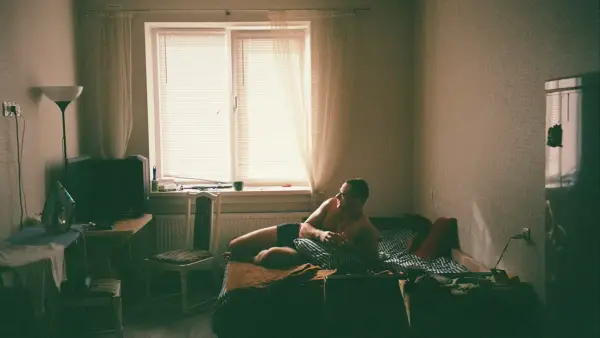
There wasn’t a single photograph of me reading. Not one of me sitting on the back porch watching the dog sleep. Not one of me drawing on the kitchen floor on a Tuesday afternoon when nothing was happening at all. Every image had a stage, a ribbon, a reason.
And I realized something that made my chest ache: I had hundreds of pictures of myself doing things, and almost none of me simply being a person in a room.
That pattern didn’t stay in the shoebox. It followed me into adulthood, into my weekends, into the low hum of panic I feel every time I sit on the couch for longer than twenty minutes without picking up my phone, opening my laptop, or starting a load of laundry. I am fifty-one years old, and I still don’t know how to be in a room where nothing is being produced.
If that resonates with you, keep reading. Because this isn’t about blaming the people who held the camera. It’s about understanding the quiet curriculum they accidentally created.
The camera was never neutral
We don’t think of family photography as a value system. We think of it as memory-keeping, something sweet and harmless, a way to hold on to time.
But for a child, the camera is a mirror. It tells them what matters. It tells them which versions of themselves are worth preserving.
When the camera only comes out during performances - the school play, the graduation, the soccer goal, the birthday party - the child absorbs a very specific lesson. Not through words. Through repetition.
The lesson is: you are worth recording when you are in motion. When you are achieving. When you are giving the room something to look at.
And the absence teaches the inverse: you sitting quietly with a book, you lying on the carpet staring at the ceiling, you simply existing on a Thursday evening - that version of you is not worth keeping.
A 2019 study published in the Journal of Personality and Social Psychology found that children develop their sense of self-worth largely through reflected appraisals - the messages they absorb about how others perceive them. These appraisals don’t need to be verbal. They can be gestural, environmental, structural.
The camera click was a gesture. And every time it went off during a performance and stayed silent during stillness, it became a small, invisible curriculum about what mattered.
Stillness starts to feel like disappearing
Here is what happens to a child who only gets documented in motion: rest begins to feel dangerous.
Not consciously. Not in any way they could name at seven or twelve or even twenty-five. But somewhere deep in the architecture of how they understand themselves, a wire gets crossed.
Stillness stops being rest. It becomes absence. It becomes the version of themselves that nobody thought was worth remembering.
So they fill it. They fill every gap. They become the teenager who takes on three extracurriculars and a part-time job. The college student who can’t watch a movie without folding laundry at the same time. The adult who describes a Saturday spent reading in bed as “wasted.”
Dr. Brene Brown has written extensively about how worthiness gets tied to productivity in Western culture. But for the child who was only photographed performing, this isn’t cultural - it’s personal. It isn’t a societal message about hustle. It’s a family message about visibility. They learned that their presence only registered when it came with proof.
And so they spend their adult lives generating proof. Not because they love the work. Because the silence that follows stopping feels like a kind of erasure.
The woman who cannot sit down on a Sunday
You probably know her. Maybe you are her.
She is fifty-three. Her children are grown. The house is clean enough. The week’s obligations are handled. It is Sunday afternoon and there is genuinely nothing that needs doing.
And she cannot sit still.
She reorganizes a closet. She starts a batch of soup nobody asked for. She wipes down a counter she already wiped an hour ago. She scrolls through her phone looking for something - anything - that needs a response.
If you asked her why, she might say she likes staying busy. She might say she doesn’t know how to relax. She might laugh it off.
But underneath the laugh is something older. A nervous system that learned, decades ago, that a woman sitting quietly in a room is a woman who is not being seen. A woman who is not being photographed. A woman who, in the emotional algebra of her childhood, does not exist.
A 2021 study in Frontiers in Psychology found that adults with high levels of “productivity guilt” - the discomfort experienced during rest - often traced these patterns to early childhood environments where external validation was conditional on visible output. The researchers noted that this guilt persisted even when participants intellectually understood that rest was necessary.
Knowing isn’t the same as feeling. You can know that rest is important. You can read every article about burnout and recovery. But if your body learned at age six that stillness equals invisibility, knowledge alone won’t quiet the alarm.
The anxiety has a texture
It doesn’t always look like anxiety. That’s what makes it so hard to name.
It looks like ambition. Like discipline. Like being the person everyone calls reliable. It looks like a full calendar and a tidy house and a reputation for never dropping a ball.
From the outside, it looks like someone who has it together. From the inside, it feels like running on a track with no finish line, because stopping was never presented as an option.
The texture of this particular anxiety is not panic. It’s a low hum. A background frequency that gets louder in quiet rooms. It’s the feeling of sitting down to watch a movie and having a voice in the back of your mind whisper, “You should be doing something.”
Not something specific. Just something. Anything that generates evidence that you’re still here. Still contributing. Still worth the space you’re taking up.
This is what the camera taught. Not that you were loved only when you performed - the love was probably real and constant. But that you were visible only when you performed. And for a child, visibility and love are nearly impossible to separate.
What the camera couldn’t say
Here’s the part that will hurt, but in a way that might also help.
The people who held the camera loved you in every moment. Not just the ones they documented.
They loved you reading on the floor. They loved you sitting in the backseat staring out the window. They loved you lying on your bed doing absolutely nothing on a humid August afternoon.
They just didn’t know how to record it. They didn’t know it was worth recording. Because most of them grew up with the same invisible curriculum - the belief that ordinary moments aren’t meaningful enough to preserve.
The camera came out when something was happening because they’d been taught that something needed to be happening for a moment to matter. It wasn’t a judgment of you. It was a limitation in them. A gap in the emotional vocabulary of an entire generation that showed love through attendance and applause rather than through the quiet words: “I see you, and you don’t have to do anything for me to want to look at you.”
Research by psychologist Susan Cain, particularly in her work on the power of quiet temperaments, has highlighted how Western culture systematically undervalues stillness, contemplation, and simply being. This cultural pattern flows downward into families, into the photos we take, into the moments we decide are worth marking.
Your parents weren’t withholding something from you. They were passing along the only model they had.
Learning to photograph your own stillness
Recovery from this pattern isn’t dramatic. It doesn’t look like a breakthrough on a therapist’s couch, although that can help. It looks like a Sunday afternoon.
It looks like sitting on the porch with a cup of coffee and noticing the urge to get up and do something - and staying anyway. Not because you’re lazy. Because you’re practicing a new lesson: that you exist even when nothing is being produced.
It looks like catching yourself mid-apology for a slow weekend and stopping. You don’t owe anyone an explanation for resting. You don’t need to list what you accomplished to justify the hours.
It looks like letting a Saturday be shapeless. Letting an evening be quiet. Letting yourself be the person in the room where nothing is happening, and feeling - maybe for the first time - that the room is not empty because of it.
You might start small. You might set a timer for fifteen minutes and sit without your phone, without a task, without a plan. You might notice how uncomfortable it is. That discomfort is the old lesson bumping up against a new one.
The discomfort doesn’t mean you’re doing it wrong. It means you’re doing something you were never taught to do.
You were always worth the photograph
Somewhere in your childhood, there is a moment no one captured. You were sitting on the stairs, maybe. Or lying on the living room rug looking up at the ceiling fan. Or standing in the kitchen doorway watching your mother cook, not saying anything, not doing anything, just being there.
No one picked up the camera. No one said, “Hold still, let me get this.”
But that moment was real. That child was real. And she was worth every bit as much as the girl on the stage with the trophy, the one in the costume, the one crossing the finish line with her arms up.
You were not valuable because you performed. You were valuable because you were there. The camera just didn’t know how to say that.
And now, decades later, you are allowed to put the performance down. You are allowed to sit in a room and do nothing and still be the kind of person worth looking at.
Not because you’ve earned it. Because you always were.