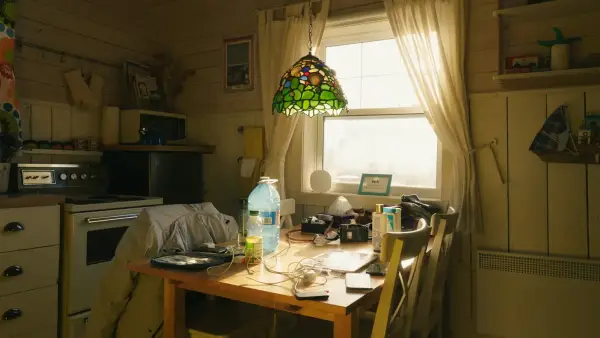
Children who were only praised for what they did and never for who they were - who heard 'good girl' after the report card but never on a Tuesday afternoon for no reason at all - often become adults who cannot rest after an achievement because they learned before they had language for it that love was a reward for performance and the moment they stopped performing the warmth disappeared
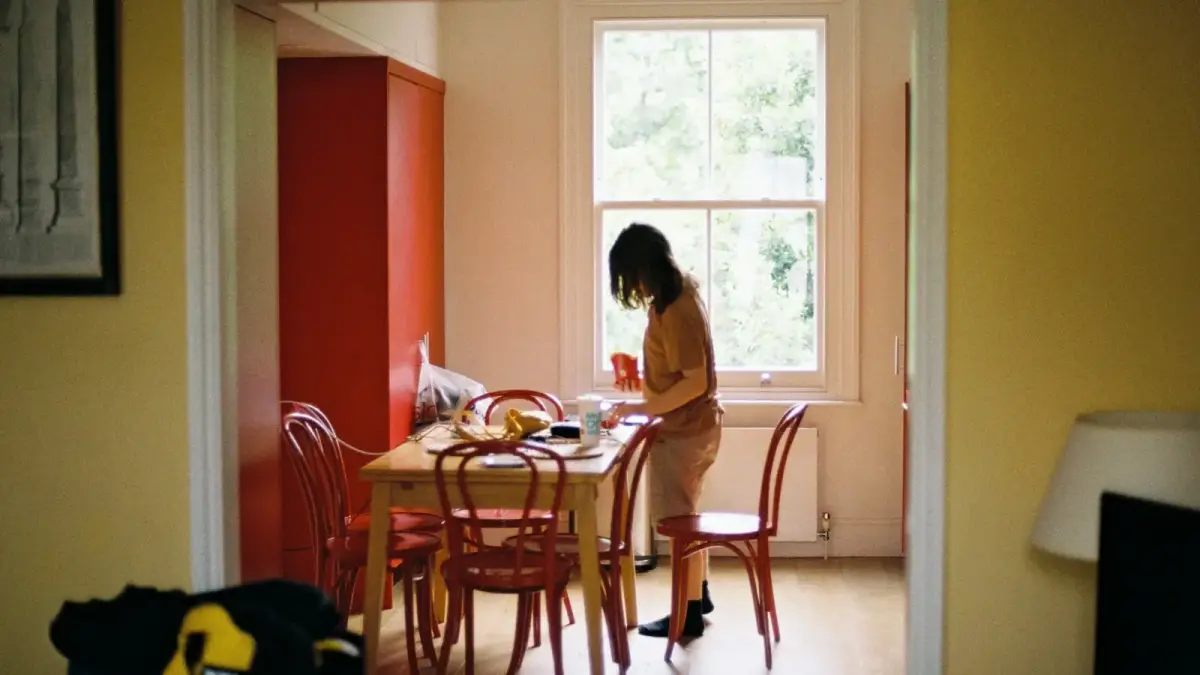
I finished my dissertation on a Thursday afternoon in April. Four years of research, two hundred and twelve pages, the final revision accepted.
I sat at my desk for maybe ninety seconds. Then I opened my laptop and started looking for conferences to submit to. Not because I had something to present. Because the silence in the room after I closed the document felt like something was draining out of me, and the only way I knew to stop it was to start filling again.
My partner came home that evening with flowers. He wanted to celebrate. I said yes, of course, and smiled through dinner, and then excused myself to the study to “just check a few things.” By midnight I had outlined three new projects. By morning I couldn’t remember what I’d finished the day before, not because it wasn’t significant, but because my body had already filed it under “expired” and moved on to scanning for the next thing that might keep the lights on.
It took me years to understand what I was doing. And longer still to understand where I learned it.
The Specific Silence After the Gold Star Faded
There is a particular kind of childhood that looks, from the outside, like encouragement. Your parents were proud of you. They told you so. They put the drawing on the fridge and the trophy on the shelf and the report card on the counter where guests could see it.
But here is the thing nobody talks about: they were proud of you when you produced. They praised you when you performed. And on the ordinary days - the Tuesdays, the rainy Saturdays, the afternoons when you were just lying on the carpet reading a book with no ambition attached to it - the warmth wasn’t there. Not cruelty. Not coldness, exactly. Just a kind of ambient neutrality that a child’s body registers as absence.
You were never told you were loved for existing. You were told you were loved for excelling. And the difference between those two sentences is the difference between a child who can rest and a child who cannot stop.
A 2004 study published in the Journal of Personality and Social Psychology by Avi Assor, Guy Roth, and Edward Deci found that children who received what they called “conditional positive regard” - love and attention that increased during success and withdrew during failure - developed a pattern of compulsive achievement paired with deep internal shame. The praise worked. It produced results. But it also produced adults who could not locate their own value outside of what they had recently accomplished.
What the Child Learned Before She Had Words For It
The lesson wasn’t spoken. It didn’t arrive as a sentence. It arrived as a pattern - thousands of small repetitions that carved a groove into the nervous system before conscious memory had a chance to record them.
The pattern went like this: perform, and the room warms up. Stop performing, and the room cools down. Not dramatically. Not dangerously. Just enough that a child’s body - which is exquisitely tuned to the emotional temperature of its caregivers - begins to understand that stillness is not safe. That rest is not neutral. That the absence of doing is the presence of something frightening.
You didn’t learn to be ambitious. You learned to be vigilant. You learned to monitor the gap between your last accomplishment and your next one the way other children monitored the gap between meals. Because in your house, accomplishment was the meal. It was the thing that fed you. And hunger, once it sets in, doesn’t care whether the food is real or symbolic.
By the time you were ten, you had internalized something that would take decades to unlearn: that you, sitting quietly in a room doing nothing, were not enough to hold anyone’s attention. That the version of you that was loved was the version that was producing. And that any pause - any gap in the output - was a moment when you might become invisible.
How It Shows Up at Forty-Five
You are not ten anymore. You know this. But the pattern doesn’t know it.
You finish a project at work and your body will not let you sit with it. There is a window - maybe sixty seconds, maybe five minutes - where you feel something that might be satisfaction. And then the internal engine starts up again, scanning the horizon, running the calculations, asking the only question your childhood ever taught you to ask: what’s next?
You take a vacation and spend the first two days making lists. You retire and immediately fill every hour with volunteer work, new hobbies, classes. You watch other people sit on a porch and drink coffee and stare at nothing, and you feel a mix of envy and genuine confusion, because you do not understand how a person can be still and not feel like they are disappearing.
Rest, for you, is not relaxation. Rest is the space where you become nobody. And becoming nobody was, in your childhood, the same as becoming unloved.
The people around you call it drive. They call it work ethic. They admire your energy, your productivity, your inability to sit still. They have no idea that what they’re watching is not ambition. It’s a forty-year-old emergency response to a threat that no longer exists.
The Research Behind the Restlessness
Carol Dweck’s work at Stanford, published across multiple papers in Psychological Science throughout the 2010s, demonstrated something that would have been useful to know at age seven: children who are praised for outcomes rather than effort develop what she called a “fixed mindset,” but the consequences run deeper than academic performance. These children learn that their value is located in their results. When results are present, value is present. When results are absent, value is absent. There is no resting position. There is no baseline worth.
Gabor Mate has written extensively about how the need for attachment - the child’s biological imperative to maintain proximity to the caregiver - will override every other need, including the need for rest, play, and authentic self-expression. A child who discovers that performance maintains attachment will perform. Not because she wants to. Because the alternative is unbearable.
This is not a metaphor. The child’s nervous system literally codes rest as danger. The sympathetic activation that other people associate with threat - the elevated heart rate, the tight chest, the scanning attention - arrives for you not when something bad happens, but when nothing is happening at all. Your body learned, before your prefrontal cortex was fully developed, that emptiness was the moment before the warmth left.
And the body, unlike the mind, does not forget.
The Cruelest Part
Here is what makes this particular pattern so hard to see: it works. It produces results. You are, by most external measures, successful. You have the degrees, the career, the full calendar. People look at your life and see someone who has it together, someone who is driven, someone who knows what they want.
They do not see the exhaustion underneath. They do not see the person who lies awake at 2 a.m. after a perfectly good day, running through a mental inventory of what she hasn’t done yet. They do not see the grief that arrives, sometimes, in the shower or on the drive home - a grief without a clear object, just a heaviness that settles when the doing stops and the being is all that’s left.
The cruelest part is that the people who built this pattern in you probably loved you. They probably thought they were motivating you. They probably carried their own version of the same wound - a parent who praised performance, a childhood where value was earned, a family where rest was laziness and laziness was the worst thing a person could be.
They gave you what they had. It just wasn’t what you needed.
What You Needed and What You Got
What you needed was someone to walk into your room on a nothing afternoon - no test results in hand, no recital on the schedule, no accomplishment to point to - and say, “I just like being around you.”
Not “I’m proud of you.” Not “You did so well.” Just the radical, terrifying simplicity of being enjoyed without a reason.
A 2018 study in Developmental Psychology found that children who received what the researchers called “unconditional positive regard” - consistent warmth and acceptance independent of performance - showed markedly lower rates of anxiety, perfectionism, and burnout in adulthood. Not because they were praised less. Because they were loved in the gaps. In the ordinary moments. On the Tuesdays when they hadn’t done anything worth putting on the fridge.
You didn’t get that. And the absence of it taught you something that felt, to your child’s mind, like a fact: that you, without your accomplishments, were not worth staying in the room for.
That was never true. It was never, not once, true. But you believed it the way children believe everything - completely, bodily, without question.
Learning to Stay in the Room After the Applause Stops
You are not going to fix this by deciding to rest. You have tried that. You have blocked off weekends, booked the cabin, told yourself this time you’ll just be. And then the old engine starts, and you find yourself reorganizing the pantry or answering emails from the porch of the cabin or mentally drafting your next quarterly goals while your partner sleeps.
The fix - if there is one - is slower than that. It’s not about forcing yourself to stop. It’s about noticing, gently and without judgment, the moment the engine starts. The moment the achievement settles and your body says, “That’s done, now what?” That moment is the edge of the old wound. That’s where the child is.
She doesn’t need you to accomplish more. She needs you to stay. To sit in the quiet after the applause and not reach for the next thing. To let the room be warm even though no one is clapping.
This will feel wrong at first. It will feel dangerous, the way it felt dangerous at eight when you finished your homework and wandered into the living room with nothing to show and no one looked up.
But you are not eight. And the warmth in your life now - the people who love you, the home you built, the person you became - does not have an expiration date. It does not require renewal. It does not depend on your output.
You were always worth staying in the room for. On the Tuesdays. On the nothing days. On the afternoons when you were just a person, lying on the carpet, reading a book, producing absolutely nothing.
That version of you deserved the warmth too.
She still does.