Children who preferred rainy days - who felt a quiet relief when the sky turned grey because it meant nobody would ask them to go outside and perform the loud, physical, socially available version of childhood that had never once felt natural - often become adults who are calmer, more productive, and more peacefully themselves on overcast days, because rain was the first external permission an introverted child ever received to stay inside and be quiet without anyone asking what was wrong with them
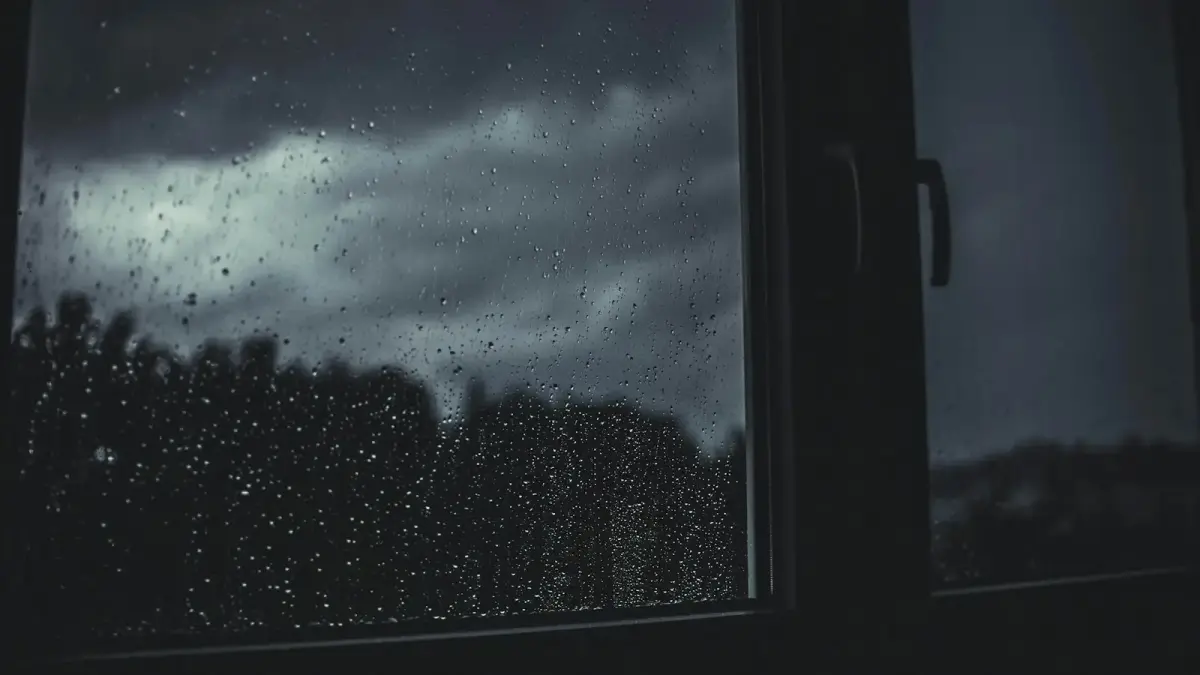
I remember watching the sky from the kitchen window on Saturday mornings, looking for clouds.
Not the wispy kind that dissolved by noon. The real ones. The dark, low, decisive clouds that meant the whole day was spoken for. When I saw them gathering over the treeline, something in my chest would loosen - a tension I didn’t have the vocabulary for yet, held by a body too young to name what it needed.
My mother would sigh and say something about the weather ruining our plans. I would nod along, arranging my face into something that looked like disappointment. But inside I was already reaching for my book, already settling into the version of myself that fit. The rain meant I didn’t have to explain why I didn’t want to ride bikes with the neighbor kids, or play in someone’s yard, or stand at the edge of a group conversation pretending to feel included.
The rain just handled it for me.
I’ve spent years studying developmental psychology, and I’ve come to understand something that no textbook ever quite captured. For introverted children, weather wasn’t just weather. It was emotional architecture. It was the difference between a day spent performing and a day spent being. And that difference shaped who we became.
If you were one of those children - if you still feel your whole body settle when the forecast says grey - here are eight things you probably carry into adulthood, and every one of them started at that window.
1. You check the weather forecast hoping for rain
Not because you need to know what to wear. Because you need to know what kind of day you’re allowed to have.
This started young - that unconscious habit of scanning the sky for permission. As an adult, you might open a weather app three or four times before noon, and the moment you see a rain icon, something shifts. Your breathing slows. The day suddenly has space in it.
A 2014 study published in the Journal of Research in Personality explored what researchers called “person-environment fit” - the idea that well-being increases when our surroundings match our temperament. For introverts, environments with lower social demand and reduced stimulation aren’t just comfortable. They’re restorative. The grey sky isn’t sad to you. It’s a signal that the world has dialed itself down to your frequency.
You’re not checking the forecast for information. You’re checking it for relief.
2. Your most productive days happen when it’s overcast
You’ve probably noticed this but never said it out loud, because it sounds strange. Sunny days are supposed to be the good ones. Everyone says so. But your best writing, your clearest thinking, your deepest focus - they happen under cloud cover.
This isn’t imagination. Susan Cain’s research on introversion and optimal arousal levels helps explain it. Introverts process stimulation more deeply, which means bright light, high energy, and social expectation create cognitive load before any real work even begins. Overcast skies lower the environmental volume. There’s less glare, less implied obligation to “enjoy the weather,” less guilt about being inside.
When you were a child, rainy days were the only days no one interrupted your reading, your drawing, your quiet games. Your brain learned to associate low light with safety, and safety with depth. That association never left. Your nervous system still reads grey skies as an invitation to think without interruption.
3. You feel permission to cancel plans when it rains
The text almost writes itself. “Ugh, this weather - want to reschedule?” And you send it with a small, private exhale. Because the rain just did what you couldn’t bring yourself to do on a clear day.
This is the adult version of that childhood relief. When the sky is blue and the air is warm, canceling plans feels like a confession - like you’re admitting something about yourself that you’re not ready to say. But when it rains, the cancellation belongs to the weather, not to your temperament. You’re not antisocial. You’re just being practical.
As a child, you learned that the world accepted your need for solitude only when it had an external cause. “She’s inside because it’s raining” was fine. “She’s inside because she wants to be” was a problem. That distinction burrowed deep. And now, decades later, you still reach for the excuse before you reach for honesty. The rain doesn’t just permit the cancellation. It permits the wanting.
4. You have a specific rainy-day ritual that hasn’t changed much in years
The blanket. The tea. The specific corner of the couch. The book or the window or the particular silence that only rain provides.
You might not have thought of this as a ritual, but it is. It has weight and order. You don’t just sit down on a rainy afternoon - you arrange yourself into it. And if one element is missing, it doesn’t feel right.
Developmental psychologists have long noted that children who feel overstimulated often create self-soothing rituals to regulate their nervous systems. These aren’t indulgences. They’re architecture. A 2019 study in Frontiers in Psychology found that repetitive, low-stimulation routines activate the parasympathetic nervous system - the branch responsible for rest and recovery. Your rainy-day ritual isn’t a quirk. It’s a regulation strategy that you built as a child and refined over a lifetime. The tea isn’t just tea. It’s a signal to your body that it’s safe to stop performing.
5. You feel oddly guilty enjoying sunny days from indoors
Here it is - the specific, low-grade guilt that no one talks about. The sun is out. The sky is blue. And you’re inside, reading. Or working. Or simply existing in a way that feels more like yourself than anything the sunlight is offering.
And you feel bad about it. Not devastated - just that quiet hum of wrongness, like you’re wasting something that other people would value.
This guilt has roots. As a child, staying inside on a sunny day was treated as a symptom. “What’s wrong?” “Why don’t you go play?” “Are you feeling okay?” The message was clear. Sunny days were for being outside, being active, being social. Staying in was evidence of a problem. You internalized that framework, and now you carry it into adulthood - the nagging sense that choosing the indoors on a beautiful day means something is wrong with you.
Nothing is wrong with you. You just learned to associate sunlight with scrutiny.
6. Vacation weather disappointment secretly relieves you
Everyone else at the resort is staring at the forecast with real frustration. The beach day is cancelled. The hike is off. The outdoor wedding is moving under a tent.
And you - standing there with your appropriately disappointed face - are already thinking about the hotel lobby, the book in your bag, the long afternoon with nowhere to be and no one expecting you to be enjoying yourself in any particular way.
This is the rainy Saturday of your childhood, relocated to adulthood. Daniel Goleman’s work on emotional self-awareness describes how introverts often develop a split consciousness around social expectations - genuinely caring about the group’s experience while simultaneously knowing that the group’s ideal day is not their ideal day. You’re not selfish for feeling relieved. You’re self-aware. The disappointment is real, but it belongs to your empathy, not your preference. Your preference has been rearranging itself quietly around the rain since you were seven.
7. You sleep best when rain hits the window
Not a sound machine. Not a recording. The real thing.
When rain hits glass, something in your body remembers. Your breathing changes. Your jaw unclenches. The specific patter of water on a window is, for you, the sound of a world that has stopped asking you to participate in it.
Research supports this in ways that go beyond simple white noise explanations. A 2021 study in Psychological Science explored how environmental sounds that individuals associate with safety and childhood comfort can lower cortisol levels and reduce sleep latency - the time it takes to fall asleep. For children who experienced rain as the sound of permission, that association doesn’t fade. It deepens. Your body learned, in a bedroom decades ago, that rain meant the day was truly over. No one would knock on the door and ask if you wanted to come back outside. The world was finished with you for the night, and that was the most comforting thought a quiet child could have.
8. You chose your city - or stayed - partly for the weather
Not for the sunshine. For the grey.
You might not have admitted this to anyone. You might not have fully admitted it to yourself. But when you moved to Portland or stayed in Seattle or kept finding reasons not to leave the Pacific Northwest or the English countryside or any place where the sky spends half the year the color of a wool blanket - the weather was part of the reason. Maybe the biggest part.
You chose a place where your temperament has a climate. Where being inside on a Tuesday afternoon doesn’t require an excuse. Where the sky does the explaining for you, day after day, and nobody finds it strange that you’re happiest when the world is quiet and damp and still.
Gabor Mate has written extensively about how children who feel mismatched with their environments spend their adult lives - often unconsciously - trying to recreate the conditions in which they first felt safe. For the introverted child, that condition wasn’t a person or a place. It was a weather pattern. And choosing to live under that weather pattern isn’t running away from something. It’s running toward the first version of the world that ever felt like it was built for you.
Here is the thing I want you to hear, if you’ve read this far and recognized yourself in every paragraph.
The rain was never the point. The rain was just the first time the world outside your window matched the world inside your chest. Quiet. Unhurried. Undemanding. And for a child who had been told in a hundred small ways that their quietness was a problem to solve, that match felt like being seen by something larger than any person had managed.
You weren’t a strange child. You were a child whose nervous system knew exactly what it needed - and the sky, on its best days, provided it.
If you still feel that drop in your shoulders when the clouds roll in, that small unclenching behind your ribs when the first drops hit the pavement - that’s not nostalgia. That’s your body remembering the first time it was allowed to rest without apology.
You don’t need the rain anymore. You have the language now, the self-knowledge, the permission you can grant yourself. But it’s okay that the rain still helps. It’s okay that some part of you still looks out the window on a grey morning and thinks, with a relief that has no age: today I can be myself.
The sky is not giving you permission. It’s reminding you that you never needed it.