Children who read the back of every cereal box at breakfast, every shampoo bottle in the bathtub, every piece of mail left on the kitchen counter - who consumed text the way other children consumed noise - often become adults who cannot sit in a waiting room without reading every pamphlet, every poster, every word on every surface within reach
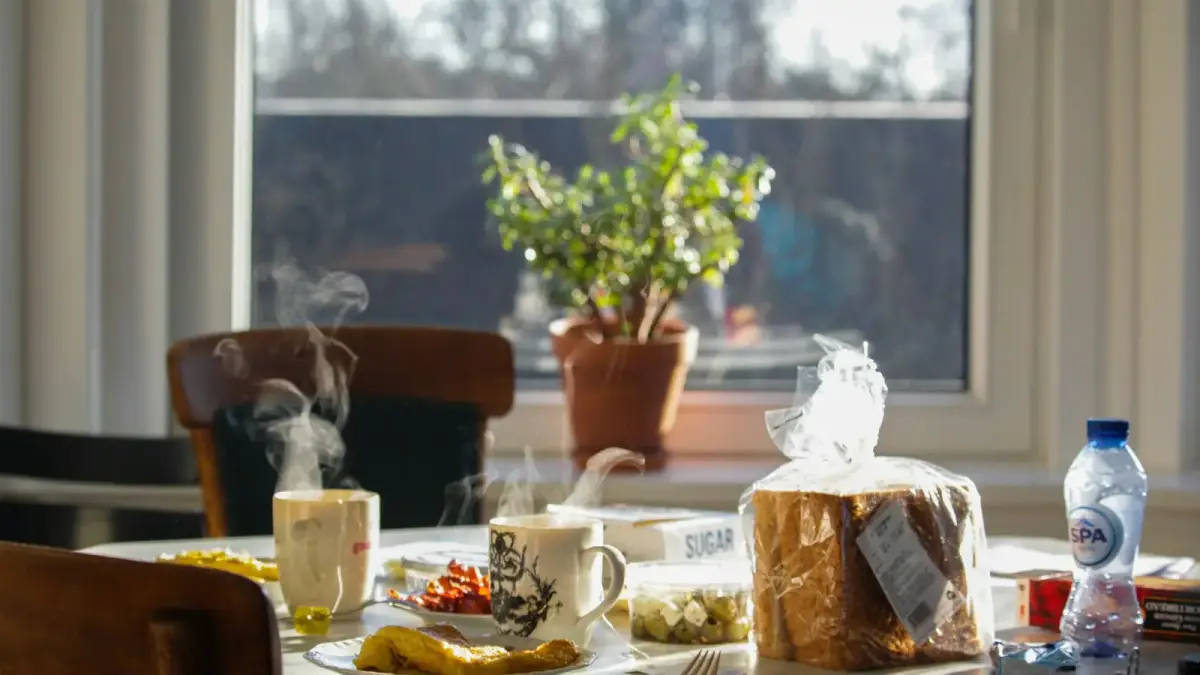
I was nine years old when my mother caught me reading the nutritional information on the back of a box of Cheerios for the third morning in a row.
She laughed about it. Told the story at dinner that night, how I was sitting there with my spoon frozen halfway to my mouth, eyes locked on the sodium content per serving like it contained the secret to something urgent.
Everyone laughed. I laughed too.
But what I remember most is the relief of it. Not the reading. The fact that no one had asked me a question in almost four minutes. That I had been sitting at a table full of people and not one of them had expected me to participate, because I looked busy. Because I looked occupied. Because a child with her eyes on a cereal box appears to be doing something, even when what she is really doing is disappearing.
I did not know what introversion was at nine. I did not have a word for the particular exhaustion of being present at a family breakfast where three conversations happened simultaneously and none of them required my input but all of them required my attention.
What I had was a cereal box. And it was enough.
The first portable wall
If you were this child, you already know what I am describing. You read everything. Not because you were gifted, not because you were precocious, and not because you had some unusual hunger for knowledge.
You read everything because text was the most socially acceptable way to leave a room without standing up.
The shampoo bottle in the bathtub. The back of the TV Guide on the coffee table. The junk mail your father left on the kitchen counter. The pamphlet about gum disease sitting in a plastic rack at the dentist’s office. You read it all, every word, not because it interested you but because it gave your eyes somewhere to go that was not another person’s face.
A 2014 study published in the Journal of Research in Personality found that introverted children develop coping strategies for social overstimulation far earlier than most adults realize - often by age six or seven. These strategies are rarely dramatic. They do not look like withdrawal. They look like reading a cereal box.
That is the trick of it. That is what made it work so well. No one worries about a child who is reading. No one interrupts a child who appears absorbed. The text itself was irrelevant. What mattered was the posture. Head down, eyes busy, face arranged in an expression of concentration.
You were not reading. You were building a wall out of words. And it was the first wall you ever learned to build.
1. You read things that have no reason to be read
The emergency exit card on an airplane you have flown a hundred times. The ingredients list on a bottle of shampoo you have used for years. The fine print on a parking garage ticket.
None of this is information you need. You already know where the emergency exits are. You already know what is in your shampoo. But your hands reach for the card, the bottle, the ticket - and your eyes settle into the text like a body settling into a warm bath.
This is not curiosity. This is a reflex. Your nervous system learned decades ago that text equals safety, and it has never unlearned it.
2. You cannot sit in a waiting room without reading every available surface
The posters about flu shots. The framed mission statement of the medical practice. The small print on the sign-in sheet.
Other people in waiting rooms scroll their phones or stare into middle distance. You read the pamphlet about managing cholesterol even though your cholesterol is fine. You read it because the alternative is sitting with nothing between you and the room, and that has never been comfortable.
A waiting room is a space where you are required to be present but not required to be available. Your childhood self recognized this contract instantly. Your adult self still honors it the same way - by finding words to stand behind.
3. You feel a small, specific anxiety when there is nothing to read
You have felt it. The moment you sit down somewhere - a bench, a waiting area, a table at a restaurant where your companion has not arrived yet - and realize there is nothing within reach that contains text.
No menu. No magazine. No flyer. Nothing on the wall close enough to read.
The feeling is not panic. It is more like being suddenly undressed. Like a layer has been removed and now you are just a person sitting in a room, visible, unoccupied, available.
Susan Cain writes in Quiet about the way introverted children learn to manage stimulation not by reducing it but by redirecting their attention. The cereal box was redirection. The absence of one feels like exposure.
4. You read while other people talk to you - and you have been doing it since childhood
Not rudely. Not obviously. But your eyes drift. To the label on the bottle on the table. To the title of the book on the shelf behind someone’s head. To the small print on the coffee cup.
You are still listening. You might even be listening better this way, because your visual channel is occupied and your auditory channel is freed up. But what you are really doing is splitting your presence. Half of you is in the conversation. Half of you is behind the wall.
You learned this at the dinner table. You perfected it by middle school. By adulthood it is so automatic you do not notice it until someone says, “Are you reading that sign right now?”
And you realize that yes, you were reading the specials board at a restaurant while someone was telling you about their day. Not because you did not care. Because caring is easier when you are not fully exposed.
5. You chose books not for what they contained but for what they prevented
Here is the thing no one says about quiet children who read constantly: not all of them loved reading.
Some of them loved what reading made impossible. A child holding a book cannot be asked to join the game outside. A child holding a book has a reason to be alone in her room. A child holding a book has an alibi for stillness.
A 2019 study in Frontiers in Psychology found that solitary reading in childhood serves a dual function for introverted children - it provides cognitive stimulation while simultaneously providing a socially sanctioned reason to withdraw. The researchers called it “legitimate disengagement.”
Legitimate disengagement. That is what the cereal box was. A way to leave without anyone noticing you had gone.
6. You read in the bathtub not for relaxation but for the same reason you read at the table
The shampoo bottle. The conditioner. The body wash. If someone left a magazine within reach, you read that too. The back of the soap box. The small text on the bath mat tag.
People describe bath reading as a luxury. For you it was architecture. You were building the same room you always built - a small, quiet, word-lined room that no one else could enter.
The bath was already private. But your nervous system did not trust privacy without a screen. Text was the screen. Even alone, even behind a locked door, you reached for words the way other people reach for a blanket.
7. You still reach for text in moments of social overwhelm
A party where you do not know many people. A family gathering that has gone on an hour too long. A work event where small talk has drained your reserves completely.
And there it is - the impulse. Your hand reaching for a program, a menu, a flyer on the table, your phone, anything with text. Not to check something. Not to look something up. Just to have words between your face and the room.
Daniel Goleman might call this a form of emotional self-regulation. A way of managing the gap between how much social energy the room demands and how much you have left to give. You are not being antisocial. You are being architectural. You are doing what you have done since you were six years old, arranging words into a structure you can stand behind.
8. You read signs aloud in your head while walking through public spaces
Exit signs. Street names. Store hours posted on doors. The hours of operation at the dry cleaner you have never entered and will never enter.
You do not need this information. But your mind reaches for it the way a hand reaches for a railing. Steadying. Orienting. Giving the brain something small and containable to process instead of the sprawling, unpredictable input of a public space full of strangers.
This is the cereal box, scaled up. The world is the breakfast table now, and every sign is a small square of text you can place between yourself and the enormity of being a person in a crowded place.
9. The moment you realized what you were actually doing
For me it happened on a plane. I was reading the emergency exit card - the laminated one tucked into the seat pocket - for what must have been the two hundredth time in my life.
I knew every word on that card. I knew the diagrams. I knew which seats were closest to the overwing exits and I knew the brace position and I knew that the floor lighting would guide me to the nearest exit.
And somewhere over Ohio, holding that card, I understood I had never once been interested in the emergency instructions.
I was interested in not being available. I was interested in having something between my eyes and the stranger in the next seat. I was interested in the same thing I had been interested in at the breakfast table thirty years ago - a small, portable wall made of words.
That is what the cereal box was. That is what the shampoo bottle was. That is what every pamphlet in every waiting room has always been.
Not reading material. Building material.
You were never strange for this
If you recognize yourself in any of this - in the cereal boxes and the shampoo bottles and the pamphlets and the signs - I want you to know something that took me a very long time to understand.
You were not a strange child. You were a child who needed space in a world that did not offer her much of it. And you found a way to make space out of the most ordinary materials available. Words. Labels. Instructions no one else bothered to read.
That is not a deficit. That is resourcefulness. That is a six-year-old solving an engineering problem with whatever she could reach.
And if you are still doing it - still reading the back of the cereal box, still scanning every poster in the waiting room, still reaching for the emergency card on the plane - that is not something you need to fix.
That is something you built. Something that works. Something that has been keeping you safe and steady and present on your own terms for as long as you can remember.
The cereal box was never about the cereal. But you already knew that.