Children who grew up hearing 'don't make a scene' whenever they expressed a strong emotion in public often become adults who can sit in a doctor's office receiving devastating news and smile politely at the receptionist on the way out, because a child who learned their feelings were a spectacle the room needed protection from grew up believing that the bravest thing a person could do with pain was make sure nobody had to watch
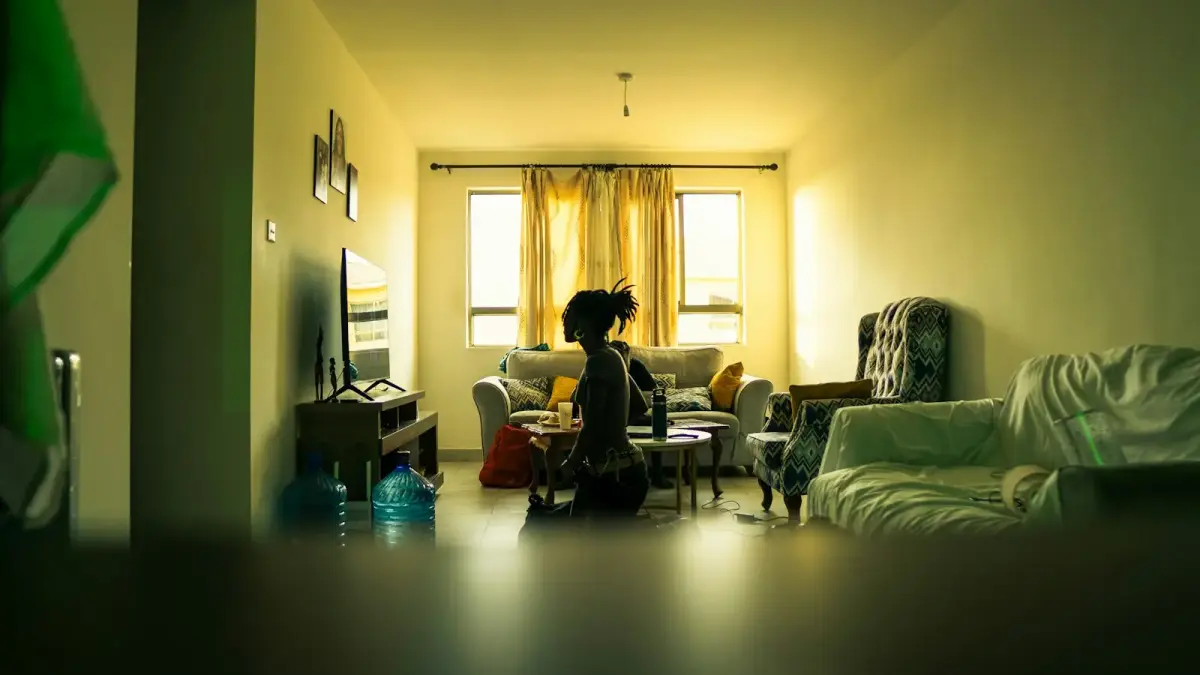
I watched my mother receive a cancer diagnosis on a Tuesday afternoon in a beige office with motivational posters on the walls. She thanked the doctor. She asked two follow-up questions in a voice so steady it could have been asking about a parking validation. She smiled at the receptionist on the way out, and the receptionist smiled back, and the whole exchange looked like two people who had just wrapped up a routine dental cleaning.
She made it all the way to the car before her hands started shaking.
I remember thinking, even at fourteen, that I had never seen anything so devastating and so invisible at the same time. And I remember thinking something else - something I wouldn’t have language for until decades later. I recognized what she was doing. Not because I had studied it. Because I already did it too.
If you grew up in a household where “don’t make a scene” was the reflex response to any strong emotion expressed in a public space, you know exactly what I’m describing. You know what it feels like to swallow a feeling so fast you almost choke on it, and then immediately rearrange your face into something the room can tolerate.
You learned this before you had any say in the matter. And you’ve been performing it ever since.
The Original Lesson
The phrase itself sounds so reasonable. Don’t make a scene. It’s four words. It’s something every parent has probably said at some point, and in isolation, it’s not damaging.
But for some children, it wasn’t isolated. It was the answer to everything.
You cried in a restaurant because your feelings were hurt, and someone leaned down and whispered it. You got overwhelmed at a family gathering and started to melt down, and a hand gripped your arm and pulled you toward the door. You were angry - legitimately, understandably angry - in a grocery store, and you were told that people were staring.
The message underneath the message was never about volume. It was about visibility.
A 2009 study published in the journal Emotion found that children who were repeatedly told to suppress emotional expression in social settings internalized a specific belief - not just that the emotion was inappropriate, but that the emotion itself was a problem others needed to be shielded from. The researchers called it “audience-oriented suppression,” and they found it was distinct from simple emotion regulation. These children weren’t learning to manage their feelings. They were learning to manage other people’s comfort.
That’s a different skill entirely. And it follows you.
The Adult It Creates
You probably know this person. You might be this person.
They’re the one who gets a devastating phone call at work and quietly closes their office door, takes the call, processes the worst news of their life, and then walks back into the meeting with a face that says nothing happened. Someone might ask if they’re okay, and they’ll say “totally fine” with such effortless warmth that nobody thinks to press.
They’re the one at the funeral holding everyone else together. Handing out tissues. Making sure the caterer has enough chairs. They’ll grieve later, they tell themselves. Somewhere private. Somewhere it won’t bother anyone.
They’re the one sitting in a doctor’s office hearing words like “aggressive” and “treatment plan” and “prognosis,” and their first instinct - before fear, before grief, before the enormity of what’s happening even registers - is to make sure the doctor isn’t uncomfortable delivering the news.
That is not strength. I know it looks like strength. It performs as strength so convincingly that people will tell you your whole life how strong you are, how composed, how graceful under pressure.
But what it actually is - and I say this as someone who lived inside it for thirty-five years - is a child’s emergency protocol running on adult hardware.
The Parking Lot Phenomenon
There’s a version of this that almost everyone who carries this pattern will recognize, and I’ve started calling it the parking lot phenomenon.
It’s the moment after the appointment, after the meeting, after the funeral, after the phone call - the moment you finally reach a space where no one is watching. Your car. A bathroom stall. The walk home. A stairwell.
And everything you held collapses.
Not slowly. Not gracefully. It hits like a wave that’s been building for hours, and you cry so hard your ribs hurt, or you grip the steering wheel until your knuckles go white, or you just sit there in a silence so loud it hums.
A 2017 study in Psychological Science examined what researchers called “emotional rebound effects” - the intensity of feeling that follows prolonged suppression. They found that people who habitually suppressed emotional expression in social settings experienced significantly more intense private emotional episodes. The feelings didn’t disappear. They compressed. And compressed feelings don’t dissolve. They detonate.
The parking lot becomes your stage. The only stage where you’re allowed to feel the full weight of being human.
And the tragedy of it - the part that still gets me - is that you probably think this is healthy. You probably think having a private breakdown in your car and then washing your face and walking into Target like nothing happened is what functioning looks like.
What You Were Really Learning
Here’s what I wish someone had explained to me twenty years ago.
When a child is told “don’t make a scene,” the child doesn’t hear a behavioral instruction. The child hears an emotional verdict. The child hears: what you’re feeling right now is so inappropriate, so excessive, so fundamentally wrong that it is causing damage to the people around you simply by being visible.
That’s an enormous thing to absorb when you’re six.
And the child - because children are brilliant problem solvers - immediately gets to work on a solution. The solution is performance. The solution is learning, with remarkable speed, how to feel one thing and display another. How to cry without sound. How to be furious without moving your face. How to be devastated and still say “I’m fine, thank you.”
Dr. Gabor Mate has written extensively about how children who learn to suppress emotional expression for the comfort of their caregivers develop what he calls a “false self” - a functional exterior designed to maintain attachment at the cost of authenticity. The child isn’t choosing inauthenticity. The child is choosing survival. Because in a child’s world, the relationship with the caregiver is survival, and if the caregiver signals that your feelings are a threat to that relationship, you will abandon your feelings before you abandon the relationship.
Every single time.
The problem is that the child grows up. The stakes change. The caregivers change. But the protocol doesn’t.
The Invisible Tax
People who carry this pattern pay a tax that nobody around them can see.
It’s the energy it takes to monitor your own face during a crisis. To calculate, in real time, how much emotion the room can handle and then serve up exactly that amount - enough to seem human, not so much that anyone feels burdened.
It’s the loneliness of being praised for the very thing that’s isolating you. “You’re so strong.” “I don’t know how you hold it together.” “You’re my rock.” Every compliment lands like a lock clicking shut on a door you were hoping someone would open.
It’s the way you start to lose access to your own feelings in real time. You’ve gotten so good at the delay - feel it later, feel it privately, feel it where it can’t inconvenience anyone - that “later” starts to stretch. Days. Weeks. Sometimes you realize months have passed and you never actually processed the thing that happened, because there was never a moment where processing felt permitted.
A 2021 study in the Journal of Personality and Social Psychology found that adults with high levels of habitual expressive suppression reported significantly lower relationship satisfaction - not because they were emotionally unavailable, but because their partners consistently underestimated the intensity of what they were feeling. The suppression worked too well. The people closest to them genuinely didn’t know what was happening inside.
That might be the cruelest part. You learned to hide your feelings to protect your relationships, and the hiding itself is what erodes them.
The Reframe You Deserve
I want to be careful here, because I’m not interested in villainizing parents. Most of the people who said “don’t make a scene” were repeating what was said to them. They were managing their own anxiety about public perception. They were doing their best inside a culture that treats visible emotion as failure, especially in adults, especially in public, especially if you’re a certain age or gender or class.
They weren’t trying to teach you that your feelings were an emergency. But that’s what you learned.
And here’s what I want you to sit with: the composure you perform - the steady voice, the polite smile, the ability to absorb devastating news without flinching - that was a child’s solution to a child’s problem.
The child’s problem was: my feelings are making someone uncomfortable, and I need to stop that immediately.
The adult’s reality is: your feelings are not an emergency. They never were. They were - and are - the most natural, human, appropriate response to being alive in a world that is sometimes unbearably hard.
You are not too much. You were never too much. You were a child having feelings in front of people who didn’t know what to do with their own, and you solved that problem so thoroughly that you forgot it was a problem at all.
What the Parking Lot Knows
I still have moments. I think most of us who grew up this way do. I still catch myself smiling at someone while my chest is caving in. I still feel the pull to perform - to make sure the room is comfortable, even if I’m not.
But I’ve started to notice the parking lot. Not just as a place where I fall apart, but as evidence. Evidence that the feelings are there. That they’ve always been there. That no amount of composure training could actually erase them - it could only delay them.
And I’ve started doing something that feels, honestly, terrifying. I’ve started letting small feelings be visible in real time. Not performing a breakdown in the middle of a grocery store. Just - not smiling when I’m sad. Saying “actually, that hurt” when something hurts. Letting my face do what faces are supposed to do.
It turns out the world can handle it. It turns out the room doesn’t collapse.
It turns out that the scene you were so afraid of making was never really a scene at all. It was just a person feeling something. And the people around you - the ones worth keeping - they don’t need protection from that.
They never did.
If you recognized yourself anywhere in this, I want you to know that the composure you built was remarkable. It got you through things that would have flattened other people. But you’re allowed to set it down now. Not all at once. Not dramatically. Just in the small, quiet moments where you catch yourself reaching for the mask - you’re allowed to leave it where it is and let your face tell the truth.
Your feelings were never the problem someone taught you they were. They were always, only, proof that you were paying attention to your own life.