Children who watched the clock during family dinners - who knew that a meal under twenty minutes meant nobody had anything to say to each other and a meal past forty meant someone had said too much - often become adults who time every shared meal, every meeting, every conversation against an internal clock that was never measuring minutes but measuring how long before the warmth in the room turned
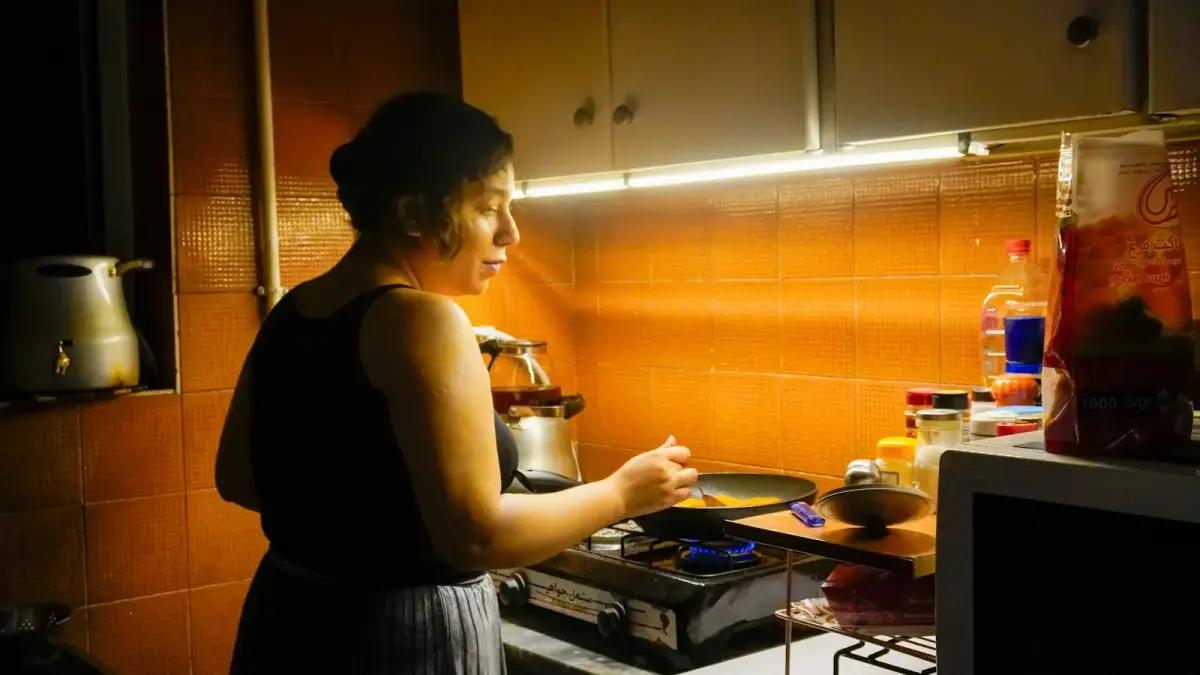
I remember the microwave clock. Not the stove clock, which was always four minutes fast and therefore useless for the kind of precision I needed. The microwave clock - green digits, slightly too bright for the dim kitchen - was the one I watched.
Dinner started when the last plate hit the table. I’d glance at the numbers. 6:14. And then something in me would begin counting.
Not consciously, not deliberately. It was more like a weather instrument inside my chest had switched on, taking atmospheric readings of the room through the only metric I had available to me at nine years old: how long this was going to last.
Because I had learned - the way children learn everything important, which is through their bodies rather than their minds - that the length of a family dinner told you everything you needed to know about what kind of night it was going to be.
The dinner table as emotional barometer
Under twenty minutes meant silence. Forks against plates, the hum of the refrigerator, maybe the television on in the other room as if someone had left it running to fill the space that conversation should have occupied. A seventeen-minute dinner was a family going through the motions. Nobody angry, exactly. Just absent. Present in body and nowhere else.
That kind of dinner had its own particular ache. It wasn’t dangerous. It was just lonely in a way that a child can feel but can’t name - sitting three feet from the people who are supposed to know you best, eating food someone technically prepared for you, and understanding on some cellular level that this table was just furniture tonight.
Twenty to thirty-five minutes was the window. That was the sweet spot, the narrow band where a meal felt like something you’d actually choose to be part of. People talked. Someone mentioned something that happened at work. Someone asked about your day and listened to the answer. Thirty-two minutes of a family dinner could feel like proof that everything was fine, that you were a normal family in a normal house doing a normal thing.
I lived for that window.
Past forty minutes, though. Past forty meant someone had opened a door that should have stayed shut. Someone brought up money. Someone mentioned a name that landed wrong. Someone said “we need to talk about” and the air pressure in the room shifted like the minutes before a thunderstorm.
A forty-five-minute dinner wasn’t a long, leisurely family meal. It was a meal that had become something else. And you could feel the turn happening - the exact moment when the conversation crossed from safe territory into the place where voices got quieter before they got louder, where someone’s jaw tightened, where the sound of a fork being set down a little too firmly was the opening note of something a child couldn’t stop.
A fifty-minute dinner ended with a chair pushed back. A door closing harder than it needed to. Dishes left on the table because the person who would normally clear them had gone somewhere to be alone.
I never needed anyone to explain this to me. My body knew the math before I did.
What the clock was actually measuring
Here’s what I understand now that I couldn’t have articulated then: I wasn’t tracking time. I was tracking emotional proximity to danger.
The minutes were just a proxy - a concrete, measurable stand-in for something that had no numbers attached to it, which was the distance between “everyone is okay” and “this is about to fall apart.” A child’s nervous system doesn’t have language for that distance, but it can learn to map it onto something observable. How loud the voices are. How much someone is drinking. And, in my case, how many minutes had passed since we sat down.
A 2019 study published in the journal Development and Psychopathology found that children in emotionally unpredictable households develop what researchers call “temporal threat monitoring” - an enhanced sensitivity to duration-based cues that signal shifts in caregiver mood or household tension. The children in the study didn’t just notice when conflict happened. They tracked patterns of timing, learning to predict escalation based on how long a neutral or positive interaction had been sustained.
The researchers described this as a form of adaptive intelligence. The child isn’t anxious for no reason. The child is doing something remarkably sophisticated - building a predictive model of their emotional environment using the only data available to them.
My data was the microwave clock.
And the model I built was terrifyingly accurate. I could feel a dinner cross the thirty-five-minute mark the way some people feel a change in barometric pressure. Something in my chest would tighten. Not panic, not yet. Just alertness. A quiet internal voice saying: we’re past the window now. Watch.
The adult inheritance: timing everything
I’m forty-one years old and I still time things.
Not with a stopwatch. Not deliberately. But the clock is always running somewhere in the back of my awareness, measuring the duration of every shared experience against a template I built before I was old enough to understand what I was building.
Dinner with friends. I notice when we cross the two-hour mark. Something in me starts listening differently - not to the words but to the tone, scanning for the subtle shift that means someone’s energy has changed, someone’s patience has thinned, someone is about to say the thing that turns a pleasant evening into something that needs to be managed.
Work meetings. A thirty-minute meeting that runs to forty-five doesn’t just feel long. It feels like a warning. My body reads “this is going past its expected duration” and translates it into “something is wrong, someone is unhappy, the room is about to turn.”
Phone calls with my mother. I know, within about ninety seconds, whether this is going to be a twelve-minute call or a forty-minute call. And I know what each one means. The twelve-minute call is the silence of the seventeen-minute dinner all over again - we’re checking a box, we’re performing the relationship without inhabiting it. The forty-minute call means she’s circling something, working up to the topic, and I can feel my shoulders rising toward my ears as the minutes accumulate.
Gabor Mate has written extensively about how the body stores patterns of threat long after the original danger has passed. The nervous system, he argues, doesn’t distinguish cleanly between a memory and a present reality. If your body learned that “long duration equals escalation,” then every experience that runs past its expected length will trigger that same cascade of vigilance - even when there’s nothing to be vigilant about.
I know this intellectually. I know that a dinner party that stretches to midnight probably means people are having a wonderful time. I know that a meeting running over might just mean the conversation is productive. I know that a long phone call with a friend usually means connection, not danger.
But the clock doesn’t know that. The clock was calibrated in a kitchen where duration was the most reliable predictor of whether the evening would end in warmth or in someone crying behind a closed door. And that calibration runs deep - deeper than logic, deeper than reassurance, deeper than the decades of evidence that most long dinners are just long dinners.
The neuroscience of learning when the room will turn
There’s a reason this pattern is so persistent, and it has to do with how the brain processes temporal information in the context of emotional learning.
A 2021 study in Frontiers in Psychology examined how the brain’s internal timing mechanisms interact with threat detection systems. The researchers found that the amygdala - the brain’s primary threat processing center - doesn’t just respond to what happens. It responds to when things happen relative to a learned pattern.
In other words, your brain doesn’t just learn that conflict is dangerous. It learns that conflict tends to occur at certain points in a temporal sequence - after a certain duration of interaction, after a certain number of exchanges, after a certain length of silence. And once that temporal pattern is encoded, the brain begins generating anticipatory stress responses at the predicted time points, even in the absence of actual threat cues.
This is why you feel something shift inside you when a holiday dinner passes the ninety-minute mark, even though nothing bad has happened. Your brain is running a pattern-completion algorithm built from hundreds of childhood meals. It has reached the point in the sequence where, historically, things went wrong. And it’s preparing you for what it believes comes next.
The sophistication of this system is remarkable. Daniel Goleman’s work on emotional intelligence touches on this - the way early emotional learning creates frameworks that operate beneath conscious awareness, shaping our responses to social situations in ways we rarely examine. The child who timed dinner wasn’t just anxious. That child was building one of the most complex predictive models a young brain can construct: a temporal map of emotional safety.
The narrow window where everything is fine
What stays with me most isn’t the anxiety of the long dinners or the loneliness of the short ones. It’s the feeling of being inside the window.
Twenty-two minutes in. Everyone talking. No tension in anyone’s voice. The food still warm enough that no one had stopped eating to argue. Twenty-six minutes. Someone laughed. Twenty-nine minutes. My father asked my mother about her day and she answered with a real answer, not the short, clipped version that meant she was holding something back.
That window was the only place where I could stop counting.
It was the only place where I was just a kid eating dinner instead of a small, silent meteorologist tracking a storm system that might or might not make landfall.
And I think this is what people don’t understand about those of us who time things. They think we’re rigid, or controlling, or that we can’t relax. They see us glance at a clock during a dinner party and think we’re bored or want to leave.
We don’t want to leave. We want to stay. We want to stay so badly. But we need to know that we’re still in the window - that the gathering hasn’t crossed into the territory where, in our experience, warmth becomes something else.
The relief I feel when something ends at the right time is almost physical. A two-hour dinner party that wraps up with everyone smiling, a meeting that ends five minutes early, a phone call that finds its natural stopping point without anyone forcing it. These endings feel like evidence. Proof that it’s possible for a shared experience to begin warmly and end warmly without the in-between turning into something that leaves marks.
The clock was never the problem - it was the best solution you had
If you recognize yourself in any of this, I want you to hear something clearly: there is nothing wrong with you.
The clock-watching, the duration tracking, the internal timer that runs in every conversation and every meal and every meeting - these aren’t signs of anxiety disorder or control issues or an inability to be present. They’re signs that you were a child who needed to predict the emotional weather of your household, and you found an astonishingly precise instrument for doing it.
You taught yourself to read a room through its duration. You learned that time itself carried information - that the length of a shared experience was a more reliable indicator of its emotional trajectory than anything anyone actually said. And you were right. In the house where you learned this, you were absolutely right.
A 2022 study in the Journal of Research in Personality found that adults who grew up in emotionally volatile households showed heightened accuracy in predicting interpersonal conflict - but also heightened false-alarm rates. They were better than average at detecting real shifts in social dynamics. They were also more likely to perceive shifts that weren’t there.
This is the inheritance. The clock works. It was built to work, and it does. The problem is that it was built for a specific house, a specific table, a specific family - and it runs everywhere now, in rooms where the weather is nothing like the weather you grew up in.
You don’t need to silence the clock. You probably can’t, and trying to will only make you feel broken in a new way.
But you can learn to notice it ticking and choose, gently, to check the actual room instead of the remembered one. To look up from the internal count and see the faces around the table - these faces, this table, this meal that has gone past forty minutes because everyone is genuinely enjoying each other’s company.
The clock was the best technology you had. It kept you prepared. It kept you safe.
You just don’t need it to keep you safe from every dinner anymore.