Children who watched their mother eat last at every meal - whose plate went cold while she refilled glasses and fetched the thing nobody asked for but she already knew they needed - often become women who cannot sit down at their own table until every person has been served, and the woman standing in the kitchen at fifty-three with a plate she has not touched is not being generous, she is a girl who learned that a woman's hunger was the least important thing in any room she was feeding
I remember my mother’s plate.
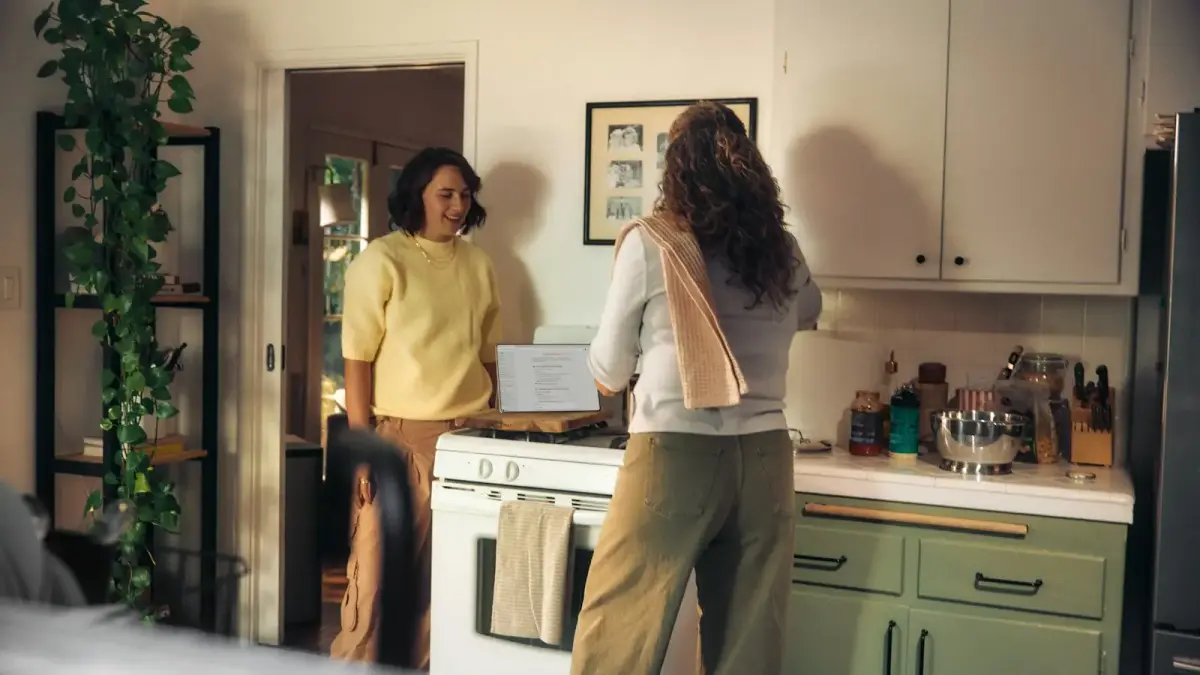
Not the pattern on the china or the color of the rim - I remember where it sat. At the far end of the counter. Behind the cutting board. Near the sink where the sponge lived. Her plate was always somewhere between the stove and the garbage can, in that no-man’s-land of the kitchen where nobody eats on purpose.
Everyone else sat down. My father, my brother, me. We had our places. We unfolded our napkins and picked up our forks. And somewhere behind us, she moved. Refilling the water pitcher before anyone noticed it was low. Slicing more bread because my brother would want a second piece in about four minutes. Warming the thing that was getting cold. Fetching the thing nobody asked for because she already knew.
By the time she sat down - if she sat down - her food was lukewarm and the conversation had moved on without her.
I didn’t think anything of it then. I thought that was just what mothers did.
I was wrong. It wasn’t what mothers did. It was what mothers were taught.
And I learned it without anyone ever saying a word.
1. You serve everyone’s plate before making your own
It starts so naturally that you barely notice it. You’re hosting dinner. You made the food. And when it’s time to eat, your hands just start moving - scooping pasta onto someone else’s plate, cutting the bread, arranging things so the person sitting closest gets the warm end of the dish.
You’re the last one holding an empty plate, and you don’t even register it as a choice. It feels like gravity. Like the natural order of a kitchen.
A 2019 study published in the Journal of Family Psychology found that women in caregiving roles consistently deprioritize their own physical needs - including hunger and rest - and that this pattern is most strongly predicted not by personality traits but by observed maternal behavior during childhood. The researchers called it “care-sequencing” - the internalized belief that your needs come after everyone else’s, not because you decided this, but because you watched it happen a thousand times before you were old enough to question it.
Your mother handed you a full plate. And you watched her stand there with nothing.
That was the lesson.
2. You eat standing up - at the counter, by the stove, leaning against the sink
There’s a particular posture that daughters of these mothers know. One hip against the counter. Fork in one hand. The other hand already reaching for something - a paper towel, a lid, the salt someone’s about to ask for.
You eat in the spaces between tasks. Between clearing and serving. Between the oven timer and the next request. You eat vertically because sitting down would mean you’re done, and you are never done.
Your partner has said it. Your kids have said it. “Sit down. Eat with us.”
And you smile and say “I will, I will” while standing there with a plate balanced on the edge of the stove, eating bites between movements, the way your mother did. The way her mother probably did too.
You don’t sit because sitting means you believe your hunger is worth a chair.
And somewhere deep in the architecture of your childhood, that belief never got built.
3. You cannot sit through an entire meal without getting up at least twice
You sit down. You take a bite. And then your body starts scanning.
Is the butter on the table? Does anyone need more water? Is the bread getting cold? Should you check on dessert? Did you forget the napkins?
You’re up before anyone asks for anything. Not because they demanded it. Because the silence feels like a question you’re supposed to answer.
Dr. Gabor Mate has written about how children internalize the emotional atmosphere of their home, not the words spoken in it. You didn’t learn to get up from the table because someone told you to. You learned it because staying seated while your mother stood felt wrong - like a small betrayal you couldn’t name.
Now you’re fifty, and you still can’t make it through a Tuesday night dinner without popping up three times. Your family jokes about it. You joke about it too.
But it’s not a quirk. It’s a muscle memory that started forming before you could reach the counter.
4. You bring food to people who didn’t ask for it because you already knew they needed it
Your son walks through the door after work and there’s a plate on the counter. He didn’t call ahead. He didn’t ask. But you knew.
You knew because you have a quiet, constantly running calculation in your head - who ate last, who’s tired, who’s had a long day, who forgot to pack lunch, who’s about to get hungry and doesn’t know it yet.
This is not intuition. This is surveillance that got renamed as love.
A 2021 study in Frontiers in Psychology explored what researchers call “anticipatory caregiving” - the tendency to meet needs before they’re expressed. They found it was significantly more common in women who grew up in households where the mother performed invisible labor and where the emotional cost of that labor was never acknowledged.
You’re not psychic. You’re a girl who learned to read a room before she learned to read a book. And you bring food to people who didn’t ask because in the house where you grew up, asking was something other people got to do.
5. You feel physically uncomfortable when someone serves you
Someone puts a plate in front of you and your first instinct is to stand up.
Not out of rudeness. Out of something that feels almost like panic - a low hum of wrongness, like you’re sitting in someone else’s seat, taking up space that wasn’t meant for you.
When your partner cooks and says “just sit, I’ve got it,” your body doesn’t know what to do with that. Your hands fidget. You reach for something to wipe. You offer to help three times before you half-sit, perched on the edge of your chair like a guest in your own home.
Being served feels like being seen in a way you were never trained to tolerate. Because in the kitchen where you grew up, the server and the served were two different categories of person. And you knew which one you were supposed to become.
The discomfort isn’t ingratitude. It’s the collision between what you want - to be cared for - and what you learned was allowed.
6. You calculate everyone’s preferences before your own hunger registers
You’re standing in the grocery store, and you know exactly what your husband likes on his sandwich. You know your daughter won’t eat the brand with seeds. You know your mother-in-law prefers the small rolls and your son only eats sourdough now.
You know all of this before you’ve registered whether you’re hungry.
Your own appetite is the last signal that breaks through. Sometimes it doesn’t break through at all. Sometimes you eat whatever’s left - the heel of the bread, the last scoop of pasta that stuck to the pot, the thing nobody else wanted.
Research on what psychologist Harriet Lerner calls “de-selfing” - the gradual erosion of personal needs in service of relational harmony - shows that it begins in childhood observation. Girls who watched their mothers consistently defer their own preferences didn’t learn selflessness. They learned that a woman’s desires are background noise in a room full of other people’s needs.
You’re not generous. You’re fluent in a language where your own hunger was never part of the vocabulary.
7. Your mother’s voice still tells you “guests first, then the children, then us”
She may never have said it in those exact words. But you heard it anyway.
You heard it when she gave the biggest piece to your father. When she ate the broken cookie so you could have the whole one. When she said she wasn’t hungry and then stood at the counter at ten p.m. eating crackers in the dark after everyone was asleep.
You heard it in the order of operations every single night: plates for the family, then plates for the children, then maybe - maybe - a plate for her. Usually cold. Usually eaten standing. Usually alone.
A 2022 study in Developmental Psychology tracked how daughters of mothers who exhibited high levels of self-sacrificing behavior developed their own patterns of need suppression. The finding that stopped me: these daughters didn’t resent their mothers. They admired them. And they replicated the behavior almost exactly, even when they consciously disagreed with it.
That’s the thing about inherited patterns. They don’t need your permission.
They just need your kitchen.
Here is what I want you to know, if you’re the woman standing at the counter right now with a plate you haven’t touched.
Your mother wasn’t a martyr. She was a girl once too. A girl who watched her own mother stand in her own kitchen, eating last, eating cold, eating whatever was left.
She taught you the only thing she knew. And you learned it perfectly - not because you’re weak, but because you loved her, and love makes us fluent in the habits of the people we adore.
But her hunger mattered. And so does yours.
You are allowed to sit down. You are allowed to eat while the food is warm. You are allowed to let someone else get up from the table.
You are allowed to make your own plate first - not because everyone else doesn’t matter, but because you do.
The girl who watched her mother eat last is still in that kitchen. She’s been standing there for decades.
Pull out a chair for her.