Children who always knew which drawer the candles were in when the power went out - who had memorized the location of every flashlight, every fuse, and every spare battery before they were eight years old - often become adults who cannot enter a room without scanning for the exits, because a child who learned early that the adults around them might not be ready became an adult who never stopped preparing for what no one else seemed to notice
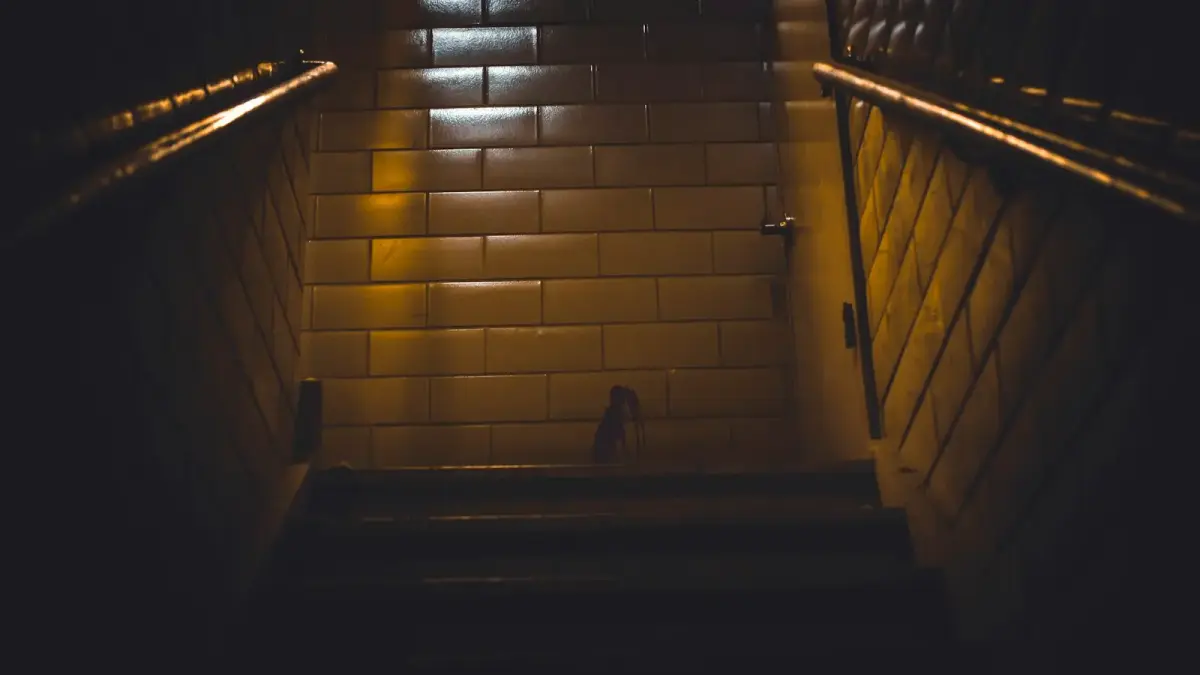
I was seven the first time I walked my mother to the candle drawer.
The power had gone out - a storm, I think, though I don’t remember the weather as much as I remember the sound of her opening and closing the wrong cabinets in the dark. She was checking the kitchen counter, then the junk drawer by the phone, then the hallway closet. I stood in the doorway of my bedroom and listened to her fumble, and something in me went very still.
“Mom,” I said. “Bottom left. Under the dish towels.”
She found them. She lit one. And in the orange glow of that single flame, she looked at me like she was seeing something she hadn’t expected. I don’t think she knew I had memorized that drawer. I don’t think she knew I had memorized most of the house.
But I had. By seven, I knew which batteries went in the TV remote and which ones fit the wall clock. I knew the fuse box was in the basement, second panel from the left. I knew where the first aid kit lived, and that it was missing the antiseptic spray but still had the butterfly bandages.
I knew all of this the way other kids knew where their toys were. It wasn’t a chore. It was the architecture of my safety.
The child who mapped the house
Not every child who knows where the candles are had a traumatic childhood. That distinction matters. Sometimes it was simply a household where the adults were distracted, overwhelmed, or a little disorganized - not dangerous, just not quite steady enough for a perceptive child to fully let go.
These were the kids who noticed things. The ones who registered that the smoke detector had been beeping for three days and nobody had changed the battery. The ones who quietly moved the space heater away from the curtain. The ones who checked the stove burners before bed, not because anyone told them to, but because they had realized - earlier than most children should - that checking was something that needed doing and nobody else was doing it.
A 2015 study published in the Journal of Child Psychology and Psychiatry found that children in households with inconsistent caregiving often develop heightened environmental monitoring - a form of cognitive mapping where the child tracks physical and emotional variables in their surroundings far more actively than their peers. The researchers described it as adaptive vigilance: the nervous system learning to compensate for unpredictability by becoming extremely good at prediction.
This wasn’t pathology. It was intelligence meeting necessity.
The child who mapped the house was not anxious in the clinical sense. They were doing something more nuanced than worrying. They were building a mental blueprint of every resource, every risk, and every gap in the household’s preparedness - and they were doing it because some quiet part of them understood that the adults could not be fully relied upon to do it first.
The inventory that never stops updating
Here is what happens when that child grows up: the inventory expands, but it never closes.
You walk into a restaurant and before you have even looked at the menu, you have located both exits, noted whether the kitchen door swings inward or outward, and registered the distance between your table and the nearest fire extinguisher. You do this without thinking. You do this the way other people notice the music playing.
You check into a hotel room and the first thing you do - before you set down your bag, before you test the bed, before you open the curtains - is read the evacuation map on the back of the door. You count the doors between your room and the stairwell. You check whether the window opens.
You keep a flashlight in your nightstand, one in the glove compartment, one in your desk at work. You have a mental catalog of every first aid kit in every building you frequent. You know where the circuit breaker is in your house, your partner’s house, your parents’ house, and possibly your best friend’s house.
And you do not think of any of this as unusual until someone watches you do it and says, “Why do you always have to check everything?”
That question lands differently than they intend. Because you don’t always have to check everything. You always do check everything. There’s a distinction. The first implies compulsion. The second implies that checking has become so deeply woven into how you move through the world that it no longer registers as a separate activity. It is simply how you exist in a space.
What the research calls it - and what it actually is
Clinical psychology has a name for this pattern: hypervigilance. It shows up in discussions of anxiety, PTSD, and attachment insecurity. And those frameworks are not wrong, exactly. But they are incomplete.
Dr. Gabor Mate has written extensively about how early environmental stress shapes the developing nervous system - how children who grow up needing to monitor their surroundings develop neural pathways that stay locked in scanning mode long after the original threat has passed. The brain, he argues, does not distinguish between a childhood household where the adults were unpredictable and a present-day restaurant where everything is perfectly fine. It runs the same program either way.
But here’s what the clinical framing often misses: the child who mapped the house was not just protecting themselves. They were protecting everyone.
That seven-year-old who knew where the candles were didn’t memorize that drawer for their own comfort. They memorized it so that when the lights went out, they could guide their mother to it. They memorized the fuse box so their father wouldn’t have to stumble downstairs in the dark. They kept track of the batteries so their little brother’s nightlight could be fixed at 2 AM without waking anyone.
This was not self-preservation. This was a child performing an act of love so quiet that nobody in the household recognized it as love at all.
The weight of being the one who notices
A 2021 study in Frontiers in Psychology examined adults who reported taking on “household management” roles before the age of ten. The researchers found that these individuals scored significantly higher on measures of conscientiousness and situational awareness, but also reported elevated levels of chronic stress and difficulty delegating tasks in adulthood.
The pattern makes sense when you trace it forward. If you spent your childhood being the person who noticed what needed noticing, you learned two things simultaneously. The first: you are good at this. The second: if you stop, nobody else will start.
That second lesson is the one that follows you into adulthood and sits on your chest at 2 AM.
You become the person at work who notices the file hasn’t been backed up, the supply closet is running low, the emergency exit is blocked by a delivery cart. You become the partner who always has a phone charger, an extra set of keys, a plan B for the plan B. You become the friend who texts “let me know when you get home” and actually waits for the response.
And you carry all of this with a strange combination of pride and exhaustion. Because the noticing is real, and it is valuable, and it has saved situations more times than you can count. But it is also relentless. The scanning never turns off. The inventory never closes.
You cannot sit in a movie theater without registering the glow of the exit signs. You cannot fall asleep in a new place until you have mentally rehearsed how you would leave in an emergency. You cannot fully relax at a dinner party because some part of you is always monitoring the candles on the table, the distance to water, the nearest clear path to the door.
And nobody tells you that this is a weight, because it looks so much like competence.
The moment you recognize yourself
If you are reading this and feeling that slow pull of recognition - that strange mix of being seen and being slightly undone by it - I want you to sit with something for a moment.
You were not supposed to know where the candle drawer was. Not at seven. Not at eight. Not at any age where you should have been free to let the adults figure it out.
The fact that you knew - the fact that you had mapped the entire house before most kids had memorized their multiplication tables - tells a story. Not about what was wrong with you, but about what was missing around you. Not catastrophically missing. Not always dramatically missing. Sometimes just quietly, persistently, enough-to-notice missing.
Susan Cain, in her work on quiet temperaments, has described how observant children often become the emotional and logistical infrastructure of their households without anyone naming it as such. They don’t demand attention for this role. They don’t even realize it is a role. They simply do what feels necessary, and what feels necessary is everything.
Reparenting the child who was always ready
The adults in your life may not have been neglectful in any way that would show up on a checklist. They may have been loving, present, and well-intentioned. But if you were the child who knew where the flashlights lived, something in the dynamic was slightly out of balance - and you corrected for it with your own nervous system.
You are allowed to put that down now.
Not all at once. Not dramatically. The child who mapped the house does not suddenly stop mapping. But you can begin to notice the moments when the scanning activates and gently ask yourself: is there actually a gap here that needs filling, or am I running an old program in a new room?
You can walk into a restaurant and let yourself not know where the fire extinguisher is. You can check into a hotel room and look at the view before the evacuation map. You can go to bed without mentally rehearsing the fastest route to the front door.
You won’t do this perfectly. You won’t do it every time. The inventory has been running for decades, and it will not close overnight.
But you can start to recognize that the child who always knew where the candles were did something remarkable. They held the household together with a kind of quiet, invisible devotion that nobody asked for and nobody thanked them for. They became the emergency system before they had the language to describe what an emergency was.
That child deserves to hear something they probably never heard at seven, standing in the doorway with the match still warm in their hand:
You did enough. You noticed enough. You can rest now. The lights are on, and someone else can find the candles tonight.