Children who developed a completely different personality for each parent - who could tell by the car in the driveway what kind of evening it would be before the front door even opened - often become adults who can read any room in three seconds but have never once walked into one as themselves
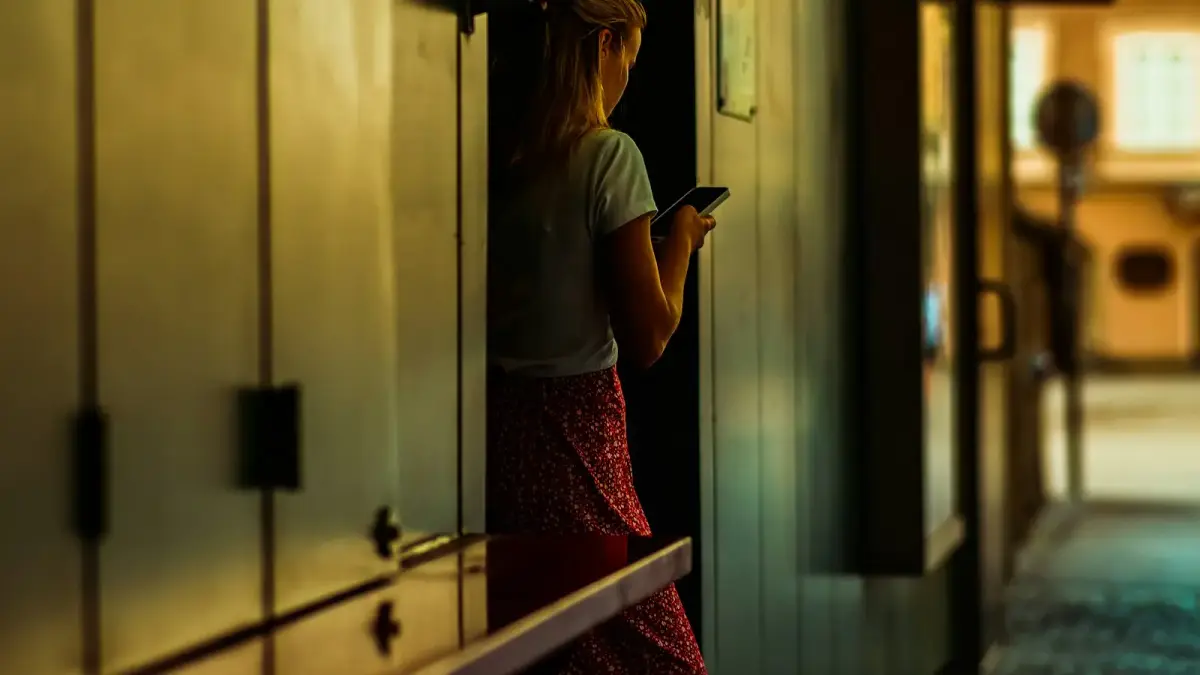
I used to stand at the living room window around five-thirty every evening, watching the driveway. Not because I was excited. Because I needed information.
If it was my mother’s car, the evening would have a certain shape. Dinner would be calm. Conversation would be light. I could be loud, a little silly, take up space. If it was my father’s car pulling in first, the house shifted. I sat straighter. I spoke less. I laughed more quietly, if I laughed at all.
I did not think of this as anything unusual. I thought everyone did it. I thought every child had two versions of themselves tucked neatly inside their chest, ready to be pulled out depending on the sound of a key turning in the front door. It wasn’t until I was thirty-four, standing outside a conference room at work, reading my boss’s posture through the glass before deciding how to enter, that I realized I had never stopped doing it. I had just gotten better at it.
If any part of this sounds familiar, I want you to know something before we go any further. You are not manipulative. You are not fake. You are someone who learned, very young, that love came in different climates - and you became fluent in both.
The driveway check
Every child who grew up between two emotional climates knows the driveway check. It is the first scan. The first reading. Before any words are spoken, before the front door opens, you already know.
It might be the car. It might be the specific sound of the garage door versus the side entrance. It might be the weight of the footsteps on the porch - one parent walks heel-first, the other toe-first.
For me, it was the key. My mother’s key always seemed to find the lock easily, a quick turn, the door swinging open mid-sentence because she was already talking to someone on the phone or calling out a greeting. My father’s key was slower. More deliberate. The silence before the door opened was its own kind of message.
And in that silence, I would make my calculation. Not consciously. Not strategically. It happened faster than thought, the way your hand pulls back from a hot stove before your brain registers heat. I knew which child to be before I knew I was choosing.
A 2019 study published in the Journal of Personality and Social Psychology found that children raised in environments with inconsistent emotional cues develop significantly heightened perceptual sensitivity to nonverbal signals. The researchers called it “affective vigilance” - the ability to detect micro-shifts in another person’s emotional state with unusual speed and accuracy. What they didn’t say, but what I think most of us already understand, is that this ability was never a gift we asked for. It was a tool we built because we needed it.
Two houses inside one house
Here is the part that makes it hard to explain to people. It wasn’t abuse. Not in either direction. Both parents loved me. Both parents were, in their own ways, trying their best.
But they were different climates.
My mother’s house - even though it was the same physical house - ran on warmth, on openness, on a certain kind of emotional generosity that made you feel like whatever you were feeling was fine. My father’s house ran on competence, on composure, on the unspoken understanding that big emotions were best handled privately.
Neither was wrong. But they required different children.
So I became both. I became the open, talkative, emotionally expressive daughter for my mother. And I became the calm, self-sufficient, low-maintenance daughter for my father. Not because either of them asked me to. Because I could feel what each of them needed from me, and giving people what they need is what I had always been best at.
The hallway was the transition zone. I remember pausing in the entryway of our house - just for a second, sometimes less - feeling the atmosphere before committing to a direction. Was it a gentle night or a careful night? Was there tension hanging in the air, or was it safe to be messy?
Dr. Gabor Mate has written extensively about how children do not adapt to their parents’ instructions but to their parents’ emotional states. Children are reading the room long before they can read a book. And they are adjusting themselves accordingly - not because they are people-pleasers, but because attunement is the first language any child learns. Before words, before logic, before personality, there is: what does this person need me to be right now?
That question gets installed so early that most of us don’t even hear it running anymore. It just runs.
The shape-shifter grows up
You would think this would fade. You leave home. You build your own life. You choose your own rooms, your own people, your own front door.
But the software doesn’t uninstall itself.
I am forty-one years old and I still do the driveway check. It just looks different now. Now it is the three seconds before I push open the glass doors of a hotel lobby, reading my colleagues’ faces through the window. Now it is the pause before I answer the phone, hearing the tone of the first syllable before I decide which version of my voice to use. Now it is the way I stand slightly outside a group at a party, watching the energy circulate, before I decide who to be tonight.
And I am good at it. That is the thing no one tells you. People who grew up toggling between emotional climates become extraordinary readers of rooms. They can sense tension between two people who haven’t spoken to each other yet. They can detect a shift in someone’s mood from across a table. They walk into a space and they know - instantly, viscerally, in their body - what the room needs.
A 2021 study in Frontiers in Psychology found that adults who reported high levels of childhood emotional monitoring scored significantly higher on tests of interpersonal accuracy - the ability to correctly identify what another person is feeling from minimal cues. These same adults also reported higher rates of identity diffusion, the clinical term for the feeling that you don’t have a stable, consistent sense of who you are.
That combination is the whole story. You are brilliant at reading others. You are lost when it comes to reading yourself.
The exhaustion no one sees
There is a specific kind of tiredness that belongs to people who have never had a default mode. It is not the tiredness of working hard or sleeping poorly. It is the tiredness of running a calculation before every single interaction.
A woman I know - smart, successful, deeply kind - once told me she was exhausted after a work dinner that lasted two hours. Just dinner. Just colleagues she liked. But by nine o’clock, she felt like she had run a marathon.
When I asked her to describe what the dinner felt like from the inside, she said something that stopped me. “I was watching the whole time. I was watching their faces, adjusting my laugh, monitoring whether I was being too much or too little. I wasn’t eating dinner. I was performing dinner.”
She was forty-eight years old. She had been performing meals, conversations, friendships - performing presence - for over forty years.
This is the cost that doesn’t show up on any diagnostic checklist. It is the energy drain of never simply being. Of always arriving at a room and running a scan before you enter. Of knowing exactly what everyone else needs and having no idea what you need. Of being so attuned to the emotional weather around you that you have become invisible to yourself.
People tell you that you’re easy to talk to. They tell you that you make them feel comfortable. They tell you that you have this incredible ability to meet people where they are. And all of that is true. But no one ever asks the follow-up question, which is: when do you get to stop meeting people where they are and just stand still?
The question underneath the question
When I work with people who recognize themselves in this pattern, the thing they most often say is: “I don’t know who I actually am.”
They don’t mean it dramatically. They mean it precisely. They can tell you who they are with their partner, who they are with their mother, who they are with their best friend, who they are with their boss. They have a version for each. And every single version is real. That is the confusing part. None of it is fake. They are not lying. They are just always responding to someone else’s frequency instead of broadcasting their own.
The psychologist Winnicott called it the “false self” - but I have always found that term slightly unfair. There is nothing false about it. It is a self that was built in response to real conditions. It kept you safe. It kept the peace. It allowed you to be loved in two different ways by two different people who needed you to be two different things.
The problem is not that you built it. The problem is that you never got the chance to find out what was underneath it.
A 2023 study published in the Journal of Research in Personality found that adults with high self-monitoring tendencies - the technical term for people who consistently adjust their behavior to match social contexts - reported lower levels of “self-concept clarity,” the degree to which a person has a clear and confident understanding of who they are. But here is what caught my attention: the same study found that when these individuals were given structured opportunities for self-reflection without social pressure, their self-concept clarity scores improved significantly. The default self was always there. It just needed a room with no audience.
What it looks like to come home
I want to be careful here, because I don’t think the answer is to stop reading rooms. That skill is real, and it has served you well, and it will continue to serve you well. The world is full of people who cannot read a room at all, and that is its own kind of difficulty.
The shift is subtler than that. It is learning to notice the moment before you scan. The half-second pause where you are still just you - before the calculation kicks in, before you start adjusting. That pause exists. It has always existed. You have just been moving through it so quickly that you never noticed it was there.
Start there. Not with some grand project of self-discovery. Not with the pressure to “find your authentic self” as if it is a lost set of car keys. Just with the pause. Just with the noticing.
The next time you are about to walk into a room - a dinner, a meeting, your own kitchen when your partner is already home - see if you can catch the moment where you are still standing in the hallway. Not the child checking the driveway. Not the adult reading energy through the glass. Just the person in between. The one who exists before the adaptation begins.
She has been there the whole time. She has been standing in that hallway for decades, waiting for you to notice her. Not the version you built for your mother. Not the version you built for your father. Not the version you built for your boss or your spouse or the stranger at the checkout counter.
Just you. The one who was there before you learned that love required a costume change.
She is tired. She is ready to sit down. And she doesn’t need you to perform anything at all.