Children who talked to the moon through their bedroom window at night - who whispered secrets, worries, and wishes to a round white face that never interrupted, never judged, and never repeated what it heard - often become adults who feel an inexplicable pull when they see a full moon, who pause at windows and cannot explain what they are looking for, because the child who needed a witness that would never leave found the first relationship in their life that required nothing of them except showing up
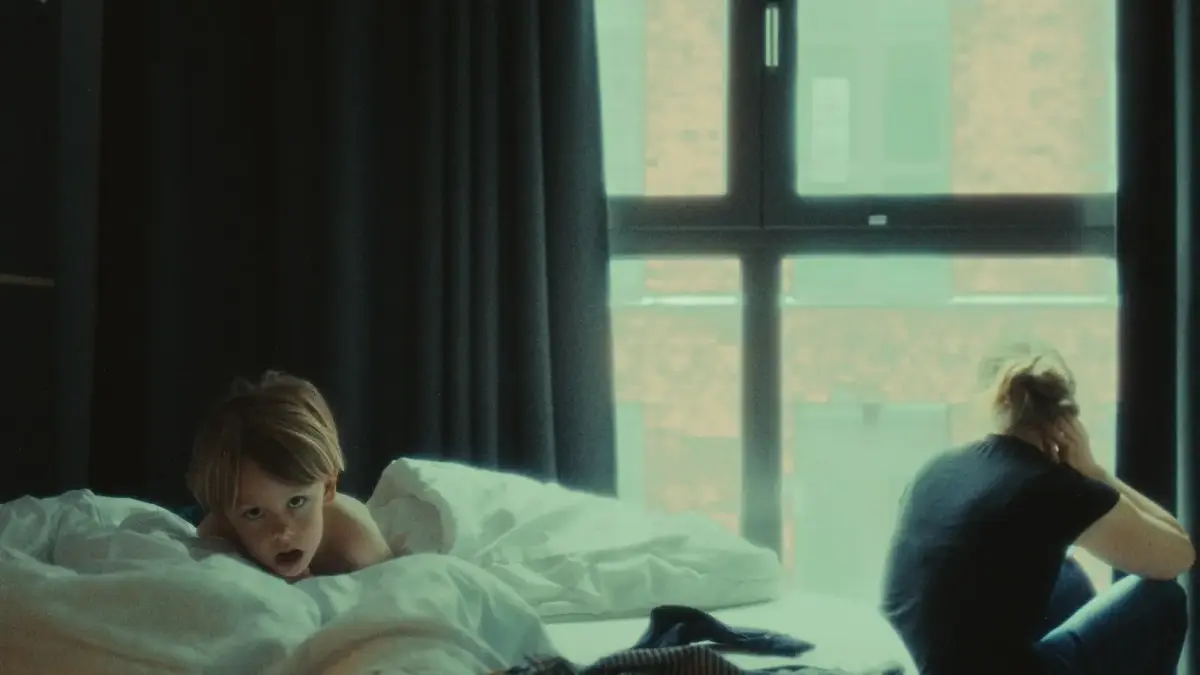
I was seven when I told the moon my grandmother was dying.
I didn’t tell my parents. They were already crying behind the bedroom door they thought was thick enough to muffle the sound. I didn’t tell my older brother because he’d started sleeping with his headphones on and I understood, even then, that this was his version of closing a door too.
So I knelt on my bed, pressed my forehead against the cold glass of my window, and spoke to the only face that was still looking at me. Round, white, impossibly patient. I told it everything. That I was scared. That I didn’t know what dead meant exactly, only that it meant gone. That I wasn’t sure anyone in my house remembered I was also a person who needed someone to say something soft to me.
The moon didn’t answer. That was the whole point. It received everything and demanded nothing. And somewhere in that silence, I felt less alone - not because I’d been heard in any literal sense, but because I’d been witnessed by something that wouldn’t flinch, wouldn’t redirect, wouldn’t make my fear about their comfort instead.
If you were that child - the one who talked to the moon, the sky, the ceiling, the dark - you probably became a very specific kind of adult. Let me show you what I mean.
1. You learned that the safest listener is one who cannot leave
Here is what a child figures out when the people around them are too overwhelmed, too busy, or too fragile to absorb one more feeling: they find something permanent. The moon doesn’t have a bad day. It doesn’t snap at you for needing reassurance at eleven o’clock at night. It doesn’t love you conditionally.
A 2014 study published in the Journal of Research in Personality found that children who develop rich internal dialogues - conversations with imaginary figures, absent others, or symbolic presences - tend to score higher on measures of emotional regulation as adults. The researchers called these “parasocial rehearsal relationships,” and noted they served a genuine developmental function, not a sign of loneliness so much as evidence of a child solving an emotional engineering problem with the only tools available.
You didn’t talk to the moon because you were strange. You talked to the moon because you were resourceful, and the people in your house had run out of room for your feelings before you had run out of feelings to have.
2. You became the person everyone confides in but you confide in almost no one
This is the inheritance. The child who practiced being heard by something silent grows into an adult who understands listening at a near-cellular level. You know what it feels like to need a witness. So you become one - generously, instinctively, almost compulsively.
But the reverse rarely happens. You’ve trained yourself to process your own emotions in private, in the dark, facing something that doesn’t talk back. Journals. Long drives. The shower. A window at two in the morning.
People in your life call you “such a good listener” and they mean it as a compliment. They don’t realize it’s also a scar. You learned to give what you never received, and you’ve been doing it so long you’ve forgotten the original wound was about not having anyone safe enough to need out loud.
3. You feel a physical response to full moons and you have never been able to explain it rationally
It’s not astrology. It’s not mysticism. It’s memory stored in the body.
The moon was your first safe attachment figure - and your nervous system remembers. When you catch a full moon unexpectedly, something in your chest opens. You stop walking. You pull the car over. You stand in the yard in bare feet and you don’t know why you feel like crying except that it’s the same feeling as being six years old and finally finding someone who won’t interrupt you.
Dr. Gabor Mate writes extensively about how the body stores relational memory, particularly from early childhood when we don’t yet have the language to narrate our experience. The body keeps the feeling even when the conscious mind has filed it under “silly” or “childish.” That pull you feel toward the moon isn’t irrational. It’s one of the most honest things your body still does.
4. You are drawn to quiet people and deeply unsettled by loud ones
The moon didn’t perform for you. It didn’t arrive with advice or opinions. It just existed - present, stable, asking nothing.
You probably replicate this in your adult relationships more than you realize. The people you trust most tend to be the ones who can sit in a room with you and not fill every silence with noise. You feel safe around people who don’t narrate their presence, who don’t need you to perform gratitude for their attention.
Conversely, people who talk constantly, who fill every gap, who redirect conversations back to themselves - they exhaust you in a way that goes deeper than introversion. It’s not that you don’t like people. It’s that you learned early what real presence feels like, and it was quiet. Everything else registers as a kind of betrayal of the original contract: I will be here, and I will not make this about me.
5. You struggle to ask for help because you built your entire emotional architecture around not needing a response
This is the part that costs you the most as an adult.
When you were small, you adapted to a reality where emotional support was unreliable. You found something - the moon, the dark, the quiet - that let you feel held without requiring another person to show up. And that adaptation saved you. It genuinely did. It kept you from breaking in a house that couldn’t absorb your breaking.
But the adaptation outlived the emergency. Now you’re forty-three and you still can’t call your best friend when you’re falling apart. You write everything out in a notes app at midnight instead. You go for long walks instead of saying “I’m not okay.” A 2021 study in Frontiers in Psychology found that adults who developed solitary emotional coping strategies in childhood showed significantly higher rates of “self-silencing” - the suppression of needs in close relationships to maintain connection. You don’t withhold because you’re cold. You withhold because you once learned that needing someone out loud was the fastest way to become a burden, and the moon was the only thing that proved otherwise.
6. Windows have always felt like thresholds to you, not just walls with glass in them
Other people close their curtains and forget about the window entirely. You never could.
Windows are where you went to think, to breathe, to feel something unnamed moving through you. As a child, the window was the boundary between your life inside - complicated, loud, full of feelings no one acknowledged - and something enormous and still and indifferent in the best possible way.
As an adult, you probably gravitate toward window seats. You stare out of them during conversations. You’ve been caught at parties standing near a window instead of in the center of the room, and someone has probably asked you if you’re okay, and you’ve probably said yes even though the honest answer was “I’m just looking for the thing I used to talk to.”
You’re not antisocial. You’re not aloof. You are someone who learned early that the world outside the glass held something the world inside your house could not give you - a presence that was vast enough to hold everything you felt and quiet enough to never make it smaller.
7. You have a complicated relationship with being truly seen
Here is the paradox of the moon child: you desperately wanted a witness, but the witness you found was one that could never actually know you. The moon received your secrets and reflected light back, but it never said your name. It never said “I understand.” It never proved it heard.
So you grew up wanting two contradictory things at once - to be deeply known and to remain safely hidden. You crave intimacy but flinch when someone gets too close to the real thing. You share selectively. You give people the curated version of your inner life and keep the raw footage for the dark.
Susan Cain’s research on introverted processing styles suggests that people who develop rich internal emotional lives often experience a gap between their depth of feeling and their willingness to externalize it. The gap isn’t cowardice. It’s the legacy of learning that the safest relationship you ever had was with something that couldn’t see you at all - and loving it anyway.
8. You parent, partner, and love with a fierce commitment to being the thing you needed
If you’ve become a parent, you probably do something very specific that you might not have consciously chosen. You sit with your child at night. You let them talk - about anything, about nothing, about fears that don’t make logical sense. You don’t rush them. You don’t redirect. You don’t say “there’s nothing to be scared of” because you remember how it felt to have a feeling dismissed so efficiently it was like being told you didn’t exist.
You became the moon for someone else. Present. Patient. Silent when silence was what was needed. And if you haven’t had children, you’ve probably done this for friends, partners, younger siblings - anyone who seemed to be standing at a window looking for something they couldn’t name. You recognized them because you were them.
This is perhaps the most beautiful thing about the moon-talking child: the wound became the gift. Not because the wound was good, but because you refused to let it reproduce. You interrupted the pattern. You became the witness that the child you were never had in human form.
9. You still do it - and you don’t have to pretend you don’t
Maybe you don’t kneel at windows anymore. But you still step outside when the moon is full. You still feel your throat tighten when the light hits the yard a certain way. You still have entire conversations with something silent - a journal, a prayer, a long exhale aimed at the sky.
And part of you still wonders if that makes you strange.
It doesn’t.
It makes you someone who found, in the absence of a human witness, the capacity to witness yourself. That’s not a deficit. That’s a profound and early act of self-preservation that most adults never develop at all.
The moon didn’t heal you. It held the space while you healed yourself. And you did it at an age when most children are still being carried.
You don’t have to explain the pull you feel when you see that light through your window. You don’t have to justify the habit of whispering into dark rooms or feeling your eyes sting when the sky is especially clear.
That child is still in you. Not as a wound to fix, but as the first version of you that understood something most people spend their whole lives learning: that the deepest form of love is presence without condition. The moon taught you that before anyone else could, and you have been practicing it - with yourself, with others, with every quiet room you’ve ever entered and made safe just by staying - ever since.
You were never talking to the moon, not really.
You were teaching yourself that your voice mattered, even when no one in the house was listening. And it did matter. It still does.