He's 54 and has realized the reason he arrives thirty minutes early to everything is not punctuality - it is a nervous system that learned at four that being early was the closest thing to being safe
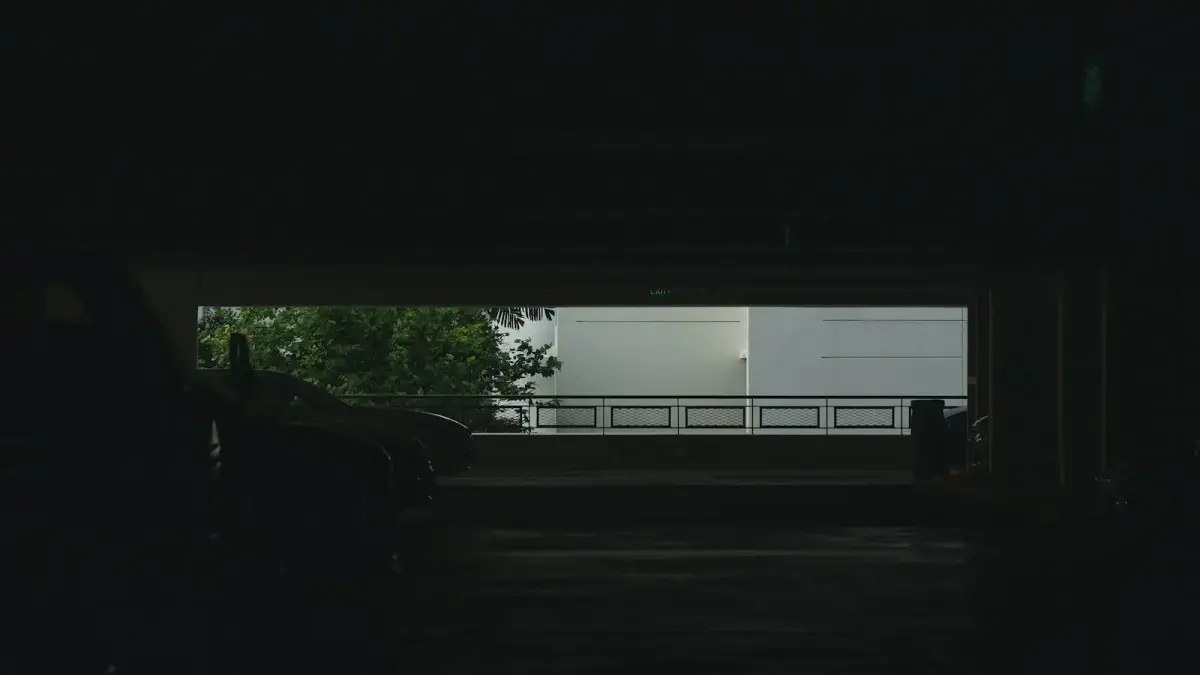
I sat in my car outside a friend’s house last Tuesday for twenty-six minutes. Engine off. Phone in my lap, screen dark. I wasn’t reading anything, wasn’t listening to anything. I was just sitting there, watching the dashboard clock tick toward the time I was supposed to arrive.
I do this constantly. Restaurants, doctor’s appointments, my daughter’s school events. I build in forty-five minutes of buffer on drives that take twenty. I am always the first person at the table, pretending to study a menu I already memorized from my phone while I waited in the parking lot.
For most of my life, I called this being responsible. My friends call me reliable. My ex-wife used the word “rigid.” My therapist, when I finally saw one at fifty-two, called it something else entirely.
She called it hypervigilance.
And when she said it, something in my chest that had been clenched since childhood quietly loosened - not all the way, but enough for me to feel how tight it had been holding.
The parking lot ritual
Here is what nobody sees. The arrival is not the moment I pull into the driveway or walk through the door. The arrival is the twenty-five minutes before that, when I’m sitting in a parked car with the windows cracked, watching the entrance, scanning for signs of how this is going to go.
Is the host in a good mood? Are people already inside? Is the energy calm or chaotic?
I didn’t know I was doing this until someone pointed it out. A colleague once saw me sitting in my car in the office parking lot at 7:15 for an 8:00 meeting. She knocked on the window and laughed. “You know the building’s open, right?”
I laughed too. But I couldn’t explain to her that the building being open wasn’t the point. The point was that I needed those forty-five minutes between leaving my house and walking through the door. Not for traffic. Not for logistics. For my nervous system to prepare for whatever was on the other side.
The house where the clock was a warning system
I grew up in a house where time was not neutral. Time was a mood. Time was a prediction.
My father wasn’t violent, but he was volatile. His anger didn’t arrive on a schedule you could track, but lateness - anyone’s lateness - was one of the reliable triggers. If my mother was five minutes late getting home from the grocery store, the silence in the house shifted. If I wasn’t ready for school when the car was supposed to leave, there was a tone in his voice that made the air feel thinner.
I learned, before I could tie my shoes, that the gap between “on time” and “early” was the distance between safe and not safe.
Being early meant I was already in position. Already dressed. Already waiting by the door with my backpack zipped and my shoes tied. It meant I had eliminated one variable - myself - from the equation of what might set things off.
A 2019 study published in the Journal of Anxiety Disorders found that children raised in unpredictable home environments often develop what researchers call “anticipatory coping strategies” - behaviors designed to prevent emotional threat before it arrives. The child doesn’t learn to manage conflict. The child learns to arrive before it does.
That was me. I was always arriving before the conflict. And somewhere along the way, I forgot I was allowed to stop.
What it looks like at fifty-four
The thing about hypervigilance dressed as punctuality is that nobody questions it. Nobody worries about the man who’s always on time. Nobody stages an intervention for someone who’s early.
Instead, they admire it.
“Marcus is so dependable.” “You can always count on him to be there.” “He’s the most organized person I know.”
And I absorbed those compliments like oxygen because they confirmed the story I’d been telling myself - that this was a personality trait. A strength. Something I chose rather than something that chose me.
But here is what dependability looks like from the inside when it’s actually hypervigilance: I cannot enjoy the first fifteen minutes of any gathering because my body is still running calculations. Reading faces. Measuring the emotional temperature of the room. Deciding whether this is a place where my shoulders can come down.
I have never once been late to pick up my daughter from school. Not once in twelve years. And I used to feel proud of that until I realized the feeling underneath the pride wasn’t satisfaction. It was terror. A low, humming certainty that if I was late - even once - something unnamed and terrible would happen.
Nothing terrible would happen. My daughter would wait on the bench with her friends. She’d be fine. I know this intellectually. But my nervous system doesn’t read intellect. It reads 1976, and the kitchen, and the sound of a car door that slammed harder than it needed to.
The body keeps the schedule
Dr. Bessel van der Kolk’s work on trauma and the body describes how traumatic stress isn’t stored as a narrative. It’s stored as a set of physical responses - muscle tension, breath patterns, gut reactions - that fire automatically when the body detects a pattern it associates with threat.
For some people, the trigger is a raised voice. For others, it’s a particular smell or a song.
For me, it’s the clock.
When the time I’m supposed to be somewhere approaches and I am not already there, something in my body starts to hum. My jaw tightens. My breathing gets shallow. I check my phone. I check it again. I calculate the drive time, then add fifteen minutes, then add ten more. And only when I am physically in the car, moving toward the destination, does the hum begin to quiet.
This is not discipline. This is not conscientiousness. This is a forty-year-old flinch dressed in responsibility.
A 2021 study in Frontiers in Psychology examined time-related anxiety in adults and found that individuals with childhood histories of emotional unpredictability were significantly more likely to engage in what the researchers called “temporal over-preparation” - arriving excessively early, building unnecessary buffers, and experiencing physiological distress when routines were disrupted.
They weren’t describing a personality type. They were describing a survival adaptation that outlived the thing it was surviving.
The friends who called it something kind
One of the cruelest things about growing up in a reactive household is that the coping strategies you develop are often the exact traits the world rewards. Nobody tells you to stop. Nobody sees the wound underneath the competence.
My friends see a man who respects other people’s time.
What they don’t see is the man who drove to a restaurant forty minutes early, sat in the parking lot with his hands on the steering wheel, and mentally rehearsed three versions of the conversation he was about to have - one for if everyone was in a good mood, one for if there was tension, and one for if something went wrong.
That’s not preparation. That’s a four-year-old standing by the front door with his jacket on, trying to make himself so small and so ready that no one would have a reason to be upset.
I’ve been doing a version of that for fifty years. The jacket changed. The door changed. The fear didn’t.
Psychologist Gabor Mate has written extensively about how childhood adaptations become adult identities - how behaviors we developed to survive emotionally volatile homes become the traits we’re known for, the traits we build careers around. The helpful child becomes the overworked adult. The quiet child becomes the adult who never asks for anything. And the child who learned to be early becomes the man everyone calls reliable, never knowing that reliability and hypervigilance can wear the same face.
What I’m learning now
My therapist asked me something last year that I think about almost daily. She said, “What would happen if you arrived exactly on time?”
I didn’t have an answer. Not because I couldn’t think of one, but because my body responded before my brain could. My chest tightened. My palms went damp. The question itself - the idea of removing that buffer - felt physically dangerous.
And that reaction told me everything I needed to know. This was never about the clock. It was about what the clock represented in a house where a child’s safety depended on being one step ahead of someone else’s mood.
I’m not fixed. I still arrive early. I was twenty minutes early to my therapist’s office last week, which we both acknowledged with a kind of tired humor.
But something has shifted. I can name it now. I can sit in the parking lot and instead of pretending I’m just “killing time,” I can say to myself: your nervous system is doing the thing it learned to do. You’re safe. There is no eruption waiting behind the door.
Sometimes I believe it. More often than I used to.
If this is your parking lot too
I’m not writing this to diagnose you or to tell you that your punctuality is a trauma response. Maybe you’re just a person who likes being on time. That’s fine. That’s real.
But if you’re the person who gets a knot in your stomach when you’re running five minutes behind - not because of logistics but because of something older, something in the body that feels like dread rather than inconvenience - then I want you to know that I see you.
You’re not uptight. You’re not rigid. You’re not controlling.
You were a child who figured out, with extraordinary intelligence, that the safest place in a chaotic house was ahead of the chaos. And you’ve been running ahead ever since, calling it responsibility, calling it character, calling it who you are.
Adam Grant once wrote about how the traits we’re most proud of are often the ones most worth examining - not because they’re false, but because their origins might tell us something we haven’t been ready to hear.
You were never early because you were disciplined. You were early because you were afraid. And the fact that you turned fear into something the world calls a virtue is not something to be ashamed of.
It’s something to grieve, gently. And then, slowly, to set down.
Not all at once. Maybe just five minutes later than usual. Maybe just sitting in the car with the engine off, letting yourself arrive - not to the place, but to the truth that you’ve been carrying this since before you knew what it was.
You were keeping yourself safe. You did a beautiful job. And you’re allowed to stop now.