He's 56 and has quietly realized the reason he cannot throw away the broken watch, the coat that no longer fits, and the boxes of magazines nobody will ever read is not sentimentality - it is a boy who watched his family lose their home and decided at nine that nothing important would ever leave his hands without his permission again
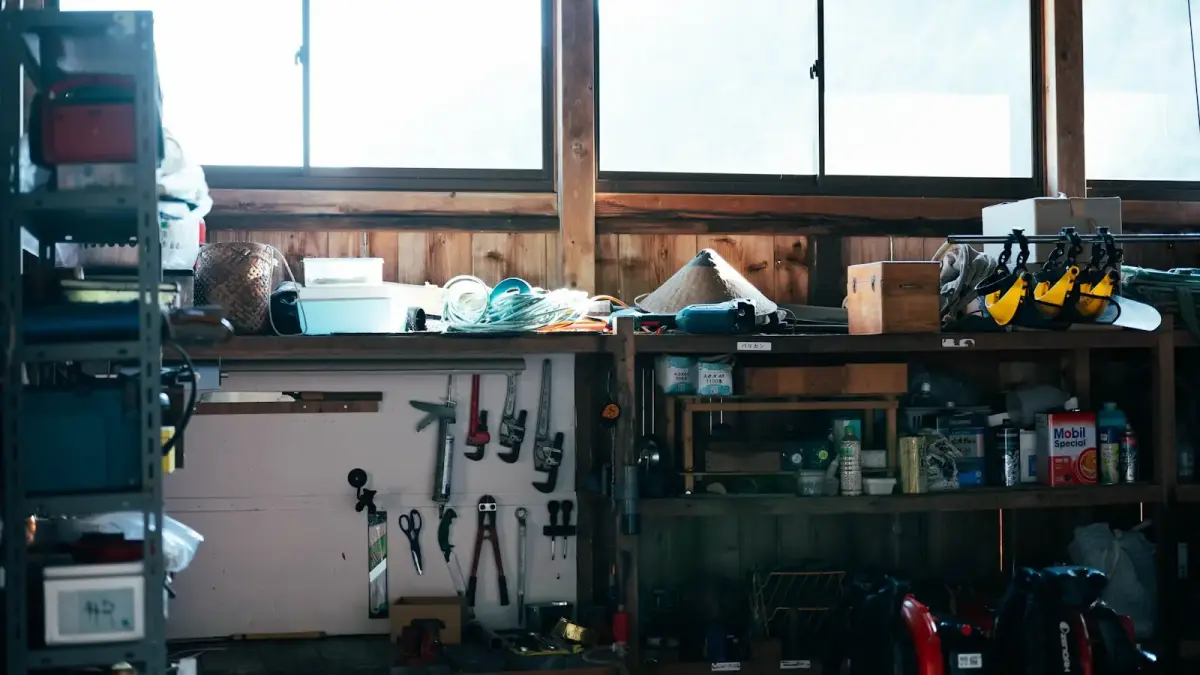
The Garage My Wife Wants Me to Clean
There is a watch in the top drawer of my dresser that stopped working in 2014. The battery died during a road trip to my brother’s place, and I took it off my wrist and set it on the nightstand of a Holiday Inn somewhere outside of Louisville. I brought it home. I put it in the drawer. And I have not worn it once in the twelve years since.
My wife has asked me to throw it away maybe thirty times. She’s not wrong - it cost nineteen dollars at a department store. It has no resale value, no family history, no story anyone would want to hear at a dinner party.
But every time I pick it up, something in my chest says no. Not loudly. Not dramatically. Just a quiet, firm refusal that I cannot fully explain and have mostly stopped trying to.
That watch sits next to a phone charger that fits nothing we own anymore, two sets of keys I cannot identify, and a birthday card from someone whose handwriting I no longer recognize. If you opened that drawer, you would see clutter. If you opened me, you would see something else entirely.
The Inventory of a Man Who Cannot Let Go
I am not unusual in this. I know men my age - mid-fifties, maybe early sixties - who have garages that look like small museums curated by someone with no organizational system and absolute conviction that everything on the shelves matters.
The coat that hasn’t fit in eight years. The box of National Geographic magazines from the nineties. The power drill with the cracked housing. The VHS tapes. The coffee mug from a job that no longer exists.
Their wives call it hoarding. Their kids post jokes about it online. The culture has a word for it now - a clinical one, complete with television shows where people weep while strangers sort their belongings into trash bags.
But here is what I have come to understand about myself, and about a lot of men who grew up the way I did: the objects are not the point. The keeping is the point. The act of holding on - of refusing to release something from your possession - is doing a job that has nothing to do with the thing itself.
And that job started a very long time ago.
What Happened When I Was Nine
When I was nine years old, my father lost his job at the plant where he had worked for fourteen years. This was not a gentle transition. There was no severance package, no career counseling, no three-month runway.
One Thursday he came home early and sat in the car in the driveway for forty-five minutes before he came inside. I watched him from my bedroom window.
Within four months, we lost the house. Not the way people lose houses in movies - all at once, with a dramatic scene on the front lawn. We lost it slowly. First the arguments about money that I could hear through the walls. Then the meals that got simpler. Then my mother selling things - the good dishes, the bookshelf my grandfather built, the television in the living room.
Then the day we put everything we still owned into a rented truck and drove to my aunt’s apartment, where three of us shared a room that smelled like cigarette smoke and carpet cleaner.
I remember standing in my empty bedroom the last morning. The carpet had square indentations where my bed and dresser had been. Those marks were proof that my things had existed. And now they didn’t.
Something in me made a decision that day. It was not conscious. It was not articulated. A nine-year-old doesn’t think in strategy. But a nine-year-old does think in promises.
And the promise I made was: nothing important leaves my hands unless I say so. Ever again.
The Child’s Logic That Never Updates
A 2019 study published in the Journal of Research in Personality found that individuals who experienced significant material loss in childhood - foreclosure, displacement, sudden poverty - were substantially more likely to develop strong attachment behaviors toward physical objects in adulthood. The researchers called it “compensatory retention.” I call it the thing that makes me keep a broken watch in a drawer for twelve years.
The logic is airtight if you are nine. You lost things. Losing things hurt. Therefore, do not lose things. Keep everything. Guard everything. The world takes things when you are not paying attention, so you must always be paying attention.
The problem is that this logic does not update. It does not mature alongside you. It does not recognize that you are no longer nine, that you own your home, that you have savings, that the world is not about to pull the carpet out from under you on a random Thursday.
The nine-year-old does not know any of that. He is still standing in the empty room, staring at the marks in the carpet. And every time you reach for that broken watch to throw it away, he grabs your wrist.
A 2021 study in Frontiers in Psychology explored how childhood adversity shapes what the researchers called “object attachment schemas” - the unconscious frameworks we build around our relationship to possessions. They found that these schemas are remarkably durable. Decades of financial stability often failed to override the patterns set down during periods of childhood scarcity.
Your rational adult mind knows the magazines are worthless. Your nervous system knows nothing of the sort.
It Is Not About the Objects
This is the part that is hardest to explain to the people who love you.
When your wife stands in the garage and says, “Why do we still have this?” she is asking a reasonable question about a physical object. But the question your body hears is different. Your body hears: “Why are you still protecting yourself?”
And the answer your body gives - silently, without words, in the language of a clenched jaw and a redirected conversation - is: because last time I stopped protecting myself, I lost everything.
Gabor Mate has written extensively about how childhood experiences of loss and instability become encoded not just in our memories but in our nervous systems. The body keeps the score, as the saying goes. But it also keeps the inventory. It knows what was taken. It remembers what it felt like to have no say in the matter.
The garage is not a storage problem. It is a sovereignty problem. Every object in it represents a moment when you - not the bank, not the landlord, not the economy, not your father’s employer - decided what stays and what goes.
That is not hoarding. That is a child who finally has authority over his own world and refuses to give it up.
The Class Dimension Nobody Talks About
There is something else here that I think matters, and it lives in the space between what we call “collecting” and what we call “hoarding.”
When a wealthy man fills his home with rare books and vintage wines and original artwork, we call him a collector. We call him cultured. We write magazine profiles about his taste.
When a working-class man fills his garage with tools and old coats and stacks of things he might need someday, we call him a hoarder. We make television about his dysfunction.
But the impulse is the same. The only difference is the price tag on the objects.
People who grew up with money learn that things are replaceable. You break a glass, you buy another one. You outgrow a coat, you donate it. The world is abundant and you have access to that abundance.
People who grew up watching their parents choose between the electric bill and groceries learn something different. They learn that things are finite. That once something leaves your hands, you may never be able to get it back. That the world is not a store you can walk into whenever you want - it is a system that gives to some and takes from others, and you had better hold onto what you have.
A 2022 study in Psychological Science examined the relationship between childhood socioeconomic instability and adult accumulation behaviors. The findings were clear: it was not poverty itself that predicted the behavior. It was the volatility - the sudden loss, the unexpected downward shift. Children who grew up consistently poor showed different patterns than children who experienced a sharp fall from stability into scarcity.
It is the fall that teaches you to grip.
What the Broken Watch Actually Is
I have been in therapy for three years now. Not because of the watch - because of the anxiety that hums underneath everything in my life, the way I check my bank account four times a day even though it is fine, the way I tense up when my wife mentions wanting to renovate the kitchen because renovation means spending and spending means the money could run out and if the money runs out we lose the house and if we lose the house -
You see how quickly it escalates. You see how a conversation about new countertops can land a fifty-six-year-old man back in a bedroom with carpet indentations where his furniture used to be.
My therapist helped me understand something that I want to share with you, if you are the kind of man who keeps things. Who has a garage or a closet or a drawer that other people don’t understand.
The broken watch is not a watch. It is a promise. It is a nine-year-old’s sworn oath that the losses are over. That from this point forward, he controls what stays and what goes. That no one will ever again walk into his life and take the things that make it feel like his.
That is not a small promise. That is the kind of promise a child makes when the adults around him have failed to keep theirs.
You Are Not Broken, and Neither Is Your Garage
If you recognized yourself anywhere in this piece - if you are the man with the boxes, the drawers, the shelves of things that serve no practical purpose but that you cannot bring yourself to release - I want you to hear something.
You are not disordered. You are not lazy. You are not sentimental in some embarrassing way that needs to be corrected.
You are faithful. You are keeping a promise you made to yourself when you were too young to understand what you were promising but old enough to know it mattered.
The clutter is not the problem. The clutter is the solution your younger self built with the only materials he had. And it worked. It got you here.
You do not have to clean out the garage this weekend. You do not have to throw away the watch. You do not have to prove to anyone that you are “over it.”
But maybe - when you are ready, and only when you are ready - you can walk into that garage and look at all of it and say: I see you. I know why you are here. I know what you are doing. And I am safe now.
The nine-year-old doesn’t need the objects anymore. He needs you to tell him the losses are actually over.
And if you are not ready to say that yet, that is okay too. The garage will wait. It always has.