He's 57 and has quietly realized that the reason he tells everyone he's 'keeping busy' after retirement isn't contentment - it is a man who spent forty years proving he was worth the space he occupied through what he produced, and the busyness everyone calls healthy is the only vocabulary left for a man who never learned another way to say 'I still matter'
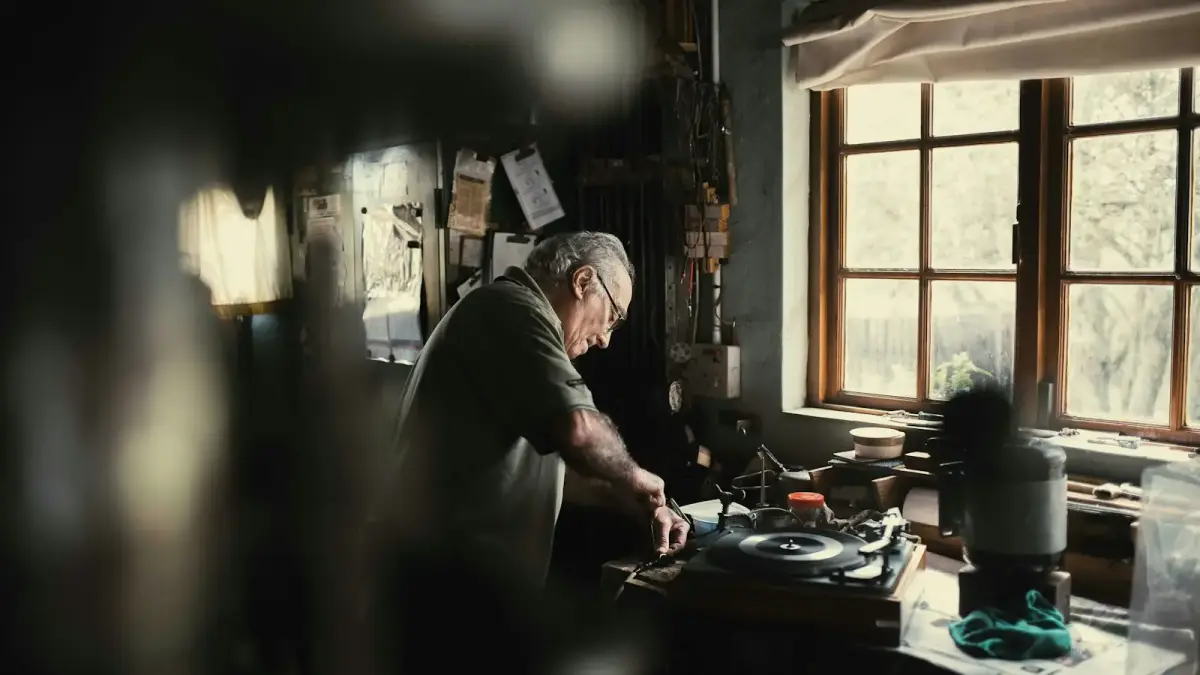
My father retired on a Friday. By Monday morning he had drawn up plans for a new deck, signed up to volunteer at two different organizations, and started pricing out a workshop renovation for the garage.
My mother watched him from the kitchen table with a look I didn’t understand at the time. She wasn’t annoyed. She wasn’t impressed. She looked worried.
“He doesn’t know how to stop,” she said quietly, almost to herself.
I told her it was healthy. That staying active was good for him. That men who stay busy in retirement live longer. I had read that somewhere, or maybe I just wanted it to be true, because the alternative was something I wasn’t ready to look at - not in him, and definitely not in myself.
It took me years to understand what she already knew. He wasn’t keeping busy because he loved building decks. He was keeping busy because the moment he stopped producing, a question surfaced that he had been running from his entire adult life: without what I do, who am I?
The performance nobody questions
There is a particular kind of applause that retired men receive, and it sounds like concern dressed up as admiration. “Oh, he’s doing great - he’s keeping busy.” Friends say it. Wives say it. Doctors say it. And the man himself says it with a half-smile that has become so practiced it feels almost real.
Nobody questions it because busyness after retirement looks like health. It looks like vitality. The man who fills every hour with projects and meetings and yard work and volunteering appears to be thriving.
But there is a difference between a man who is busy because he is genuinely engaged with life and a man who is busy because stillness feels like dying. The first man has hobbies. The second man has a coping mechanism that everyone around him has agreed to call a hobby.
I know this because I watched my father build things he didn’t need, fix things that weren’t broken, and volunteer for committees he didn’t care about - all with the same quiet intensity he once brought to his job. The output changed. The engine underneath it never did.
Forty years of earning the right to exist
Here is what I think happens, though I can only speak for the version of it I inherited.
A boy grows up learning that his value lives in what he produces. Not in who he is. Not in how he feels. Not in the quality of his presence. His value lives in report cards, then paychecks, then promotions, then the size of the lawn he maintains on Saturday mornings.
A 2019 study published in the Journal of Research in Personality found that men who strongly tied their self-worth to professional achievement experienced significantly higher rates of depression and anxiety following career transitions - including retirement. The researchers called it “contingent self-worth,” which is a clinical way of saying something much simpler: these men had spent so long proving they mattered through output that they had never built any other evidence.
For forty years, this system works beautifully. It produces providers, achievers, reliable people. The man gets up early. He works hard. He earns. He builds. And every single day, the world confirms what he needs to believe about himself - that he is useful, therefore he is worthy.
Then retirement arrives like a door opening into a room he has never furnished.
The garage that isn’t really about the garage
My father’s workshop became immaculate. Tools organized by size, then by function, then by frequency of use. Pegboard systems. Labeled drawers. A workshop that could have been photographed for a magazine.
He wasn’t building anything in particular. He was building the feeling of being a man who builds things.
I see this everywhere now. The retired neighbor who mows his lawn twice a week. The former executive who sits on four nonprofit boards and calls it “giving back” but checks his phone during dinner the same way he did when he was managing a department. The guy at the hardware store every morning at opening, not because he needs anything, but because the ritual of purposeful movement through a purposeful space is the closest thing to peace he knows how to reach.
None of these are bad activities. That is what makes this so hard to talk about. You cannot point to a man volunteering at the food bank and say something is wrong. You cannot watch a man sanding a table in his garage and call it a crisis.
But you can notice that he never sits down. You can notice that the only time he seems calm is when his hands are moving. You can notice that “relaxing” makes him irritable, and that a vacation without an itinerary feels to him not like freedom but like abandonment.
What rest reveals
Dr. Gabor Mate has written extensively about how people use activity - even productive, admirable activity - to avoid confronting emotional pain. The workaholic and the perpetually busy retiree are running the same software. They have just installed it on different hardware.
When a man like this finally stops - truly stops, not the performative stop of sitting in a chair while mentally planning tomorrow’s project list - something uncomfortable rises to the surface. It is not boredom. Boredom is too small a word for it.
It is the raw, unfiltered experience of existing without justification. Of being a person in a room with nothing to show for the last hour except the fact that you were breathing during it.
For a man who was taught that breathing is not enough, this is terrifying.
A 2021 study in Frontiers in Psychology examined the psychological adjustment of recently retired men and found that those who described themselves as “staying active” were not necessarily healthier or happier than those who embraced slower routines. What predicted well-being wasn’t activity level - it was the degree to which a man felt his identity existed independent of his productivity. The men who could say “I am enough without doing anything” fared better than the men who could not sit still.
The conversation we never had
I tried to talk to my father about this once. I was careful about it. I didn’t use the word “therapy.” I didn’t say he seemed anxious. I just asked him what he enjoyed doing when he wasn’t working on something.
He stared at me like I had asked the question in a language he didn’t speak.
Then he said, “I enjoy working on things.”
And I understood that for him, those were the same sentence. Enjoyment and output had been fused together so completely that he could not experience one without the other. Rest without production wasn’t rest. It was failure wearing comfortable clothes.
I think about how many men are walking around inside this equation right now. Men who are praised for their energy. Men whose wives say “I can’t get him to slow down” with a mixture of frustration and relief, because at least he is not sitting on the couch getting depressed like Bill from down the street.
But Bill from down the street might actually be closer to something honest. Bill might be sitting in the discomfort that every man in this situation needs to eventually face. Bill might be grieving. And grief, as terrible as it feels, is the beginning of something.
The thing underneath the busyness
What I have learned - slowly, imperfectly, mostly by watching my father and then catching myself doing the same thing at forty-three - is that the busyness is not the problem. The busyness is the answer to a problem that was never spoken aloud.
The problem is this: somewhere along the way, a man absorbed the idea that he is not inherently valuable. That his worth is conditional. That love, respect, and belonging are not things he receives for existing but things he earns through output, day after day, until he dies.
Retirement does not create this belief. It simply removes the structure that kept it hidden.
Adam Grant has written about how identity foreclosure - building your entire sense of self around a single role - creates a kind of psychological brittleness. When that role disappears, the self doesn’t flex. It fractures. And the man doesn’t talk about the fracture. He picks up a hammer and starts building something.
Learning to be, not just to do
I want to be careful here because I am not suggesting that every busy retiree is in crisis. Some men genuinely love their projects. Some men find real meaning in volunteering. Activity is not the enemy.
But if you are a man reading this, and something in your chest tightened a little when I described the inability to sit still without producing - if you recognized yourself in the garage, in the committee meetings, in the compulsive need to have something to show for every single day - then maybe what I am about to say matters.
You were always enough. Before the career. Before the title. Before the deck and the workshop and the volunteer hours. You were a whole person the day you were born, and nothing you have built or earned since then made you more whole.
The busyness was never the evidence that you are okay. It was the evidence that you were afraid you weren’t.
A 2023 study in Psychological Science found that older adults who practiced what the researchers called “purposeful stillness” - deliberate periods of non-productive time spent in reflection, nature, or simple presence - showed measurable improvements in life satisfaction and emotional regulation over a six-month period. Not because stillness is magic, but because it teaches something that decades of productivity never could: you can stop, and you will still be here. You will still matter.
What I wish I had said to my father
He is seventy-nine now. The workshop is quieter than it used to be. His knees don’t let him stand for as long, and some mornings the projects stay on the bench while he sits on the porch with his coffee and watches the birds.
I don’t know if he has made peace with stillness or if his body simply made the choice for him. But I notice that he seems less agitated in those porch moments than he ever did in the middle of a project. There is something in his face that I can only describe as a man slowly allowing himself to be held by a morning he did not earn.
I wish I had told him sooner that I didn’t admire him because he was productive. I admired him because he was my father, and his presence alone was the thing that made me feel safe - not his output, not his projects, not his endless proof of usefulness.
If you are a man who tells people you are “keeping busy,” I am not here to take that away from you. Build the deck. Join the committee. Organize the garage.
But maybe, once in a while, try sitting in a chair with nothing in your hands and nowhere to be. Let the discomfort come. Let it sit beside you like an old dog that just wants to be near you.
You don’t have to produce anything right now.
You are already enough to fill the room.