He's 57 and has just realized he has never once allowed himself to be photographed without smiling - not in forty years of family portraits, holiday gatherings, and posed moments with his children - because a boy who watched his mother study photographs afterward and announce who looked miserable learned before ten that his face in a picture was not a moment captured but evidence submitted, and the smile at fifty-seven is not joy but homework he has been handing in for four decades to a teacher who left the room long ago
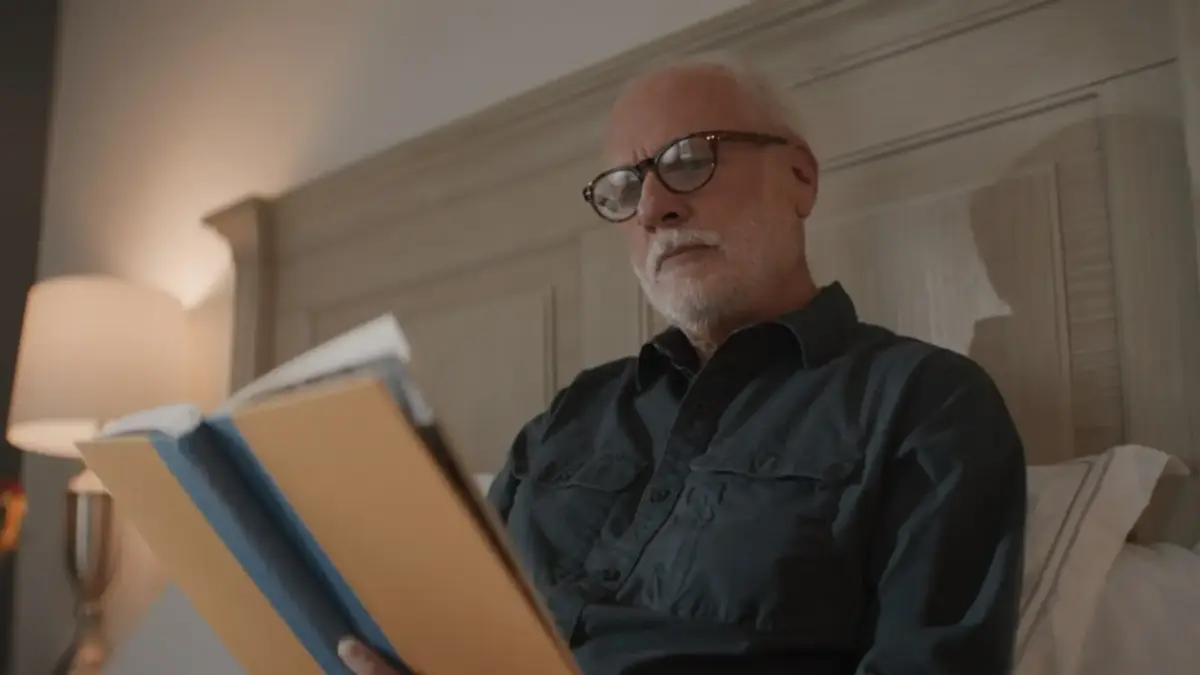
The Photograph That Started It
I was fifty-seven when I saw it. Not a single photograph - but the absence of one.
My daughter was organizing old albums into a digital archive, scanning decades of family history into neat folders on her laptop. She called me over to confirm a date on a Christmas photo from 1994, and as I leaned over her shoulder, I watched her scroll through thirty years of my face. The same face. Every single time.
There I was at my wedding. Smiling. There I was holding my firstborn in the hospital. Smiling. There I was at my father’s funeral reception, standing between my brothers. Smiling. The same reliable expression, produced on command, without variation, for four decades.
“You always look so happy, Dad,” my daughter said. She meant it as a compliment.
And something in my chest went very still. Because I was not always happy. I was not happy at that funeral. I was not happy in several of those Christmas photos. I was not happy in my wedding pictures in the way the smile suggested - I was terrified, overwhelmed, twenty-four years old and pretending I knew what I was doing.
But you would never know it. Because the smile was never about what I felt. It was about what I had learned to submit.
The Boy Who Learned to Produce Evidence
My mother was not cruel. I want to be clear about that, because this is not a story about cruelty. It is a story about something smaller and more persistent - a quiet curriculum taught without anyone realizing they were teaching it.
After every family event, my mother would collect the developed photographs from the drugstore envelope and spread them across the kitchen table. She would study them the way a teacher studies homework. And she would announce her findings.
“Look at your brother’s face. Would it kill him to smile?” “Your aunt looks absolutely miserable. She always does this.” “Why does your father look like he’s being punished?”
I was maybe seven or eight when I understood the assignment. The photograph was not a record of a moment. It was a test, and the test had one correct answer, and the answer was a pleasant expression that proved you were grateful to be there, happy to be included, and not ruining anything for anyone.
By ten, I had perfected it. The slight upturn of the mouth, the softening around the eyes, the posture that suggested ease. It was not conscious. It became as automatic as blinking. Camera appears, face arranges itself, evidence submitted.
No one ever commented on my photographs negatively. Which I understood, even as a child, was the entire point.
The Cost of Never Being Caught
Here is what I lost, though I did not know I was losing it until I was fifty-seven years old scrolling through those albums: I have no record of who I actually was at any given moment in my life.
I do not know what my real face looked like when I held my daughter for the first time. I know the performed version - the proud father, appropriately moved, camera-ready. But the real thing, the overwhelm and the terror and the strange animal grief of realizing you will never again be the most important person in your own life - that is gone. I covered it with the smile before anyone could see.
A 2019 study published in the Journal of Personality and Social Psychology found that people who habitually manage their emotional expressions for others - what researchers call “surface acting” - report significantly lower feelings of authenticity and connection over time. Not because the performance is detected as false by others, but because the performer eventually loses access to what they were covering.
That landed hard when I read it. Because it is not that I was hiding some dark truth beneath the smile. It is that I genuinely do not know what was underneath. The performance replaced the original so long ago that I cannot find the original anymore.
There are photographs of me from the worst year of my marriage where I look indistinguishable from photographs taken during the best year. Same expression. Same reliable, pleasant face. If my children ever look back at those albums trying to understand what their parents were going through - they will find nothing. I made sure of it. Just like my mother taught me.
What Compliance Looks Like When You Call It Personality
The thing about performing something for forty years is that you stop recognizing it as a performance. It becomes identity. “I’m just a person who smiles in pictures.” “That’s just how I am.” “I’m easy-going.”
I said all of those things at various points in my life, and I believed every one of them.
But easy-going people do not feel a small spike of anxiety when a camera appears. They do not do a rapid internal check - is my face right? Am I producing the correct evidence? Easy-going people are not doing homework. They are simply standing there.
Dr. Gabor Mate writes about how children adapt to their environment by developing what he calls a “false self” - a version of the person designed entirely to maintain connection with caregivers. The false self is not a lie exactly. It is more like a prosthetic that was fitted so early you forgot it was not your own limb.
My smile is that prosthetic. It was fitted before I had language to describe what was happening, and it has functioned so well for so long that I mistook it for my own face.
The Moment You See It
When you finally recognize a pattern like this - fifty-seven years in, standing behind your daughter at a laptop - the feeling is not anger exactly. It is something closer to vertigo.
You look back at your life and you see all the moments that were pre-edited before they were even captured. All the times you could have simply had whatever face you had, and the photograph would have been true, and you could look at it now and remember what that Tuesday actually felt like instead of seeing the same pleasant mask repeated across decades.
Research from the University of California published in Psychological Science in 2021 found that people who suppress emotional expression in social contexts often develop what the researchers called “emotional granularity loss” - a gradual reduction in their ability to identify and name their own internal states. The suppression does not just hide feelings from others. Over time, it hides them from you.
I think that is the cost I am only now beginning to calculate. Not the loss of authentic photographs - though that is real. But the loss of access to my own internal weather. The boy learned to produce a smile so effectively that the man eventually forgot he was producing anything at all. He thought it was simply raining sunshine every time someone pointed a camera his way.
This Was Survival, Not Superficiality
If you are reading this and recognizing something - if you have your own version of the reliable face, the automatic adjustment, the expression you produce before you even decide to produce it - I want you to hear this clearly.
You were not being fake. You were being safe.
A child who learns to manage their face for a parent’s approval is doing something remarkably sophisticated. They are reading the room, identifying the threat, calculating the response, and executing it before the threat materializes. That is intelligence. That is emotional precision operating at a level most adults cannot achieve deliberately.
The problem is not that you learned it. The problem is that the alarm system never got the update that the emergency is over. You are fifty-seven years old and still handing in homework to a teacher who may not even be alive anymore. The assignment was never officially canceled. So you just keep completing it.
A 2017 study in Frontiers in Psychology found that adults who grew up managing their emotional expressions to meet parental expectations showed higher baseline cortisol levels decades later - their bodies still preparing for the evaluation that never stopped. The performance is not just psychological. It is physiological. Your nervous system is still standing at that kitchen table, watching photographs get sorted into acceptable and unacceptable.
The First Photograph
I am not going to tell you that you need to take an unsmiling photograph to prove something. That would be trading one performance for another.
But I will tell you what happened to me last month. My son took a picture of me on a Sunday morning - just a quick snap on his phone because the light was good on the porch and I was holding a cup of coffee and staring at nothing in particular. I did not see the camera coming. I did not have time to arrange.
When he showed me the picture later, my first impulse was discomfort. I looked - I do not know. Tired. Thoughtful. Older than I imagine myself. Present in a way that I could not have manufactured.
“Delete that,” I almost said. And then I heard the echo. The kitchen table. The evaluation. The quiet announcement of who looked wrong.
I did not say it. I looked at that photograph and I saw my actual face for maybe the first time in forty years. It was not smiling. It was not frowning. It was just there. Just the face of a man on a Sunday morning who has nothing to prove and no homework due.
I asked my son to send it to me.
It is now my favorite photograph of myself. Not because I look good in it. Because I look real in it. And after fifty-seven years of producing evidence, real is the most radical thing I can imagine being.
You are not broken for having learned this. You are not shallow for having performed it for so long. You were a child doing extraordinary work to stay safe in a room where your face was being graded.
The grading period is over. You just never got the notice.