He's 59 and has quietly realized that every career decision he ever made was an audition for a version of manhood his father never once described out loud but his body absorbed anyway, and the retirement everyone keeps congratulating him for is not freedom but the first morning in forty years where he has to decide what he would have chosen if nobody had been watching
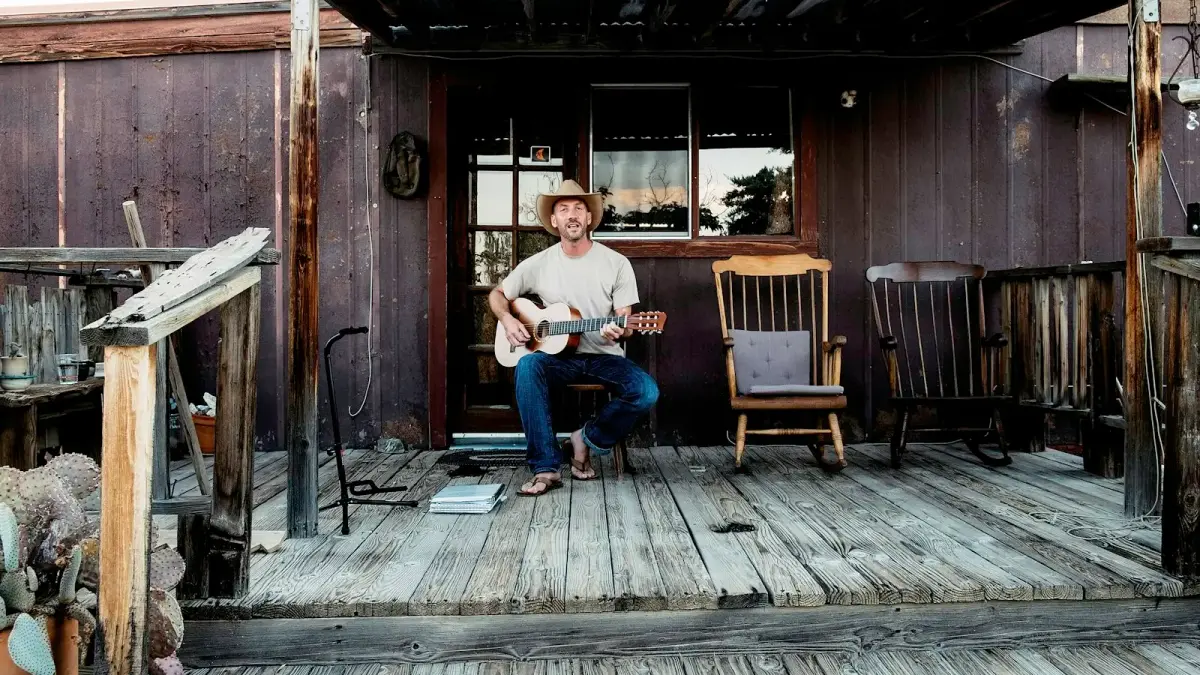
My father never told me what a man was supposed to be. Not once. Not in any conversation I can recall across thirty years of knowing him before he died.
But I watched him leave the house every morning at six-fifteen with his jaw set and his shoulders squared, and I watched him come home every evening with that same jaw slightly looser and those same shoulders carrying something I didn’t have a name for until I was well into my fifties. I watched him choose the safe accounts, the steady clients, the promotion that meant more hours but also meant my mother could stop worrying about the mortgage. I watched him say no to things quietly and yes to things reluctantly and I never once saw him do something just because it called to him.
I absorbed all of it. Every bit. And I spent the next forty years performing a role I never auditioned for on purpose but somehow knew every line of by heart.
The blueprint nobody writes down
There’s a particular kind of instruction that never comes through language. It comes through posture. Through what a man reaches for when the phone rings at dinner. Through the way he talks about the neighbor who quit his job to paint, and the silence that follows - the silence that says everything about what that kind of choice means for men like us.
I was maybe eleven when my father’s college roommate came to visit. Frank had left his accounting practice to open a fly-fishing guide service in Montana. My father was polite. Gracious, even. But on the drive home, he said one sentence that I carried in my body for the next four decades.
“Must be nice to have that option.”
That was it. Seven words. But what I heard - what my eleven-year-old nervous system translated instantly - was: men like us don’t get to choose what we love. Men like us choose what keeps the lights on. And if you’re lucky, you learn to find something tolerable inside the obligation.
Daniel Levinson’s landmark research on adult development, published in “The Seasons of a Man’s Life,” described what he called the Dream - the imagined self that a young man carries into adulthood, the vision of the life he wants to build. Levinson found that for many men, this Dream gets quietly buried under practical demands by their early thirties. Not abandoned, exactly. Just placed in a drawer that eventually gets painted shut.
My father never told me to bury my Dream. He just showed me what a man looks like with the drawer already sealed.
Forty years of performing competence
I went into financial consulting. Not because I loved numbers - I was decent at them, the way you’re decent at anything you practice enough - but because it was legible. My father could describe what I did. His friends could nod. It had a salary range that communicated something, and what it communicated was: this is a serious person making a serious living.
And here’s the thing I couldn’t see for most of my career. I was good at it. Genuinely good. I built a practice, earned trust, solved real problems for real people. There’s nothing false about that competence.
But competence and calling are not the same thing, and I spent forty years pretending they were.
Every promotion I accepted was a small audition. Every late night at the office was a performance review administered by a man who’d been dead for fifteen years. Every time I said “I love what I do” at a dinner party, some small, sealed-shut part of me would knock quietly from behind the paint.
A 2019 study published in the Journal of Personality and Social Psychology examined what researchers called “role engulfment” - the process by which a person’s sense of self becomes entirely absorbed by a single social role. They found that men were significantly more susceptible to role engulfment through career identity than women, and that the depth of engulfment correlated strongly with early paternal modeling. In other words, the more a boy watched his father define himself through work, the more likely he was to do the same - and the less aware he’d be that he was doing it.
I wasn’t aware. Not for decades. The water was warm and I’d been swimming in it since I was old enough to watch my father knot his tie.
The retirement nobody prepared me for
I turned fifty-nine in January. My last day at the firm was February 28th. People brought cake. Someone made a slideshow. My business partner gave a speech about my integrity and my work ethic and the way I always answered the phone, and I sat there feeling something I couldn’t name.
Everyone kept using the word “freedom.” You’re free now. Think of all the time you’ll have. You’ve earned this.
But the first Monday morning after my last day, I sat at the kitchen table with a cup of coffee and the entire day stretching out in front of me like a field I’d never learned to walk across, and what I felt was not freedom. What I felt was the sudden, nauseating absence of the script.
For forty years, I knew what the day required. I knew what a successful morning looked like, what a productive afternoon felt like, what “doing enough” meant. And all of that knowing came from the same source - from a template my father built with his body and his silences and his seven-word verdict on a man who chose fishing over obligation.
Research on retirement adjustment published in The Gerontologist in 2021 found that men who strongly identified with the provider role experienced the transition out of work not as liberation but as what the researchers termed “identity vertigo” - a disorienting loss of the internal coordinates that had always told them where they were and whether they were doing it right.
Identity vertigo. That’s exactly what it felt like. Standing still and spinning at the same time.
The question he never got to ask
Here’s what I’ve been sitting with for the last two months, and I want to be honest about it because I think there are men reading this who are sitting with the same thing.
If nobody had been watching - if my father’s example hadn’t been absorbed into my bones before I was old enough to question it - what would I have chosen?
I don’t mean what hobby would I have picked. I mean what kind of life. What shape of days. What would a Tuesday morning look like if the only person I had to satisfy was the one looking back at me in the mirror?
I don’t know. And that’s the part that keeps me up at night. Not the loss of the career - I can grieve that, and I am, and it’s appropriate. But the thing underneath the grief is scarier. It’s the suspicion that I never developed the part of myself that chooses. That muscle atrophied decades ago, or maybe it never formed at all, because the blueprint I inherited didn’t include it.
My father didn’t choose his career either. Or his father before him. Choosing was a luxury, and luxury was suspicious, and suspicious things were for men who didn’t have families depending on them.
We passed this down the way you pass down a jaw line or a tendency toward high blood pressure. Not through instruction. Through the body itself.
What was never modeled
I want to be very careful here, because this is not a criticism of my father. My father was a man who did everything he was taught to do, and he did it with a kind of quiet dignity that I admire more now than I did when I was young and wanted him to be someone louder, warmer, more available.
He wasn’t withholding. He was giving me everything he had. It’s just that what he had was a model of manhood built for endurance, not exploration. For reliability, not curiosity. For being needed, not being known.
Adam Grant has written about how the qualities we most admire in ourselves are often the ones that cost us the most - that being dependable and being fulfilled are not the same achievement, and that many people spend entire careers optimizing for the former at the expense of the latter.
My father optimized for dependability. So did I. And the optimization worked. The mortgage got paid. The kids went to good schools. Nobody ever had to worry about whether the lights would stay on.
But somewhere inside that forty-year performance, a twenty-two-year-old kid with half-formed ideas about what he actually wanted got quieter and quieter until he stopped talking altogether.
The first morning of the rest of it
My wife asked me last week what I wanted to do with the day. Not what I needed to do. Not what was expected. What I wanted.
I stood in the kitchen for a full thirty seconds and felt something I can only describe as panic. A gentle, low-grade panic, like being handed a blank piece of paper and told to draw anything and realizing you’ve never held the pencil for yourself.
I’m fifty-nine years old. I have decades of experience, a solid reputation, a marriage I’m grateful for, and grown children who seem to like me. And I’m standing in my own kitchen unable to answer the simplest question a person can ask.
That’s not failure. I’m starting to understand that. That’s the cost of a blueprint that never included a line item for desire.
I’m not angry at my father. I’m not angry at the culture that built the blueprint. I’m just - for the first time - aware of it. Aware that the man I became was a response to a model I never chose, and that the retirement everyone keeps congratulating me for is actually the first real threshold I’ve ever crossed without someone else’s footprints to follow.
It’s terrifying. I won’t pretend it isn’t.
But there’s something else under the terror, something I noticed last Saturday morning when I drove to a used bookstore for no reason at all and spent two hours reading about architecture and didn’t check my phone once. A feeling I don’t have a practiced word for, because my father’s vocabulary didn’t include it.
I think the word might be “mine.”
Not earned. Not performed. Not inherited.
Just mine.
I’m fifty-nine. And for the first time in my adult life, the morning belongs to me. I have no idea what to do with it. But I’m starting to suspect that not knowing might be the whole point.