He's 59 and recently noticed he eats dinner standing at the kitchen counter when he's alone, not because he's in a rush but because sitting down at an empty table and making a proper meal felt like something he was never taught he deserved when nobody was watching
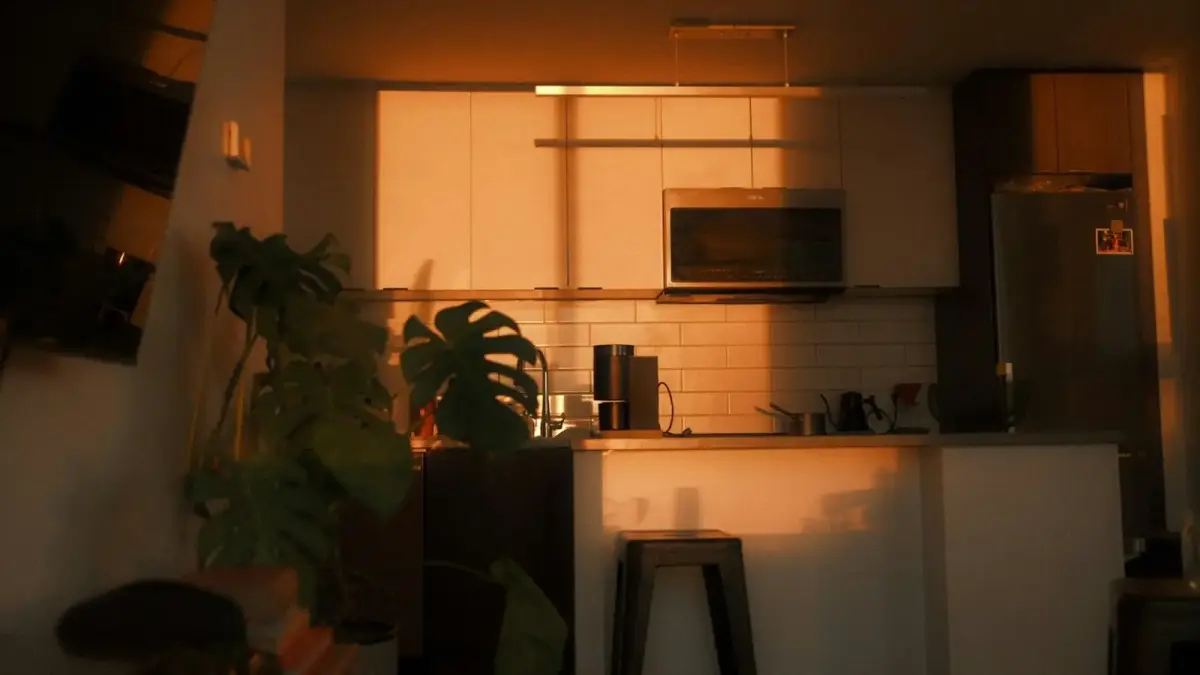
I caught myself doing it again last Tuesday.
Standing at the counter with a fork in one hand and a container of leftover pasta in the other, eating over the sink like a man trying to finish before someone walked in. My wife was visiting her sister. The house was mine for three days. And not once - not a single time - did I sit down at the table to eat.
It wasn’t laziness. The table was right there, six feet away, clean, empty, perfectly available. I just didn’t walk toward it. I stood where I always stand when I’m alone, leaning against the counter with my hip pressing into the edge, eating something that could have been warm if I’d taken thirty more seconds with it.
And when I finally noticed the pattern - really noticed it, the way you notice a crack in a wall you’ve walked past for twenty years - I felt something shift in my chest. Not shame, exactly. More like recognition. The particular sting of realizing you’ve been telling yourself a story about efficiency when the truth is something much older and much quieter than that.
The counter is not about convenience
Here’s what I want you to sit with for a moment, if you’re the kind of man who does this too.
The counter is not a shortcut. It’s a station. It’s the place where a meal can happen without becoming an event. Where eating doesn’t require a plate, a placemat, a glass of water, a chair pulled out, a napkin unfolded. Where the whole act of feeding yourself can be compressed into something so small and practical that it barely counts as self-care at all.
And that’s the point.
Because self-care is the part that feels wrong. Not consciously - you’d never say it out loud. But somewhere in the architecture of how you move through an empty house, there’s a blueprint that says: comfort is for when other people are present. When you’re alone, you operate. You don’t dine. You fuel.
I’ve talked to enough men my age to know this isn’t rare. The standing. The eating over the sink. The cold leftovers at 6:40 p.m. in a quiet kitchen with the lights half off. It’s so common it looks like a personality trait. Just a guy thing. Just how we are.
But trace it backward and the roots go somewhere specific.
Where boys learned to eat
Think about the meals of your childhood. Not the holiday ones - those were performances, everyone seated, food passed in bowls, someone saying grace. I mean the ordinary ones. The Tuesday dinners. The after-school snacks. The mornings when no one was orchestrating anything.
If you grew up the way a lot of boys did, especially in working-class and middle-class homes in the sixties and seventies, meals had a hierarchy you absorbed without anyone explaining it. Mom made the food. Dad ate it. Kids took what was there. And the whole thing ran on an unspoken economy: don’t ask for too much, don’t take too long, don’t make your hunger into a production.
Boys especially learned to eat fast, eat standing, eat whatever was available without requesting something different. Hunger was a problem to solve, not an experience to honor. You didn’t set yourself a place. You grabbed what was there and got out of the way.
Nobody taught this explicitly. Nobody sat a nine-year-old boy down and said, “Your comfort doesn’t matter.” But the lesson landed anyway, the way most of the important ones do - through repetition, through watching, through noticing who got fussed over and who didn’t.
A 2021 study published in the Journal of Research in Personality examined gender differences in self-compassion across age groups and found that men consistently scored lower than women on measures of self-kindness - the capacity to treat oneself with warmth and care rather than harsh judgment. The gap was particularly pronounced in men over fifty. Researcher Kristin Neff, who developed the Self-Compassion Scale, has noted that masculine norms discourage the very behaviors self-compassion requires: gentleness toward oneself, acknowledgment of shared human vulnerability, and mindful attention to one’s own suffering.
The man standing at the counter at fifty-nine is not being lazy. He’s eating exactly the way a boy ate when he needed the meal to be invisible, efficient, and over before anyone could notice he was taking up space.
The meal you won’t make for yourself
Here’s something I’ve been thinking about for months.
I will cook an elaborate dinner for my wife. Two courses, a side salad, the good olive oil. I’ll set the table. Light a candle if the mood strikes. I will make her a plate and carry it to the table and ask if she wants pepper.
When she’s gone, I eat cheese on bread standing at the counter in the dark.
This isn’t about cooking skill or motivation. I know how to make the meal. I have the time. I have the ingredients. What I don’t have - what I’ve never quite been able to locate inside myself - is the feeling that I’m worth the effort when no one else benefits from it.
That’s the part that hurts to say.
Because you can go your whole life being generous. Being the provider. Being the one who fixes, builds, carries, and shows up. And still, somewhere underneath all that capability, there’s a boy who learned that his own comfort was only justified when it was a byproduct of serving someone else.
Brene Brown’s research on vulnerability and masculine norms points to something she calls the “narrow corridor of acceptable emotion” that men are socialized into. The permission to need - to need comfort, softness, warmth, a set table, a proper meal - falls outside that corridor for most men. Need is weakness. Weakness is unacceptable. And so the need doesn’t disappear. It just goes underground, where it disguises itself as preference.
“I prefer standing.”
“I don’t need a whole production.”
“It’s just me - why bother?”
Listen to those sentences again. They sound like choices. They feel like freedom. But they’re architecture. They’re the walls a boy built around his hunger so that nobody - including himself - would ever have to take it seriously.
Utilitarian eating and the invisible man
Researchers who study solitary eating patterns in older adults have found something that doesn’t get talked about enough.
A 2019 study published in the journal Appetite found that men who live alone or eat alone regularly are significantly more likely to engage in what the researchers called “utilitarian eating” - consuming food standing, skipping meals, or eating the same low-effort foods repeatedly. The study found that this pattern was not primarily driven by lack of cooking skills or nutritional knowledge but by a diminished sense that one’s own meals were “worth the effort.”
Read that phrase again. Worth the effort.
Not worth the calories. Not worth the nutrition. Worth the effort of care.
The men in the study could describe in detail what a proper meal looked like. They knew what they should be eating. They just couldn’t locate the motivation to do it for themselves. The meal, when it was only for them, felt like an indulgence they hadn’t earned.
This is what I mean when I say the counter isn’t about convenience. It’s about worthiness. It’s about whether you believe you deserve the full experience of being fed - not just the calories, but the warmth, the sitting down, the slow chewing, the glass of water you pour because your body asked for it and you listened.
What the table asks of you
Sitting down at a table to eat alone requires something that standing at the counter doesn’t.
It requires you to be present with yourself. To occupy space without justifying it. To say, with your body, “I am here and this meal is for me and that is enough of a reason to make it good.”
That’s a vulnerable act for a man who was raised to earn every comfort he receives. The table asks you to receive something you didn’t earn. It asks you to be the guest at your own dinner. And for a lot of men - men who built entire identities around being useful, being needed, being the one who provides rather than the one who receives - that’s an almost unbearable ask.
Not because it’s hard. Because it’s soft. And softness, for so many of us, still registers as something we’re not allowed to have unless someone else puts it in front of us.
I think about my father. He ate standing at the counter too. Same hip against the edge. Same fork in the same hand. Same quiet efficiency. I used to think it was just his way. Now I think it was his inheritance - passed down from a generation of men who worked with their hands and ate like the meal was a task on the list between two other tasks, never the point of anything, always in service to what came next.
Setting a place for the boy
I want to be careful here because I’m not trying to tell you that standing at the counter is a pathology. It’s not. Sometimes a quick meal is just a quick meal. Sometimes you’re genuinely in a rush and the counter is the right call.
But if you’re honest with yourself - truly honest, the kind of honest that makes your throat tight - you might recognize that the standing isn’t always about the rush. Sometimes it’s about not knowing how to sit down and be cared for by yourself. Sometimes it’s about a boy who learned to eat like he was borrowing the kitchen.
A 2020 study in Psychological Science explored the relationship between self-care behaviors and internalized beliefs about personal worthiness. The findings showed that people who struggled with self-worth didn’t just neglect self-care out of forgetfulness or busyness. They actively avoided it because the act of caring for themselves triggered discomfort - a felt sense that they were being excessive, indulgent, or selfish.
That discomfort is familiar, isn’t it?
The weird resistance you feel when you think about setting the table for one. The voice that says, “That’s ridiculous - it’s just dinner.” The way it feels almost performative to sit down at an empty table and eat like you matter.
You do matter. You mattered when you were nine and eating cereal standing at the counter because the table felt like it belonged to other people’s meals. You matter now, at fifty-nine, standing in the same position in a different kitchen, still eating like a man who hasn’t quite given himself permission to sit down.
The table is right there. Six feet away. Clean, empty, perfectly available.
You’re allowed to walk toward it. You’re allowed to set a place for yourself - a real plate, a glass of water, a napkin if you want one. You’re allowed to sit down and eat slowly and not justify it to anyone, including the boy who taught you that meals were something to get through rather than something to receive.
That boy did the best he could. He made himself small and efficient and invisible because that’s what the world seemed to require. But you’re not that boy anymore. And the kitchen is yours now.
Pull out the chair. Sit down. Eat like someone who deserves a warm meal in his own home.
You always did.