He's 60 and Has Just Realized That the Reason He Cannot Watch His Wife Struggle With Anything Without Immediately Taking It From Her Hands Is Not Chivalry or Control but the Emergency Protocol of a Boy Who Watched His Mother Do Everything Alone and Decided at Nine Years Old That No Woman in His Life Would Ever Carry Something Heavy While He Stood There With Empty Hands
The Jar Lid
I watched a man at a dinner party last month do something so fast that nobody else caught it.
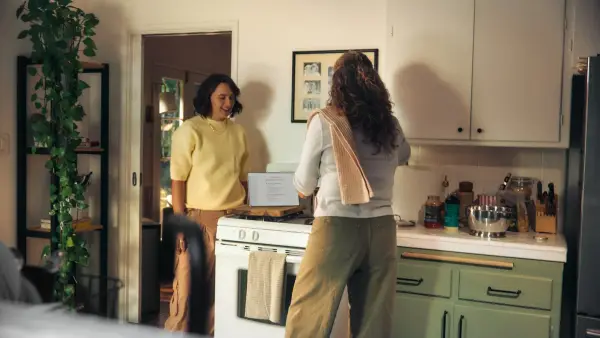
His wife picked up a jar of olives. She gripped the lid. She hadn’t even started twisting yet - her fingers were still adjusting - and his hand was already there. He took it from her without a word, opened it, and set it back on the counter.
She looked at him the way women look at men when they’ve had this conversation a hundred times already. Not angry. Just tired.
“I had it,” she said.
He nodded. He knew she had it. That wasn’t the point.
I recognized the whole thing because I am that man. I have been that man for forty years. My wife reaches for a suitcase and my body moves before my brain does. She carries a box from the car and I’m already halfway across the lawn, hands out, as if something terrible will happen if she takes another step with that weight.
She has told me - kindly, then firmly, then with real frustration - that she is a capable adult. That she can carry a bag of dog food. That my help, when she hasn’t asked for it, doesn’t feel like help. It feels like doubt.
And she’s right. But knowing she’s right hasn’t stopped me from doing it. Because what’s driving my hands has nothing to do with her.
What It Looks Like From the Outside
From the outside, compulsive helping looks like one of two things: old-fashioned chivalry or quiet control.
The chivalry read is generous. He’s a gentleman. He was raised right. He opens doors and carries things and never lets a woman lift anything heavier than a coffee cup. People smile at this. They call it sweet.
The control read is less generous but sometimes more accurate - at least on the surface. He doesn’t trust her to manage. He infantilizes her. He needs to be the capable one, the strong one, the one whose hands are always full so hers can stay empty.
Both readings miss something essential.
There’s a third possibility that nobody talks about because it doesn’t fit neatly into either narrative. The man who can’t stop helping isn’t performing strength and he isn’t performing dominance. He’s performing an apology. One that started decades ago, directed at someone who isn’t even in the room anymore.
A 2019 study in the Journal of Personality and Social Psychology found that adults who grew up with overwhelmed or under-supported caregivers frequently develop what researchers call “compulsive caregiving” - a pattern where helping others becomes an automatic, anxiety-driven response rather than a conscious choice. The helping isn’t generous. It’s urgent. It doesn’t feel like kindness in the body. It feels like emergency.
And emergencies don’t wait for permission.
The Grocery Bags
Here is the image that lives in the body of every man like me.
You are eight, maybe nine. Your mother pulls into the driveway after work. The trunk is full of grocery bags. Paper bags, because it was the eighties or nineties, and paper bags don’t have handles. You have to hug them against your chest and hope nothing shifts.
She starts carrying them in. One trip, two trips, three trips. You try to help but you’re small and the bags are heavy and you drop one on the steps and a can of tomatoes rolls under the car. She doesn’t yell. She doesn’t even sigh. She just picks it up and keeps going.
Your father is not there. Maybe he left. Maybe he works late. Maybe he’s in the next room and it doesn’t occur to him. The reason doesn’t matter to a nine-year-old. What matters is the picture: your mother, alone, carrying everything, and you - standing there with your small hands and your small arms, unable to do the one thing that feels like it would fix all of it.
If I could just carry the heavy ones, you think. If I could just be bigger.
You make a decision that day. You don’t know you’re making it. It doesn’t come with words. It comes with a feeling in your chest that tightens every time you see a woman reach for something heavy.
No woman will ever carry something alone while I’m standing here.
That’s not a value. That’s a vow. And vows made by nine-year-olds don’t expire when you turn forty. They just go underground.
The Woman Who Isn’t Your Wife
Here’s what I didn’t understand until embarrassingly recently.
When my wife picks up a heavy box and I take it from her hands, I’m not in the kitchen with my wife. Not really. I’m on the front steps in 1975. I’m watching my mother carry bags alone. And every time I take something from my wife’s hands, I’m not helping my wife.
I’m helping my mother.
I’m saying: I’m big enough now. I can carry it now. You don’t have to do this alone anymore.
My mother died twenty years ago. She doesn’t need me to carry anything. But the boy in my chest doesn’t know that. The boy in my chest is still on those steps, watching her disappear through the door with a bag on each hip and her purse sliding off her shoulder, and he is still calculating whether he’s strong enough yet.
That boy runs my hands. He runs my legs. He moves me across rooms before my adult brain can catch up and say, “She didn’t ask. She doesn’t need you. This is about you, not her.”
Psychologist Gabor Mate has written extensively about how childhood experiences of helplessness get encoded in the body as survival programs - automatic responses that fire long after the original threat has passed. The threat, for boys like me, wasn’t violence or deprivation. It was witnessing someone you love carry more than they should while you stood there unable to do anything about it.
The body remembers that helplessness. And it spends the next fifty years making sure it never feels it again.
What His Wife Actually Experiences
Here’s the part that matters and the part that’s hard to hear.
When a man takes things from his wife’s hands before she’s asked for help, she doesn’t feel rescued. She feels unseen. She feels like he’s decided she can’t handle it - whatever “it” is - before she’s even had a chance to try.
Over time, it becomes a pattern that erodes something important. Her sense of competence in the relationship. Her feeling that he sees her as a full, capable person and not a fragile thing to manage.
She might say, “I can do it myself.” And he hears: You’re doing something wrong. What she’s actually saying is: I need you to see me, not your mother.
This is the cruel geometry of old wounds. The very thing he does to make sure no woman feels unsupported is the thing that makes his wife feel like he doesn’t trust her. His love and his injury produce the same behavior, and the behavior lands as something that looks nothing like either one.
A 2021 study published in Frontiers in Psychology found that unsolicited help in intimate relationships was associated with lower relationship satisfaction for the person receiving the help - even when the helper’s intentions were genuinely caring. The researchers noted that unwanted assistance often communicates a subtle message of incompetence, regardless of the helper’s motivation.
He means: I love you and I won’t let you struggle alone.
She hears: I don’t think you can handle this.
Both are real. Neither is wrong. And that’s what makes it so hard to untangle.
The Apology That Has No Address
What I’ve come to understand is that my compulsive helping is a form of grief.
Not grief the way we usually talk about it - crying at funerals, missing someone on holidays, hearing a song that brings them back. This is operational grief. It lives in the muscles. It runs in the background like software you forgot you installed.
Every time I take something heavy from a woman’s hands, I am completing a task I failed at forty years ago. I am carrying the bags my mother carried alone. I am saying sorry for every time I was too small, too young, too powerless to step in.
The apology has no address. The woman it’s meant for is gone. So it just keeps delivering itself to whoever is closest, whoever is holding something heavy, whoever looks like she might have to do this alone.
My wife. My daughters. The woman at the grocery store whose cart has a wobbly wheel.
It looks like helpfulness. It is helpfulness. But it’s also something else entirely. It’s a sixty-year-old man still trying to be big enough to help a woman who stopped needing help a long time ago.
Learning to Stand Still
The hardest thing I’ve ever done is not pick up a box.
That sounds absurd. But for men like me, standing still while someone you love struggles with something - even something minor, even something they clearly can handle - feels like a moral emergency. Your whole body says: Move. Help. Don’t just stand there.
And you have to let your body say it. You have to feel the alarm. You have to notice that the alarm is old, that it belongs to a different house and a different woman and a different decade. And then you have to stay still anyway.
This isn’t about stopping being helpful. It’s about learning the difference between helping and apologizing. Between seeing your wife and seeing your mother. Between responding to what’s happening now and responding to what happened then.
I still carry things. I still open jars. But I’m learning to wait. To let her try first. To let her succeed without me. To let her be a person who doesn’t need rescuing - because she isn’t the person who needed rescuing. That was someone else. And my hands, no matter how fast they move, can’t reach her anymore.
What the Boy Needs to Hear
If you’re a man who does this - who can’t watch a woman struggle with anything without your hands reaching out before your brain catches up - I want you to know something.
You were not too small. You were not too late. You were a child, and carrying groceries was never your job. The fact that you wanted to, that you ached to, that you made a silent vow on those front steps - that doesn’t mean you failed when you couldn’t.
It means you loved her.
And the love didn’t fail. It just didn’t know where to go after she was gone, so it went everywhere. Into every jar lid, every suitcase, every heavy box. Into your wife’s hands before she had the chance to grip.
You’re not controlling. You’re not performing. You’re finishing a task that a nine-year-old started and a sixty-year-old still can’t put down.
But you can put it down. Not because she didn’t matter. Not because those grocery bags weren’t heavy. But because the woman standing in front of you now - the one with the jar in her hands, the one looking at you with patient, tired love - she’s asking you to see her. Not your mother. Not your guilt. Her.
And seeing her, really seeing her, might be the first time you actually put those bags down.