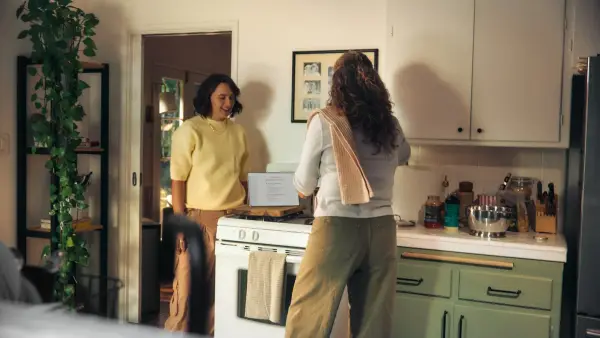
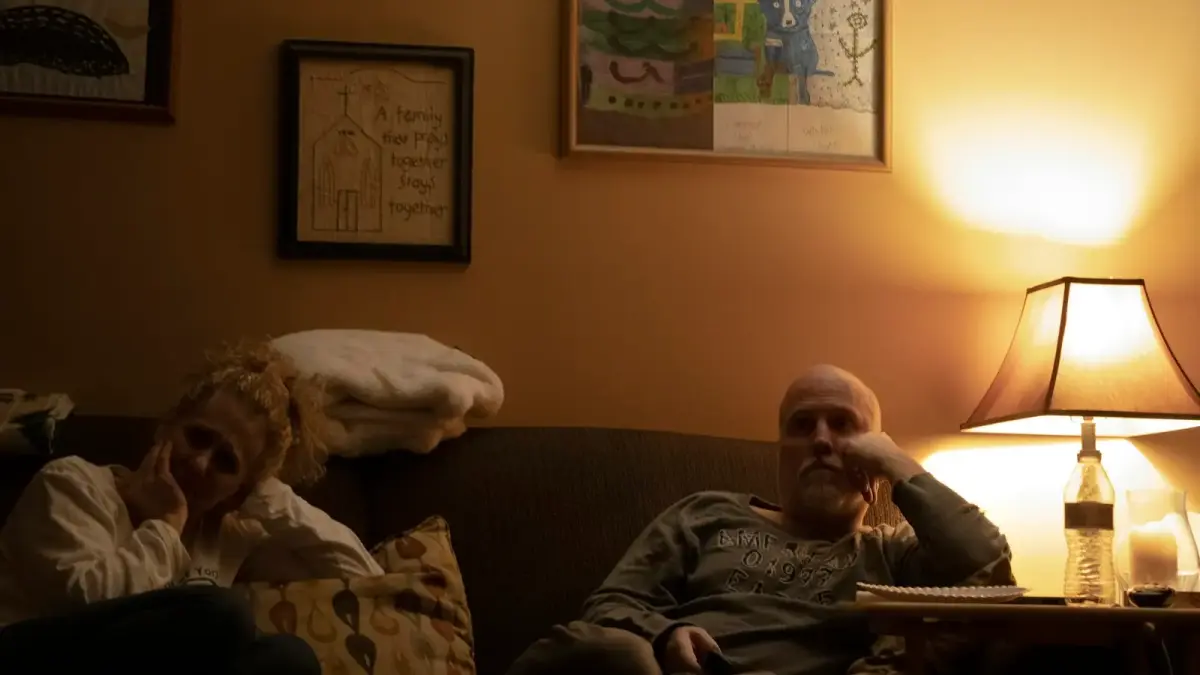
He is 60 and has just realized that every time his wife falls asleep on the couch while they are watching television together, he turns the volume down one notch at a time until the room is nearly silent and then sits there watching her breathe, not because the show stopped mattering but because a boy who used to listen for his mother's breathing through the bedroom wall to make sure she was still alive never outgrew the part of him that needs to hear the people he loves still breathing before he can believe they are safe
The Volume Goes Down
It happens around the forty-minute mark. Her head tilts. Her hand loosens around the remote she stopped using twenty minutes ago. Her breathing shifts from the shallow rhythm of paying attention to the deeper, slower current of sleep.
And he does this thing he never planned to do. He reaches for the remote - his remote, the one he kept - and presses the volume down. One notch. Then another. Then another.
He doesn’t turn it off. That would be too deliberate, too much like a decision. Instead he lowers it the way you might dim a lamp in a room where someone is dreaming. Gradually. Carefully. Until the voices on the screen are just a murmur, and then less than a murmur, and then nothing at all.
And then he sits there. Not watching the show. Watching her.
He is sixty years old and he just realized he has been doing this for the entire length of his marriage.
The Boy at the Wall
When he was seven, his mother got sick. Not dramatically sick - not the kind of sick that puts you in a hospital where machines do the breathing for you. The quieter kind. The kind where a woman goes to bed earlier and earlier, where the house gets still in a way a child can feel in his teeth.
He shared a wall with her bedroom. At night, after his father turned off the hallway light, he would press his ear against the plaster and listen. Just listen.
He was listening for breathing.
Not because anyone told him to. Not because he understood what was happening. But because some part of him - the animal part, the part that runs older than language - understood that if he could hear her breathing, she was still there.
A 2019 study published in the Journal of Child Psychology and Psychiatry found that children who experience parental illness develop what researchers call “ambient monitoring” - a persistent, low-level attentiveness to the physical state of attachment figures. It becomes so automatic that most people who do it never realize they’re doing it at all.
He never realized he was doing it.
What Vigilance Becomes When It Has Nowhere Else to Go
Here is what nobody tells you about growing up afraid: the fear leaves, eventually. You build a life. You marry someone healthy. You sleep in a house where nobody is disappearing.
But the wiring stays.
The nervous system doesn’t care that you are safe now. It learned its lesson decades ago - that the people you love can go quiet, can go still, can stop being there - and it refuses to unlearn it. Not out of dysfunction. Out of devotion.
So the vigilance doesn’t go away. It just finds new clothes to wear.
It becomes the man who always sleeps closest to the door. The father who checks on the children one more time before bed, pressing his hand against their backs to feel the rise. The husband who, without ever consciously choosing to, turns the television down notch by notch until the room is silent enough to hear the one sound that has always meant safety to him.
Breathing.
Daniel Goleman wrote about the emotional brain’s capacity to encode survival responses so deeply that they become invisible to the person carrying them. You don’t experience them as fear. You experience them as preference. As habit. As just something you do.
He would have said he just liked the quiet. If you had asked him why he turns the volume down, he would have shrugged. “She’s sleeping. I don’t want to wake her.”
And that would be true. But it would not be the whole truth.
The Architecture of Tenderness
Men of his generation - men who grew up in houses where love was demonstrated through endurance rather than language - built their tenderness out of the materials they had. And sometimes the materials were fear. Sometimes the materials were grief. Sometimes the materials were nights spent listening through walls.
This is not a flaw. This is craftsmanship.
Think about what he actually does in that moment on the couch. He suspends his own evening. He surrenders the story he was following on the screen. He sits in near-silence beside a sleeping woman and watches the small motion of her chest and feels - though he would never use this word - peace.
That is not anxiety wearing a mask. That is a man who learned, as a boy, that presence is the highest form of love. That being in the room, being awake, being watchful - that is how you keep people.
A 2021 study in Frontiers in Psychology examined what researchers termed “protective caregiving behaviors” in adults with early experiences of parental vulnerability. The study found that these adults often performed acts of care so subtle and internalized that neither they nor their partners recognized them as caregiving. The behaviors looked like nothing. They looked like turning down a television.
They looked like sitting still.
The Things Nobody Sees
His wife doesn’t know about this. That is the part that undoes me every time I think about it.
She has no idea that three or four nights a week, after she drifts off during the second episode of whatever they are watching, her husband conducts this quiet ritual. She doesn’t know that he sits there for ten, sometimes fifteen minutes, doing nothing but listening to her breathe. She doesn’t know that this is, for him, the most intimate part of their day.
She will wake up eventually. She will blink and look around and say something like, “Did I fall asleep?” And he will say, “Yeah, about twenty minutes ago.” And she will stretch and say she is going to bed, and he will say he will be there in a minute, and neither of them will mention what just happened because, from her perspective, nothing happened.
But something happened.
Something has been happening every night for thirty-five years. A man has been keeping watch. Not because he is afraid she will die - he is not living in crisis, he is not consumed by dread. But because the boy inside him still believes, on some frequency below thought, that love means making sure.
Making sure they are still breathing. Making sure they are still here.
Love as Listening
I think about my own father when I think about this. I think about a generation of men who would never describe themselves as tender. Who would be embarrassed by the word. Who carried their love like a wallet in a front pocket - always there, never displayed.
My father used to stand in the hallway outside my bedroom when I was small. I didn’t know this until my mother told me, years later. He would come home from work and stand in the dark hallway and listen. Not checking on me. Just listening. Just confirming.
He never told me. She almost didn’t tell me. It was the kind of love that existed only in the doing of it, never in the telling.
And I think this is more common than we know. I think there are men all over this country sitting in living rooms right now, in the blue light of a muted television, watching their wives sleep and feeling something so enormous and so old that they couldn’t name it if you gave them a hundred years.
They don’t call it love. They don’t call it anything. They just turn the volume down.
The Sound Beneath the Sound
What he is really listening for - what he has always been listening for - is continuity. The proof that the story goes on. That the person beside him will still be beside him tomorrow.
As a boy, he couldn’t take that for granted. His mother’s breathing was a nightly bulletin. Still here. Still here. Still here.
As a man, he doesn’t need the bulletin anymore. He knows his wife is healthy. He knows she is just napping after a long day. The rational mind holds all of this clearly.
But the heart has its own memory. And the heart remembers a wall, and a boy, and the terrible silence that meant something had gone wrong. So it asks, gently, automatically, without making a fuss - can I just check? Can I just listen? Can I just sit here in the quiet and hear her breathing one more time?
Brene Brown once described this kind of vulnerability - the vulnerability of loving someone so much that the thought of their absence is unbearable. She called it foreboding joy. The inability to fully surrender to a good moment because some part of you is already bracing for its end.
But I don’t think that is quite what he is doing. I think he has moved past bracing. I think he has arrived at something quieter than fear and steadier than joy.
He is witnessing.
Just Sitting There
He is sixty. He has a mortgage that is almost paid off and a knee that predicts rain and a wife who falls asleep on the couch most nights around nine-thirty. His life is ordinary in every direction.
But in the space between the last notch of volume and the moment she wakes up, he does something extraordinary. He loves someone so completely and so silently that the object of his love will never know the full shape of it.
And maybe that is fine. Maybe that is even the point.
Maybe the purest love is the kind that doesn’t need to be witnessed to be real. The kind that happens in a room where one person is sleeping and one person is awake and the only sound is breathing.
He was a boy who listened through walls.
Now he is a man who turns down the television.
The gesture changed. The listening never did.