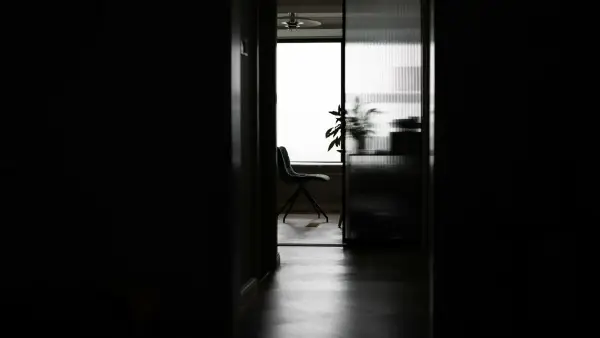
He's 61 and has finally noticed he cannot sit through a single evening without getting up to check the locks, the stove, and the porch light - not because he's anxious but because a boy who was the oldest of four in a house where nobody else was paying attention learned before ten that rest was something you earned by making sure every person you loved was accounted for
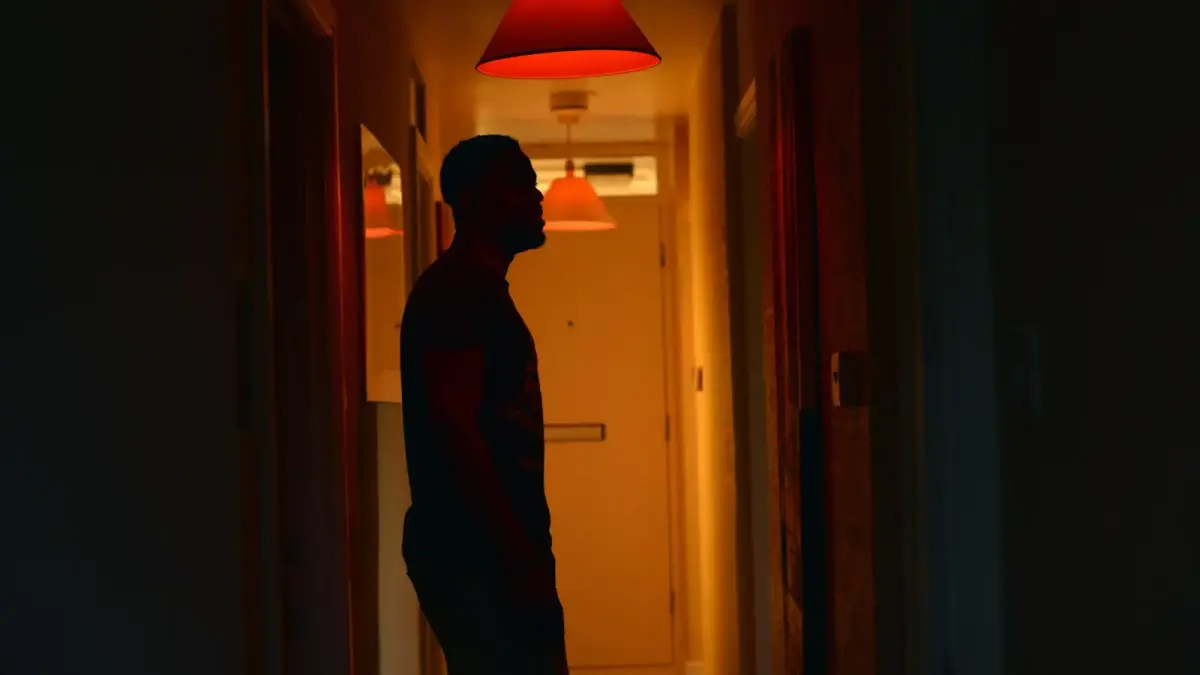
I watched my father do it every night of my childhood.
Ten o’clock. The TV goes off. He stands up slowly, knees cracking, and begins his circuit. Front door. Back door. Stove knobs, one by one. Garage side door. Porch light on. Car locked. Windows latched. Then the hallway, standing there for a moment with his hand flat against the front door like he was listening for something none of us could hear.
My mother would call from the bedroom. “It’s fine, come to bed.” And he’d say “I know,” but he wouldn’t move. Not yet. He had to finish.
I’m doing the same thing now. I’m 47 and I catch myself standing in my own hallway at midnight, pressing my palm against the deadbolt, not because I think someone is coming but because something in my body will not let me lie down until I’ve confirmed that every single entry point is sealed. Every burner is cold. Every person under my roof is breathing.
My wife thinks it’s a quirk. Something she mentions lightly at dinner parties. “Marcus checks the locks three times before bed - it’s adorable.” And I laugh because what else do you do when someone accidentally describes the most honest thing about you as a personality feature.
But it’s not adorable. And it’s not a quirk. It’s the last surviving ritual of a boy who understood, before he could articulate it, that nobody else in the house was going to stay awake.
The boy who never went to sleep first
There’s a specific kind of oldest child who didn’t just grow up fast. They grew up sideways - into a role that had no title, no acknowledgment, and no end date.
I was the eldest of three. My father worked nights. My mother did her best, but her best was often just being present in the room without being available in it. She was tired in a way that I now recognize as depression, though nobody called it that in the late 1980s.
So I watched. I listened. I learned the sound of the back door when it wasn’t latched properly. I knew which stove burner my sister left on after making ramen. I checked the baby monitor when my mother fell asleep on the couch because my youngest brother was only two and the house was old and the heating vents were the kind you could fit a small hand into.
I was nine.
A 2014 study published in the Journal of Family Psychology found that parentified children - those who take on caregiving roles inappropriate for their developmental stage - often carry hypervigilant monitoring behaviors well into adulthood. Not because they develop anxiety disorders, but because their nervous systems were trained on a simple, brutal equation: if I stop watching, something bad might happen. And something bad actually did happen, often enough to prove the equation right.
That’s the part people miss. This isn’t irrational fear. This is pattern recognition that worked.
Rest as a reward you never collect
Here’s what I’ve never been able to explain to anyone who didn’t grow up this way.
It’s not that I can’t relax. It’s that relaxation has conditions. And the conditions are never fully met.
I can sit on the couch. I can watch a movie with my wife. But somewhere around the forty-minute mark, my body begins its quiet audit. Did I lock the side gate? Is the garage door down? Did the dryer finish its cycle or is it still running with the lint trap I forgot to clean? Did my daughter text when she got home?
I get up. I check. I come back. My wife doesn’t even look up anymore.
What she doesn’t know - what I’ve never said out loud - is that every single check is a prayer. Not to God. To the universe. A small, physical act that says: I am still here. I am still paying attention. Nothing will go wrong tonight because I refused to stop looking.
Gabor Mate has written about how children in unpredictable environments develop what he calls a “duty to vigilance” - an internal mandate that their awareness is the thing keeping chaos at bay. It’s not that the child believes they’re powerful. It’s that they’ve been given evidence, over and over, that when they stopped paying attention, something fell apart. A sibling got hurt. A parent didn’t wake up. A bill didn’t get paid.
The child doesn’t choose vigilance. Vigilance chooses the child. And the man who inherits that child’s nervous system doesn’t choose the nightly circuit, either. It’s not a decision. It’s a debt he doesn’t know how to stop paying.
What it looks like from the outside
My wife sees a man checking locks.
My kids see a dad who’s a little particular about the house being “buttoned up” before bed.
My friends see someone who always parks where he can see his car, who always sits facing the door in restaurants, who always knows where the exits are.
None of them see the boy.
None of them see the nine-year-old lying in the dark with his eyes open, listening for the sound of something going wrong, because if he heard it first, he could fix it before it reached his siblings. Before it reached his mother. Before it became the kind of thing that made her cry in the kitchen at six in the morning when she thought everyone was still asleep.
I heard her. Every time. And I added it to the list of things I was supposed to prevent.
Research published in the Journal of Research in Personality in 2019 found that eldest children who experienced early caregiving responsibilities showed higher levels of what psychologists call “threat monitoring” - a persistent, low-grade scanning of their environment for potential problems. The study noted that this behavior was often invisible to others because it didn’t present as traditional anxiety. There were no panic attacks, no avoidance behaviors, no visible distress. Just a man who got up to check the stove.
Just a man who couldn’t explain why sitting still felt like leaving his post.
The language nobody taught us
I think about this a lot - how men who grew up this way never received a vocabulary for what they carry.
We don’t say “I am parentified.” We say “I’m just responsible.”
We don’t say “My nervous system was shaped by chronic instability.” We say “I like to know things are taken care of.”
We don’t say “I am performing the only love language I was ever given, which is making sure nothing goes wrong.” We say “I’ll be right back. Just going to check something.”
And when someone asks why we can’t just sit down, just relax, just let it go, we don’t have an answer. Because the answer is a story that starts when we were eight or nine or ten, and it doesn’t have an ending. It just has a man standing in a dark hallway at midnight, pressing his hand against a door.
Daniel Goleman talks about emotional intelligence as though it’s a skill people develop. But for some of us, it wasn’t developed. It was conscripted. We didn’t learn to read the room - we learned that reading the room was the only thing standing between the people we loved and the thing that was always coming.
And the thing that was always coming never had a name. It was just the feeling that something, somewhere, was about to go wrong, and if you were the one paying attention, maybe you could stop it.
The door is not a door
My youngest son is 14 now. A few weeks ago, he came downstairs at midnight to get water and found me standing in the hallway.
“Dad, what are you doing?”
“Just checking the door.”
He nodded and went back to bed. He’s used to it. He’s grown up with a father who does a perimeter sweep every night like a man guarding a castle that nobody is attacking.
But here’s what I wanted to tell him, and couldn’t. What I’m writing now because some things are easier on paper.
I’m not checking the door. I’m touching the last wall between you and everything I spent my entire childhood being told was always on its way. I’m putting my hand on the lock and asking it to hold. I’m asking the house to be enough. I’m asking the night to pass without incident, the way I asked it when I was nine and my brother was two and my mother was asleep and my father was at work and I was the only person in the entire house who knew that the back door didn’t latch unless you lifted the handle and pushed with your hip at the same time.
I knew that at nine. I still know it. My body still gets up at midnight to check, even though that door is in a house two states away that was sold in 2004.
The door is not a door. The lock is not a lock. The stove is not a stove.
They are the last surviving pieces of a ritual that a boy built to keep his family safe, and the man cannot stop performing it because stopping would mean admitting that the boy’s job is finished. And if the boy’s job is finished, then what was all of it for? What were all those nights for?
What I am learning, slowly
I’m in my late forties. I still do the circuit. I probably always will.
But something shifted recently. Not in the behavior - in how I understand it.
I used to think there was something wrong with me. That I was anxious, or rigid, or controlling. That a normal person would just go to bed. That a healthy man wouldn’t need to press his hand against a locked door to feel safe enough to close his eyes.
But I’ve started to see it differently.
That boy who stayed awake - he wasn’t broken. He was the most devoted person in the house. He built a system of care out of nothing but attention and fear and love so tangled together that they became the same thing.
And the man who checks the locks every night isn’t performing anxiety. He’s performing the most faithful act of love he knows. It’s devotion expressed as perimeter maintenance. It’s tenderness wearing the only clothes it was ever given, which happen to look like vigilance.
I don’t need to be fixed. I might need to be seen.
Not by a therapist, though that’s fine too. But by myself. By the part of me that still thinks rest is dangerous and vigilance is love and the only proof that you care about someone is that you’re the last one awake, scanning the dark for the thing that hasn’t come yet.
It’s okay to sit down.
It’s okay if someone else checks the door.
It’s okay if nobody checks the door.
I’m still learning that. I may never fully believe it. But I’m learning it.
And some nights, when I’ve done my circuit and I’m standing in the hallway with my hand on the lock, I let myself feel something that the boy never could.
I let myself feel proud of him. For staying awake. For paying attention. For building something out of nothing that kept four kids and a tired mother safe in a house that nobody else was watching.
He did his job. He did it beautifully.
It’s just that nobody ever told him he could stop.