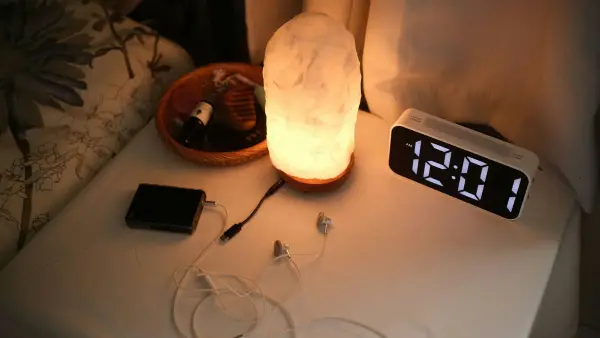
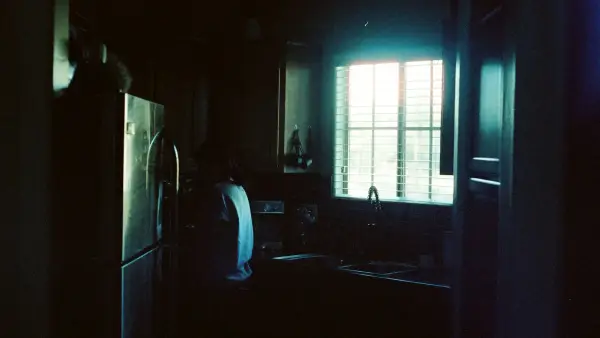
He's 62 and just realized the reason he checks every lock twice, turns off every appliance at the wall, and walks through the house one final time after everyone is asleep isn't caution - it's the eight-year-old boy who learned that safety was his job because nobody else was paying attention
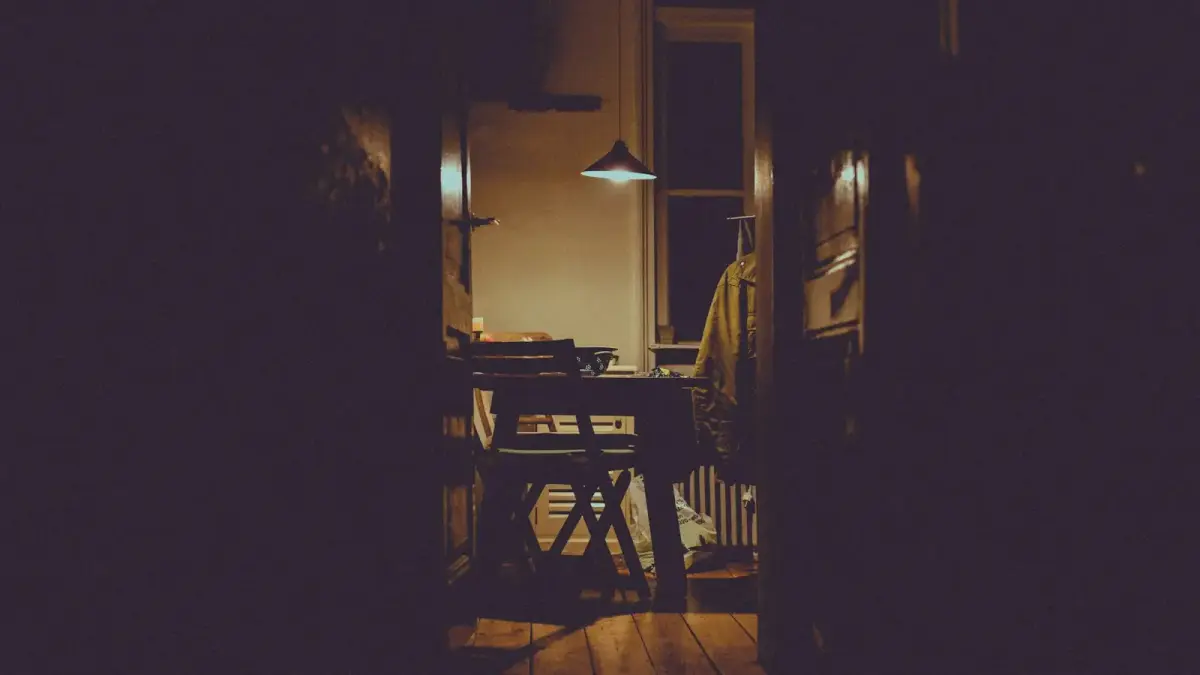
I am sixty-two years old and every single night I do the same thing.
Front door. Lock. Deadbolt. Check. Back door. Lock. Chain. Check. Kitchen - stove knobs all pointed to off, coffee maker unplugged, toaster unplugged at the wall. Living room - TV off, not just dark but actually off at the power strip. Bathroom - curling iron my wife used six hours ago, unplugged. Hallway night light - on. Thermostat - set. Then I walk through every room one more time. I listen. I look at the windows. I check that my grandchildren’s bedroom door is slightly open when they stay over, exactly the way it should be.
My wife has been teasing me about this for thirty-four years. She calls it “the rounds.” My kids grew up hearing my footsteps after midnight, the soft click of locks being tested, the quiet creak of doors being opened and closed. They thought it was just Dad being Dad.
I thought so too. I called it being careful. Being responsible. Being a man who takes care of his home.
I was wrong about what it actually is.
The choreography that never changes
The routine takes eleven minutes. I’ve never timed it on purpose, but I know because my wife once told me she could set a clock by the gap between me saying goodnight and me finally getting into bed.
Eleven minutes. Every night. For decades.
It doesn’t matter if we’re exhausted. It doesn’t matter if I already checked everything an hour ago. It doesn’t matter if my wife locked the front door right in front of me and I watched her do it. I have to do it myself. I have to feel the lock under my own hand. I have to see with my own eyes that every switch is off, every door is sealed, every potential threat has been neutralized.
If I skip it - if I try to just go to bed - my body won’t let me sleep. There’s a hum in my chest. A low-grade electricity that says something is wrong, something is undone, and if I don’t get up and check, something bad will happen to the people I love.
I always assumed this was just what conscientious men do. That this was the weight of being the provider, the protector, the one whose name is on the mortgage.
But a few months ago, my therapist asked me a question that broke something open. She said, “When did you first start checking?”
And the answer came out of my mouth before I could think about it.
“Eight. I was eight.”
A house where no one else was watching
My father was not a bad man. I need to say that first because I’m not interested in blame. But he drank. Not every night - but enough nights that you never knew which version of the evening you were getting.
My mother worked second shift at the hospital. She left at 2 p.m. and came home after midnight. That meant from the time school ended until the time my father either fell asleep in his chair or went to bed, the house was his. And when he was drinking, the house was no one’s.
I had two younger sisters. Seven and four.
No one told me to be the one who checked the doors. No one assigned me the job of making sure the stove was off after my father heated something up and wandered away. No one asked me to walk through the house at 10 p.m. and make sure the back door was locked and the porch light was on so my mother could see the steps when she came home.
I just did it. Because someone had to. And I was the only one awake enough, sober enough, old enough to understand that a house needs someone paying attention.
By the time I was nine, I had a routine. Every night, same order. Doors, stove, lights, sisters. Check that my sisters were in bed, covered, doors open a crack so I could hear them if they called out. Then - only then - I could go to sleep.
I was a child running a security detail for a household that didn’t know it needed one.
The shift that never ended
A 2014 study published in the Journal of Child and Family Studies found that children who take on parental responsibilities before they’re developmentally ready - what researchers call parentification - often carry hypervigilant behaviors well into adulthood. The body learns that safety depends on personal surveillance, and it never unlearns that lesson.
That’s me. That’s the eleven minutes every night.
When I moved out at eighteen, the checking didn’t stop. It just transferred to a new location. My first apartment - I checked every lock twice before sleeping. My first house with my wife - the routine established itself within a week, like muscle memory finding a new stage.
I thought I was being a good husband. A responsible homeowner. A man who didn’t cut corners.
But the truth is simpler and sadder than that. The boy who appointed himself the night watchman at eight years old never received word that the shift was over. No one ever tapped him on the shoulder and said, “You can stand down now. Someone else is watching. You are safe.”
So he kept watching. He kept checking. He kept walking the perimeter of whatever building held the people he loved, making sure the world couldn’t get in.
Gabor Mate writes about how the body stores the emotional responsibilities of childhood long after the mind has moved on. The nervous system doesn’t understand timelines. It doesn’t know that you’re sixty-two now, that your house has an alarm system, that your wife is a capable adult, that your children are grown. It only knows the pattern it learned: if you don’t check, something bad happens. If you stop paying attention, someone gets hurt.
And so you check. Every night. For fifty-four years.
It’s not OCD - it’s loyalty to a boy who had no backup
For a while I wondered if there was something clinically wrong with me. My wife gently suggested it once - maybe talk to someone about the checking? Maybe it’s a little obsessive?
But my therapist helped me see the difference. OCD is driven by irrational fear - the brain generating threats that aren’t connected to lived experience. What I do is driven by rational fear that became permanent. My childhood taught me, through real evidence, that if I wasn’t watching, bad things happened. The stove did get left on. The door did get left unlocked. My sister did wake up crying with no one there.
A 2019 study in Frontiers in Psychology found that adults who experienced parentification in childhood show heightened threat detection and an exaggerated sense of responsibility for others’ safety. The researchers noted these aren’t pathological responses - they’re adaptive strategies that became fixed because they were necessary for survival.
My nightly routine isn’t a disorder. It’s a boy’s loyalty to his post. It’s the part of me that still believes - at some deep, pre-verbal level - that the moment I stop being vigilant, the house falls apart.
The fact that it hasn’t fallen apart in thirty-four years of marriage doesn’t update the software. The boy doesn’t care about evidence. He cares about not failing again.
What my wife’s teasing never touched
My wife is kind about it. She always has been. The teasing is gentle - “doing your rounds?” with a smile as I get out of bed for the last check. She’s never made me feel broken.
But she also doesn’t know what lives underneath it. She didn’t grow up in a house where the adults checked out. Her father locked the doors every night. Her mother turned off the stove. She never had to learn, at eight, that the world is only as safe as your willingness to stand guard over it.
A 2016 study in the Journal of Personality and Social Psychology found that people who developed hypervigilance in childhood often struggle to explain their behaviors to partners who had secure upbringings. The gap isn’t intellectual - it’s experiential. You can’t describe what it feels like to be the only person in a house who’s watching, if the other person always had someone watching for them.
I don’t resent her for not understanding. But I want to name what this is, finally. Not for her. For me. For the eight-year-old who is still, every single night, walking through the dark making sure everyone is safe.
The man at midnight is still the boy at ten o’clock
I’m sixty-two. My house is locked. My alarm is set. My wife is beside me. My children are grown and safe in their own homes, doing their own nightly checks - and yes, I notice that, and yes, it makes me ache a little.
I still do the rounds. Every night. I don’t think I’ll ever stop.
But something shifted when I understood what it actually is. It’s not a quirk. It’s not a habit. It’s not even responsibility in the way I always told myself.
It’s love. A very old, very tired kind of love. The kind a child invents when the adults aren’t doing their job and someone has to make sure the house holds together until morning.
I was that someone. I’m still that someone. The difference now is that I know it - and I can walk through my house at midnight with something closer to tenderness than anxiety. I can check the lock and whisper, silently, to the boy who started this whole ritual: I see you. I know why you’re still here. You did a good job. You kept everyone safe.
You can rest now.
Even if you still choose to check one more time.