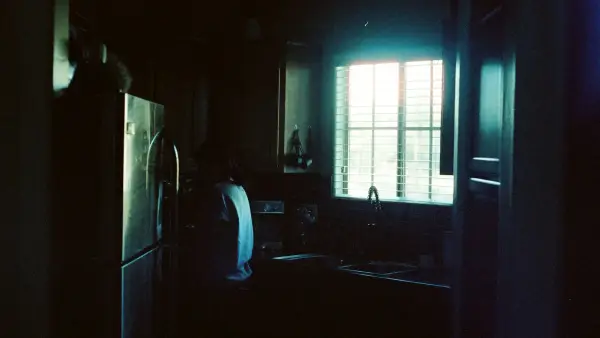
He's 62 and has quietly realized that the reason he still rehearses every phone call before dialing - running through each possible response, mapping out three versions of the same sentence before choosing the safest one - is not the anxiety his wife thinks it is but a boy who learned that the wrong sentence at the wrong moment in his childhood home could rearrange the entire week, and the scripts are not overthinking but protection that outlived its purpose by forty years
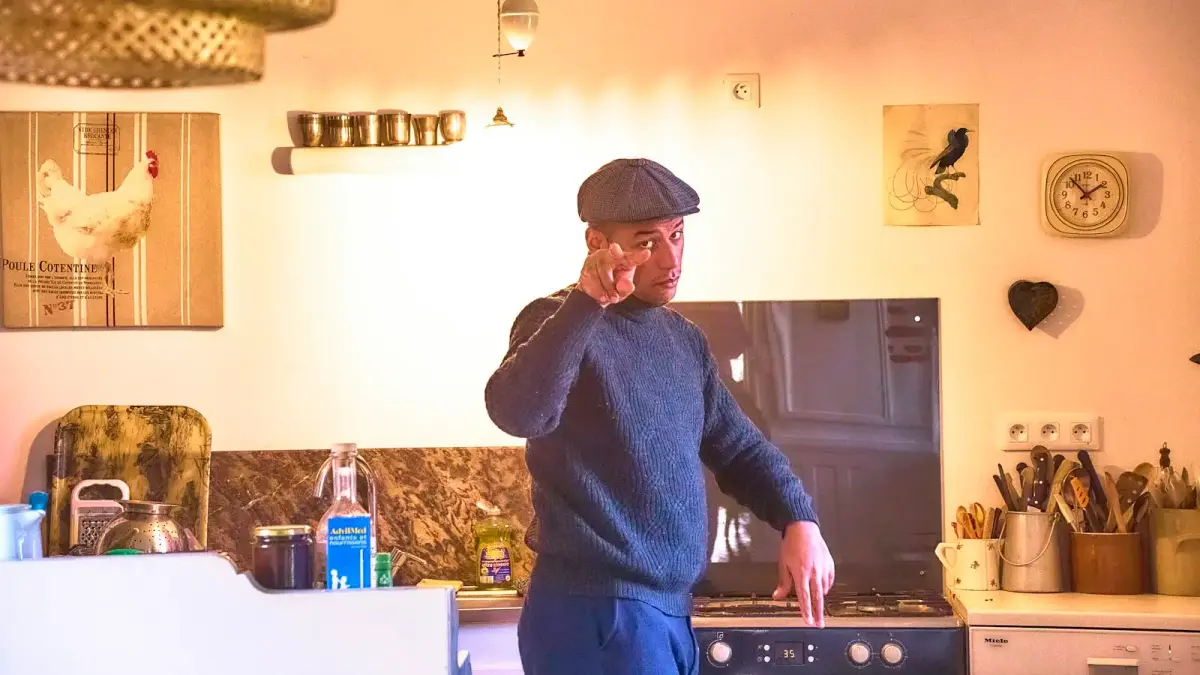
He stands at the kitchen counter with his phone in his hand, and he doesn’t dial. Not yet.
First, he runs the opening line. “Hey Bill, it’s David. Hope I’m not catching you at a bad time.”
He mouths it once, silently. Adjusts. Replaces “hope” with “sorry if.”
No - that sounds like he’s already apologizing. Back to “hope.”
He decides that if Bill sounds rushed, he’ll keep it to forty-five seconds. If Bill sounds warm, he’ll ease into the real reason he called. He maps out both versions and rehearses the transition sentence between small talk and the actual thing he needs to say.
All of this happens before his thumb touches the screen.
His wife has watched this ritual for thirty-seven years. She calls it anxiety. She says it gently, without judgment, the way you’d name a weather pattern you’ve learned to live around.
“He gets anxious about phone calls.” She’s mentioned it to their daughter. She’s probably mentioned it to her friends.
The word has settled over him like a diagnosis he never agreed to.
But standing in that kitchen, phone in hand, running the script one final time - he knows something she doesn’t. This isn’t anxiety. This is something much older. Something that started in a house where words had weight, and the wrong one at the wrong moment could change the air for days.
The house where sentences had consequences
He grew up in a home that looked fine from the outside. No violence. No screaming matches the neighbors could hear. His father went to work. His mother kept the house in order. Dinner was at six.
But language in that house operated on a different set of rules than language anywhere else.
His mother could hear a sentence the way a musician hears a wrong note. If he said the wrong thing - not cruel, not defiant, just the wrong shape of honest at the wrong time - the temperature would drop. Not with yelling. With silence. With the particular quality of quiet that meant she had folded whatever he’d said into some private injury, and now the house would carry the weight of it for three days, maybe five.
He learned early that there was no warning before the silence came. A sentence that was fine on Tuesday could be dangerous on Thursday. The rules shifted without announcement.
So he started writing scripts.
Not on paper. In his head. Before he spoke to either parent, he would run the sentence through every possible interpretation. He’d map out how his mother might hear it on a good day, and then on a bad one. He’d prepare a softer version, a safer landing, a way to rephrase if the first attempt hit wrong.
By the time he was ten, he could read a room before he entered it. By twelve, he could adjust his vocabulary, his tone, even the timing of his sentences based on the emotional weather of the house that particular morning.
He didn’t know this was unusual. He thought everyone did this.
The script as survival
A 2016 study published in the Journal of Personality and Social Psychology found that children who grow up in emotionally unpredictable environments develop what researchers call “hypervigilant monitoring” - a heightened sensitivity to the emotional states of others, paired with a compulsive need to predict how their words and actions will be received. It isn’t a disorder. It’s an adaptation. The body learns to scan for threat before the mind even registers that it’s doing it.
What this looked like, for the boy who became David, was a kind of invisible labor that ran underneath every interaction. Before he spoke, he calculated. Before he answered a question, he read the face of the person asking it. Before he entered a room, he checked the air.
The scripts were not obsessive thinking. They were mission planning. Every sentence was a small negotiation between what he wanted to say and what was safe to say. And the gap between those two things - that gap was where he lived for most of his childhood.
He got very good at it. So good that nobody ever noticed he was doing it. Teachers found him articulate. Friends found him easygoing. His parents found him agreeable.
Nobody knew that every word out of his mouth had been vetted by a committee of one, in a process that took place in the half-second before he opened his mouth.
The rehearsal follows him
He’s sixty-two now. His mother has been dead for nine years. His father lives in a care facility and mostly talks about the weather. The house where sentences had consequences was sold in 2014. Demolished two years later for a subdivision.
But the scripts never stopped.
He rehearses calls to his doctor. He rehearses calls to his brother. He rehearses calls to his daughter, whom he loves more than anyone alive. Before calling to wish her a happy birthday, he runs through the opening three times. He prepares for the possibility that she sounds busy. He plans what to say if she mentions something he doesn’t know how to respond to. He builds an exit strategy in case the conversation turns toward something that might require him to say the wrong thing.
He does this for people who love him. People who have never once punished him for a sentence.
His body doesn’t know that.
A 2021 study in Frontiers in Psychology examined adults who reported chronic “pre-conversation rehearsal” - the habit of scripting interactions before they happen. Researchers found that the behavior correlated strongly not with generalized anxiety disorder but with early experiences of emotional unpredictability in the home. The rehearsal wasn’t a symptom of a broken mind. It was evidence of a brilliant one - a mind that had learned, under pressure, to simulate social outcomes before committing to them.
The study called it “anticipatory social cognition.” David would just call it the thing he does before every phone call, every meeting, every conversation with someone he hasn’t spoken to in more than a week.
What his wife sees, and what she doesn’t
His wife sees a man who holds his phone for two minutes before dialing. She sees him mouthing words. She sees the slight tension in his jaw, the way his eyes go somewhere else for a moment, like he’s reading from a page that isn’t there.
She calls it anxiety because that’s the word the culture gave her. It’s the closest container she has for the behavior. And she’s not wrong that something is happening. She’s just wrong about what it is.
What she doesn’t see is the boy standing in the hallway outside his parents’ bedroom, holding a sentence in his mouth like a marble, trying to decide if it’s safe to let it go. She doesn’t see the Sunday mornings when he said something innocent at breakfast and spent the rest of the day watching his mother move through the house without looking at him. She doesn’t see the way he learned, before he had language for any of it, that words are not free. That every sentence costs something. That the safest thing you can do before speaking is to rehearse.
The rehearsal is not nervousness. It’s reverence. A deep, almost sacred respect for the power of language - earned in a home where a single careless sentence could rearrange the emotional architecture of an entire week.
The moment something shifts
He’s standing in the kitchen again. Thursday morning. Pale light through the window over the sink. His daughter’s name on the screen.
He starts the script. “Hey sweetheart, it’s Dad. Just calling to -”
And then he stops. Not because the script fails, but because something underneath it shifts. A recognition. The faintest awareness that the person on the other end of this call has never once made him pay for a sentence. That his daughter has never gone silent for three days because he chose the wrong word. That the room he’s about to speak into is not the room he grew up in.
He doesn’t throw the script away. He’s not sure he could if he tried. Forty years of protection don’t dissolve in a single morning.
But something loosens.
Psychologist and trauma researcher Gabor Mate has written extensively about how survival behaviors persist long after the original threat has passed. The body, he argues, does not update its protocols on the same timeline as the mind. You can know, intellectually, that you are safe. Your body may take decades to believe it - if it ever does.
David knows this now. Not from books. From standing in his kitchen with his phone in his hand, catching himself rehearsing a conversation with someone who has only ever loved him back without conditions.
The scripts are not the problem
Here’s what I want to say to every man who rehearses phone calls. Every person over fifty who still maps out conversations before having them. Every adult who was once a child in a house where the wrong sentence could change the weather.
The scripts are not a disorder. They are not a sign that you are broken or anxious or incapable of spontaneity.
They are proof that you survived something that required extraordinary intelligence. That your mind - young, unprotected, working with limited information - built a system to keep you safe. And that system worked. You’re here. You made it out of that house.
The fact that the system still runs is not a failure. It’s a testament to how well it was built.
Maybe one day, the scripts get shorter. Maybe the rehearsal takes thirty seconds instead of three minutes. Maybe you call your daughter and say whatever comes out first, and it’s not perfect, and she laughs, and you laugh, and the silence that follows isn’t dangerous - it’s just two people breathing on the same line.
Or maybe the scripts stay. Maybe you rehearse every call for the rest of your life. And maybe that’s okay too. Not everything that protected you needs to be dismantled. Sometimes it just needs to be understood.
He dials. She picks up on the second ring.
“Hey, Dad.”
He lets out a breath he didn’t know he was holding. The script is there, waiting. But so is something else - something quieter, something that sounds a lot like the beginning of permission to just speak.
“Hey sweetheart,” he says. “I just wanted to hear your voice.”
It wasn’t in the script. It was true anyway.