He is 63 and has finally admitted that the reason he always insists on carrying every bag from the car in a single trip has nothing to do with efficiency - it is the last surviving performance of a boy who learned that a man's value was measured in what he could carry without setting anything down, and the heaviness was never the groceries but the forty-year belief that needing a second trip meant admitting he was not enough
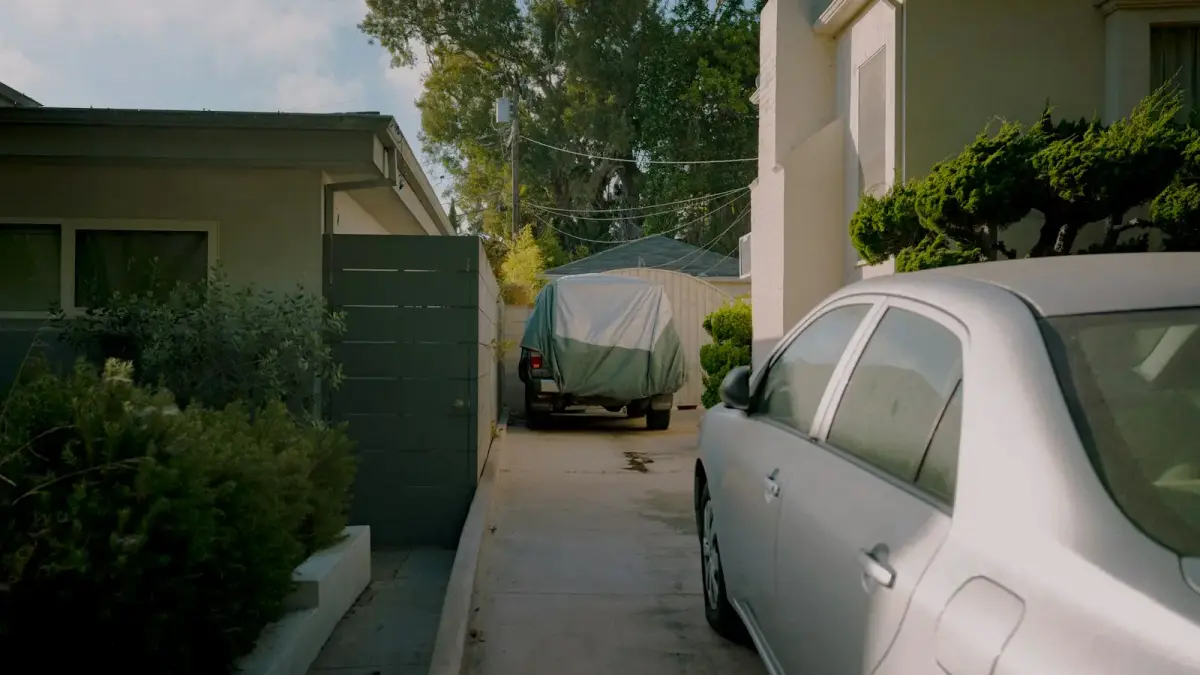
His wife watches him from the kitchen window. She has watched this exact scene four hundred times and it never changes.
He stands at the open trunk of the car with his arms slightly extended, fingers already calculating. Six plastic bags on the left side. Four on the right. A gallon of milk. A case of sparkling water she asked him not to carry because it is heavy, which only guaranteed he would carry it. He loops bags over his wrists until the plastic cuts small white lines into his skin. He wedges the milk under his left arm. He hooks the last two bags on his right pinky and ring finger. Then he nudges the trunk closed with his elbow and walks toward the house like a man crossing a finish line nobody else can see.
She used to ask if he needed help. She stopped years ago. Not because she gave up, but because she recognized something in his face when she offered - a flicker of something wounded, something that looked almost like embarrassment, and she loved him enough to stop putting that look there.
He is sixty-three. And he has just started to understand what he has been carrying.
The performance nobody questions
Every man I know does this. Every woman I know has watched a man do this. It is one of those behaviors so universal it has become a joke - memes, greeting cards, sitcom bits. The one-trip guy. The man who would rather lose circulation in both hands than walk back to the driveway a second time.
We laugh at it because it seems harmless. Silly, even. A quirk of stubbornness, maybe. A small, victimless display of unnecessary determination.
But I have been thinking about it differently lately. I have been thinking about why it matters to us so much. Why it is not funny when you are the one standing at the trunk. Why there is a tightness in your chest when someone says “just make two trips” that has nothing to do with groceries and everything to do with something you learned before you had the language to question it.
The one-trip carry is not about efficiency. It never was.
It is a performance. A ritual. A weekly reenactment of a lesson that was taught without words and absorbed without consent. And the lesson was this: a man’s value is measured by what he can carry without putting anything down.
What the boy was watching
I learned it from my father the way most boys learn the important things - not through conversation but through observation.
My father never told me a man should be able to carry everything in one trip. He never said the words. He did not have to. I watched him do it every Saturday after the grocery store. I watched him refuse help from my mother. I watched him refuse help from me, even when I was old enough and strong enough to carry half the bags myself. He would say “I’ve got it” with a tone that made it clear the offer itself was a kind of insult.
What I was watching, though I could not have named it then, was a man proving something. To whom, I still do not entirely know. To my mother. To the neighbors. To himself. To whatever invisible tribunal of manhood he had been performing for since his own boyhood.
Brene Brown spent years researching vulnerability and shame, and one of her findings that I cannot stop thinking about is this: for men, shame is not primarily tied to any single failure. It is tied to being perceived as weak. The mandate is not “be good” or “be successful” - it is “do not be seen as weak.” And weakness, for most men, is defined as needing help. Needing rest. Needing a second trip.
My father was not stubborn. He was obedient. He was following a rule he had never been given permission to examine.
And I watched him closely enough to memorize every part of the performance without ever being told to rehearse it.
The arithmetic of carrying
There is a specific kind of math that happens at the trunk of the car. You have seen it, even if you have never named it.
It is not regular math. It is not about weight distribution or ergonomic efficiency. It is a calculation about identity. You look at the bags and you do not think “how many can I carry?” You think “how many do I have to carry to still be the person I need to be?”
The answer is always all of them.
I have watched myself do this and recognized, with a clarity that was almost nauseating, that the calculation has nothing to do with the groceries. The groceries are just the current version of the weight. Before it was groceries, it was furniture. Before furniture, it was boxes during a move. Before boxes, it was the expectation that I would carry my family’s emotional silence without ever mentioning that it was heavy.
Ronald Levant, the psychologist who developed the concept of normative male alexithymia - the idea that boys are systematically trained out of emotional vocabulary - would probably recognize the trunk-of-the-car moment for what it is. It is not a man choosing to carry bags. It is a man performing the only version of value he was given access to. Physical capacity as proof of worth. Endurance as identity. The willingness to be uncomfortable as the price of being enough.
A 2015 study published in the Journal of Counseling Psychology found that men who more rigidly adhered to traditional masculine norms were significantly less likely to seek help - not just emotional help, but any help. Medical help. Directions. A hand with the bags. The researchers found that the relationship between masculine norm adherence and help-avoidance was not about pride. It was about identity threat. Asking for help did not feel like a practical decision. It felt like an existential one.
That is the arithmetic. You are not calculating weight. You are calculating whether you are still allowed to be who you are if you set something down.
What it costs to never put anything down
I am going to tell you something I have not said out loud before.
There was a night, maybe eight years ago, when I was carrying a box of books up a flight of stairs during a move. The box was too heavy. I knew it was too heavy. My lower back was already telling me a story I did not want to hear. But my father-in-law was watching from the landing, and my wife was behind me, and the box was just books, and I thought: if I cannot carry a box of books up one flight of stairs, then what exactly am I?
I carried the box. I set it down in the bedroom. I closed the door. And I sat on the edge of the bed for five minutes because my back was seizing and my eyes were wet and I could not have explained to a single person in that house why I was upset.
It was not the box. It was the fact that I almost could not carry it. And “almost could not” felt the same as “failed.”
That is what it costs. Not the sore back, though there is that. Not the pulled muscles or the dropped bags or the bruised shins from kicking the car door shut with your arms full. Those heal.
What does not heal as easily is the quiet, corrosive belief that your worth is load-bearing. That you are only as valuable as your capacity to absorb weight without complaint. That the moment you say “this is too heavy” or “I need help” or “I cannot do this alone,” you are not just being practical - you are being less.
Less of a man. Less of a provider. Less of whatever your father was when he carried everything in one trip and made it look like it did not hurt.
The science of masculine self-worth as load-bearing
Psychology has a name for this, though I wish it had a gentler one. They call it “precarious manhood” - the theory, supported by a significant body of research, that manhood is perceived as something that must be continuously earned and can be easily lost. Womanhood, by contrast, is treated as a biological status. But manhood is a performance. A social achievement. And it can be revoked at any moment by the wrong admission, the wrong gesture, the wrong number of trips to the car.
A 2013 study in the Journal of Personality and Social Psychology found that when men felt their masculinity was threatened, they responded with increased risk-taking, aggression, and avoidance of anything coded as feminine - including asking for help. The researchers described it as an “identity maintenance strategy.” The men were not trying to prove a point. They were trying to survive a feeling.
That is the part that gets lost in the jokes about the one-trip carry. The feeling underneath it is not competitive. It is not funny. It is fear. The fear that if you set the bags down, if you walk back for a second load, if you admit that the weight was more than you could manage, something essential about who you are will come undone.
And the cruelest part is that the fear is not irrational. Many of us grew up in homes where it was confirmed. Where fathers carried everything alone and were praised for it. Where boys who cried were corrected. Where asking for help was met not with support but with a lesson about self-reliance that felt, to a seven-year-old, indistinguishable from rejection.
We learned. We all learned.
The second trip he was never allowed to take
I want to tell you about the second trip. Not the one back to the car - the metaphorical one. The one where you go back for the things you left behind because you were told you could only make one pass.
The second trip is where you pick up the feelings you dropped at the trunk. The grief you left in the driveway because it was too heavy to carry in front of anyone. The tenderness you set down in your twenties because it did not fit with everything else you were holding. The admission - simple, devastating, true - that you are tired. That you have been carrying things for forty years and your hands hurt and you would like, just once, for someone to walk out to the car with you. Not because you cannot do it alone. But because you should not have to.
The man at the trunk of the car is not being stubborn. He is being loyal - to a version of himself that was built before he had any say in the blueprints. And the grocery bags are not groceries. They are proof. Proof that he is still strong. Still capable. Still enough.
But the proof was never needed. That is the part no one told him. The proof was never needed because the people who love him were never measuring. His wife at the kitchen window is not counting bags. She is watching the man she married hurt himself with a loyalty he does not owe to anyone, and she is wishing he would just let her carry the milk.
I am fifty-one. I still carry all the bags. I probably will tomorrow, too.
But last week, for the first time, I made two trips. Not because the bags were heavy. They were. But because I wanted to see if I could set something down and still be standing when I came back.
I was. The driveway was still there. The car was still there. I was still there.
And the second trip was the lightest thing I have carried in years.