He is 66 and just realized he has greeted his adult sons with a handshake at every airport arrival, every holiday visit, and every Sunday dinner for their entire lives - not because he does not love them or even because he is cold but because a boy who grew up in a house where his father's hand was the closest thing to an embrace he was ever offered learned that the distance between a handshake and a hug is not measured in inches but in permission, and a man who was never shown that his arms were allowed to reach further than his palm has spent forty years standing exactly one handshake away from the tenderness his sons have been waiting for
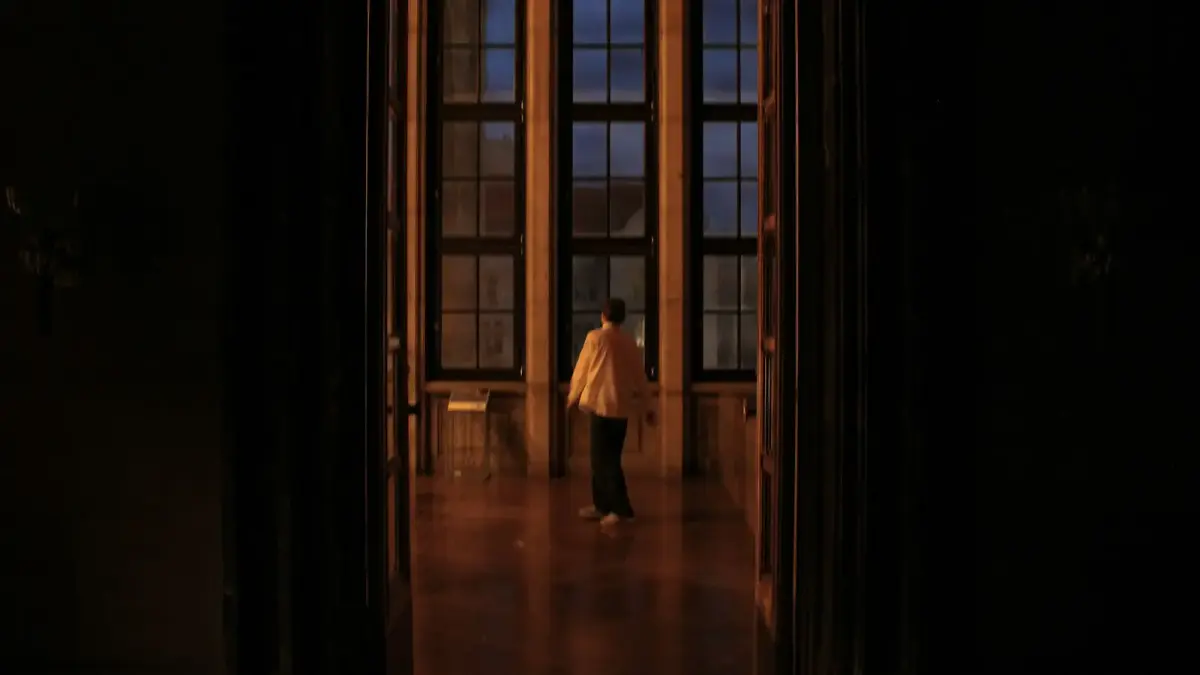
I watched it happen at baggage claim last Tuesday.
A man in his sixties stood near the arrivals gate, hands clasped behind his back, scanning the crowd with the kind of quiet alertness that only fathers have. When his son appeared - mid-thirties, rolling a carry-on, visibly tired from the flight - the older man stepped forward. His right hand extended before his son had even set the bag down.
They shook hands. Firm. Brief. The son smiled. The father nodded. And something enormous passed between them that neither of them named.
I know that handshake. I have studied it for twenty years, not in a lab, but in living rooms and airport terminals and driveways where fathers stand with their arms at their sides while their children wonder why the space between them never seems to close. And what I have come to understand is that the handshake is not what it looks like from the outside. It is not distance. It is not coldness. It is a man reaching as far as his body was ever taught to reach - and aching because he suspects, somewhere deep in his chest, that farther was always an option he was never given the map for.
The Inheritance Nobody Talks About
We talk a lot about what our parents gave us. The recipes. The political leanings. The way we organize a kitchen drawer or fold a towel.
But we rarely talk about the physical inheritance - the precise choreography of how close we are allowed to stand to the people we love. That choreography gets passed down with the same quiet authority as a last name, and most of us never think to question it.
A 2019 study published in the Journal of Personality and Social Psychology found that men’s comfort with physical affection is more strongly predicted by their father’s behavior than by any other single variable - more than culture, more than personality type, more than their own stated beliefs about masculinity. The researchers called it “tactile inheritance,” and what struck me was how perfectly that phrase captures what happens. You do not decide how to greet your son. Your father’s body decided for you, decades ago, in a kitchen where nobody hugged.
The man who extends his hand at the airport did not choose that gesture in any meaningful way. He inherited it. His father shook his hand. His grandfather probably shook his father’s hand. Somewhere back in the generational chain, a man decided - or more likely, was never given the option to decide otherwise - that a firm grip was enough.
And so a firm grip became everything.
What the Handshake Is Actually Saying
Here is what I need you to understand, because I think a lot of people get this wrong.
The handshake is not the absence of love. The handshake is the maximum expression of love that a certain emotional vocabulary allows. It is a man saying “I would hold you if I knew how, if my arms had ever been given permission, if the word ‘permission’ didn’t feel absurd when applied to something as simple as wrapping your arms around your own child.”
I think about Daniel Goleman’s work on emotional intelligence and how he describes the way certain emotions get “frozen” in families - not because the feeling disappears, but because the pathway for expressing it was never built. The feeling is there. The infrastructure is not.
That is what I see in the handshake. A man whose love is fully intact, standing behind a wall that was built before he was born, pressing his palm against it because that is the only part of his body that is allowed to make contact.
His sons feel the wall. They have always felt it. What they may not realize is that he feels it too - and that he has been pressing against it for forty years, hoping that someday the pressure would be enough to bring it down.
The Generation That Loved in Code
If you grew up in the 1950s and 1960s, physical affection between fathers and sons was not just uncommon. It was actively discouraged.
There was a specific cultural script, and it went something like this: mothers hold, fathers provide. A mother’s love is soft and close. A father’s love is structural and distant. You know your father loves you because there is food on the table and a roof that does not leak. You do not need to be told. You certainly do not need to be held.
A 2016 study in Frontiers in Psychology examined generational shifts in paternal affection and found that men born before 1965 were significantly less likely to initiate physical contact with their children - not because they reported less love, but because they reported less permission. The researchers noted that these men often described affection as something they felt intensely but expressed “through action rather than contact.” They built things. They fixed things. They drove long distances to be present at events where they would stand at the edge of the crowd with their hands in their pockets.
This is the generation that loved in code. And the code was so subtle that their children often missed it entirely.
The handshake was the code. A firm grip that said: I see you. I am proud of you. I would cross any distance to stand here in front of you. But this is as close as my body knows how to get, and I need you to understand that it is not because I do not want to be closer.
The Moment It Cracks
I have talked to dozens of men like this - men in their sixties and seventies who describe a specific moment when the handshake started to feel like it was not enough.
Sometimes it happens at a funeral. Sometimes at a hospital bedside. Sometimes it is nothing dramatic at all - just a Sunday dinner where a grandchild crawls into their lap and wraps both arms around their neck without asking, without hesitating, without the slightest awareness that physical affection could be something that requires negotiation.
And in that moment, something cracks. Not breaks - cracks. A hairline fracture in the wall that has been standing for sixty years.
One man told me he watched his son hug his own child - the man’s grandson - at a school pickup. Just scooped the boy up, kissed his forehead, held him against his chest like it was the most natural thing in the world. And the grandfather stood on the sidewalk and thought: “When did my son learn to do that? I never taught him that.”
He was right. He never taught his son that. His son learned it despite what he was taught, which is perhaps the most hopeful part of this entire story. The chain can break. It does break. But the man holding the last link still feels the weight of it in his hand.
The Distance Between Inches and Permission
Brene Brown talks about vulnerability as something that requires what she calls “the courage to be seen.” I think about that phrase constantly when I think about fathers and handshakes, because what is a hug if not the ultimate act of being seen? You open your arms. You expose your chest. You pull someone against the softest, most unprotected part of your body and you hold them there.
For a man who was raised to believe that softness was dangerous, that exposure was weakness, that the body was a tool for work and not for tenderness - asking him to hug is not asking him to move his arms twelve inches. It is asking him to cross a lifetime of conditioning.
And here is what I want to say to every son or daughter who has stood on the other side of that handshake and felt the sting of it: your father’s hand is not a barrier. It is a bridge. It is the longest bridge he knows how to build, and he has been building it toward you every single time he extends it.
A 2021 study in Psychological Science found that adults who perceived their parents’ constrained affection as intentional rejection reported significantly more attachment anxiety than those who understood it as a generational limitation. In other words, the story you tell yourself about the handshake matters enormously. If you tell yourself “he won’t hug me,” it wounds. If you tell yourself “he doesn’t know he’s allowed to,” it opens a door.
What Forty Years of Reaching Looks Like
The man at the airport does not need you to fix him. He does not need a therapist to tell him his father was emotionally unavailable, though that may be true. He does not need his sons to force a hug, though if they did, he might let out a sound he has been holding since 1972.
What he needs - what I think every man carrying this particular inheritance needs - is for someone to see the handshake for what it actually is.
Not distance. Not coldness. Not the absence of love.
A man reaching. A man reaching as far as his arms were ever taught to go. A man whose grip has been firm for four decades because firmness was the only form of tenderness his father’s hands ever demonstrated.
He is sixty-six years old and he has greeted his sons the way his father greeted him, not because the pattern felt right but because the pattern felt like the only option. And the most heartbreaking part is not the handshake itself. It is the half-second before it - the moment where his arms almost rise, where his chest almost opens, where the hug almost happens before sixty years of muscle memory pulls his hand forward instead.
That half-second is where all the love lives. His sons may never see it. But it is there, every single time, pressing against the wall.
And if you are someone who has spent your life on the other side of a handshake like that, I want you to know something that took me twenty years to understand: he was never keeping you at arm’s length. He was closing the distance the only way he was ever shown. And every firm grip was his entire heart, translated into the only language his body was given.
That language was limited. But the love behind it never was.