The arguments you never heard still echo the loudest
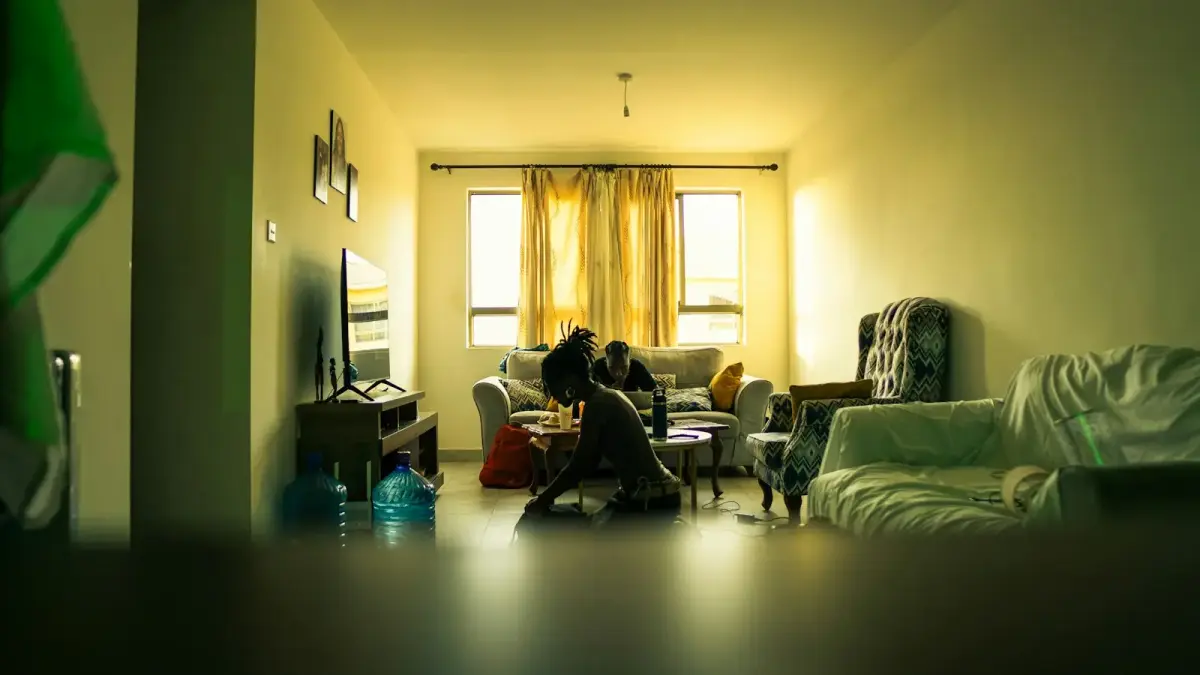
I remember the first real argument I had with my partner. Not a disagreement - an actual argument, with raised voices and messy emotions spilling across the kitchen table.
I lasted about forty-five seconds before my body shut down.
My hands went cold. My thoughts scattered. I felt this overwhelming need to leave the room, to disappear into some quiet corner where the air didn’t feel so heavy. And the strangest part? He wasn’t even yelling. He was just being honest. But something in my nervous system had decided that any friction at all was an emergency.
It took me years of studying developmental psychology - and honestly, years of living inside my own patterns - to understand where that reaction came from. It came from a home where nobody fought. Where the dishes were always done and the doors never slammed. Where everything looked fine from the outside.
But if you grew up in a house like mine, you already know. The silence wasn’t peace. It was a language. And you learned to read it before you could read books.
People who grew up in homes where conflict was silent often become adults who struggle to trust what peace actually feels like
This is the paradox that researchers keep circling back to. Children raised in overtly hostile homes often develop visible markers - anxiety, aggression, hypervigilance around loud conflict. But children raised in homes where conflict was present but unspoken develop something harder to name.
They develop a deep distrust of calm.
1. You learned to scan rooms before you entered them
Before you walked through any door in your childhood home, you were already reading the room. Was the television on? Were your parents in the same space or had one retreated to the bedroom? Was the air tight or loose?
A 2019 study published in the Journal of Family Psychology found that children in homes with high levels of “demand-withdraw” conflict patterns - where one parent pursued resolution and the other shut down - showed elevated cortisol responses even during neutral interactions. Their bodies stayed on alert even when nothing was happening.
You didn’t learn this skill. It was installed in you. And as an adult, you probably still walk into dinner parties and know within seconds who’s fighting, who’s pretending, and who just had a conversation in the car that isn’t over yet.
2. You confuse silence with rejection
In homes where conflict was expressed through withdrawal - the cold shoulder, the clipped tone, the parent who suddenly became very interested in folding laundry - silence became the sound of something going wrong.
So now, when your partner gets quiet, your brain doesn’t think “they’re tired” or “they’re processing.” Your brain thinks “they’re leaving.”
Not physically. Emotionally. Which, to a child who depended on emotional connection for survival, felt like the same thing.
3. You either avoid conflict completely or you overcorrect
This is where the research gets interesting. Developmental psychologist John Gottman’s work on conflict styles found that people who grew up watching avoidant conflict don’t all become avoiders themselves. Some do - they’ll swallow every frustration until the relationship erodes from the inside. But others swing in the opposite direction.
They become the person who has to talk about everything, right now, immediately. Because the thing they feared most as a child was the not-knowing. The silent gap where the truth should have been.
Both responses come from the same wound. One says “I’ll never let conflict happen.” The other says “I’ll never let conflict go unspoken.” Neither one learned what healthy disagreement actually looks like, because they never saw it.
4. You apologize for having needs
When conflict in your home was punished with withdrawal, you learned an equation early: expressing a need equals causing a problem.
So you became the person who says “it’s fine” when it isn’t. Who apologizes before making a request. Who frames every boundary as a question instead of a statement - “Would it maybe be okay if I…” instead of “I need this.”
A 2021 study in Frontiers in Psychology found that adults who reported growing up in emotionally avoidant households were significantly more likely to suppress their own needs in romantic relationships, even when they could clearly articulate what those needs were. They knew what they wanted. They just didn’t believe they were allowed to ask.
5. You’re hyperaware of tone but undertrained in words
Here’s something I’ve noticed in my research and in my own life. People who grew up reading silent conflict are extraordinarily perceptive. They catch micro-expressions, shifts in vocal tone, the slight pause before someone says “I’m fine.”
But when it comes to putting their own emotions into language? They struggle.
This makes sense. In a home where feelings were performed through behavior rather than discussed through conversation, you never got a vocabulary for what was happening inside you. You can feel everything. You just can’t always name it.
Daniel Goleman’s work on emotional intelligence points to this gap - the difference between emotional perception and emotional articulation. You might have the first in abundance. The second requires practice you were never given.
6. You mistake intensity for intimacy
When you’ve never seen two people disagree and then repair - when conflict only ever led to distance - you don’t trust that love can survive friction.
So sometimes you gravitate toward relationships where the passion is high and the arguments feel like proof that someone cares enough to fight. Because at least that’s legible. At least you know where you stand.
The quiet, stable partner who handles disagreements calmly might actually make you nervous. Not because they’re doing anything wrong. But because the calm feels like the thing that came before the cold.
7. You carry guilt for conflicts that were never yours
Children in silently conflicted homes often become the emotional thermostat. They learn to regulate the household temperature - being funny when things get tense, being perfect when things feel fragile, disappearing when the air gets too thick.
And they carry that role into adulthood. If your friend group has tension, you’re the one trying to smooth it over. If your partner is upset about something that has nothing to do with you, you still feel responsible for fixing it.
A 2020 study in Psychological Science examined what researchers call “parentification” - when children take on emotional caretaking roles - and found lasting effects on adult relationship satisfaction. The pattern doesn’t stop just because you leave the house. You bring the thermostat with you.
8. You have a complicated relationship with the word “fine”
“Fine” was the most common word in your childhood home. Everything was fine. Your parents were fine. Dinner was fine. The weekend was fine.
You knew it was a lie every single time.
So now you have two reactions to “fine.” Either you use it the same way your parents did - as a wall, a closed door disguised as a word - or you flinch when someone says it to you, because your body remembers what “fine” really meant.
It meant: don’t ask again.
9. You crave honesty but find it terrifying
This might be the most painful part. You desperately want the thing you never had - a relationship where people say what they mean, where disagreements happen in the open, where nobody disappears into silence when things get hard.
But when someone actually offers that? When your partner says “I’m upset about something and I want to talk about it”? Your first instinct isn’t relief. It’s dread.
Because your nervous system doesn’t have a file for “conflict that leads to connection.” It only has a file for “conflict that leads to distance.” And rewriting that file takes time, patience, and a willingness to feel unsafe while you learn that you actually are safe.
10. You’re already doing the hardest part
If you recognized yourself in any of this - if you felt that quiet ache of being seen in a pattern you’ve carried for decades - then you’re already further along than you think.
The homes that taught us silent conflict also taught us something else: how to pay attention. How to notice what others miss. How to sit with discomfort without demanding it be resolved in the next five minutes.
Those aren’t just trauma responses. They’re also skills. The question is whether you can learn to use them in service of connection instead of self-protection.
The quiet rooms we carry
I still catch myself sometimes. A pause in conversation that lasts a beat too long, and my body tenses. My partner’s phone face-down on the table, and I scan for meaning that probably isn’t there.
But I’ve learned something that my childhood home never taught me. Conflict isn’t the opposite of love. It’s one of love’s most honest expressions. Two people saying “this matters to me enough to be uncomfortable about it” - that’s not a threat. That’s an offering.
You didn’t get to see that as a child. The arguments that needed to happen were swallowed, and what you got instead was a silence that felt like abandonment wearing a mask of composure.
But you’re not in that house anymore. And the person sitting across from you - the one who wants to talk about the hard thing - they’re not withdrawing. They’re reaching.
You learned to read silence before you could read words. That means you’re already paying closer attention than most people ever will. Now you get to decide what to do with all that attention.
Not perfectly. Not overnight. But with the kind of patience you’ve been practicing your whole life - even if you didn’t know that’s what it was.