There are people who taught themselves to swim - who stood at the edge of a pool or a lake for an entire summer watching other children jump in without thinking, who practiced holding their breath in the bathtub, who figured out floating and kicking and breathing alone because no one signed them up for lessons and they could not bring themselves to admit they did not know how - and the confidence that built is different from any other kind, because a skill nobody gave you is the only one the world can never take back
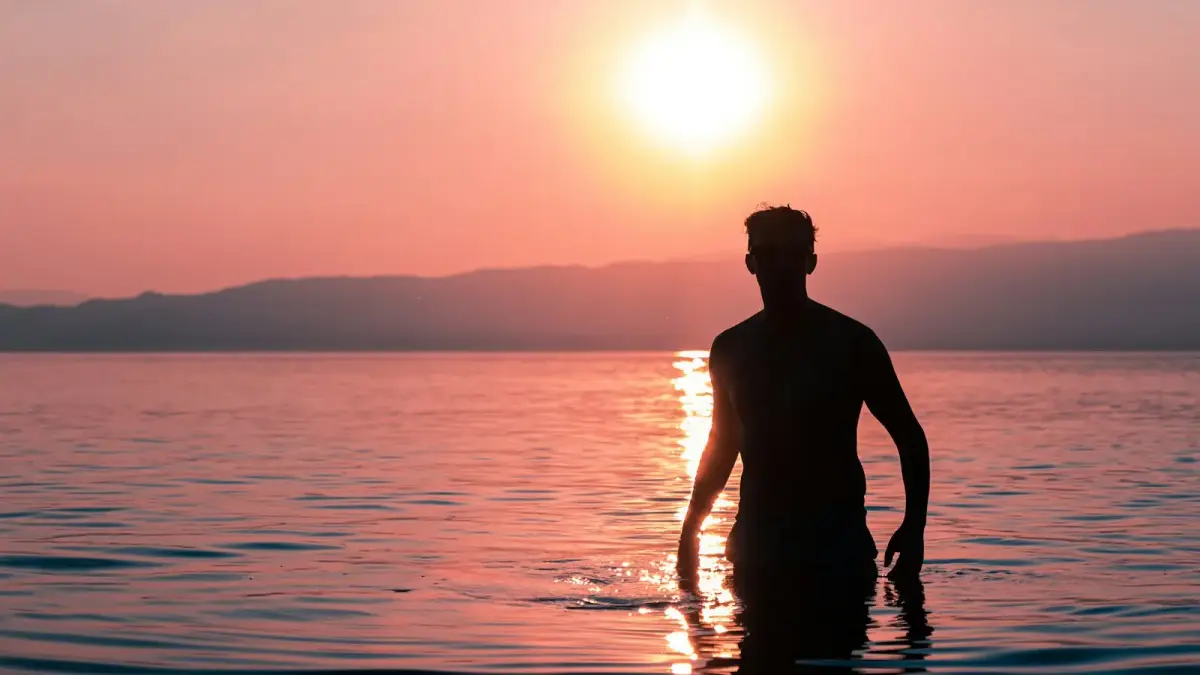
I was eleven the summer I taught myself to swim.
Not in a class. Not with an instructor holding a foam board in front of me, telling me to kick. Not with a parent standing waist-deep, arms open, saying they would catch me.
I learned in a lake behind my cousin’s house, alone, over the course of six weeks, by watching other kids do it and then going back to the shallow end to try it myself when nobody was paying attention.
I remember the bathwater practice. Lying face down in four inches of water in the tub, holding my breath, counting to ten. Then fifteen. Then twenty. I remember the specific terror of letting my feet leave the bottom for the first time - not the deep end, just chest-high water, just enough that I had to trust something other than the ground. I remember the afternoon it clicked. The moment my body understood that the water would hold me if I stopped fighting it.
Nobody clapped. Nobody even noticed. I just walked home with wet hair and a feeling I could not name yet but have carried every day since.
The edge of the pool is its own classroom
There is a particular kind of child who stands at the edge while everyone else jumps in.
Not the child who is afraid of water. Not the child who does not want to swim. The child who wants it desperately but cannot figure out how to begin, because beginning means admitting you do not know how, and admitting you do not know how means someone might see you fail at something that looks like it should be easy.
This child watches. Studies. Catalogs every movement. They notice that the kids who swim well keep their fingers together. They notice the timing between the arm pull and the breath. They build an internal manual from observation alone, the way someone might learn a language by sitting in a restaurant and listening for months before ordering.
And then one day, when the crowd thins out or the sun drops low enough that the pool is empty, they get in. Quietly. Without announcement.
The learning happens in private because the stakes feel too high for an audience.
Nobody signs you up for lessons when lessons are not in the budget
Here is something people rarely say out loud: swimming lessons cost money.
They cost money and they cost a parent who has the time to drive you there and the awareness to know you need them. They cost belonging to a family where childhood enrichment is something that gets planned, scheduled, and prioritized. For millions of kids, none of those conditions were met.
A 2019 study published in the journal Pediatrics found that children from lower-income households were significantly less likely to have received formal swimming instruction and significantly more likely to report an inability to swim. The gap was not about desire. It was about access.
So you taught yourself. Not because you were brave - you did not feel brave at all. You taught yourself because the alternative was watching everyone else do something you could not do for the rest of your childhood. And even at ten or eleven years old, some part of you understood that waiting for someone to come teach you was a bet that might never pay off.
This is where the self-reliance starts. Not from inspiration. From necessity.
The bathtub curriculum
I think about the ingenuity of a child who practices swimming in a bathtub.
Four inches of water and a body too big for the space, but they are in there anyway, face down, blowing bubbles, counting seconds. Working on the breath hold because the breath hold is the part that scares them most, and they know - instinctively, without anyone telling them - that you have to separate the skills and master them one at a time.
That is not just learning. That is pedagogy. A child who breaks a complex physical skill into component parts and practices each one in isolation has essentially designed their own curriculum. They are student and teacher simultaneously, and neither role came with instructions.
Psychologist Albert Bandura’s research on self-efficacy - published extensively through the Journal of Personality and Social Psychology - showed that mastery experiences are the single most powerful source of confidence. Not praise. Not encouragement. Not being told you can do it. Actually doing it. And the effect is strongest when the mastery is hard-won, when the person had to push through doubt and discomfort to get there.
The child in the bathtub is building something that no amount of external validation will ever replicate. They are learning that they can teach themselves. And that lesson will outlast every swimming stroke they ever master.
Taught confidence versus earned confidence
There are two kinds of confidence, and they sit differently in the body.
Taught confidence comes from someone believing in you enough to invest. A coach. A mentor. A parent who signed you up, drove you there, sat in the bleachers. This confidence says: someone saw potential in me and helped me reach it. It is real and valuable and I do not want to diminish it.
But earned confidence - the kind that comes from figuring it out alone - says something different. It says: even when no one came, I found a way. Even when the system did not include me, I included myself. Even when the instruction was not available, I became my own instructor.
The person who carries earned confidence does not wait for the training. They read the manual first. They watch the tutorial. They try it in private before they try it in public. They trust their own process because their own process is the only one that has never let them down.
This is not stubbornness, although it can look like it. It is a deep, cellular memory of having been left to figure something out and having actually figured it out. That memory becomes a template. Every new challenge gets filtered through it: I have been here before. I did not know how, and then I did.
The fear that stays
But here is the part no one talks about.
The person who taught themselves to swim still carries the fear. Not of water - they conquered that. The fear of being seen not knowing. The fear of being a beginner in front of other people. The fear that asking for help will reveal a gap that should have been filled a long time ago.
A 2021 study in Frontiers in Psychology found that individuals who developed competencies through self-directed learning often showed higher task persistence but also reported greater anxiety around skill gaps in new domains. The researchers described it as a paradox: the same independence that made them resourceful also made them reluctant to seek support, because their identity was built on not needing it.
I know this pattern in myself. I will spend three hours trying to fix something before I call someone who could explain it in ten minutes. Not because I think I am smarter. Because some part of me still believes that needing help means I have failed at the only thing I was ever reliably good at - figuring it out alone.
The self-taught swimmer becomes the self-taught everything. And that is both a gift and a weight.
The deep end, with nobody watching
I think the reason this memory stays so vivid - the lake, the bathtub, the slow accumulation of courage measured in inches of depth - is that it was the first time I proved something to myself without needing anyone else to witness it.
No grade. No certificate. No parent in the bleachers. Just me and the water and the quiet, private knowledge that yesterday I could not do this and today I can.
That kind of knowledge changes your relationship with yourself. Psychologist Carol Dweck’s work on mindset - detailed across decades of research through Stanford’s psychology department - suggests that the framing of ability matters enormously. People who believe competence is built rather than given approach challenges differently. They persist longer. They recover faster from failure. They view difficulty as information rather than indictment.
But I think the self-taught swimmer knows something even beyond growth mindset. They know that the system will not always come for you. That lessons will not always be offered. That sometimes the pool is right there and nobody is going to push you in or hold you up, and the only question is whether you will get in the water anyway.
And they did. At eleven. In a lake. With nobody watching.
A skill nobody gave you
If you taught yourself to swim - or to ride a bike by watching the neighbor kid, or to cook by standing next to the stove and experimenting, or to read music by matching the dots on the page to the sounds on the radio - I want you to know something.
That was not a gap in your childhood. That was a forge.
The confidence you carry is not louder than other people’s confidence. It is quieter. It sits deeper. It does not need applause because it was never built on applause. It was built on bathwater and shallow ends and the specific, stubborn refusal to accept that not being taught meant not being able to learn.
You are the person who reads the manual. Who watches the tutorial twice. Who tries it alone first, not because you do not value other people, but because you learned early that your own hands are the ones that will always show up.
That is not a flaw. That is the deepest kind of self-trust there is.
And the next time you catch yourself refusing to ask for help - staying late, reading one more article, trying one more approach before admitting you are stuck - be gentle with yourself. You are not being difficult. You are being the kid at the edge of the lake, the one who watched and waited and then, when nobody was looking, got in the water and figured it out alone.
That kid did something remarkable. And they are still doing it. Every single day.