Psychology says people who always ask 'are you mad at me' after the smallest disagreement - who cannot let two hours of silence pass without checking, who interpret a partner's tiredness as withdrawal and a partner's distraction as punishment - are not insecure and are not needy, they are people who grew up in homes where silence was never just silence but the sound a house makes right before something breaks, and the question at forty-seven is not paranoia but a child's early warning system still listening for the crack
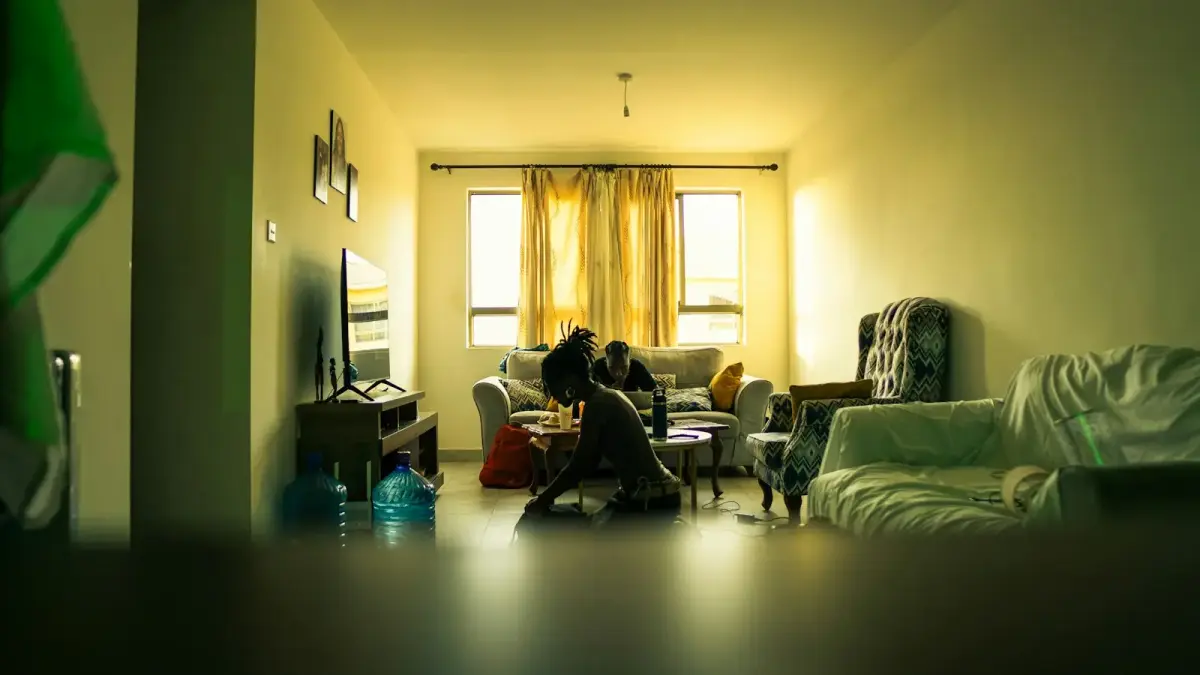
I ruined a Tuesday once because my husband sighed while loading the dishwasher.
It wasn’t a dramatic sigh. It wasn’t aimed at me. He was tired. His back hurt. He’d been on his feet for nine hours. But the sound landed in my chest like a verdict, and within forty-five seconds I was standing in the kitchen doorway asking the question I have asked more times than I can count.
“Are you mad at me?”
He looked confused, which is the expression he wears most often when I ask this. Not annoyed. Not frustrated. Just genuinely unsure how a sigh became a referendum on our marriage.
I am forty-nine years old. I have a graduate degree in psychology. I have read more attachment theory than most therapists assign in a semester. And I still cannot let a quiet room stay quiet without scanning it for threat. I still read a closed door as a locked one. I still interpret “I’m fine” as the opening line of something terrible.
For most of my adult life, I called this insecurity. My friends called it neediness. One ex-boyfriend called it exhausting. But none of those words ever fit, because none of them explained why the feeling arrives before I even have time to think - why it lives in my body before it reaches my brain.
It took me a long time to understand that it was never about the relationship I was in. It was about the house I grew up in.
The Silence Before the Storm Isn’t Something You Forget
There is a particular kind of quiet that children in volatile homes learn to recognize. It is not peaceful. It is not restful. It is loaded.
It is the sound of a parent sitting in the living room with a drink they are holding too tightly. The sound of a door closing with precisely the right amount of force to communicate fury without technically slamming. The sound of dinner being made without conversation, every plate set down just a fraction harder than necessary.
In homes like these, silence is not the absence of conflict. Silence is the runway conflict uses to gather speed.
A 2017 study published in the journal Development and Psychopathology found that children raised in unpredictable home environments develop heightened sensitivity to emotional cues - particularly ambiguous ones. Their brains learn to treat neutrality as a potential threat because, in their experience, neutrality was never actually neutral. It was the mask anger wore before it took the mask off.
This is not a flaw in perception. This is an adaptation. The child who could read the room accurately - who could detect the difference between tired silence and dangerous silence - was the child who could prepare. Who could make themselves smaller. Who could intervene, soothe, distract, or disappear before things escalated.
That skill kept them safe. The problem is that it never learned to retire.
Your Nervous System Kept the Old Job Description
Here is what nobody tells you about growing up in an emotionally unpredictable home. You do not just carry memories of it. You carry the surveillance system you built to survive it.
Your nervous system learned its job in childhood, and it was very good at that job. It monitored facial expressions for micro-shifts. It tracked vocal tone the way air traffic control tracks altitude. It cataloged the difference between a parent’s “fine” that meant fine and a parent’s “fine” that meant you had about twenty minutes before the kitchen became a courtroom.
And your nervous system, unlike the rest of you, never graduated. Never moved out. Never started a new life with someone safe.
Dr. Stephen Porges, who developed polyvagal theory, describes this as neuroception - the body’s unconscious scanning for safety and danger. In people who grew up in chaotic environments, neuroception stays calibrated to the old threat level. The system doesn’t update just because the environment does.
So you are forty-seven, in a stable marriage, with a partner who has never once punished you with silence. And your body is still running the software it installed at age eight, still scanning for the sound a house makes right before someone’s voice changes.
That is not neediness. That is a smoke detector in a building that burned down thirty years ago, still wired to the same alarm.
The Question Is Not What It Sounds Like
When you ask “are you mad at me,” you are not actually asking about anger. You are asking something much older and much more desperate.
You are asking: Is this safe right now? Am I about to lose something? Do I need to prepare?
The words come out as a relationship question, but the feeling underneath them is a survival question. And the urgency you feel - that pressing, almost physical need to check, to know, to resolve the ambiguity immediately - is not about your partner. It is about the child inside you who learned that ambiguity is where danger hides.
I have talked to dozens of people who do this, and the pattern is remarkably consistent. They do not ask the question when things are clearly good. They do not ask when things are clearly bad. They ask in the in-between. In the gray space. In the pause.
Because the pause was always where the worst things lived.
A 2020 study in the Journal of Personality and Social Psychology found that individuals with anxious attachment styles do not actually misread emotions more often than securely attached people. They read ambiguous emotions as more threatening. The signal detection is working perfectly. It is the threat threshold that was set too low, calibrated in a kitchen where you learned that a quiet father at dinner might mean nothing or might mean everything.
What Your Partner Sees Versus What You Feel
This is the part that creates the most pain, I think. The disconnect between what is happening and what it feels like.
Your partner sees someone who cannot let a small disagreement go. Who needs constant reassurance. Who turns a mildly quiet evening into an emotional check-in. And from the outside, it does look like insecurity. It looks like a lack of trust. It can even look, on a bad day, like control.
But from the inside, you are not trying to control anything. You are trying to survive something that is not actually happening. Your body has sounded an alarm, and you are responding to the alarm, not to the room you are actually standing in.
This is what makes it so hard to explain. You know, intellectually, that your partner is just tired. You know they are not building a case against you in their head. You know that two hours of quiet does not mean two hours of resentment.
But knowing and feeling are two different countries, and your nervous system does not have a passport to the one where knowing lives.
The guilt compounds it. You feel the anxiety. Then you feel guilty about the anxiety. Then you feel anxious about the guilt. And somewhere in that spiral, you ask the question - “are you mad at me?” - not because you believe the answer will be yes, but because the not-knowing is a sensation your body physically cannot tolerate.
You Were Never the Problem in the Room
I want to say something clearly, because I think you need to hear it.
The fact that you still ask this question does not mean you are broken. It does not mean you are too much. It does not mean you lack some fundamental capacity for trust that other people were simply born with.
It means you were a child who paid very close attention. Who had to. Who survived specifically because you could read a room before the room declared itself.
Brene Brown talks about how the most empathetic people are often the ones who grew up needing to be. Empathy, in those homes, was not a soft skill. It was armor. You learned to feel what other people were feeling before they said it because the gap between their feeling and their saying was where the danger lived.
That vigilance cost you something. It cost you the ability to rest inside a quiet moment without scanning it for edges. It cost you the luxury of assuming that silence is just silence.
But it also gave you something. A depth of emotional perception that most people never develop. An ability to notice what is unspoken. A tenderness toward other people’s inner weather that comes from years of tracking storms.
The work now is not to kill that sensitivity. It is to update it. To let your nervous system learn - slowly, gently, through repeated experience - that this home is not that home. That this quiet is not that quiet.
The Repair Happens in the Pause Itself
A 2019 study in Frontiers in Psychology found that adults who grew up in unpredictable environments can gradually recalibrate their threat responses through consistent, safe relationships - but only if they allow themselves to stay in the ambiguity long enough for the new data to register.
This is the hard part. The healing does not happen when your partner reassures you. It happens in the seconds before you ask, when you let the quiet be quiet and nothing breaks.
It happens when you notice the alarm going off and choose to wait. Not because you are suppressing the feeling, but because you are giving your body a chance to update its records. To register that this particular silence was not followed by a slamming door. That this particular tiredness was just tiredness. That the house held.
You will not get this right every time. Some Tuesdays you will still ask the question before you can stop yourself, standing in a kitchen doorway with your heart in your throat. That is okay. The question is not a failure. It is a reflex, and reflexes soften slowly.
What matters is that you know where the question comes from now. Not from weakness. Not from neediness. From a child who was taught that love could turn without warning, and who built an entire warning system to survive it.
That child did an extraordinary thing. They kept you safe in a home that was not always safe. They deserve your compassion, not your criticism.
And the person you are now - the one who still checks, still scans, still listens for the crack in the foundation - that person is not too much. That person is someone who loved hard enough to pay attention, even when paying attention hurt.
The quiet in your house tonight is just quiet. You are allowed to rest inside it.