Psychology says people who always fall asleep last - who lie awake listening to the house settle, who cannot close their eyes until every person they love is accounted for and breathing safely in the dark - are not insomniacs, they are running the night watch a child built in a house where the worst things happened after everyone else was asleep, and the woman staring at the ceiling at fifty-one is not restless but standing guard over a perimeter that stopped needing protection decades ago
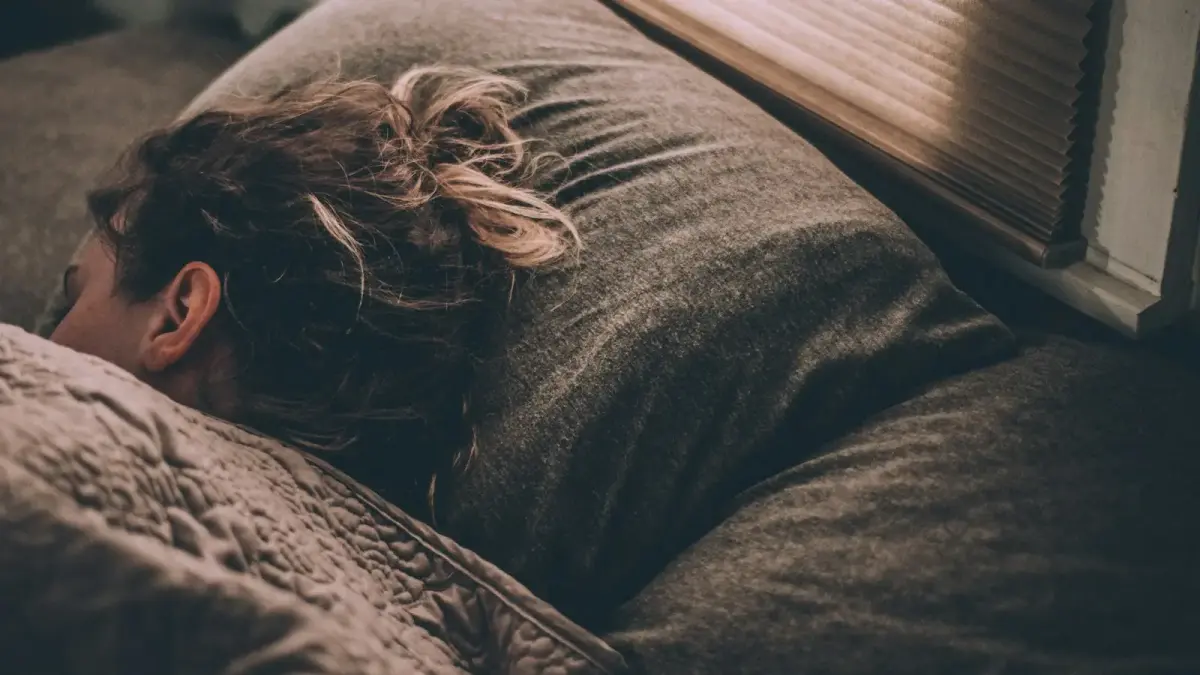
I used to think I was just bad at sleeping.
That was the story I told myself for years - that I was wired wrong somehow, that my brain simply refused to power down. I tried the melatonin. I tried the lavender spray, the weighted blanket, the white noise machine that was supposed to mimic ocean waves but sounded more like static from a broken television. None of it worked because none of it was addressing the actual problem.
The actual problem was that I wasn’t trying to fall asleep. I was trying to confirm that the house was safe.
I would lie there in the dark, completely still, tracking the rhythm of my husband’s breathing. Listening for the click of the furnace, the settling of the foundation, the particular silence that meant the children were genuinely asleep and not just pretending. I could not release myself into unconsciousness until every single person I loved was accounted for and the house had gone fully, verifiably quiet.
I thought this was anxiety. I thought this was insomnia. It took me a very long time to understand that it was neither. It was a job - one I’d been assigned at age seven and never been relieved of.
The night watch nobody asked for
There is a particular kind of wakefulness that has nothing to do with caffeine or screen time or a racing mind. It is the wakefulness of a body that learned, very early, that nighttime was when things went wrong.
Maybe it was parents who fought after the kids went to bed, voices rising through the floor in sharp, unpredictable bursts. Maybe it was a father who drank and became someone else after ten o’clock. Maybe it was a mother who cried in the kitchen at midnight when she thought no one could hear. Maybe it was something worse - a door opening that should have stayed closed, footsteps in a hallway that meant danger was approaching.
Whatever the specifics, the lesson was the same: sleep is when you are most vulnerable, and vulnerability is not safe here.
So the child did what children do. She adapted. She built a system. She became the last one awake - not by choice, but by necessity - because someone had to listen. Someone had to monitor. Someone had to stand between the sleeping house and whatever might happen next.
A 2017 study published in the journal Psychological Trauma: Theory, Research, Practice, and Policy found that adults who experienced unpredictable home environments in childhood showed significantly elevated nighttime arousal responses, even decades after the original threat had passed. Their nervous systems had essentially learned to treat darkness as a cue for danger rather than rest.
The researchers called it conditioned hypervigilance. I call it the night watch.
The body remembers what the mind has filed away
Here is what makes this pattern so difficult to recognize: it does not feel like fear. It does not feel like trauma. It feels like responsibility.
The woman lying awake at 1 AM listening to her family breathe does not think she is afraid. She thinks she is being thorough. She thinks she is being careful. She is running a perimeter check on a house that has been safe for thirty years, and she cannot explain why she needs to do it, only that she cannot stop.
This is one of the hallmarks of what Bessel van der Kolk describes in his research on how trauma lives in the body. The conscious mind moves on. It rationalizes. It tells a story about being a light sleeper, about needing less rest than other people, about always having been this way. But the body holds the original instruction: stay awake, stay alert, stay ready.
And the body does not care that you are fifty-one now and the house is quiet and your children are safe and the doors are locked. The body is still seven years old, lying rigid in a twin bed, ears straining for the sound that precedes the bad thing.
A 2021 study in Frontiers in Psychology examined sleep architecture in adults with adverse childhood experiences and found that these individuals showed reduced deep sleep and increased periods of light sleep throughout the night - their brains were cycling back to near-wakefulness at regular intervals, scanning for threats that no longer existed.
They were sleeping, technically. But they were never off duty.
Why it looks like love (because it is)
Here is the part that undoes me every time I think about it.
The night watch did not start as fear. It started as love.
The child who stayed awake was not just protecting herself. She was protecting everyone. She was the early warning system for a household that could not protect itself. She was listening for the car in the driveway, the raised voice, the breaking glass - not so she could hide, but so she could intervene. So she could comfort a younger sibling. So she could be the calm one when everything else fell apart.
And this is exactly what she is still doing at fifty-one. She is lying awake in a safe house, in a safe marriage, in a safe life, running the same watch - not because the danger is real, but because the love is. The protective instinct that was forged in chaos did not disappear when the chaos ended. It just kept looking for something to protect.
Her partner says, “You worry too much.” Her doctor says, “Have you tried melatonin?” Her friends say, “You just need to relax.”
Nobody says, “You are standing guard over the people you love because a very young version of you decided that was her job, and she has never once been told she can put it down.”
The perimeter that outlived the threat
There is a concept in psychology called extinction resistance - the tendency of a learned response to persist long after the original stimulus has been removed. It is notoriously strong in responses learned during childhood, under conditions of unpredictability, when the stakes felt life-or-death.
The night watch is extinction-resistant in the purest sense. It was learned when the brain was still forming. It was reinforced by genuine danger. And it was never formally addressed because the child who learned it grew into an adult who reframed it as a personality trait rather than a survival strategy.
“I’m just a night owl.”
“I can’t sleep unless the house is quiet.”
“I’ve always been this way.”
These are not descriptions of preference. They are descriptions of a security protocol so deeply embedded that the person running it no longer recognizes it as one.
Dr. Stephen Porges’ polyvagal theory offers a framework for understanding why. The autonomic nervous system, Porges suggests, operates on a hierarchy of safety responses. When a child’s nervous system learns that nighttime is unsafe, it can get locked into a state of sympathetic activation during evening hours - heart rate slightly elevated, senses slightly sharpened, the body hovering just above the threshold of rest.
The woman at fifty-one does not feel her heart rate elevate. She does not notice her senses sharpening. She just notices that she cannot fall asleep until the house settles. She notices that she wakes at every creak, every shift, every sound that deviates from the baseline her nervous system has cataloged as “normal.”
She is running a perimeter check on a perimeter that stopped needing protection decades ago. And she is exhausted - not from lack of sleep, but from a job she was never meant to have.
Putting down the watch
I want to be careful here, because I am not suggesting that recognizing this pattern makes it vanish. It does not. A nervous system that spent forty years on night duty does not stand down because someone explained the neuroscience.
But something shifts when you stop calling it insomnia and start calling it what it is.
When you understand that the wakefulness is not a flaw but a function - that it was a brilliant adaptation by a child who needed to survive - the shame dissolves. You are not broken. You are not high-strung. You are not bad at sleeping. You are running an outdated program that was, at one time, the most important thing you did.
The work, if you choose to do it, is not about forcing yourself to sleep. It is about slowly, gently communicating to your nervous system that the watch has ended. That the house is safe. That the people in it are okay. That the child who built this system did an extraordinary thing, and she is allowed to rest now.
A 2019 study in Journal of Clinical Psychology found that adults who were able to identify the childhood origins of their hypervigilant sleep patterns and reframe them as adaptive rather than pathological showed significant improvements in sleep quality within twelve weeks - not because the pattern disappeared, but because the relationship to the pattern changed.
They stopped fighting themselves. They started thanking the child who had kept them alive.
What I want you to hear
If you are the person who always falls asleep last - the one who lies in the dark listening, monitoring, unable to surrender until the house confirms that everyone is safe - I want you to know something.
You are not anxious. You are not difficult. You are not wired wrong.
You are the person who kept watch. You are the child who decided, in a house where the nights were unpredictable, that someone needed to stay awake - and you volunteered yourself because there was nobody else.
That was not a disorder. That was an act of profound, quiet, unrecognized courage.
And you have been doing it ever since. Every night. In every house you have ever lived in. Through every relationship, every stage of life, every version of yourself.
The ceiling you are staring at tonight is not the ceiling you stared at as a child. The house is different. The people are different. The danger is gone.
But the love that started the watch - that has never changed.
You are allowed to close your eyes now. The house is safe. Everyone is breathing. You did your job, and you did it beautifully, and you have been doing it for so long that you forgot it was ever supposed to end.
It can end now, if you let it.
Not all at once. Not perfectly. But slowly, night by night, breath by breath - you can begin to let the watch go.
You kept everyone safe. Now let someone keep you safe, too. Even if that someone is just the quiet dark, holding you the way you have been holding everyone else.