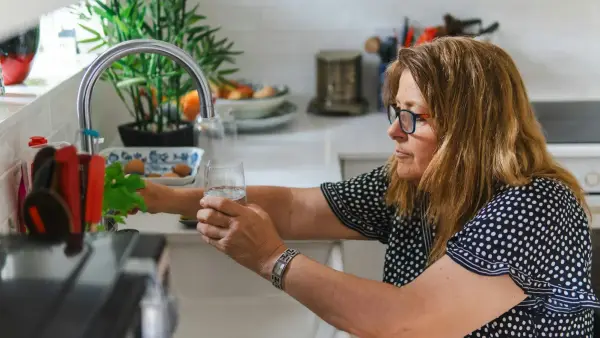
Psychology says people who always say 'sorry to bother you' before asking a question - who preface every email with an apology, who cannot request help without first acknowledging that their existence in this moment is an inconvenience - are not excessively polite but running an appeasement script written by a child who learned that needing anything from the adults in the room meant becoming a burden, and the woman at fifty who whispers sorry before asking a waiter for more water has not lost her confidence but is still negotiating with a version of her parents who told her that wanting was the same as being too much
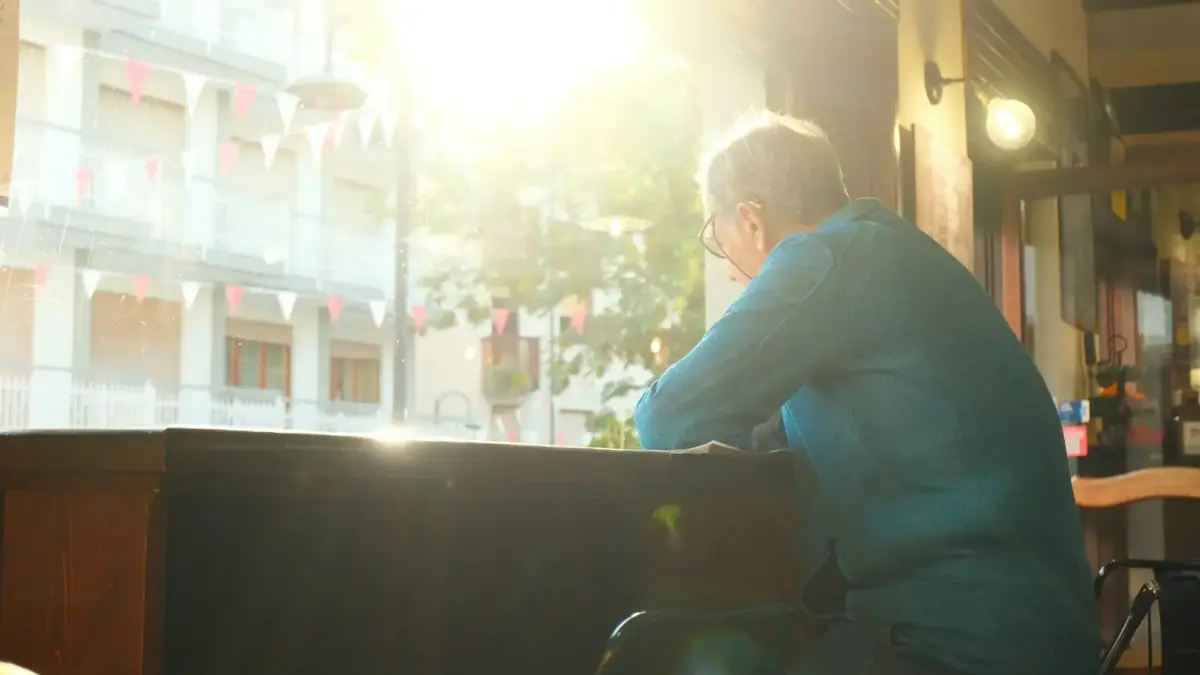
I caught myself doing it again last Tuesday. Standing at the counter of a coffee shop I’ve been going to for three years, ordering the same drink I always order from the same barista who already knows my name, and the words came out before the order did.
“Sorry - could I just get a medium latte?”
Just. Could I just. As if the latte were an imposition. As if the woman whose entire job is making lattes needed to be warned that I was about to ask her to make one.
I stood there holding my card and thought: I just apologized to a person for giving her business. And I do this everywhere. Every email begins with “sorry to bother you.” Every request at a restaurant starts with “I’m sorry, but could we possibly.” Every question in a meeting is preceded by “this might be a stupid question, but” - which is not a question about the question but a preemptive offer to be dismissed.
I am fifty-three years old. I have a doctorate. I have published in journals that rejected better researchers than me. And I cannot ask a stranger for a glass of water without first apologizing for being thirsty.
The script nobody remembers writing
The thing about chronic apologizing is that it doesn’t feel like a problem. It feels like manners. It feels like consideration. The people around you might even praise it - you’re so polite, so thoughtful, so careful about other people’s time.
But politeness has a rhythm to it. It shows up when the situation calls for it and retreats when it doesn’t. What I’m describing is different. What I’m describing is a reflex that fires before every request regardless of context - before asking your own husband to pass the salt, before telling a customer service representative the reason you called, before raising your hand in a room full of people who are being paid to listen to you.
A 2019 study published in the Journal of Personality and Social Psychology found that people who engage in chronic preemptive apologizing - saying sorry before making a request rather than after a mistake - consistently score higher on measures of childhood emotional invalidation. The researchers called it “relational appeasement behavior.” The participants called it being considerate.
The difference matters. Politeness is a social choice. Appeasement is a survival strategy wearing the clothes of a social choice.
The kitchen table where wanting was too much
I can trace mine to a specific chair at a specific table in a house that doesn’t exist anymore.
My mother was not cruel. She was overwhelmed. Four children, a husband who worked nights, a house that needed things we couldn’t afford. And when I asked for something - a new notebook for school, permission to go to a friend’s house, a second helping of anything - her face did something that wasn’t anger but was adjacent to it. A tightening around the eyes. A very small exhale through the nose.
She would say yes. She almost always said yes. But the face came first, and the face taught me something that the yes could never undo: that my asking had cost her something. That every need I expressed landed on a woman who was already carrying too much, and I had just added weight.
So I learned to make myself lighter. I learned to preface every want with a disclaimer. “Only if it’s not too much trouble.” “I don’t really need it, but.” “Sorry to ask, but.”
The sorry was not an apology for a specific thing. The sorry was an apology for existing in a state of need.
The email that takes forty-five minutes
If you recognize yourself in this, you probably also recognize the email problem.
You need to ask a colleague for something simple - a file, a deadline extension, a five-minute conversation. And the email takes forty-five minutes to write. Not because the request is complicated but because you’re engineering the sentences so that the person on the other end will not feel imposed upon, inconvenienced, or asked to do something they don’t want to do.
You write “I was wondering if maybe you might have a chance to” instead of “could you send me.” You add “no worries if not” to a request that is entirely reasonable. You soften the ask so thoroughly that the recipient sometimes doesn’t realize you were asking at all.
Harriet Lerner, the psychologist who spent decades studying patterns of over-apologizing, wrote that the chronic sorry is almost never about the present moment. It is a time-traveling word. It reaches back to the first environment where your needs were treated as a problem and tries to solve that environment in every room you enter for the rest of your life.
The woman who says “sorry to bother you” before asking her doctor a question in a fifteen-minute appointment she is paying for is not in that doctor’s office. She is in a kitchen, watching a tired face tighten, learning that the safest version of herself is the one that needs nothing.
The invisible tax
What nobody tells you about this pattern is that it is expensive. Not in any way you can measure, but in the slow accumulation of things you didn’t ask for, conversations you didn’t start, promotions you didn’t pursue, help you didn’t accept.
A 2021 study in Psychological Science found that adults who reported high levels of childhood emotional minimization - environments where their feelings or needs were consistently treated as excessive - were significantly less likely to negotiate salaries, request accommodations, or seek medical attention for symptoms they described as “probably nothing.” The researchers noted that these participants did not lack confidence in the traditional sense. They lacked what the study called “request permission” - the internal authorization to ask for something without first paying an emotional toll.
That phrase stopped me when I read it. Request permission. Because that is exactly what the sorry is doing. It is asking for permission to ask.
And the brutal part is that most of the time, the permission is granted. The waiter brings the water. The colleague sends the file. The doctor answers the question. Nobody was bothered. Nobody was imposed upon. The apology was unnecessary in every external sense.
But internally, the math still ran. The child still calculated the cost. The sorry still paid a debt that was never actually owed.
What it costs to be low-maintenance
People who run this script are often described as low-maintenance. Easy to work with. Undemanding. And that word - undemanding - is supposed to be a compliment. But what it actually describes is a person who has organized their entire relational life around the principle that their needs should take up as little space as possible.
The low-maintenance person does not call when they’re struggling. They do not ask for help until the situation is critical. They do not tell you they’re overwhelmed until they’re already past the point where your help would have mattered.
They are not easy to work with. They are easy to overlook.
I say this as someone who spent thirty years being proud of how little I asked for. Who wore self-sufficiency like a badge. Who told herself that not needing anyone was the same as being strong.
It was not strength. It was the girl at the kitchen table, watching her mother’s face, deciding in real time that the notebook wasn’t that important and the friend’s house could wait and one helping was probably enough.
The practice of asking without apology
I am not going to tell you to stop saying sorry. If you could stop, you would have stopped already. The script is not a choice - it is a reflex, and reflexes don’t respond to instructions.
But I will tell you what has started to change things for me. Not a practice, exactly. More of a noticing.
Every time I hear myself say “sorry to bother you,” I pause - just for a second - and I ask myself: is this an apology or a toll? Am I sorry for something I did, or am I paying admission for the right to have a need?
Adam Grant has written about the difference between what he calls “givers” and what I’d call “ghosts” - people who give so preemptively and apologize so reflexively that they become functionally invisible in their own lives. The distinction isn’t generosity. The distinction is whether the giving comes from abundance or from the fear that taking anything at all will confirm what a child once learned at a kitchen table: that you are, fundamentally, too much.
You are not too much. You were never too much. You were a child in a room with adults who were stretched too thin, and you did the most sophisticated thing a small person can do - you read the room and made yourself smaller so everyone else could breathe.
That was brilliant at seven. It is a cage at fifty.
The water is free. The question is welcome. The email does not need a disclaimer. And the woman who whispers sorry before she asks for anything is not polite.
She is still trying to earn the right to take up space in a world that told her, very early, that her space was borrowed.