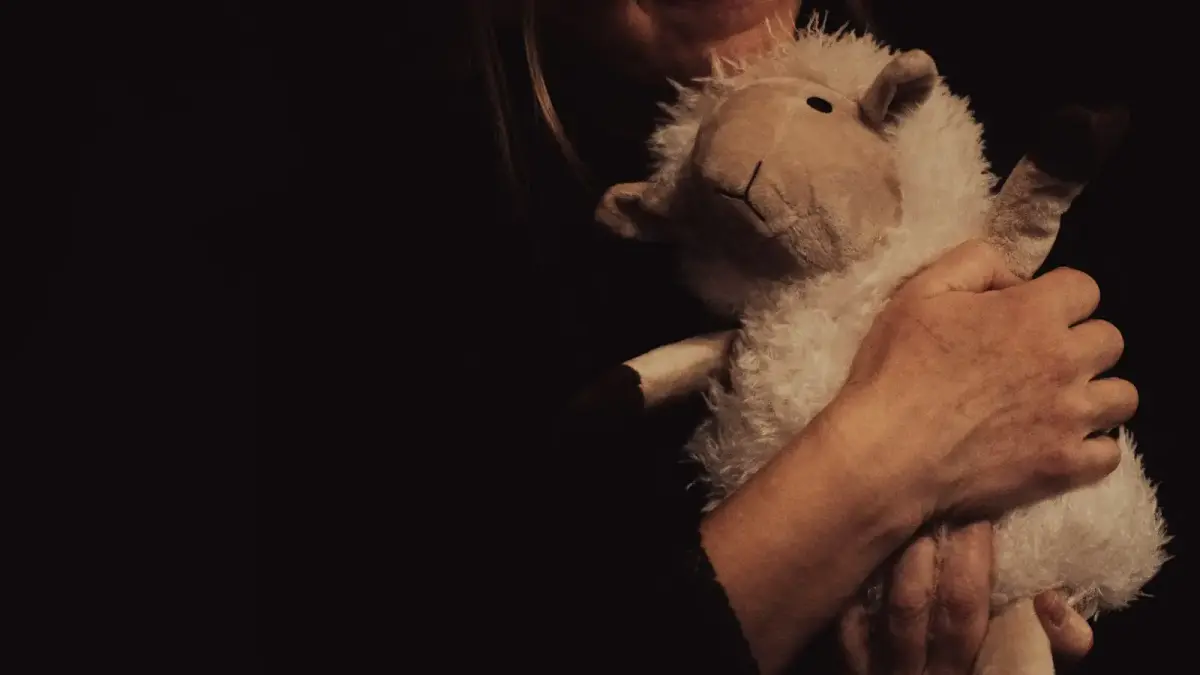
Psychology says people who apologize to furniture they bump into, whisper 'thank you' to a car that starts on a cold morning, and feel genuine guilt about throwing away a stuffed animal their children outgrew are not eccentric or childish - they are people whose empathy was built so large in childhood that it expanded past the species barrier, and the woman at fifty-two who says 'sorry' to a table she walked into is not confused about what is alive but fluent in a dialect of care that most nervous systems never learned to speak
The Table Didn’t Need My Apology, But I Gave It One Anyway
I was fourteen the first time someone laughed at me for it.
I’d bumped a kitchen chair while clearing plates after dinner, and I muttered “sorry” under my breath without thinking. My older cousin heard it and announced it to the room. “She just apologized to a chair,” he said, delighted. Everyone laughed. I laughed too, because that’s what you do when you’re fourteen and something private about you gets held up to the light.
But the truth is I wasn’t embarrassed about the apology. I was embarrassed that no one else seemed to understand why it felt necessary.
I still do it. I’m forty-six now, and last week I whispered “come on, you can do it” to my laptop when it was struggling to load a file. I felt a small flush of tenderness toward it, like I was coaching something through a hard moment. If you do things like this - if you’ve ever patted a car dashboard after a long road trip, or felt a stab of sadness putting a pair of shoes in a donation bag because they carried you through a hard year - I want you to know something that took me decades of studying developmental psychology to understand.
You are not being ridiculous. You are being fluent.
Your Nervous System Learned a Language Most People Don’t Speak
Every child goes through a phase of what psychologists call animistic thinking - believing that objects have feelings, intentions, and inner lives. The lamp is sad. The rock wants to come home with you. The blanket misses you at school.
For most children, this fades. The cognitive machinery matures, the brain draws sharper lines between alive and not alive, and by age seven or eight, the rock is just a rock again.
But for some children - the ones who were already more emotionally attuned, or whose early environments required them to be hyperaware of the feelings in a room - something different happens. The animistic thinking doesn’t fully dissolve. It gets woven into a broader empathic architecture that stays active long past childhood.
This isn’t a failure to develop. It’s an expansion.
A 2019 study published in the journal Social Neuroscience found that individuals who scored highest on empathy scales showed neural activation patterns when witnessing objects being “mistreated” - a hammer hitting a stuffed animal, for example - that overlapped significantly with their responses to seeing another person in distress. Their mirror neuron systems didn’t draw the same hard line between animate and inanimate that lower-empathy individuals drew effortlessly.
The researchers didn’t describe these people as confused. They described them as having broader empathic boundaries.
Which means the woman at fifty-two who says “sorry” to a table she bumped into is not making a cognitive error. Her nervous system is simply casting a wider net than most.
Winnicott Knew This Seventy Years Ago
The British psychoanalyst Donald Winnicott spent decades studying what he called transitional objects - the blankets, teddy bears, and worn-out stuffed rabbits that children cling to as they navigate the terrifying space between total dependence and independence.
Winnicott understood something that still gets overlooked. The child doesn’t love the blanket because they think it’s alive. They love it because the blanket holds something real - the residue of comfort, the memory of safety, the physical evidence that someone cared for them during the hours they couldn’t care for themselves.
That relationship isn’t imaginary. It’s relational in the deepest sense. The child is practicing care, practicing attachment, practicing the act of valuing something outside themselves.
For children whose emotional systems were built larger than average - through temperament, through early attunement with a caregiver, or sometimes through the painful necessity of monitoring every mood in an unpredictable household - this practice doesn’t stop at blankets. It extends. To the family dog, obviously. But then further. To the car. To the house itself. To a coffee mug that’s been on the shelf so long it feels like it has earned its place.
These are not delusions. They are the visible edges of an empathy so thoroughly constructed that it spills past the boundaries most people consider natural.
The Guilt You Feel About That Stuffed Animal Is Real - And It’s Telling You Something True About Yourself
I once spent an entire afternoon unable to throw away a pair of my daughter’s baby shoes. They were scuffed, one sole was peeling, and she was nine. They’d been in a closet for years.
But when I held them over the trash bag, something in my chest resisted. Not nostalgia, exactly. Something closer to betrayal. These shoes had done their job. They had held her feet when she was learning to walk. And now I was going to just - discard them?
I know how this sounds. I study this for a living, and I still felt it.
That guilt is not irrational. It’s the output of a system that was built to honor connection - a system that doesn’t have an off switch for objects that participated in meaningful moments. Your brain doesn’t file the stuffed animal under “possessions.” It files it under “relationships.” And discarding a relationship triggers the same neural alarm as abandonment.
A 2021 study in Frontiers in Psychology examining hoarding tendencies and empathy found something the researchers themselves seemed surprised by. The subjects who felt the most distress about discarding objects were not the ones with the weakest cognitive function. They were the ones with the highest scores on emotional empathy scales. Their brains were not malfunctioning. Their brains were doing exactly what they were built to do - just with a wider aperture than most.
The Cost and The Gift Live in the Same Room
I won’t pretend this is all beautiful. Because the same wiring that makes you whisper “thank you” to a car that started on a frozen morning also makes you absorb other people’s pain like a sponge dropped in water.
You walk into a room and feel the tension before anyone speaks. You carry conversations from three days ago in your body because someone’s tone felt slightly off and you can’t stop replaying it. You are the person everyone calls when they need to be heard, and you give that listening freely, and then you sit alone at night wondering why you feel so hollow.
Emotional contagion research - the study of how feelings transfer between people - has shown that highly empathic individuals don’t just mirror other people’s emotions. They absorb them. A 2017 study in Psychological Science demonstrated that people with the highest empathy scores showed physiological stress responses - elevated cortisol, increased heart rate - simply from watching a stranger describe a difficult experience. They weren’t imagining the pain. They were having it.
Now extend that same system to objects, and you start to understand why apologizing to furniture isn’t a quirk. It’s the most visible, most harmless expression of a nervous system that feels everything, everywhere, all the time. The apology to the table is the tip of an iceberg that goes down into every interaction, every relationship, every room you’ve ever walked into.
The gift is obvious. You love deeply. You notice what others miss. You are the person who remembers that your friend mentioned once, six months ago, that she missed her grandmother’s kitchen, and you bought her a candle that smelled like cinnamon bread without being asked. You are the person whose children will grow up knowing what it feels like to be truly seen.
The cost is that the world is louder for you than it is for almost everyone else.
The People Who Mock It and the People Who Recognize It
There are two kinds of responses you get when someone catches you apologizing to an inanimate object.
The first is the laugh. The “you know that’s not alive, right?” The gentle or not-so-gentle mockery that frames your behavior as childish, as a failure to grow up, as a cute little glitch in your otherwise functional adult brain.
The second is the quiet recognition. The person who sees you pat your car before getting out and doesn’t say anything, but later tells you that they’ve never been able to throw away their father’s old watch even though it hasn’t worked in fifteen years. The person who finds it endearing not because it’s silly but because they understand exactly what it means - that you are someone who cannot help extending care past the point where most people’s care runs out.
The first response tells you nothing about yourself. It tells you about the other person’s empathic range.
The second response is how you find your people.
Daniel Goleman, whose work on emotional intelligence reshaped how we understand interpersonal skill, has written about what he calls empathic accuracy - the ability to correctly read what another person is feeling. The research consistently shows that the people who are most empathically accurate are also the ones most likely to extend relational behavior to non-human entities. Not because they can’t tell the difference. But because their system for detecting “things that matter” has a lower threshold and a wider reach.
You are not confused about what is alive. You are simply running a more generous definition of what deserves care.
The Dialect Nobody Taught You
Here is what I want you to sit with.
You did not choose this. Nobody sits down at age five and decides to build an empathy system that extends past people, past animals, past every boundary that most brains draw automatically. It was built in you - by temperament, by early experience, by some combination of nature and nurture that developmental psychology is still trying to fully map.
And because nobody chose it, nobody should have to apologize for it. Not to the people who find it strange. And certainly not to yourself.
The woman who says “sorry” to a table is speaking a dialect of care. It is a language built from years of paying attention, of feeling deeply, of refusing - at a neurological level - to divide the world into things that matter and things that don’t.
Most people’s nervous systems learned to draw that line early and never questioned it. Yours didn’t. Yours kept going. Past people, past pets, past the species barrier entirely, until even a stuffed animal sitting in a donation bag could trigger something that felt like grief.
That is not a malfunction. That is a fluency.
And the world - the one full of people who walk past each other without noticing, who discard without feeling, who move through their days inside a tight circle of concern that barely extends past their own skin - that world needs the people who apologize to furniture.
Not because the furniture needs it.
Because the rest of us do.