Psychology says people who cannot watch a movie without Googling whether the ending is happy first are not ruining the experience - they are performing the only form of emotional preparation their childhood taught them, because the worst part of every bad thing that happened was never the thing itself but the not-knowing, and the spoiler at forty-seven is not about the movie but about removing the exact condition - uncertainty - that a nervous system shaped by unpredictability was never given the tools to survive
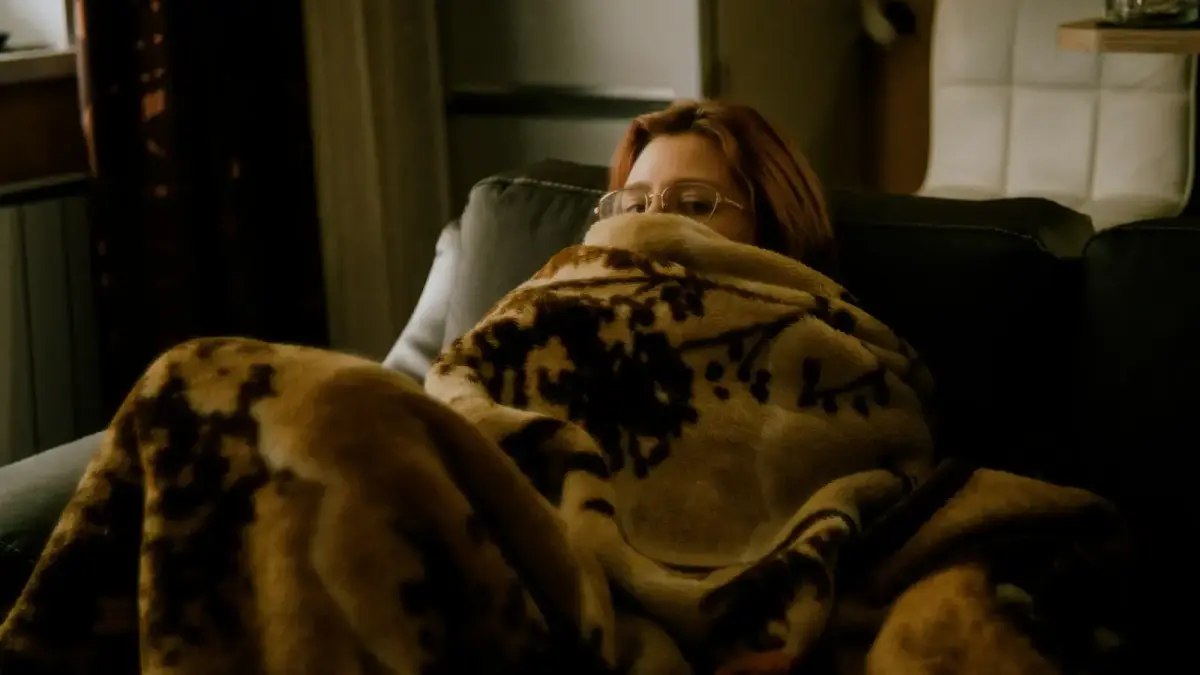
My friend Nora does this thing that used to drive me quietly insane.
We’d pick a movie - something we’d both been meaning to watch, something with good reviews, a plot we were genuinely excited about - and before the opening credits finished rolling, she’d be on her phone. Scrolling through the plot summary on Wikipedia. Reading the last paragraph first. Then she’d set the phone down, exhale, and say, “Okay. I’m ready.”
I used to tease her about it. “You just ruined the entire movie.” She’d shrug and say, “No. Now I can actually enjoy it.”
It took me years - and a slow, humbling reckoning with my own research - to understand that Nora wasn’t ruining anything. She was doing the only thing that had ever made her feel safe enough to stay in the room when something unpredictable was unfolding. She wasn’t weak. She wasn’t impatient. She was a woman whose childhood had taught her one very specific lesson: the not-knowing is where the danger lives.
And the spoiler was never about the movie. It was about removing the one variable her nervous system had never learned to tolerate.
The behavior looks trivial until you trace it backward
On the surface, spoiler-checking is barely a behavior. It’s a quirk. A minor preference. The kind of thing people joke about in group chats - “I’m the person who reads the last page of the book first, don’t judge me.”
But if you ask the people who do it why they do it - really ask, past the self-deprecating laugh - you’ll hear something that doesn’t sound quirky at all.
“I can’t relax until I know it’s going to be okay.”
“If something terrible happens to the main character and I’m not prepared, I feel it in my chest for hours.”
“I need to know where the story is going so I can decide how much of myself to invest.”
That’s not a movie preference. That’s an emotional survival strategy wearing casual clothes. And the people who do it almost always share a common origin: they grew up in homes where the emotional weather could change without warning.
When the worst part was never the thing itself
There’s a particular flavor of childhood that doesn’t leave bruises anyone can photograph. It’s the childhood where things were fine - until they weren’t. Where a parent could be warm and present at breakfast and cold and unreachable by dinner. Where a good week didn’t mean the bad weeks were over. Where the most dangerous stretch of time wasn’t the crisis itself but the space between the last crisis and the next one, because in that space, you were supposed to relax, and you couldn’t, because you’d learned that relaxing was what you were doing right before everything fell apart.
A 2004 study by Dugas, Buhr, and Ladouceur, published in the Journal of Clinical Psychology, introduced a concept that changed how we understand anxiety: Intolerance of Uncertainty. Their research found that for many anxious individuals, the distress doesn’t come from anticipating a bad outcome. It comes from not knowing what the outcome will be. Uncertainty itself - the gap between “I don’t know yet” and “now I know” - is the source of suffering. Not the ending. The waiting.
This lands differently when you grew up in a home where uncertainty was not a neutral state but an active threat.
If your parent’s mood was unpredictable, you didn’t just dislike surprises. You learned, at a cellular level, that the space between “I don’t know what’s going to happen” and “now I know” was the most dangerous place to stand. Hope was a setup. Optimism was a trap. And the only safe move was to skip ahead - to find out what was coming before it arrived, so you could prepare your body, your face, your heart.
The spoiler is an insurance policy written by a child
Think about what spoiler-checking actually does. It collapses the uncertainty. It takes a two-hour stretch of not-knowing and compresses it into thirty seconds of reading. And once the person knows - once they know the dog lives, or the couple reunites, or the main character survives - something in their body unlocks. The shoulders drop. The jaw unclenches. The breath deepens.
They haven’t ruined the movie. They’ve made it safe enough to feel.
This is the part most people miss. The spoiler-checker isn’t avoiding emotion. They’re creating the conditions under which they can finally access it. Without the spoiler, they’d spend the entire film braced - scanning for signs of disaster, reading characters’ faces for foreshadowing, unable to sink into the story because their nervous system is too busy doing threat assessment to enjoy anything.
Gabor Mate writes extensively about how children in unpredictable environments develop a hypervigilant orientation to the world - a nervous system that stays on permanent patrol, scanning for shifts in emotional temperature. In adulthood, this doesn’t look like anxiety in the clinical sense. It looks like a person who needs to check the reviews before the restaurant, read the syllabus before the class, Google the trail conditions before the hike. It looks like someone who has simply learned that unscripted experiences are where people get hurt.
The spoiler is the script. And the person checking it isn’t avoiding life. They’re trying to feel safe enough to participate in it.
The real question isn’t why they check - it’s what happened when they didn’t know
If you’re someone who does this - who can’t press play without first confirming that the story won’t ambush you - I want you to think about a specific memory. Not a movie. A moment from your childhood when you didn’t know what was going to happen and you were right to be afraid.
Maybe it was the sound of a car pulling into the driveway and not knowing which version of your parent was behind the wheel. Maybe it was the silence after a fight - the kind of silence that could mean it was over or that something worse was coming. Maybe it was a promise that kept getting broken until you stopped believing promises altogether, not because you were cynical but because believing and then being wrong felt worse than never believing at all.
A 2016 study in the journal Cognition and Emotion found that people with high intolerance of uncertainty actually experienced greater physiological stress during ambiguous situations than during confirmed negative outcomes. Let that land. Knowing something bad was going to happen was less distressing than not knowing whether something bad was going to happen. The uncertainty was harder than the pain.
Your childhood taught you that. Not as a lesson anyone sat you down and delivered, but as a pattern your body absorbed through repetition. Don’t hope. Don’t assume. Don’t relax into not-knowing, because the not-knowing is where you got blindsided every single time.
It’s not about the movie - it was never about the movie
When Nora checks the ending of a film, she’s not thinking about her childhood. She’s not making a conscious connection between a fictional character’s arc and the nights she lay in bed at nine years old listening to her parents’ voices through the wall, trying to decode from the pitch and rhythm whether tonight was safe or tonight was the night everything changed again.
She doesn’t need to make that connection consciously. Her body already made it. The nervous system doesn’t distinguish between categories of uncertainty. It doesn’t say, “This is a movie, so I can relax” and “This is real life, so I should be vigilant.” It only knows: I don’t know what’s coming, and that feeling is the feeling that came right before the worst things.
So the body does what it was trained to do. It seeks information. It closes the gap. It finds the ending before the ending finds it. And the person - the adult, the forty-seven-year-old on the couch with the blanket and the tea - gets to feel something that was never available to them as a child: the experience of entering an uncertain situation already knowing they’ll be okay.
That isn’t weakness. That’s the nervous system solving a problem it was handed decades ago with the only tool it was ever given.
The people who judge you for this have never needed it
There’s a particular kind of condescension reserved for spoiler-checkers. “You’re missing the whole point.” “The suspense is what makes it good.” “Just let yourself be surprised.”
And those people aren’t wrong - for themselves. If you grew up in a home where surprises were mostly good, where unpredictability meant birthday parties and snow days and spontaneous trips to get ice cream, then yes, uncertainty feels exciting. It feels like possibility. Your nervous system learned that not-knowing usually resolves into something wonderful, so it leans into the space rather than bracing against it.
But if you grew up in a home where surprises were mostly reorganizations of your sense of safety - where the surprise was a parent’s rage, a sudden move, a promise retracted, a mood that shifted the entire temperature of the house in seconds - then uncertainty doesn’t feel like possibility. It feels like the moment before impact.
A 2019 study published in Psychological Science found that adults who reported high levels of childhood unpredictability showed measurably different neural responses to ambiguous stimuli compared to adults who reported stable childhoods. Their amygdalae activated faster and stayed activated longer. Their brains literally processed not-knowing as a threat state.
So when someone tells you to “just enjoy the surprise,” they’re asking you to override a neurological pattern that was built over years of lived experience. They’re asking you to feel safe in the exact conditions that once meant you weren’t.
What the spoiler actually gives you
Here’s what I want you to hear, if this is you.
You are not ruining anything. You are not broken, or weak, or incapable of handling real emotion. You are a person whose early life taught you that uncertainty was the most dangerous feeling available, and you developed an elegant, quiet, entirely reasonable strategy for managing it.
The spoiler gives you what your childhood never did: a guarantee. A tiny, low-stakes guarantee that for the next two hours, nothing will ambush you. You can cry at the sad parts because you chose to. You can laugh at the funny parts because your guard is down. You can feel everything the film wants you to feel because you’re not spending half your energy bracing for an ending that might knock you sideways.
You didn’t kill the magic. You created the safety that the magic requires.
And maybe, over time, as the nervous system gets enough evidence that not-knowing doesn’t always end in catastrophe - through safe relationships, through therapy, through hundreds of small experiences where uncertainty resolved into something gentle - maybe the need to check will soften. Maybe one day you’ll press play without Googling first and notice that your chest stays open instead of tight.
But if that day hasn’t come yet, that’s okay too. The spoiler isn’t a failure. It’s a bridge. It’s the thing that lets you sit in a dark room with a story you can’t control and stay anyway.
And staying - when every nerve in your body was trained to brace or leave - is one of the bravest things a person can do.